The short answer
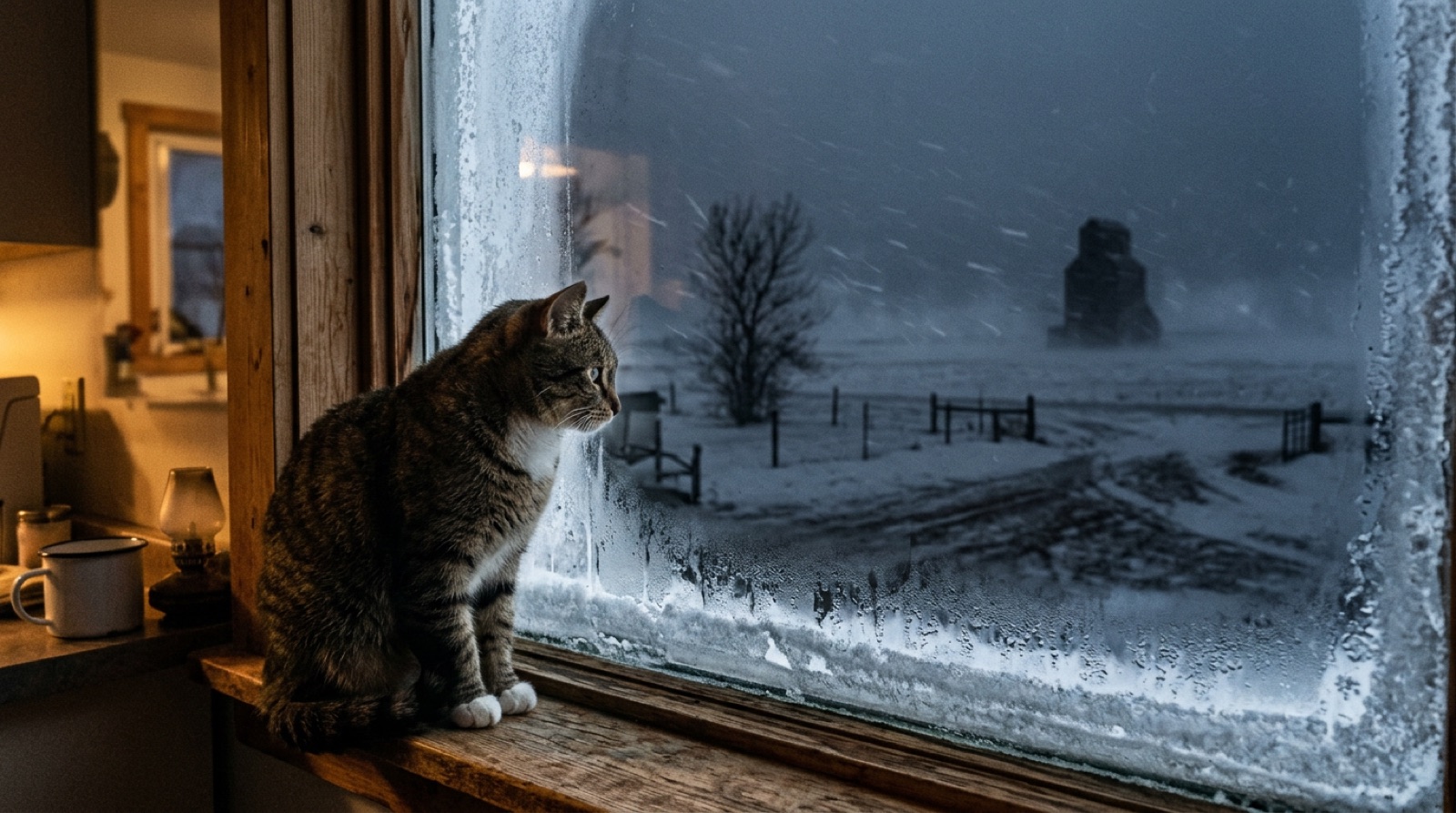
Indoors, with enrichment. Brandon winters run well below minus 30 with prairie wind behind them, which is frostbite territory for ears, tails and paws. Add coyotes using the Assiniboine valley as a corridor, owls after dark, and vehicle traffic. The workable middle ground is a catio for the warm months, harness walks for cats that take to them, and real indoor climbing space for the long stretch from November to March.
Ask around Brandon and you will hear that cats have always gone outside here. That is true, and it is also why both city shelters take in strays year after year. The two facts are connected.
This is farm country. Westman runs on grain and cattle, barn cats are genuinely useful, and the idea that a cat belongs outdoors is baked into the region. None of that is stupid. But a barn cat has a heated building, a colony and an owner who accepts the risks. A cat adopted into a house on Victoria Avenue has none of those things and the same coyotes.
Here is what a Brandon cat is actually up against outside, and the alternatives that give it the good parts without the rest. If you are still choosing a cat, the live Brandon cat listings are refreshed regularly.
What a roaming cat faces in Brandon
| Risk | What it means here | When |
|---|---|---|
| Deep winter cold | Nights well below minus 30 with wind on top | November to March |
| Engine block sheltering | Cats climb into warm engine bays and are killed at startup | Coldest months |
| Coyotes | Established along the Assiniboine valley and the city edges | Year round, worse at dusk |
| Great horned owls and raptors | A real threat to small cats after dark | Year round |
| Traffic | Trans-Canada and the arterial routes through the city | Year round |
| Fights, FIV and feline leukemia | Spread by bites between roaming cats | Year round |
| Summer heat and mosquitoes | Parasite exposure climbs sharply in July and August | June to September |
The cold is the first problem
Brandon gets properly cold. Overnight lows in the minus 30s are a normal January here, not an event, and there is nothing between this city and the open prairie to slow the wind down. Ice fog settles in on the worst mornings.
Frostbite in cats takes the extremities first: ear tips, tail tips and paw pads. The damage does not grow back. Short-haired cats are worse off than thick-coated ones, but no house cat is equipped for a Westman cold snap, whatever its coat.
There is a second cold-weather hazard people forget. Antifreeze is sweet, cats will drink it, and a very small amount is fatal. Spills in driveways and garages are more common in winter. The American Veterinary Medical Association lists it among the standard cold-weather hazards. Clean spills up immediately and store containers sealed.
The practical line: if you would not stand out in it in a jacket, the cat should not be out in it either.
Bang on the hood before you start the car
Cats climb into warm engine bays to escape the cold, and they are killed or badly injured when the engine turns over. It happens every winter in every cold city and Brandon is no exception. The cat under your hood is usually a neighbour's or a local stray rather than yours.
Prevention costs two seconds. Thump the hood or tap the horn before you start on any cold morning, then give it a moment. Do it at home, at work, and at the rink. Tell the people you live with to do it too, because a habit only one person has does not help.
Coyotes, owls and the river valley
The Assiniboine River valley cuts through Brandon and gives wildlife a green corridor straight into town. That is lovely for the trails around Riverbank Discovery Centre and less lovely if your cat treats the valley edge as its territory.
Coyotes thrive across the prairies and use exactly this kind of habitat to move between countryside and city. A domestic cat sits inside their prey range. Risk peaks around dusk and dawn, which is unfortunately when cats most want to be out.
Great horned owls are the threat people never think about. They hunt after dark, they are silent, and a small cat is a realistic target. Neither of these is a reason for panic, but together they explain why supervised outdoor time beats free roaming here, particularly on the streets nearest the valley and the open edges of the city.
The farm-cat question, taken seriously
Barn cats do a job. On a Westman grain operation they earn their keep, and nobody working land around Brandon needs a lecture about it. The working-cat tradition here is real and it is not going away.
The problem is what happens at the edges of it. Unfixed barn populations grow fast, rural Manitoba gets used as a dumping ground for unwanted litters, and those cats end up as somebody's intake problem. Groups like Cats TNR & Rescue in the Neepawa area exist precisely because of that gap, trapping, fixing and either returning cats to their territory or placing them in barn homes.
If you keep working cats, the single most useful thing you can do is get them fixed. A managed, sterilised barn colony stays stable. An unmanaged one doubles and then arrives at a shelter door in July. Our Brandon spay and neuter guide covers the options.
What does not transfer is the model itself. A house cat on a residential street has no heated barn, no colony and no tolerance for minus 35.
The middle ground that actually works
A catio. An enclosed run off a window or door gives the cat air, birds and sun with nothing able to get in. Treat it as an April to October structure in this climate, roof it solidly against raptors, and skirt the base so nothing digs under.
Harness walks. Works for a decent share of cats, best started young. Introduce it indoors over days, then try the yard, then somewhere quiet like the Assiniboine trails. Short outings only, and never leave a harnessed cat tied up alone.
Vertical space indoors. The highest-value purchase you can make. A tall tree by a window gives a cat height, a view and a job. Cats care more about up than about square footage.
Real play, daily. Two short wand sessions a day covers most of what an indoor cat is missing. Rotate toys instead of leaving them all out permanently.
A second cat. Genuinely helps through a long winter. Two cats entertain each other at hours when you are asleep, which is a real argument for adopting a bonded pair rather than a single.
Browse adoptable Brandon cats
Plenty of cats in Brandon shelters are already settled indoor animals, and bonded pairs handle a prairie winter better than singles. Listings refreshed regularly.
See Available Brandon Cats →Frequently Asked Questions
Should I let my cat outside in Brandon?
The honest answer is that a Brandon winter alone makes it a bad bet, and the rest of the year adds coyotes, owls, traffic and disease on top. Cats that live indoors consistently live longer than cats that roam, and in a prairie city the gap widens because the weather itself is dangerous for months at a time. Both Brandon shelters lean toward indoor placement, and the Brandon Humane Society states that its animals should be adopted as house pets and not left running loose. That is the shelter position, and it reflects what they see come back through the door.
How cold is too cold for a cat outside in Brandon?
Far warmer than most people assume, and Brandon spends months below that line. January overnight lows in the minus 30s are routine here, and open prairie wind makes the effective temperature worse than the number suggests. Frostbite takes ears, tail tips and paw pads, and the damage is permanent. A cat with a thick coat copes better than a short-haired one, but no house cat is built for a Westman cold snap. If you would not stand outside in it comfortably, the cat should not be out in it either.
What is the engine block risk and how do I prevent it?
Cats looking for warmth climb into the engine bay of a recently parked vehicle, and they are killed or badly injured when it starts. It happens in every cold-climate city and Brandon is squarely one of them. The prevention is simple and takes two seconds: bang on the hood before you start the car, or give the horn a short tap, on any cold morning. Do it in your own driveway too, since the cat sheltering under your hood is often a neighbour's or a local stray rather than a stranger's.
Are there coyotes in Brandon?
Yes, and the Assiniboine River valley running through the city gives them a natural corridor straight into residential areas. Coyotes do well on the prairie generally, and river valleys and open edges are exactly the habitat they use to move around. A domestic cat is within their prey range. Dusk and dawn are the highest-risk windows, which unfortunately is also when cats most want to be out hunting. This is one of the clearest arguments for supervised outdoor time over free roaming, especially anywhere near the valley or the city's open edges.
Everyone in Westman has barn cats. Why is a house cat different?
Barn cats are a real and useful part of farming here, and nobody is arguing with a working cat on a grain operation. The difference is what the cat is set up for. A barn cat typically has a heated or deeply sheltered building, a colony around it, and a life expectancy that reflects the risks it takes. A house cat adopted into a Brandon home has none of that infrastructure, and the culture around normalised roaming is exactly why so many cats end up on shelter intake lists. The farm-cat model does not transfer to a suburban street.
What is a catio and does it work in Manitoba?
A catio is an enclosed outdoor run attached to a window or door, and it solves most of the problem. The cat gets fresh air, smells, birdwatching and sun, and nothing gets in or out. It works fine in Manitoba, with the caveat that it is a three-season structure in practice. Nobody's cat wants to sit in an unheated enclosure in February. Build it for the stretch from April to October, make the roof solid so raptors are not an issue, and bury or skirt the base so nothing digs under.
Can I train a cat to walk on a harness in Brandon?
Many cats take to it, though it works best when started young and it never suits every cat. Introduce the harness indoors over days rather than minutes, let the cat wear it around the house first, and only then try the yard. Riverbank Discovery Centre and the quieter trails along the Assiniboine are pleasant enough for a confident harness cat in summer. Keep the outings short, keep the cat off the ground where you cannot see what it is stepping on, and never leave a harnessed cat tied and unattended.
My cat has always gone outside. Can I bring it in permanently?
Usually yes, though expect a rough couple of weeks and plan for it rather than winging it. The cat will protest at the door, and giving in once teaches it that protesting works. Replace what outside was providing: vertical climbing space, a window perch with a view, puzzle feeders, and a few short play sessions a day with a wand toy. Winter is the easiest time to make the switch, since the weather is doing half the persuading for you. Increase litter box provision too, because a cat that toileted outside now needs indoor options.
Do indoor cats get bored in a Brandon winter?
They can, and the fix is stimulation rather than outdoor access. Manitoba winters are long, and an indoor cat that gets nothing to do from November to March finds its own entertainment, usually at three in the morning. Vertical space matters most, so a tall cat tree by a window is the highest-value item you can buy. Add rotating toys rather than a permanent pile, food puzzles instead of a full bowl, and short daily play sessions. Two cats also entertain each other, which is a genuine argument for adopting a bonded pair.
What about mosquitoes and parasites in summer?
Manitoba summers produce serious mosquito numbers, and roaming cats pick up more parasite exposure than indoor ones across the board. Fleas, ticks and worms all come with outdoor access, and an outdoor cat needs year-round prevention rather than a seasonal afterthought. Talk to your Brandon clinic about a prevention plan matched to how your cat actually lives, because the right product differs between an indoor cat and one that hunts along a river trail. Heat is worth watching too. Cats need shade and water on the hot end of July.
Is an indoor cat really happier?
Safer, definitively. Happier depends entirely on what you provide indoors. A cat in a bare apartment with a bowl and a box is not living a rich life, and pretending otherwise does nobody any favours. A cat with height to climb, windows to watch, things to hunt and a person who plays with it daily does at least as well as a roaming cat, and it lives considerably longer. The trade is that indoor life shifts the work onto you. Outdoor cats entertain themselves. Indoor cats need you to provide the entertainment.
What if my cat gets out in winter?
Search immediately rather than waiting until morning, because time matters enormously in deep cold. Check under decks, in sheds and garages, and around any warm vehicle nearby, since those are exactly the spots a cold cat picks. Post in Brandon lost-pet groups straight away and let neighbours know. Because the city licenses cats, a found cat may be traceable, so ask anyone who spots it to check for a collar and get it scanned for a microchip. A chipped, licensed cat has a far better chance of coming home than an anonymous one.
Related Brandon Guides
Safe, warm and waiting
Shelter cats and foster cats from across Brandon and Westman, in a single list.
Browse Available Brandon Cats →New cat? Start with these care guides
Everything a new adopter needs to set up a safe, happy home.