The short answer
Chihuahuas are long-lived (14 to 18 years) and healthy overall, with small-dog issues. The most common is dental disease, from tiny crowded mouths, so brushing and cleanings matter enormously. Also watch for luxating patella (a slipping kneecap), heart conditions (mitral valve disease), tracheal collapse (use a harness, not a collar), and hypoglycaemia in very young or tiny dogs (feed small, frequent meals). Keep the dog lean and stay on annual exams so heart murmurs are caught early. And remember the breed feels cold intensely. With good dental care and winter protection, a Chihuahua is a durable, devoted companion for a very long time.
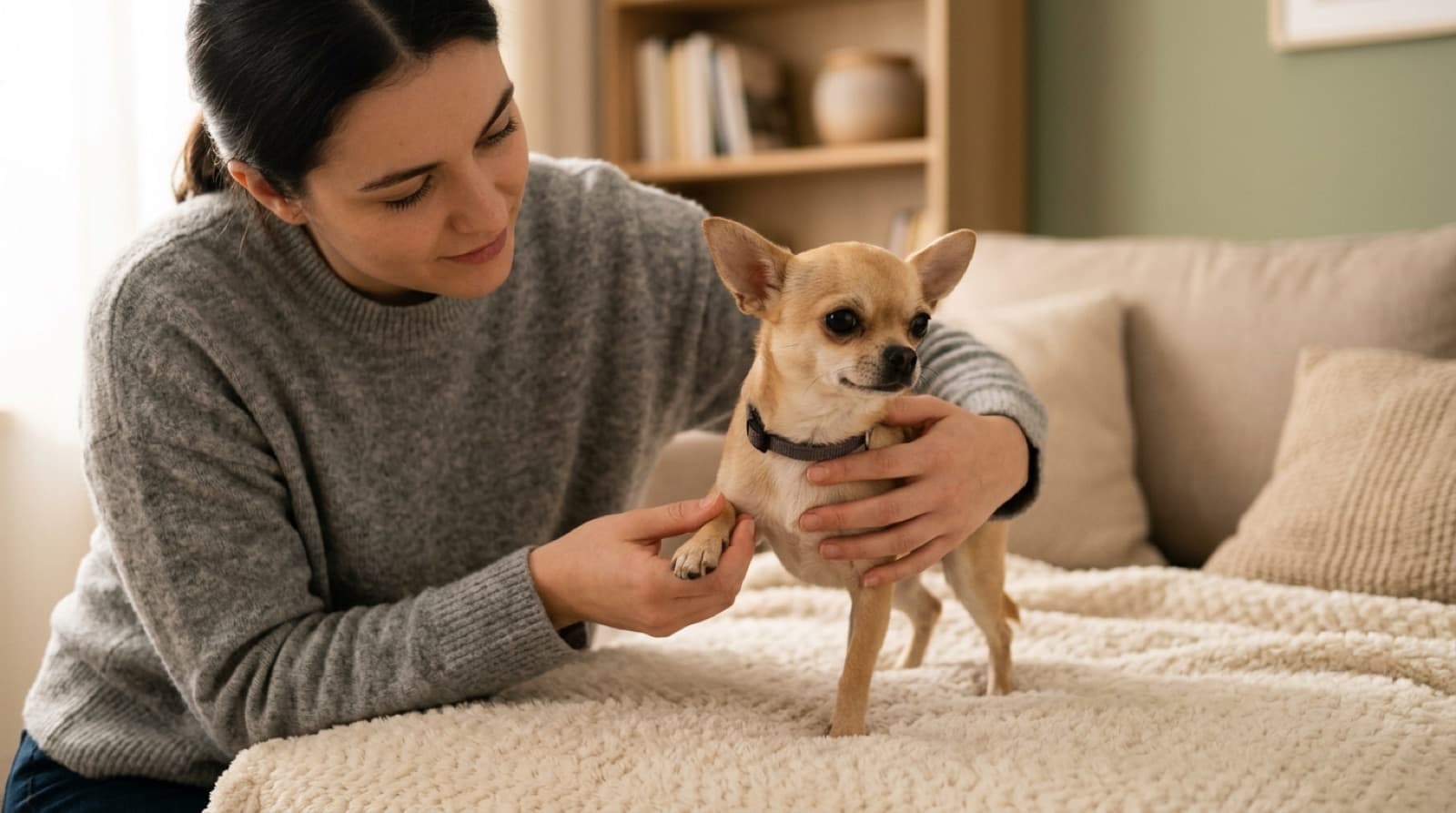
Dental disease: the number-one issue
Chihuahuas have tiny mouths with crowded teeth that trap food and build plaque fast, so dental disease is the breed’s most common health problem, and it is painful, not cosmetic. Untreated, it leads to tartar, gum disease, tooth loss, and infection that can affect the heart. Prevention is consistent home care: brush regularly with dog toothpaste, use appropriate dental chews, and keep up professional cleanings at your vet’s recommendation. Starting early and staying consistent is one of the highest-value things you can do for a Chihuahua, protecting comfort and organ health over a very long life, and saving on dental procedures later.
The American Kennel Club breed profile has a good overview of Chihuahua care.
Knees, heart, trachea, and blood sugar
Luxating patella. A slipping kneecap, common in tiny breeds. Watch for a skip in the gait or a briefly held-up leg. Keep the dog lean; severe cases may need surgery.
Heart. Mitral valve disease becomes more common with age, often first heard as a murmur on a routine exam; some Chihuahuas have a congenital defect. Watch for coughing or tiring easily, and keep up annual exams.
Tracheal collapse. A weakened windpipe causing a honking cough, worsened by neck pressure, which is why a harness beats a collar for this breed. Keep the dog lean and avoid airway irritants.
Hypoglycaemia. Low blood sugar in very young or tiny dogs; feed small, frequent meals. Weakness, trembling, or wobbliness needs prompt feeding and, if severe, emergency care. Some Chihuahuas also have an open soft spot (molera) and, rarely, hydrocephalus.
What it costs, and the Winnipeg factor
| Condition | Typical Treatment Cost | Notes |
|---|---|---|
| Dental cleaning (+ extractions) | $300 to $1,000+ | Often needed repeatedly over a long life; preventable with home care |
| Patellar surgery | $2,000 to $4,000 | Per knee; only severe cases |
| Heart medication (ongoing) | Modest monthly cost | Cardiology referral to Winnipeg if needed |
| Tracheal collapse management | Varies | Weight, harness, sometimes medication |
| Pet insurance | $25 to $55 / month | Pays off over a 14-to-18-year life |
Figures are Canadian dollars and before Manitoba’s 12 percent tax. See the full budget in our Brandon adoption costs guide.
Meet an adoptable Chihuahua in Brandon
A rescue Chihuahua comes with a vet workup already done, often including a dental assessment. Browse who is available.
See Available Chihuahuas →Frequently Asked Questions
What health problems are Chihuahuas prone to?
Chihuahuas are one of the longest-lived breeds, commonly 14 to 18 years, and healthy overall, but they have a recognisable set of small-dog issues. The most common is dental disease, because tiny crowded mouths trap food and build tartar fast. They are also prone to luxating patella (a slipping kneecap), heart conditions including mitral valve disease and, in some, a congenital defect called patent ductus arteriosus, tracheal collapse (which is why a harness matters), hypoglycaemia (low blood sugar, especially in very young or very tiny dogs), and hydrocephalus in some dogs with a large open soft spot on the skull. They also feel cold intensely. Most of these are manageable, and with good dental care, a lean weight, and winter protection, a Chihuahua is a durable, long-lived companion.
Why is dental care so important for Chihuahuas?
Because dental disease is the breed’s most common health problem, and it is both painful and consequential. Chihuahuas have tiny mouths with crowded teeth that trap food and build plaque quickly, leading to tartar, gum disease, tooth loss, and infection that can affect the heart and other organs. It is not a cosmetic issue; untreated dental disease genuinely hurts and shortens quality of life. Prevention is straightforward but must be consistent: brush the teeth regularly with dog-specific toothpaste, provide appropriate dental chews, and have your vet check the teeth at annual exams and perform professional cleanings when needed. Starting brushing early and keeping it up is one of the highest-value things you can do for a Chihuahua’s long-term health and comfort, and it saves money on dental procedures down the line.
What is luxating patella in a Chihuahua?
Luxating patella is a kneecap that slips out of its normal groove, very common in tiny breeds like the Chihuahua. Signs are an intermittent skip or hop in the gait, briefly holding a back leg up mid-stride, or occasional lameness that comes and goes. Mild cases often need no more than keeping the dog lean and monitoring, while more severe cases can cause pain and arthritis and may need surgical correction. Your vet can usually feel it during an exam. Keeping the dog at a healthy weight reduces the stress on the small joints and helps, as does discouraging jumping from heights that are large relative to a tiny dog. If you notice a persistent skip or your Chihuahua favouring a back leg, have your vet assess the knees.
Do Chihuahuas have heart problems?
Some do, and heart health is worth monitoring in the breed. Chihuahuas are prone to mitral valve disease, a degeneration of a heart valve that becomes more common with age and is often first detected as a heart murmur during a routine exam, which is one reason those annual checks matter. Some Chihuahuas are also born with patent ductus arteriosus, a congenital heart defect. Signs of heart trouble to watch for include coughing, tiring easily, reduced exercise tolerance, or laboured breathing. Many heart conditions are manageable with medication for a good quality of life, especially when caught early, and some congenital defects can be corrected. Keeping up annual vet exams so a murmur is caught early, and acting on any new coughing or exercise intolerance, is the key.
What is tracheal collapse, and why does it matter for a Chihuahua?
Tracheal collapse is a weakening of the windpipe that causes it to flatten, common in tiny breeds, and it produces a characteristic honking cough, especially with excitement, pulling on a leash, or pressure on the neck. This is the main reason a harness rather than a neck collar is strongly recommended for Chihuahuas: a collar puts direct pressure on the delicate trachea and can trigger or worsen the problem, while a harness spreads the pressure across the chest. Keeping the dog lean also helps, since extra weight worsens it, as does avoiding smoke and other airway irritants. Mild cases are managed with weight control, a harness, and sometimes medication; severe cases occasionally need more intervention. If your Chihuahua develops a honking cough, see your vet, and switch to a harness right away.
What is hypoglycaemia in a Chihuahua, and how do I prevent it?
Hypoglycaemia is low blood sugar, and it is a real risk in very young and very tiny Chihuahuas because their small bodies have little energy reserve. It can come on if a small puppy or tiny adult goes too long without eating, gets overly stressed or chilled, or burns energy faster than it takes in, and signs include weakness, wobbliness, lethargy, trembling, disorientation, and in severe cases seizures or collapse. Prevention is about regular feeding: small, frequent meals rather than long gaps, especially for puppies and the smallest dogs. If you see early signs, offering food or a small amount of a sugar source like corn syrup rubbed on the gums can help while you contact your vet, but severe episodes are an emergency. Ask your vet about the right feeding schedule for your specific dog’s size and age.
How much do Chihuahua health problems cost to treat in Brandon?
Generally modest compared with large-breed conditions, but dental and dental-adjacent costs add up. Routine care runs a few hundred dollars a year. Dental cleanings run a few hundred dollars and more with extractions, and Chihuahuas often need them repeatedly over a long life. Patellar surgery, if needed, runs a few thousand dollars per knee; heart medication is an ongoing modest cost. Manitoba’s 12 percent tax applies to vet services. Brandon has capable everyday vet care, but the nearest specialty and emergency hospitals are in Winnipeg, about 215 km east, so a cardiology referral or surgery may mean a drive. Because a Chihuahua lives so long, cumulative care matters; pet insurance, commonly $25 to $55 a month for a young dog, and diligent dental care both pay off over a 14-to-18-year life.
Is it safe to adopt an adult or senior Chihuahua with unknown history?
Usually yes, and given how long the breed lives, even a senior Chihuahua can have many years ahead. A reputable rescue does a vet workup before adoption and shares what it knows. Book your own wellness exam with a Brandon vet in the first week or two to set a baseline, including a dental assessment (many surrendered Chihuahuas have neglected teeth), a listen to the heart, and a check of the knees and weight. For a senior, expect to absorb some vet costs directly, as insurers exclude pre-existing conditions, and dental work is common. Many adopters find an adult or senior Chihuahua’s known temperament and calm, devoted nature ideal, and older Chihuahuas are often overlooked in rescue, so adopting one does real good.
Related Guides
New dog? Start with these care guides
Everything a new adopter needs to set up a safe, happy home.