The short answer
The prairie wind is the real hazard, not just the number on the forecast. Below about minus 20, and especially past minus 25 to minus 30 with wind chill, keep walks short for most dogs, and swap the walk for a quick toilet trip on the most extreme days. Frostbite hits ears, tail, and paws first and can start within minutes. A thin-coated, small, senior, or short-legged dog needs a coat, and booties or a paw balm plus a rinse protect against toxic road salt. Cover exercise indoors with scent games and puzzle feeders. Keep antifreeze locked away, since a tiny amount is deadly. No dog should be left outdoors through a Manitoba winter.
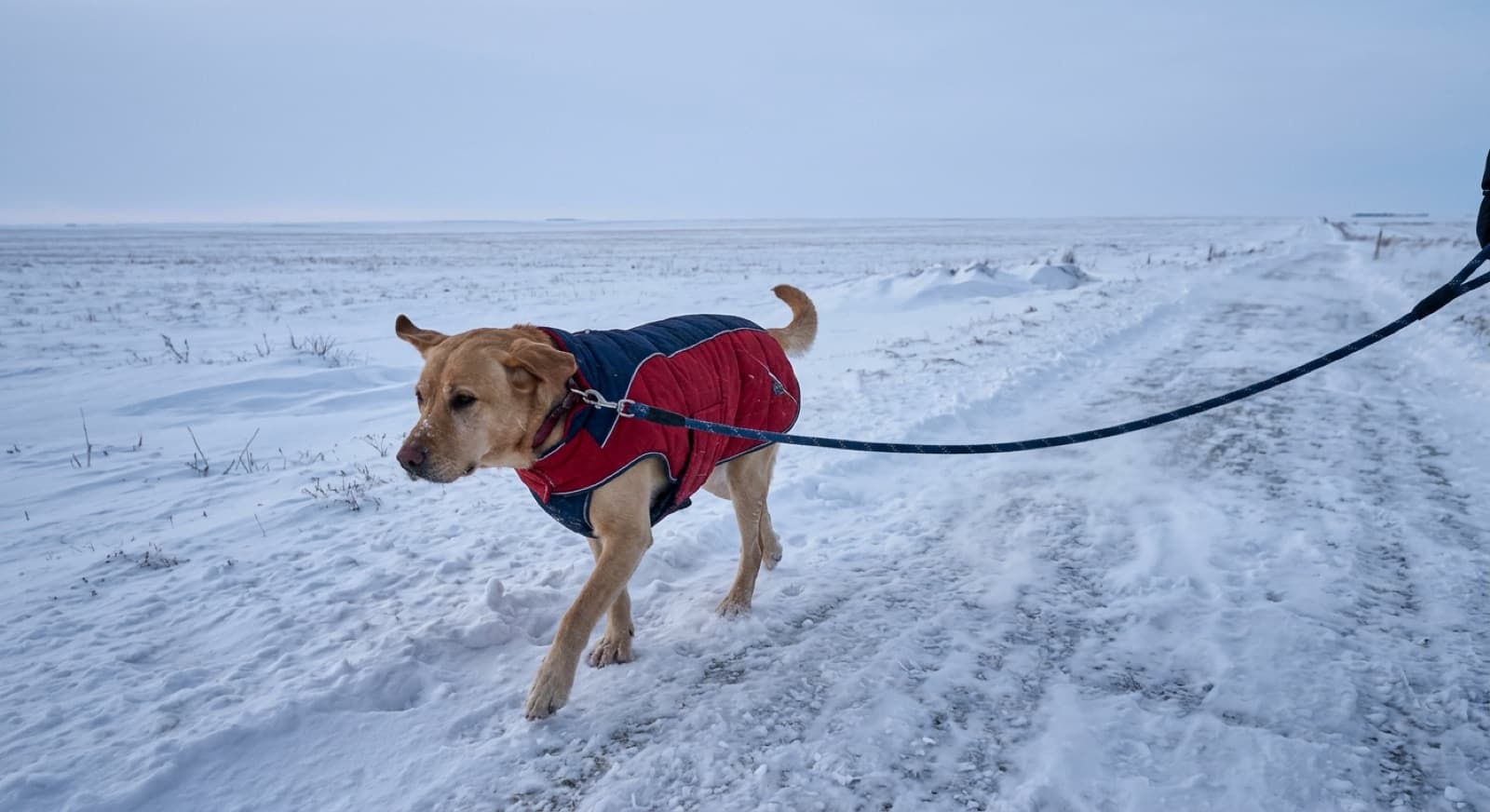
How cold is too cold?
For most dogs in Brandon, walks should get short below about minus 20 Celsius, and shorter still once wind chill pushes past minus 25 to minus 30. Small, thin-coated, senior, and young dogs feel it far sooner than thick-coated northern breeds. The wind off open prairie is the deciding factor, because it drives the felt temperature well below the forecast and speeds frostbite on ears, paws, and tail. On the most extreme days, a quick toilet trip plus indoor enrichment beats forcing a walk. Read the dog: shivering, lifting paws, and turning for home all mean head in.
Frostbite, coats, and paws
Frostbite hits the extremities first, ear tips, tail, and pads, and can begin within minutes in extreme wind chill. Watch for pale, grey, or bluish skin that later swells or blisters as it thaws. Warm the dog gradually with body heat or lukewarm water, never hot, do not rub the area, and call your vet.
A well-fitted coat earns its keep for thin-coated, small, senior, and short-legged dogs whose bellies drag through snow. Booties protect against both cold and the bigger everyday hazard: road salt and chemical ice-melt, which crack pads and are toxic if licked off. If your dog will not wear boots, use a paw balm before walks and wipe or rinse the paws afterward, drying between the toes. Trim the fur between the pads so painful ice balls cannot form there.
Antifreeze: the deadly winter hazard
Ethylene glycol antifreeze tastes sweet, and dogs will lap up even a small spill in a garage or driveway. A very small amount can cause fatal kidney failure. Clean up spills at once, store containers sealed and out of reach, and check where cars leak. If you even suspect your dog has licked antifreeze, treat it as an emergency and call your vet immediately, because waiting for symptoms is often too late. Pet-safer propylene glycol antifreeze is worth choosing. The American Veterinary Medical Association has a full cold-weather safety checklist worth a read before the season.
Exercise indoors when it is too cold out
Brainwork tires a dog faster than a walk, which makes it the answer for deep-cold days. Scatter treats for a scent hunt, feed meals from a puzzle or snuffle mat, run short training sessions on new cues, and play tug or hallway fetch. Three short toilet trips plus twenty to thirty minutes of indoor enrichment keeps most dogs settled through a cold snap. Plan the indoor routine before the cold arrives, because an under-exercised dog gets restless and destructive, and that is when the chewing and pacing start.
New to your dog’s routine? Our first week with a rescue dog guide covers settling a new dog in the cold months, and the Brandon adoption costs guide budgets in the winter gear.
Looking for a winter-ready companion?
Plenty of Brandon rescue dogs are built for a prairie winter and love the snow. Browse who is available and set an alert.
Browse Brandon Dogs →Frequently Asked Questions
How cold is too cold to walk a dog in Brandon?
It depends on the dog, but a useful rule for Westman is that below about minus 20 Celsius, and especially once the wind chill pushes past minus 25 to minus 30, walks should be short and purposeful for most dogs. Small, thin-coated, senior, and young dogs feel it far sooner than a thick-coated northern breed. The wind coming off open prairie is the key factor here, because it drives the felt temperature well below the forecast number and speeds up frostbite on ears, paws, and tail. On the most extreme days, swap the walk for a quick toilet trip and cover the exercise indoors. Watch the dog: shivering, lifting paws, and wanting to turn back are all signs to head in.
Do dogs get frostbite in Manitoba winters?
Yes, and it is a real risk in Westman rather than a rare one. Frostbite most often hits the extremities that get least blood flow, the ear tips, tail, and paw pads, and it can begin within minutes in extreme wind chill. Early signs are pale, grey, or bluish skin that may later swell, redden, or blister as it thaws, and the area can be painful. If you suspect frostbite, warm the dog gradually with body heat or lukewarm, never hot, water, do not rub the area, and call your vet. Prevention is simpler than treatment: limit exposure on the coldest days, use a coat and booties, and check ears and paws when you come in.
Does my dog need a coat and boots in Brandon?
Many dogs do, and some genuinely do not. A thin-coated or small dog, a puppy, a senior, or a short-legged dog whose belly drags through snow benefits a lot from a well-fitted winter coat, and it is not just cosmetic in a prairie winter. Boots matter for a different reason as much as warmth: salt and chemical ice-melt on Brandon sidewalks irritate and crack paw pads and are toxic if the dog licks them off. If your dog will not tolerate boots, a paw balm before walks and a wipe or rinse of the paws afterward is a solid alternative. Thick double-coated northern breeds often need neither, but every dog needs its paws checked after a salted walk.
How do I protect my dog’s paws from salt and ice in Brandon?
Salt and ice-melt are the quiet winter hazard. They dry and crack pads, sting any small cut, and are toxic if licked off, and they are everywhere on treated sidewalks and lots. The routine that works: apply a paw balm or wax before walks to create a barrier, use booties if the dog tolerates them, and wipe or rinse the paws with lukewarm water when you come in, drying between the toes. Trim the fur between the pads in winter, because ice balls form there and are painful. If a pad looks raw or cracked, give it a rest indoors and see your vet if it does not improve, since raw pads pick up infection.
How do I keep my dog exercised when it is too cold to go outside?
Move the workout indoors and lean on the dog’s brain, which tires it faster than a walk anyway. Scent games, hiding treats around a room, puzzle feeders and snuffle mats, short training sessions on new cues, and a game of tug or fetch down a hallway all burn real energy. Feeding meals out of a puzzle instead of a bowl stretches enrichment across the day. Three short outdoor toilet trips plus twenty to thirty minutes of indoor brain work will keep most dogs settled through a stretch of deep cold. An under-exercised dog gets restless and destructive, so plan the indoor routine before the cold snap, not during it.
Is antifreeze dangerous to dogs in winter?
Extremely, and it is one of the deadliest household hazards of the season. Ethylene glycol antifreeze tastes sweet, so dogs will lap up even a small spill or puddle in a garage or driveway, and a very small amount can cause fatal kidney failure. Clean up any spill immediately, store containers sealed and out of reach, and check the driveway and garage floor where cars leak. If you even suspect your dog has licked antifreeze, treat it as an emergency and call your vet at once, because time is critical and waiting for symptoms is often too late. Pet-safer propylene glycol antifreeze exists and is worth choosing.
Can my dog live outside in a Brandon winter?
No dog should be left outdoors through a Westman winter. The combination of prairie wind and extreme cold makes it dangerous even for thick-coated breeds, and Manitoba weather can turn lethal fast. Dogs are companion animals that regulate warmth partly through contact and shelter, and an outdoor dog in this climate faces frostbite, hypothermia, and real suffering. Dogs belong indoors with the family, with outdoor time limited to exercise and toileting appropriate to the day’s cold. If you know a dog being left outside in deep cold, that is a welfare concern worth reporting to local animal services.
What winter signs mean I should call the vet?
Head in and call if you see persistent shivering that does not stop once the dog is warm, weakness, disorientation, or very slow breathing, which can signal hypothermia. Pale, grey, or blistered skin on ears, tail, or pads points to frostbite. Limping, raw or bleeding pads, or a dog constantly licking its feet after walks means salt or ice damage that needs attention. And any suspected antifreeze contact is an immediate emergency. For most of these, your regular Brandon vet is the first call; for after-hours emergencies, ask your vet how their on-call and referral arrangements work, since the nearest specialty hospitals are in Winnipeg, about two and a half hours east.
Related Guides
New dog? Start with these care guides
Everything a new adopter needs to set up a safe, happy home.