The short answer
Goldens shed heavily, year-round plus two big seasonal coat blows. The fix is a routine, not a haircut: brush two to three times a week, daily during a blow, with a slicker brush and an undercoat rake, paying extra attention to the feathering that mats. Never shave the double coat, it insulates against heat and cold and can grow back wrong. Bathe every six to eight weeks and dry thoroughly, since a damp undercoat breeds hot spots and ear infections. In a Brandon winter, trim the fur between the pads so ice balls cannot form, and rinse the legs after snowy walks. Goldendoodles usually shed less but need more professional grooming, and none are truly hypoallergenic.
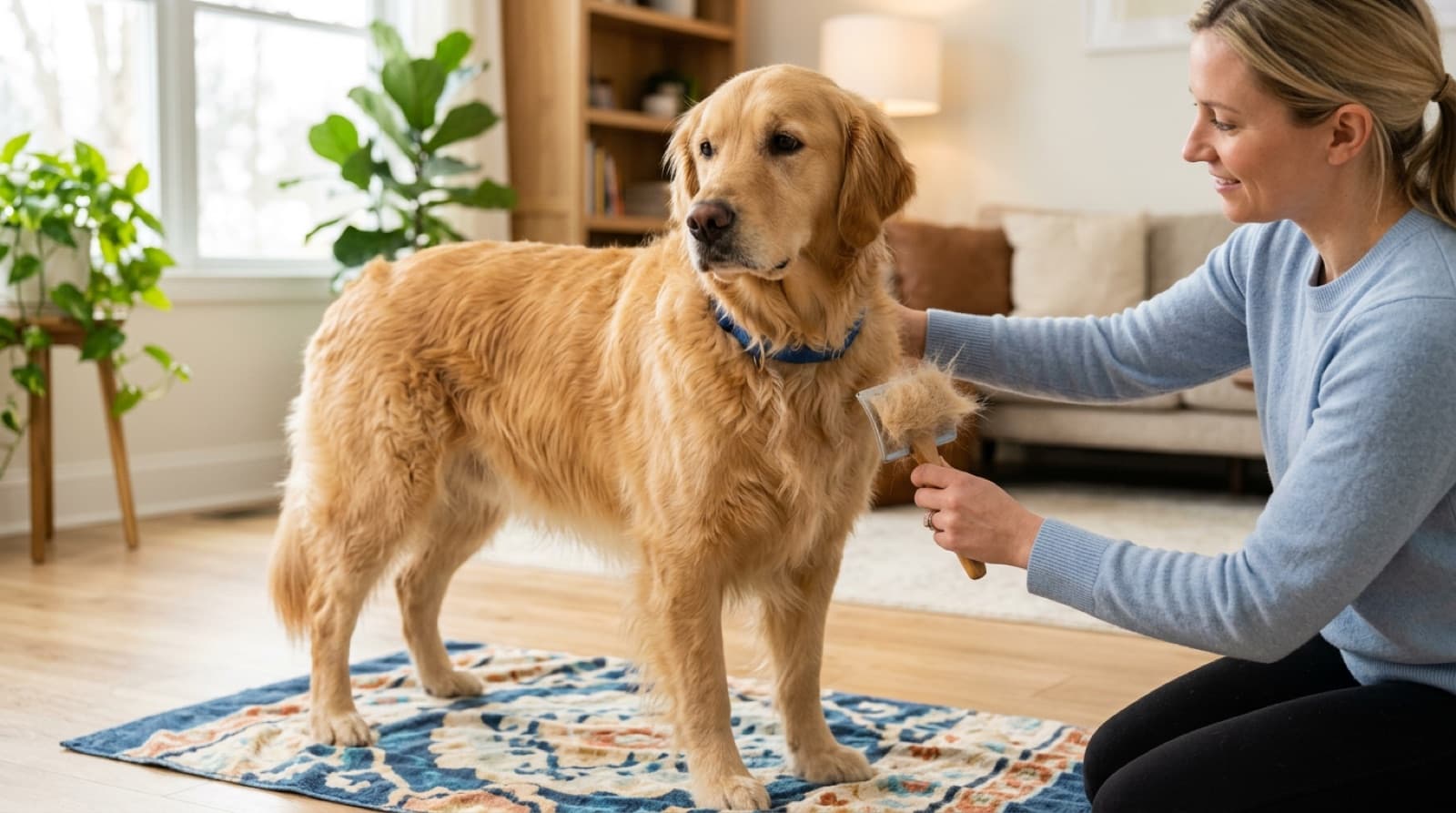
The brushing routine that keeps a house livable
Brush two to three times a week, moving to daily during the spring and autumn coat blows. Regular brushing pulls loose undercoat before it mats or coats your floors, spreads the skin oils that keep the coat healthy, and doubles as a weekly hands-on check for lumps, ticks, and skin issues, which genuinely matters for a cancer-prone breed. Focus on the feathering, the longer fur on the legs, tail, chest, and behind the ears, which mats first. A slicker brush plus an undercoat rake handles most Goldens; a metal comb finishes the feathering. Fifteen minutes a few times a week keeps both the coat and the house under control.
The Brandon winter coat jobs
The double coat is a winter asset, but Westman conditions add two tasks. Ice balls form in the feathering between the toes and on the legs, which is painful, so trim the fur between the pads and rinse or wipe the legs and feet after snowy walks. Dry winter air and indoor heating can dry the skin, so do not over-bathe in the cold months, and add a humidifier if you see flaking. Keep brushing on schedule, because a matted coat insulates poorly and traps moisture against the skin. Road salt is the other winter hazard for the paws, covered in our Brandon winter dog care guide.
Bathing, mats, and the tool kit
Bathing: every six to eight weeks and only when genuinely dirty. Over-bathing strips the coat’s weatherproofing and dries the skin, worse in a Manitoba winter. Use dog shampoo, rinse fully, and dry thoroughly, especially the dense areas and ears, because a damp undercoat causes hot spots and ear infections. Brush before bathing.
Mats: form in the feathering behind the ears, under the legs, on the chest, and on the tail. Work them out gently with a comb or mat splitter, never yank, and never bathe a matted coat because water tightens mats. A tight mat near the skin is a groomer job, not a scissors gamble.
Tool kit: a slicker brush, an undercoat rake or de-shedding tool, a metal comb, nail clippers or a grinder, and blunt-tipped scissors for tidying paw fur. You never need body clippers, because you never shave the coat. Quality tools last years and make the routine fast enough that you actually keep it up.
The American Kennel Club breed profile has a good primer on the Golden’s coat if you want the background.
Ready for a Golden of your own?
Browse adoptable Goldens and Golden crosses from Brandon and Manitoba rescues. Ask the foster about coat type and shedding for any Goldendoodle.
See Available Goldens →Frequently Asked Questions
Do Golden Retrievers shed a lot?
Yes. Goldens are heavy shedders, and it is one of the most common surprises for new owners. They shed moderately year-round and then heavily twice a year during seasonal coat blows, usually spring and autumn, when the undercoat releases in large amounts. Expect fur on the floor, the furniture, and your clothes as a permanent feature of Golden ownership. This is not a grooming failure; it is the double coat doing its job. The good news is that consistent brushing captures most of it before it lands on your couch, and a Golden’s shedding is manageable with the right routine and tools even in a smaller Brandon home.
How often should I brush a Golden Retriever?
Two to three times a week is the baseline for a Golden, moving to daily during the spring and autumn coat blows. Regular brushing removes loose undercoat before it mats or ends up on your floors, distributes skin oils that keep the coat healthy, and gives you a weekly hands-on check for lumps, ticks, and skin issues, which matters for a cancer-prone breed. The feathering on the legs, tail, chest, and behind the ears mats most easily, so pay extra attention there. A slicker brush plus an undercoat rake covers most Goldens; add a metal comb to work through the feathering. Fifteen minutes a few times a week keeps the coat and the house under control.
Should I shave my Golden Retriever in summer?
No, never shave a Golden’s double coat. It is one of the most damaging grooming mistakes owners make, however well-intentioned in summer heat. The double coat insulates against both cold and heat and protects the skin from sunburn, and shaving it can lead to improper regrowth, patchy texture, and a coat that never returns to normal. It does not keep the dog cooler, because the coat is what regulates temperature. To help a Golden in heat, brush out the dead undercoat so air can circulate, provide shade and water, and exercise in the cool of the morning or evening. Leave the coat length alone; manage the heat other ways.
How do I manage a Golden’s coat through a Brandon winter?
Winter is where the double coat shines, since it is genuinely cold-hardy, but Manitoba conditions create two grooming jobs. First, snow and ice ball up in the feathering between the toes and on the legs, which is painful, so trim the fur between the pads and rinse or wipe the legs and feet after walks. Second, dry winter air and indoor heating can dry the skin, so do not over-bathe in winter and consider a humidifier if you see flaking. Keep brushing on schedule through the cold months, because a matted coat insulates poorly and traps moisture against the skin. Road salt on the paws is the other winter issue, covered in our Brandon winter dog care guide.
How often should I bathe a Golden Retriever?
Roughly every six to eight weeks for most Goldens, and only when genuinely dirty in between. Over-bathing strips the natural oils that keep the double coat weatherproof and the skin healthy, and it can leave a Golden itchy and flaky, especially in dry Manitoba winters. Use a dog-specific shampoo, never a human one, and rinse thoroughly, because leftover residue irritates the skin. The critical step is drying: a double coat holds water, and a damp undercoat is a recipe for hot spots and ear infections, so dry thoroughly, particularly the dense areas and the ears. Brush before bathing to remove loose fur, or you will have a matted, harder-to-dry coat.
What grooming tools do I need for a Golden Retriever?
A modest kit handles most Goldens. A slicker brush for the body and the feathering, an undercoat rake or de-shedding tool to pull dead undercoat during blows, and a metal comb to finish the feathering and catch small mats. Add nail clippers or a grinder, since Goldens need nails trimmed every few weeks, and a good pair of blunt-tipped scissors for tidying the paw fur and trimming between the pads in winter. You do not need clippers for a full body cut, because you should never shave the coat. Quality tools last for years and make the routine faster, which means you are more likely to keep it up.
Do Goldendoodles shed less than Golden Retrievers?
Usually less than a purebred Golden, but it varies a lot and none are truly hypoallergenic. A Goldendoodle inherits a mix of the Golden’s shedding coat and the Poodle’s low-shed curly coat, and the result depends on the individual dog’s genetics, which is unpredictable in a cross. A more Poodle-like Goldendoodle sheds little but needs frequent professional grooming to prevent matting, while a more Golden-like one sheds more and grooms more like a Golden. If shedding or allergies are a deciding factor, meet the specific dog and spend time with it, because you cannot assume a Goldendoodle will be low-shed just from the label. Brandon rescue Goldendoodles are worth asking the foster about on coat type.
Why is my Golden Retriever’s coat matting?
Mats form where the coat is longest and there is friction, so the feathering behind the ears, under the legs, on the chest, and on the tail mats first, especially if brushing lapses or the coat gets wet and dries without brushing. In a Brandon winter, snow that balls up and melts in the feathering is a common trigger. Work mats out gently with a comb or a mat splitter, never yank, and never bathe a matted coat, because water tightens mats. If a mat is tight to the skin, a groomer can remove it safely rather than risking a cut. The fix is prevention: brush the feathering two to three times a week and dry the coat properly after snow or baths.
Related Guides
New dog? Start with these care guides
Everything a new adopter needs to set up a safe, happy home.