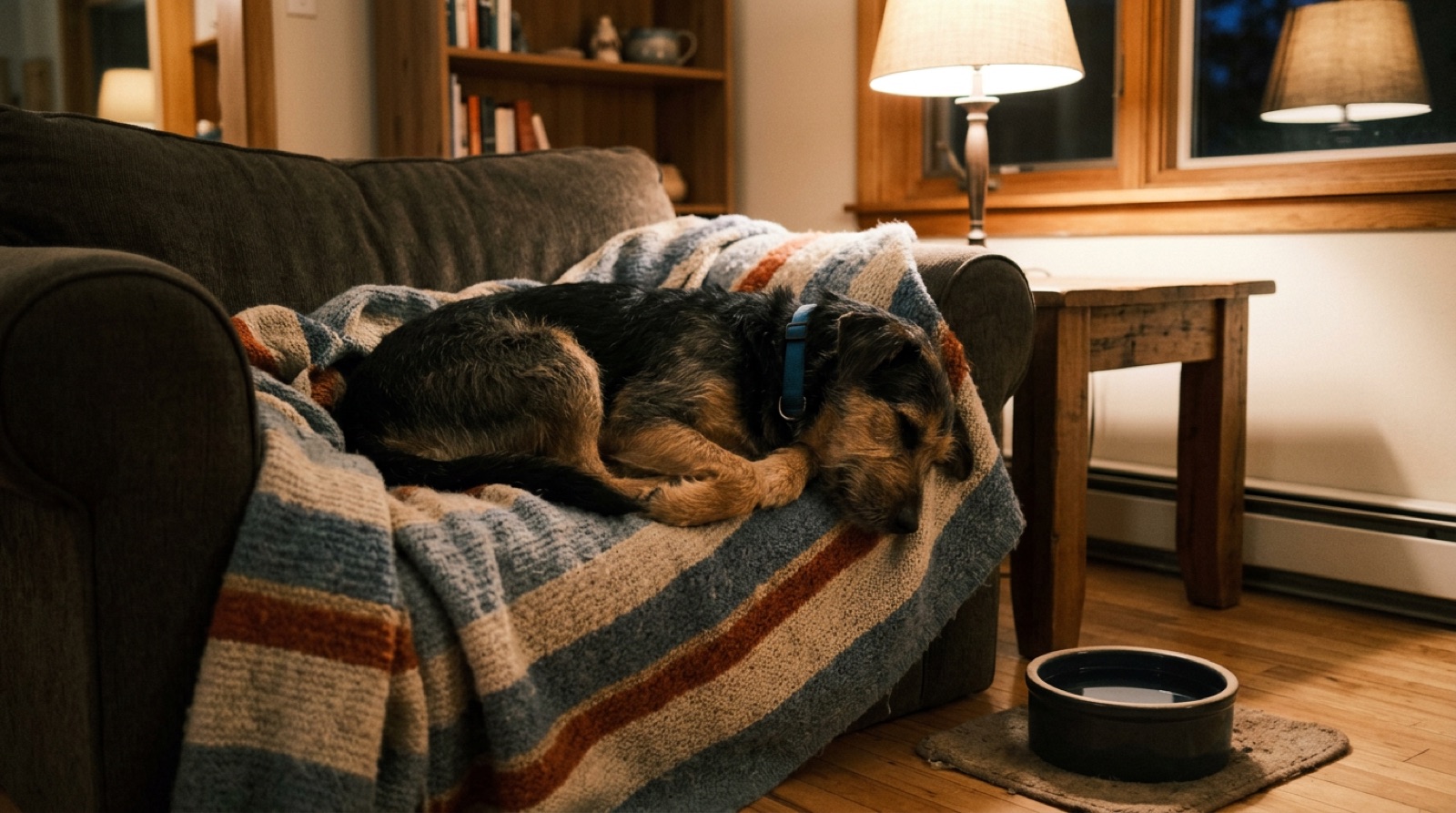
The short answer
Give your new dog less than your excitement wants to give: a quiet room, a crate or bed, set mealtimes, and two or three short leashed walks on the same route. No visitors in week one, no dog park for a few weeks, no off-leash anywhere. Follow the 3-3-3 rule (3 days to exhale, 3 weeks to learn your rhythm, 3 months to feel home). Moncton admin: confirm the microchip registration lists your number (it doubles as your licence exemption), keep the rabies certificate, and book a vet intro exam within two weeks.
The day you bring home a dog from the Moncton rescue network is the day their world resets to zero. Whatever came before (the stray months, the surrender, the shelter kennel at Greenock Street, the foster home), your hallway is now an unfamiliar planet. The single biggest gift you can give in week one is predictability.
That runs against every instinct. You want to show the dog the neighbourhood, introduce the in-laws, test the Centennial dog park. The story we hear from Moncton adopters again and again is the same: the dogs who settle fastest are the ones whose first week was almost eventless. Decompression first. The fun arrives on its own schedule, and it arrives sooner when you do not rush it.
One reassurance before the plan: a P.A.W. dog arrives spayed or neutered, vaccinated, dewormed, and microchipped, so the medical groundwork is done and the big first bills are already inside the adoption fee. Week one is about the dog's nervous system, not their chart.
The 3-3-3 Rule, Honestly Explained
| Phase | What You See | Your Job |
|---|---|---|
| First 3 days | Overwhelm. Hiding, pacing, poor appetite, odd sleep, accidents. Or the opposite: eerily perfect behaviour (shutdown, not settledness). | Protect the quiet. Feed on schedule, walk short, ask nothing. |
| First 3 weeks | The real dog emerges: personality, quirks, and the behaviours the shelter never saw. Testing of boundaries starts now. | Build routine and gentle rules. Start short training sessions. Widen the walk map slowly. |
| First 3 months | Trust. The dog anticipates your rhythm, relaxes fully, and starts acting like the couch was always theirs. | Consolidate. Graduate to busier places, longer trails, and (recall permitting) the dog park. |
The timeline stretches for shut-down, under-socialised, or multiple-home dogs. Progress is loops, not a line; a bad day in week five is normal, not relapse.
The Week, Day by Day
Day 1 (homecoming): straight home, leashed bathroom stop at the spot you want them to keep using, then into the prepared quiet room. Sit nearby and let the dog come to you. Feed at the time you plan to feed forever. Early night.
Days 2 to 3: hold the routine steady: same wake time, same walk route (quiet residential streets, not the Riverfront Trail yet), same meal times. Start hand-feeding part of meals if the dog is comfortable; it builds the association that you are the source of good things. Accidents get cleaned, not scolded.
Days 4 to 5: if the dog is eating normally and choosing to be near you, expand slightly: a new street on the walk, a short car ride, five minutes of name-recognition practice with treats. If the dog is still hiding, do not expand anything. Their pace wins.
Days 6 to 7: handle the admin below, book the vet intro exam, and take stock. Eating well, tail loosening, following you room to room: on track. Still frozen or not eating: call the rescue for advice, and the vet if appetite is the problem. Nobody good judges you for asking.
All week: no visitors, no dog park, no off-leash anywhere (a bolting new dog is the classic week-one disaster), and a leash or long line even in an unfenced yard. Two clips on harness and collar for escape-artist types. New dogs are flight risks until they know where home is.
The Moncton To-Do List (Ten Minutes, Total)
- Confirm the microchip registration. Every P.A.W. dog arrives chipped, but the chip only works if the registry lists your current phone number. This matters twice in Moncton: a registered chip is what gets a lost dog home fast, and under By-Law H-1322 a microchipped dog is exempt from the annual dog licence entirely.
- File the rabies certificate. It came in the adoption paperwork. If you ever license instead of relying on the chip exemption, the City of Moncton dog licence requires a current rabies vaccination ($10 a year fixed, $20 fertile). Our licensing guide has the full process.
- Register with a vet and save the emergency number. Book a get-to-know-you exam within two weeks at a clinic you can reach easily. Then put 506-387-4015 (Riverview Animal Health Centre, the region's 24/7 hospital) in your phone tonight. Our emergency vet guide covers the rest.
The Week-One Walk Map (and What Comes Later)
Week one: quiet residential streets near home, same route every time. Predictability is the point; the dog is mapping their new territory and learning that walks end back at safety.
Weeks two to four: graduate to the on-leash trail network. Mapleton Park and Irishtown Nature Park are the best decompression walks in the city: wooded, calm on weekday mornings, and long enough to tire a dog without crowding one.
Month two and beyond: busier exposure like the Riverfront Trail along the Petitcodiac, then, recall and sociability permitting, the fenced off-leash parks: Centennial in Moncton, Isaac's Run in Riverview, or Dieppe's big field. The park is a graduation, not a starting line.
Every walk, all winter: Moncton's freeze-thaw sidewalks mean ice and road salt for a good chunk of the year. The paw-rinse habit and gear notes live in our winter dog care guide.
Normal Wobbles vs. Call-Someone Problems
Normal in week one
- ✓Poor appetite for the first 2 to 3 days
- ✓House-training accidents, even in “house-trained” dogs
- ✓Hiding, pacing, whining at night, velcro shadowing
- ✓Suspiciously perfect behaviour (shutdown; the real dog shows up in week two or three)
- ✓Your own second thoughts (the adoption blues lift with routine)
Call the vet or the rescue
- No food at all past 2 to 3 days, or refusing water
- Vomiting, diarrhoea, coughing, or lethargy beyond ordinary tiredness
- Growling, freezing, or snapping over food, space, or handling: call the rescue for guidance early, before patterns set
- Signs of separation panic (destruction at exits, non-stop vocalising when alone) rather than mild fussing
- Anything after hours that cannot wait: Riverview Animal Health Centre, 506-387-4015, open 24/7
Still choosing your dog?
Browse adoptable dogs across the Moncton rescue network. Every one arrives vaccinated, fixed, and microchipped, with week one waiting to begin.
See Available Moncton Dogs →Frequently Asked Questions
What is the 3-3-3 rule for rescue dogs?
My new rescue dog is not eating. Should I worry?
When can I take my new dog to the Centennial dog park?
What should I do the day I bring my Moncton rescue dog home?
What paperwork do I need to sort in Moncton after adopting?
Should I crate my new rescue dog?
How much exercise does a new rescue dog need in week one?
My rescue dog had an accident inside. Now what?
When should my new rescue dog first see a vet in Moncton?
How do I introduce my rescue dog to my kids?
How do I introduce a rescue dog to my resident dog?
Is it normal to regret adopting in the first week?
Related Moncton Guides
Week One Starts With a Match
The plan above works for any dog. The right dog makes it easier. Browse who is waiting across Greater Moncton.
Browse Available Moncton Dogs →New dog? Start with these care guides
Everything a new adopter needs to set up a safe, happy home.