The short answer
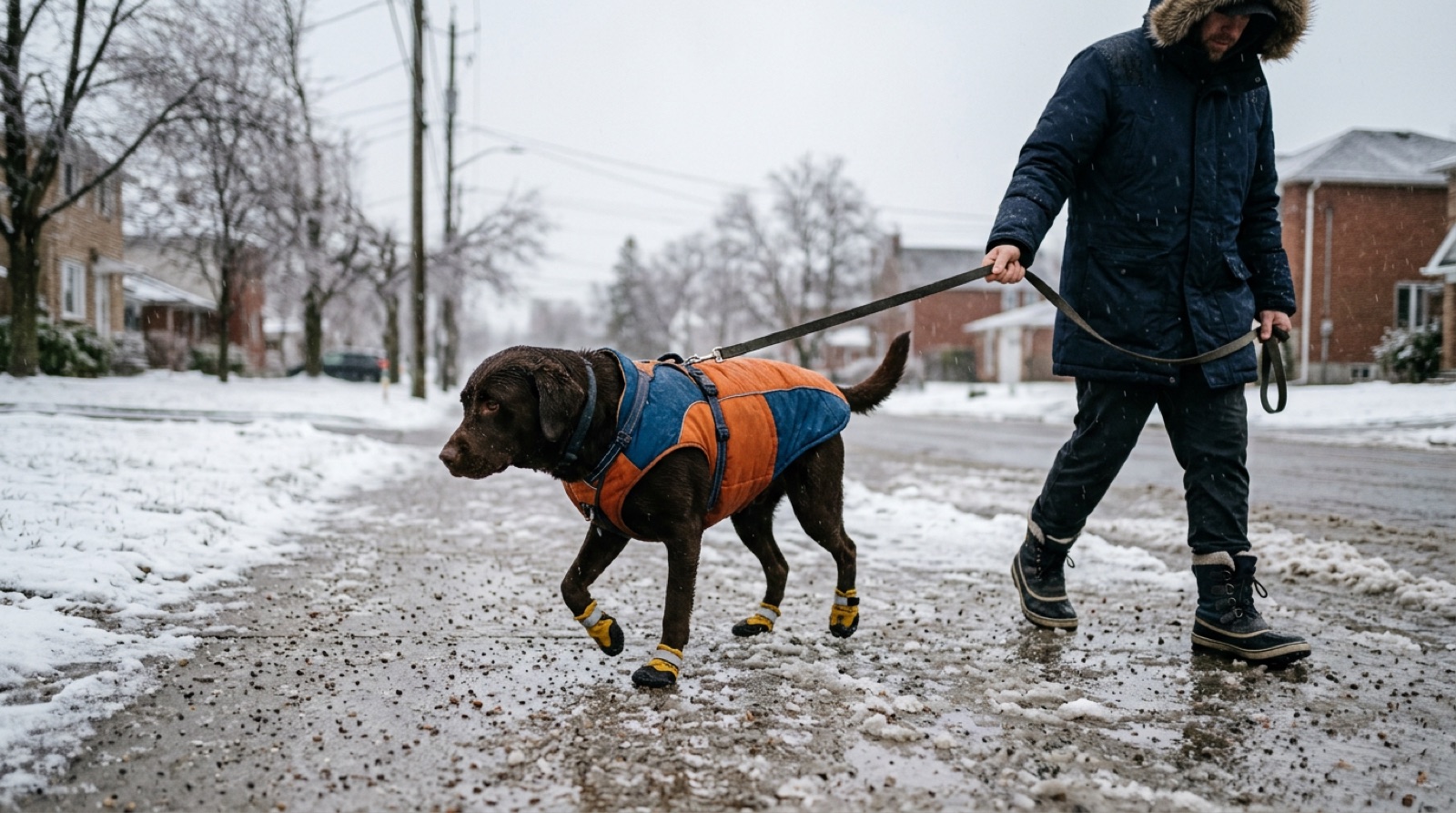
Manage the freeze-thaw, not just the cold. Moncton's cycling between snow, freezing rain, and thaw makes ice underfoot and road salt the top hazards: pick footing carefully, use paw balm or booties, and rinse and towel paws at the door after every walk. Coat the short-coated, small, senior, and post-surgery dogs; leave the double coats bare. On storm days, trade mileage for puzzle feeders and training games. And stay off river and pond ice completely; it never freezes reliably here.
Heads up: This article is informational and is not veterinary advice. Cold tolerance varies enormously by breed, age, and health; ask your Moncton vet what is right for your specific dog. For suspected frostbite, hypothermia, or antifreeze ingestion, call the Riverview Animal Health Centre at 506-387-4015 immediately; it is open 24/7.
Ask a prairie dog owner about winter and they describe cold: deep, dry, predictable cold. Moncton winter is a different animal. The Maritime climate cycles: a snowstorm, then freezing rain, then a thaw that turns everything to slush, then a hard refreeze that turns the slush to glass, sometimes all in the same week. The seasonal hazards Environment and Climate Change Canada flags for the region (freezing rain, storm surge cold snaps, rapid swings) are exactly the ones dog owners feel through the leash.
For dogs, that cycling produces a specific hazard list: ice underfoot, salt everywhere, and wet cold that chills faster than dry cold. It also produces the payoff: plenty of bright, walkable days between systems, and a trail network (Mapleton, Irishtown, the Riverfront) that stays gorgeous under snow. Moncton dogs do not hibernate; their owners just run a routine.
This guide is that routine. It matters double if you have just brought home a dog from the Moncton rescue network, because many NB rescue dogs are thick-coated Maritime mixes who need less protection than you think, walking beside short-coated dogs who need more. Build for your dog, not for the internet's.
The Three Real Hazards
1. Ice (the freeze-thaw signature)
Refrozen melt and freezing-rain glaze are the injuries-waiting-to-happen of a Moncton winter. Dogs slip and strain joints; owners fall holding leashes. Manage it with route choice (snow over sheen, grass edges over pavement), slower pace on suspicious stretches, and traction aids for your own boots, because the human falling is the more common accident.
The absolute rule: no dogs on river or pond ice, ever. The Petitcodiac and local ponds do not freeze reliably in a climate that thaws every other week. A dog through the ice becomes two emergencies, because owners follow them in.
2. Salt and de-icers
Because the freeze-thaw keeps re-icing every surface, Greater Moncton salts hard and often. Salt stings cracked pads, dries the skin between toes, and upsets stomachs when licked off. The routine: balm or booties before sidewalk walks, favour trails over brined pavement when you can, and a warm-water rinse and towel-dry at the door, every time. A boot tray and towel station by the entrance is standard Moncton winter furniture.
The chemical exception: antifreeze. It tastes sweet and small amounts are life-threatening. Sealed storage, immediate cleanup of drips, and an immediate call to 506-387-4015 if you suspect a lick.
3. Wet cold and wind chill
Maritime cold is humid cold, and a damp coat loses insulation fast: a soaked dog at a mild-looking temperature can be colder than a dry dog in a deep freeze. Wind chill does the rest, especially on open stretches like the Riverfront. Towel-dry after wet outings, dry the coat and any dog jacket between walks, and shorten sessions when the wind is doing the talking. Watch the dog for the tells: shivering, lifted paws, tucked tail, lagging behind.
Who Needs What: Cold Tolerance by Dog
| Dog | Winter Reality | Gear Call |
|---|---|---|
| Double-coated (huskies, shepherds, Maritime mixes) | Built for this; watch overheating and icy footing at speed | No coat; booties only if salt bothers them |
| Short-coated and lean (boxers, pointers, pittie types) | Chill fast, especially wet; shorter outings once well below freezing | Water-resistant insulated coat; balm or booties |
| Small dogs | Live closer to the cold ground and deep slush; lose heat quickest | Coat routinely; consider shovelled-path routes |
| Seniors and arthritic dogs | Damp cold flares joints; ice falls are high-consequence | Coat, shorter frequent walks, traction-first routes; ask your vet about joint support |
| Puppies and post-surgery dogs | Poor thermoregulation; shaved sites lose heat | Quick outings only; recovery suit or sweater (see our spay/neuter guide) |
The Door Routine (60 Seconds That Prevents Most Problems)
- Before the walk: paw balm or booties if the route is salted pavement; coat on the dogs who need one; leash and harness checked (wet clips freeze and fail).
- On the walk: footing first, distance second. Trim outings when wind chill bites, and skip the glazed days entirely; a missed walk costs nothing a puzzle feeder cannot repay.
- At the door: warm-water paw rinse or a dunk-and-wipe with a cloth, toes spread to clear packed snow and salt, quick towel over belly and legs. Check pads for cracks or cuts weekly.
- Between walks: dry the coat and booties fully. Damp gear is cold gear. Keep nails trimmed too; long nails splay feet on ice.
Storm Days: Mileage Swaps for Brain Work
When a nor'easter parks over the city, the day plan flips: quick leashed bathroom breaks outside, everything else indoors. Mental work tires a dog nearly as well as distance:
Food puzzles: stuffed Kongs (freeze them for longer sessions), snuffle mats, puzzle feeders, or simply scattering kibble through a towel roll. Feed whole meals this way on storm days.
Nose games: hide treats around a room and release the dog to search. Start obvious, get sneaky. Ten minutes of sniffing beats thirty of pacing.
Training blocks: two or three ten-minute sessions on something new (a trick, mat settling, hallway recalls). New learning is the most tiring work a dog does.
And afterwards: the post-storm days are the reward. Fresh snow at Mapleton or Irishtown, or a cold sunny session at one of the fenced off-leash parks, is Maritime winter at its best.
Cold injuries: when it stops being a gear problem
- Frostbite: pale, grey, or bluish skin on ears, tail tip, or paws, sometimes swelling or blistering later. Warm gradually with blankets; never rub the tissue or apply direct heat.
- Hypothermia: strong shivering and lethargy progressing to stumbling, shallow breathing, and unresponsiveness. Wrap in dry blankets and go.
- Antifreeze ingestion: do not wait for symptoms; early treatment is everything.
- Ice-fall injuries: sudden limping, yelping on a slip, or a leg the dog will not load deserves a same-day call.
For all of the above, the region's 24/7 answer is the Riverview Animal Health Centre at 550 Pine Glen Road: 506-387-4015. Our emergency vet guide covers the decision tree and the noon-to-midnight walk-in alternative.
Adopting in Winter Works Better Than You Think
Winter adoptions have a quiet advantage: the season enforces exactly the routine a new rescue dog needs. Short, predictable walks. Lots of quiet indoor time. No busy dog park temptation. The first-week decompression plan and the Maritime winter schedule are nearly the same document.
Two winter-specific cautions for new adopters. Escape risk rises: a spooked dog on ice, with snowbanks shortening fences, is a flight case, so keep the harness and leash on everywhere and confirm the microchip registration on day one. And skip the parks until spring; a new dog's first off-leash experience should not involve sheet ice and a strange pack.
Browse adoptable Moncton dogs
Plenty of Maritime mixes in the Moncton rescue network were built for this weather. Meet them before the next thaw.
See Available Moncton Dogs →Frequently Asked Questions
How cold is too cold to walk a dog in Moncton?
What makes Moncton winter different for dogs?
Does my dog need booties in Moncton?
Which dogs struggle most in a Maritime winter?
What is the biggest winter hazard for Moncton dogs?
Is road salt actually dangerous for dogs?
How do I exercise my dog during a Moncton snowstorm?
Should my dog wear a coat?
How do I know if my dog has frostbite or hypothermia?
Do dogs need more food in winter?
Are the Moncton dog parks usable in winter?
Any special winter advice for a newly adopted rescue dog?
Related Moncton Guides
Winter Is Better With a Dog In It
Fresh snow at Mapleton, a warm couch after. Find the Moncton rescue dog to share the season with.
Browse Available Moncton Dogs →New dog? Start with these care guides
Everything a new adopter needs to set up a safe, happy home.