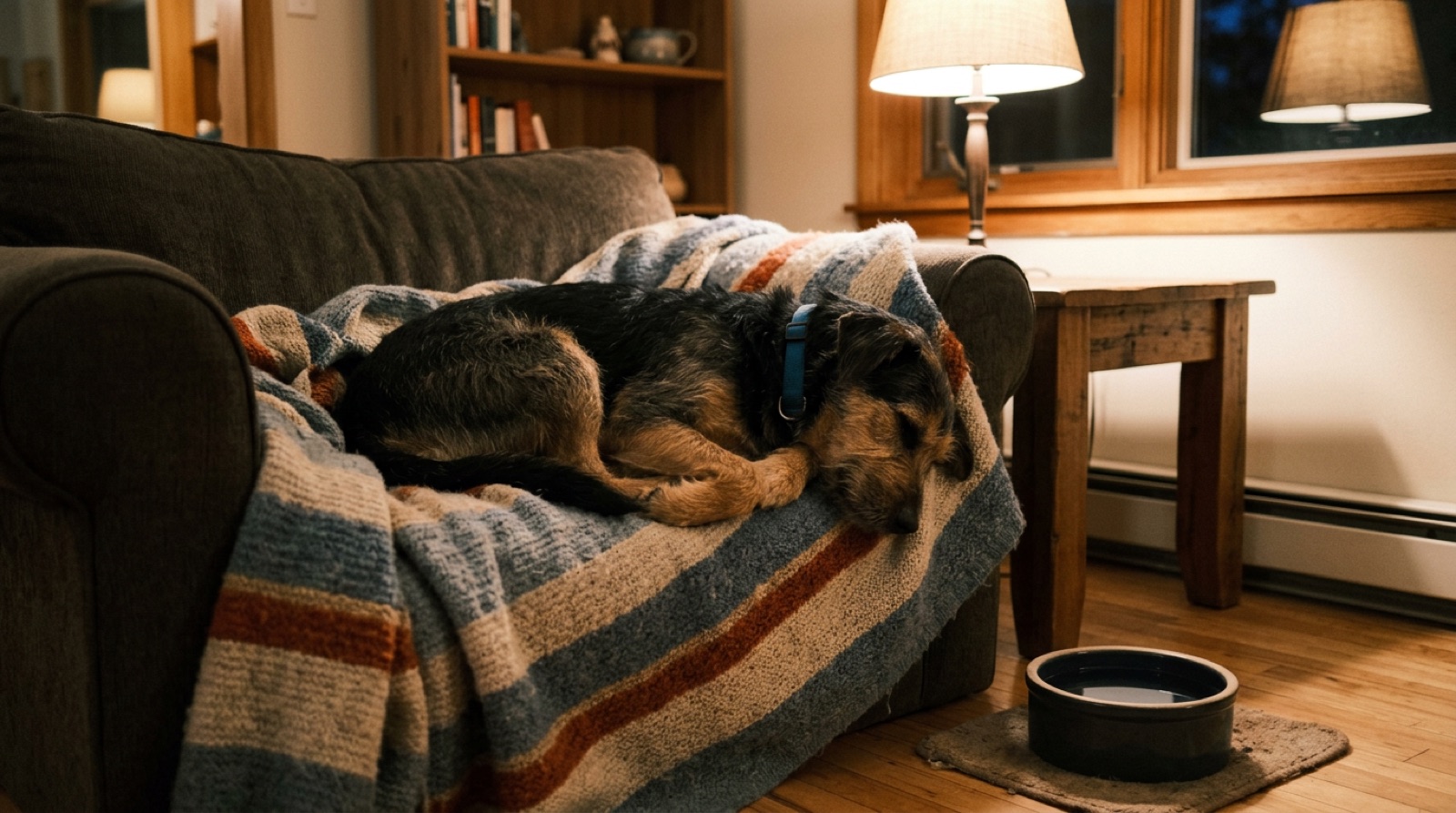
The short answer
Follow the 3-3-3 rule: three days overwhelmed, three weeks settling, three months to feel at home. Week one, keep the world tiny: one quiet zone, the same short walk route, the rescue's food, no visitors, no dog parks. Do two errands: buy the $10 city licence (your dog already qualifies, arriving fixed and vaccinated) and book the free partner-clinic vet visit included in the adoption. Everything else can wait for the dog to catch up.
Heads up: This article is general settling-in guidance, not veterinary or behavioural advice for your specific dog. If your new dog shows aggression, extreme panic, or any medical concern, call your vet or the rescue; both would rather hear from you early than late.
By the time a Saint John dog comes home, it has been through the Saint John SPCA Animal Rescue's deliberate process: application, approval, multiple supervised visits. The humans have had weeks to prepare. The dog has had a car ride. From its side, the story so far is: lost my old life, lived in a kennel, met some nice strangers a few times, and now everything smells different again.
That gap is what the first week is for. Decompression is not a luxury add-on to adoption; it is the mechanism by which a stressed animal becomes your dog. The rescue community's shorthand for the timeline is the 3-3-3 rule, and it holds up because it keeps new adopters from misreading normal stress as a failed match. Most “it's not working out” calls to rescues happen inside the window when it could not have been working yet.
This guide walks the timeline, then the Saint John specifics: the two errands, the first walks in a city of hills and fog, and when the five off-leash parks become a fair ask. If you are still at the browsing stage, the Saint John dogs listing shows who is waiting, and our rescues guide maps the organisations.
The 3-3-3 Rule
First 3 days
OverwhelmedYour dog is decompressing from the shelter, the car ride, and a total life change. Expect shutdown or restlessness, little appetite, accidents, and sleep in odd places. Keep the world tiny: one or two rooms, the same short bathroom route, no visitors, no outings.
First 3 weeks
Settling inRoutines start to land. Your dog learns the feeding schedule, the walk times, and the household rhythm, and the real personality begins to surface, including the quirks the shelter never saw. Start gentle training, expand walks gradually, and keep introductions slow.
First 3 months
At homeTrust is built. Your dog knows it is staying, tests a boundary or two, and settles into being your dog. This is when off-leash parks, dog friends, and bigger adventures become fair asks, guided by what you now actually know about this dog.
Guideline, not law. Confident dogs run ahead of it; dogs with rough histories run behind it. The point is to calibrate your expectations to the dog's clock instead of yours.
The First Week, Day by Day
Day 1: arrival. Straight home from Bayside Drive. Leashed bathroom stop at the spot you want to become the spot. Then the quiet zone: one or two rooms, bed, water, food. Family sits low and lets the dog approach. No tour, no guests, no errands. If the dog wants to sleep for hours, that is the nervous system doing its job.
Days 2 and 3: the boring routine takes hold. Same wake time, same feeding times, same short walk route. Keep walks to quiet blocks; a decompressing dog does not need King's Square at lunch hour. Accidents, picky eating, and odd sleep are all normal this window. Start hand-feeding part of meals if the dog is comfortable; it quietly builds the bond.
Days 4 and 5: the errands. With the dog steadier, do the paperwork lap: the $10 city licence (sold at the SPCA Animal Rescue, City Hall, and some clinics; your adoption paperwork covers the proof) and booking the complimentary partner-clinic vet visit. Neither errand needs the dog along.
Days 6 and 7: gentle expansion. A slightly longer walk, maybe a new quiet street. One calm visitor if the dog seems ready, dropped food rewards from the guest, no looming. First short alone-time rehearsals: leave for five minutes, return without ceremony, build from there. You are teaching the most important lesson of the month: people leave, and they come back.
The Saint John Specifics
Hills are a real variable. Uptown and the surrounding neighbourhoods climb, and a dog fresh off weeks of kennel rest has kennel fitness. Keep early walks short and flat where you can, and build distance over weeks. This doubles as leash-manners practice at a pace the dog can think at.
Fog changes the soundscape. On thick Fundy fog days, familiar streets sound and smell different, and some dogs spook at things they walked past calmly yesterday. Shorten the route on fog mornings during the first weeks, and treat every walk as a two-points-of-contact situation: harness fitted, tag on the collar. New dogs are flight risks; a lost dog in fog is the hard version of that problem.
Salt and slush in winter. If your first week lands in winter, add paw wipes at the door and consider balm or booties for salted sidewalks. Our winter care guide has the full routine; for week one, the short version is short walks and dry paws.
The parks can wait, and should. Saint John's five off-leash parks are excellent infrastructure for the dog you will have in a month. For the dog you have this week, they are too much. The off-leash parks guide includes the graduation sequence when the time comes.
Know the emergency answer before you need it. Port City Emergency Veterinary Hospital on McAllister Drive runs 24/7. Save 506-658-8387 in your phone during week one; the odds you need it are low, and the value of having it if you do is total.
The Mistakes That Undo Week One
The welcome party. Friends and extended family can meet the dog in week three. In week one, every new person resets the stress clock. Send photos instead.
The gear-store field trip. A big-box pet store is a wall of noise, smells, and strange dogs. Buy the gear before pickup, or go without the dog.
Testing the recall. No off-leash anywhere unfenced, no exceptions, for weeks. The dog does not know its name is its name yet. This is the single most common way new rescue dogs get lost.
Punishing the settling behaviours. Accidents, whining at night, and hiding are stress, not defiance. Correcting them adds fear to a dog trying to figure out if you are safe. Manage the environment, reward what you like, and let the clock work.
Calling it too early. The dog that seems wrong on day four is a dog on day four. If something feels genuinely unworkable, call the rescue and talk before deciding anything; that conversation is exactly what they are for, and our rehoming guide exists for the rare case where it truly is not workable.
Browse adoptable Saint John dogs
Every rescue dog arrives fixed, vaccinated, and microchipped, with a free first vet visit included. The first week plan starts here.
See Available Saint John Dogs →Frequently Asked Questions
What is the 3-3-3 rule for rescue dogs?▾
A rough decompression map: three days of being overwhelmed, three weeks of settling into routines, three months to feel fully at home. It is a guideline rather than a law; a confident dog moves faster, a shy or bounced-around dog slower. The value of the rule is expectation-setting. The shut-down dog hiding behind your couch on day two is not broken or mismatched. It is on schedule.
What should I do the day I bring my dog home?▾
Less than you want to. Drive straight home, walk the dog on leash to its bathroom spot, then bring it into a small, quiet part of the house. Show it water, food, and its bed. Skip the grand tour, the visitor parade, and the pet store trip. Let the dog approach you rather than the reverse. A boring first day is a perfect first day; your job is to be predictable, not entertaining.
When should my new dog first see a vet in Saint John?▾
Within the first week or two, sooner if anything seems off. Every Saint John SPCA Animal Rescue adoption includes one complimentary visit at a partner clinic, so the appointment is free; use it to establish a file, confirm the records, and ask your questions. Arriving as an established client matters later: clinics have more flexibility for patients they know. Book it in the first days, even if the visit lands in week two.
When do I need to license my dog?▾
Promptly; every Saint John dog must be registered and licensed under the Dog Control By-law. The good news is that your paperwork is already in order: rescue dogs arrive fixed (which earns the $10 rate instead of $25) and vaccinated (which covers the proof requirement). Licences are sold at the SPCA Animal Rescue on Bayside Drive, at City Hall, and at some clinics and pet shops. It is a ten-minute errand in the first week.
When can my rescue dog go to a Saint John off-leash park?▾
Weeks in, not days, and only after your recall and your read of the dog have both earned it. A dog park in week one stacks strange dogs on top of an already overwhelmed animal, and one bad early experience can colour dog interactions for years. Build up: leashed walks first, then fence-line visits at a quiet park like Chown, then short off-peak sessions. Rockwood on a summer Saturday is the final exam, not the first date.
My new dog will not eat. Should I worry?▾
A reduced appetite for the first day or two is normal decompression; new-home stress suppresses hunger. Keep offering the same food the rescue used, at set times, in a quiet spot, without hovering. Call a vet if the dog refuses all food past 48 hours, refuses water, or pairs not-eating with vomiting, diarrhoea, or lethargy. Those combinations move it from settling-in to medical, and Saint John has both an urgent-care tier and a 24/7 emergency hospital if your regular clinic cannot see you.
Should I crate my new rescue dog?▾
A crate set up as a den (door open, blanket, treats tossed in casually) gives most rescue dogs the hiding spot they badly want in week one. Some dogs arrive crate-trained and relax visibly with one available; a minority, often dogs with confinement history, panic in one. Introduce it without force, feed near then inside it, and never use it as punishment. If the dog genuinely fights it, a gated quiet room does the same job.
How do I handle the first walks in uptown Saint John?▾
Short, slow, and secure. Uptown means narrow sidewalks, hills, harbour wind, and fog days when the world sounds strange, which is a lot of input for a decompressing dog. Use a well-fitted harness with the leash clipped and the collar tag on (a spooked new dog is a flight risk), keep early walks to the same quiet route, and let the dog sniff; sniffing is how dogs process a new place. Save Harbour Passage crowds and Rockwood's trail network for later weeks.
When should I introduce my dog to visitors and other pets?▾
Visitors: after the first few days, one or two calm people at a time, letting the dog approach first. Resident dogs: ideally introduced before adoption (the rescue's multiple-visit process usually covers this), then managed with separate feeding and supervised time at home. Cats: slower still, with barriers and weeks of patience. The rescue's notes on your specific dog beat any generic timeline; ask them what they saw.
My rescue dog seems perfect. Can I skip the slow stuff?▾
The first-week angel is often a dog too shut down to show you anything yet. Real personality, including the opinions, surfaces across the first three weeks as confidence returns. Enjoy the calm, but keep the structure anyway: the small world, the routine, the slow introductions. Honeymoon-period overconfidence, like off-leash beach trips in week two, is how new adopters end up posting lost-dog notices. Let the three weeks pass before you renegotiate the rules.
What should I have ready before the dog arrives?▾
The basics: food (ask the rescue what the dog eats now and start with that), bowls, a flat collar with an ID tag, a harness and leash, a crate or bed, and a small stock of treats. Saint John-specific additions: a towel by the door (fog and drizzle are a lifestyle here) and, in winter, paw balm for the salt. Set up the dog's quiet zone before pickup so the first hour home is calm instead of a shopping trip.
Related Saint John Guides
Ready for a First Week of Your Own?
Three days, three weeks, three months. The plan is written; the dog is the missing piece.
Browse Available Saint John Dogs →New dog? Start with these care guides
Everything a new adopter needs to set up a safe, happy home.