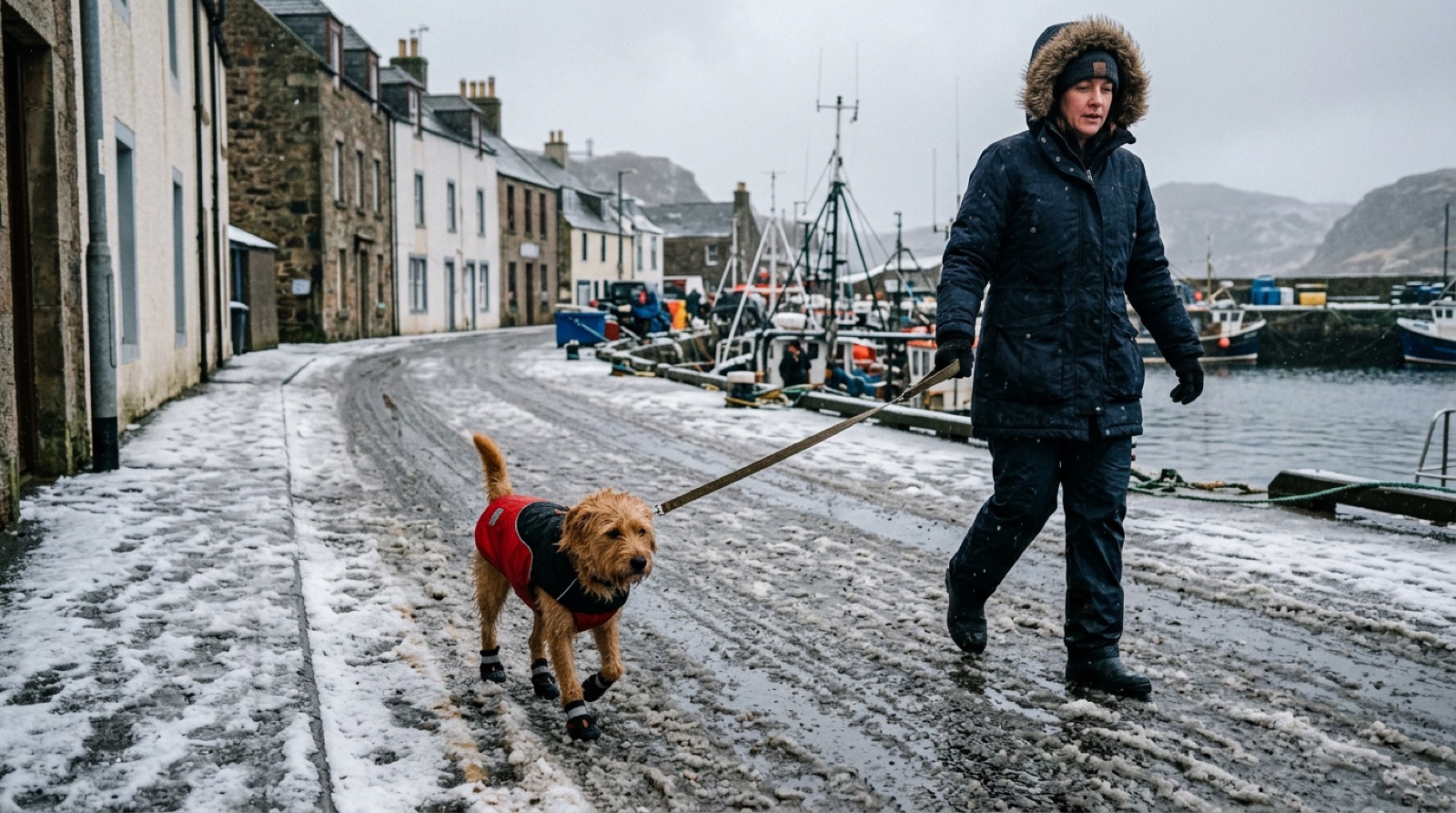
The short answer
Four habits carry a Saint John dog through winter: paw care (balm or booties before salted walks, a wipe-down after every one), footing discipline (slow on refrozen ice, dogs leashed near all winter water), visibility (reflective gear for fog and 5 p.m. dark), and poison vigilance (no licking parking-lot puddles; antifreeze is lethal in small amounts). Coats for short-coated, small, senior, and lean dogs. Same exercise total as summer, delivered in shorter pieces.
Heads up: This article is general care guidance, not veterinary advice. Cold tolerance varies enormously by breed, age, and health; ask your Saint John vet what is right for your specific dog, and treat any suspected poisoning or ice incident as an emergency.
Ask a prairie transplant about Saint John winter and you get the same review: it is not the cold, it is everything else. The thermometer here is merciful by Canadian standards. What the Bay of Fundy adds instead is damp wind that cuts through the numbers, fog banks in January, snow that falls wet and refreezes overnight, and a municipal salting program equal to all of it. For dogs, that mix creates a specific set of problems, and none of them are solved by the generic “limit time outside at minus whatever” advice written for Winnipeg.
The good news: every one of the maritime problems has a cheap, boring solution, and the city keeps working for dogs all winter. The five off-leash parks stay open year round (our parks guide covers them), Rockwood Park under snow is genuinely beautiful on a leash, and a dog with dry paws and a visible coat can enjoy all of it.
This guide works hazard by hazard: salt, ice, fog and dark, cold itself, and the two winter poisons. At the end, the gear list that Saint John owners actually use, and the emergency numbers worth saving before the season starts.
Salt: The Daily Grind
Why it matters here: freeze-thaw cities salt heavily and often, and Saint John qualifies twice over. Salt stings paws on contact, dries pads until they crack, packs into the fur between toes, and is harmful when dogs lick it off their feet and bellies at home.
Before the walk: a thin layer of paw balm acts as a barrier on salted routes. Booties beat balm for dogs that tolerate them, and most dogs do after a few short, treat-heavy practice sessions indoors.
During the walk: route around the worst of it. The crunchy blue-white buildup at corners and crosswalks is the highest concentration; a metre of detour spares the paws the worst exposure.
After the walk: the non-negotiable step. Rinse or wipe paws with a damp cloth, getting between the pads, and towel the belly on slushy days. Thirty seconds at the door prevents the cracked-pad infections that turn a free habit into a vet bill.
Watch for: limping mid-walk (often an ice ball or salt sting between toes; check and clear it), persistent licking of paws at home, and red or split pad edges. Cracks that will not heal deserve a vet look before they infect.
Freeze-Thaw Ice: Footing and Water
The footing problem: Saint John winter cycles above and below zero all season, so surfaces glaze and refreeze constantly, and the hilly streets uptown add gradient to the glaze. Dogs slip less than we do but not never; hard sprinting on refrozen ground produces muscle strains, torn dewclaws, and worse. Slow the pace on shaded stretches, favour the best-cleared route on your block, and save fetch for forgiving surfaces.
The water problem: the same freeze-thaw cycling means pond and lake ice never builds reliable thickness here. Rockwood Park's lakes and the water at Little River Reservoir look inviting and are not trustworthy at any point in the season. Keep dogs leashed near winter water, everywhere, all winter. It is also simply the law outside the off-leash areas.
If a dog goes through ice
Do not go onto the ice after it; rescuers drowning in the attempt is the standard second tragedy. Call 911, keep calling the dog toward the shore it entered from, and get the dog to an emergency vet immediately once out, because cold-water immersion needs medical follow-up even when the dog seems fine. Prevention is the leash.
Fog and the Early Dark
Be seen. December sunsets land before 5 p.m., and fog erases what daylight is left. Reflective leash, collar or harness strips, and a small clip light turn your dog from a shadow into an object drivers register. Wear something reflective yourself; the pair of you is the visible unit.
Shorten the leash in thick fog. Fog distorts sound and hides the things dogs use to orient. Some dogs spook at objects they pass calmly every other day. A shorter lead through the thick stretches keeps a startle from becoming a bolt.
Do not trust recall in fog. A dog that loses sight of you may run the wrong direction, and searching in fog is miserable odds. Fenced parks or leash, no exceptions on the thick days. Double-check harness fit and ID tags in fog season; this is when escapes are hardest to recover from.
The Cold Itself: Who Needs Help
Damp cold beats dry cold. Maritime air at a mild-looking temperature can chill a dog faster than colder, drier prairie air, because damp coats lose insulation. Judge by the dog: shivering, hunching, lifted paws, tucked tail, and quitting early all mean wrap up or head in.
Coat candidates: short-coated breeds, small dogs, seniors, lean dogs, and anything recently moved from a warmer climate. Fit over fashion: belly covered, shoulders free. Double-coated dogs mostly need nothing and often love the season.
Dry the dog properly. A chronically damp coat in a warm house breeds hot spots and skin trouble. The door-side towel rotation is skin care as much as floor care.
Adjust food only if work changes. A dog doing the same winter exercise needs the same calories. A dog doing serious daily snow hiking may need more; a dog on couch-heavy storm weeks needs less. Weight creep in winter is common and easier to prevent than reverse.
The Two Winter Poisons
Antifreeze (ethylene glycol)
Drips from vehicles all winter, pools in driveways and parking lots, tastes sweet, and is lethal to dogs in small amounts. It attacks the kidneys and the treatment window is short. Never let a dog lick winter puddles near parked cars, store automotive fluids up high, and clean spills immediately. Suspected ingestion is a go-now emergency: call Port City Emergency Veterinary Hospital at 506-658-8387 immediately rather than waiting for symptoms.
Ice melter chemicals
Some commercial ice melters are more toxic than plain road salt, and dogs ingest them by licking paws. The paw wipe-down handles the exposure; using a pet-safer melter on your own steps handles your share of the problem. Vomiting or drooling after a walk on treated surfaces deserves a call to your vet.
The Gear That Earns Its Keep
| Item | Why (in Saint John terms) | Priority |
|---|---|---|
| Paw balm | Barrier against salt and slush on wet days; heals cracked pads. The single highest-value item for a Saint John winter. | Essential |
| Towels by the door | Fog, drizzle, and slush mean a wet dog most days from November to April. A dedicated towel rotation saves your floors and the dog's skin. | Essential |
| Booties | Best protection on heavily salted routes and for dogs whose pads crack anyway. Expect a comedy adjustment period; fit and short practice sessions fix it. | Dog-dependent |
| Insulated coat | Short-coated, senior, small, and lean dogs lose heat fast in wind-driven damp cold. Double-coated breeds mostly do not need one. | Dog-dependent |
| Reflective gear or clip light | Sunset lands before 5 p.m. in December, and fog cuts driver visibility further. Make the dog visible on every evening walk. | Essential |
| Long line | Keeps recall practice legal and safe when fields are icy and fog shortens sightlines. A 10 to 15 metre line is the winter middle ground. | Useful |
Total cost is modest, especially against the vet bills the routine prevents. Budgeting the winter kit belongs in the first-year math; our adoption costs guide counts it.
Storm Days: Exercise Without the Outdoors
Nose work is the cheat code. Scatter kibble in a towel roll, hide treats around a room, or teach a find-it cue. Ten minutes of focused sniffing tires a dog out of proportion to the effort, which is exactly what a nor'easter day calls for.
Training sessions count as exercise. Five-minute rounds of new tricks or polished basics burn mental energy and build the bond. A storm week is honestly a training opportunity wearing a disguise.
Puzzle feeders replace the bowl. Make the dog work for meals on indoor days. Slower eating, busier brain, calmer evening.
Then get back out. Indoor work covers a day or three, not a season. The exercise debt from a fully indoor winter comes due as chewed furniture and 3 a.m. zoomies. Saint John winter is walkable most days with the routine above; the gear exists so the walks keep happening.
Browse adoptable Saint John dogs
Winter is a quieter, easier season to adopt, and every rescue dog arrives fixed, vaccinated, and microchipped, ready for the salt-and-fog routine.
See Available Saint John Dogs →Frequently Asked Questions
How cold is too cold to walk a dog in Saint John?▾
There is no single number, because Saint John cold is damp, windy cold that hits harder than the thermometer suggests. Watch the dog, not just the forecast: lifted paws, shivering, tucked tail, and reluctance to move all mean head home. Small, short-coated, senior, and lean dogs feel it soonest and need coats and shorter outings. Thick-coated dogs often love the season. On the genuinely bitter, wind-driven days, several short bathroom outings plus indoor games beat one long march.
How do I protect my dog's paws from road salt?▾
A three-part routine. Before walks on salted routes, apply paw balm as a barrier, or fit booties for dogs that tolerate them. During walks, avoid the most heavily treated stretches where you can; the crunchy blue-white buildup is the worst of it. After every walk, rinse or wipe paws with a damp cloth, getting between the pads where salt lodges. Salt stings on contact, dries pads into cracks, and is harmful when licked off, so the wipe-down is not optional in this city.
Does my dog need a winter coat?▾
Depends on the dog. Huskies, shepherds, and other double-coated breeds are built for this and mostly need nothing. Short-coated dogs (boxers, pitties, hounds), small dogs, seniors, and skinny dogs lose heat quickly in maritime damp wind and genuinely benefit from an insulated coat. The test is behaviour: a dog that shivers, hunches, or quits early on cold walks is asking for one. Fit matters more than fashion; the coat should cover the belly and not restrict the shoulders.
Why is freeze-thaw ice more dangerous than steady cold?▾
Because it never stabilises. Saint John winters cycle above and below zero constantly, so yesterday's melt is this morning's glaze, and surfaces change block by block. For dogs this means slips, strained muscles, and torn dewclaws on refrozen ruts; for owners it means falls. Slow down on shaded sections, favour the best-cleared routes, and keep high-speed fetch off refrozen ground. The same cycling keeps pond and lake ice unreliable all season, which is why dogs stay leashed near winter water.
Is it safe for my dog to walk on frozen ponds?▾
Treat all pond and lake ice as unsafe here, all winter. Freeze-thaw cycling means Saint John ice rarely builds reliable thickness, and a mild spell can rot it from below while the surface looks fine. Rockwood Park's lakes and the water at Little River Reservoir are the classic temptation spots. Keep dogs leashed near winter water, full stop. A dog through ice is a life-threatening emergency twice over, because owners instinctively go in after them.
What is antifreeze poisoning and why does winter make it worse?▾
Ethylene glycol antifreeze drips from vehicles in winter, tastes sweet, and is lethal to dogs in small amounts; it destroys the kidneys, and the treatment window is short. Do not let dogs lick puddles in driveways or parking lots, store automotive fluids up high, and clean any spill immediately. If you even suspect ingestion, call Port City Emergency Veterinary Hospital at 506-658-8387 right away rather than waiting for symptoms. Early treatment is the difference; late symptoms often arrive after the damage is done.
How much exercise does my dog need in winter?▾
The same as summer, which is the inconvenient truth of the season. The delivery changes: shorter, more frequent walks on bitter days, and indoor work to cover the gap. Sniffing games, puzzle feeders, hide-and-seek, stair fetch (for sound joints), and five-minute training sessions burn real energy. A useful rule: ten minutes of focused nose work tires a dog like a much longer walk. Under-exercised winter dogs invent their own jobs, and you will not like their choices.
Are the off-leash parks worth using in winter?▾
Yes, with adjustments. All five Saint John dog parks stay open year round, and three (Rainbow, Chown, Little River Reservoir) run 24 hours, which matters when daylight ends before the workday. Go for shorter, more frequent visits, watch footing on refrozen ground, wipe paws afterward because the approaches are salted, and keep dogs away from the water edges at Little River. A snowy weekday morning at a dog park is honestly one of the best dog experiences this city offers.
What winter problems actually send Saint John dogs to the vet?▾
The maritime pattern, per the emergencies our emergency vet guide covers: antifreeze exposure, salt-cracked paws that turn into infected splits, slips on refrozen ice that end in strains or torn ligaments, and dogs through thin ice. Add fog-related escapes; a spooked dog that bolts in thick fog is hard to find, so harness fit and ID tags matter more here in winter. Almost all of it is preventable with the routine in this guide.
Does fog actually change how I should walk my dog?▾
It does, in three practical ways. Visibility: drivers see you late, so reflective gear and lights stop being optional on grey days, not just at night. Sound: fog muffles and distorts noise, and some dogs spook at things they normally ignore, so keep the leash short in thick stretches. Recall: never trust off-leash recall in fog, even in familiar places; a dog that loses sight of you may bolt in the wrong direction. Fence or leash, no exceptions on the thick days.
Should I wipe my dog down after every winter walk?▾
In Saint John, essentially yes. The combination that defines this city's winter (wet snow, slush, salt, and fog-damp air) coats paws and bellies on most walks. A thirty-second routine at the door (paws wiped between the pads, belly towelled on slushy days) prevents salt burns, ice-ball buildup between toes, and the hot spots that come from a chronically damp coat. Keep the towel and balm at the door and the habit builds itself.
Is winter a bad time to adopt a dog in Saint John?▾
It is honestly a good one. Adoption demand dips in winter, so you face less competition for the same dogs, and the season's rhythm (short walks, long indoor evenings) suits the decompression a new rescue dog needs anyway. You will learn winter care with a dog that is learning you, which builds routine fast. Every Saint John rescue dog arrives fixed, vaccinated, and microchipped, and our first-week guide maps the settling-in plan season by season.
Related Saint John Guides
Winter Sorted. Now the Dog.
The routine is four habits and a towel by the door. Saint John rescue dogs arrive ready for all of it.
Browse Available Saint John Dogs →New dog? Start with these care guides
Everything a new adopter needs to set up a safe, happy home.