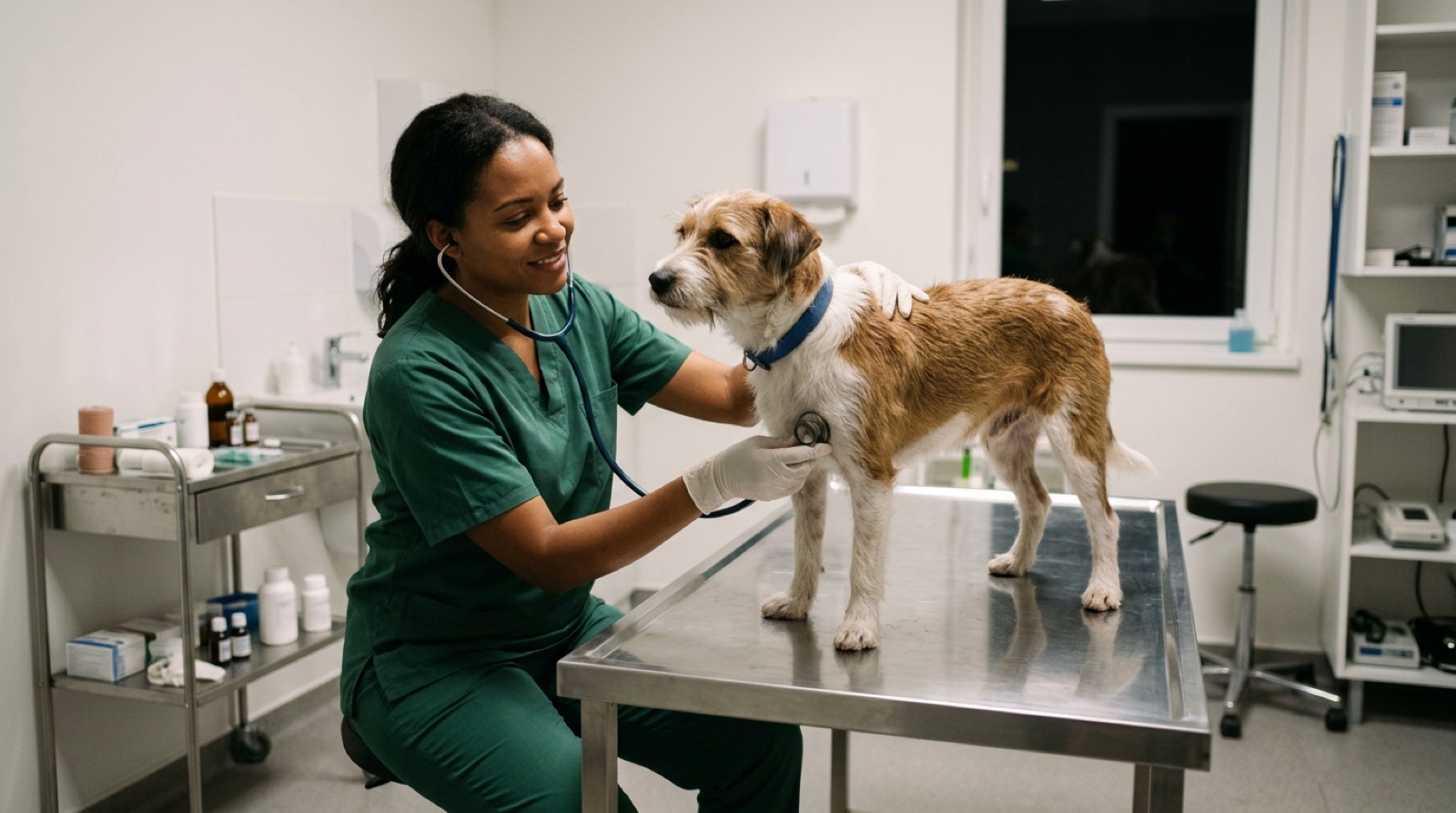
The short answer
Veterinary Specialty Centre of Newfoundland and Labrador, 860 Topsail Rd, Mount Pearl: 709-221-7838. Walk-in emergency care overnight, triaged by severity, with a published emergency exam fee of $262 plus HST. Coverage runs Sunday evening through Friday morning, so weekends are the gap. Outside those hours, phone your own clinic's main line, which in several area practices routes to a collaborative emergency triage group. Save both numbers today.
Heads up: This article is informational and is not veterinary advice. If your dog is in distress, stop reading and phone 709-221-7838. Hours, fees, and services reflect published clinic information as of July 2026 and change without notice. The phone call is always the authoritative source.
Every dog owner in St. John's eventually gets the bad hour: the retching that will not stop, the limp out of nowhere, the chewed-open container that used to hold something dangerous. The worst possible moment to work out how local emergency care is organised is while it is happening.
The structure here is smaller than in a mainland city, and honest about it. There is one dedicated emergency hospital, it is in Mount Pearl, and its coverage is weeknights and weekdays rather than every hour of every day. Around that sits a set of regular clinics that route after-hours calls into a shared triage arrangement. Knowing that shape in advance is most of the preparation.
This matters double for new adopters. A dog whose full history you are still assembling is a dog capable of surprising you, and the first few months are when the surprises surface. Save the numbers the day you bring one home, next to your own clinic's.
Your Options, In Order
Veterinary Specialty Centre of Newfoundland and Labrador
Overnight emergency, Mount PearlThe region's emergency and specialty hospital, at 860 Topsail Road in Mount Pearl, roughly fifteen minutes from downtown St. John's. It runs emergency and urgent care through the night on a walk-in basis, with published coverage running from Sunday evening through Friday morning and no weekend daytime service. No appointment is needed, but calling ahead lets the team prepare for what is arriving. Cases are triaged by severity, so poisoning, collapse, bloat, paralysis, and respiratory distress are seen first while stable cases wait. The emergency examination fee is published at $262 plus HST, which covers the physical exam only.
Location: 860 Topsail Rd, Mount Pearl, NL
Phone: 709-221-7838
Your own clinic, and the regional triage group
Business hours, plus after-hours routingDuring the day, your regular clinic is the right first call: they hold the file and follow-up lands in one place. After close, several St. John's area practices route callers to a collaborative emergency triage arrangement rather than leaving a recorded message. Avalon Animal Hospital on Logy Bay Road, for example, tells owners to call its main line at any hour for direction to that triage group. If you do not have a regular vet yet, get one in the first month of owning a dog. A clinic that already knows your dog is worth a great deal at 2 a.m.
Location: St. John's, Mount Pearl, Paradise, Torbay
Phone: 709-754-1750
Daytime clinics for urgent but stable problems
Weekday eveningsSome area clinics run longer weekday hours than a standard nine to five, which covers a useful middle ground: the limp that appeared at teatime, the ear that has clearly gone wrong, the cut that needs looking at but is not pouring. Paradise Animal Hospital on Karwood Drive, for instance, is open into the evening on weekdays and closed at weekends. Phone before you drive anywhere, because hours change and a wasted trip with a sick dog in the car helps nobody.
Location: 49 Karwood Dr, Paradise, NL
Phone: 709-782-1107
Which Door, When
| Situation | Where to go |
|---|---|
| Life-threatening, weeknight or overnight | Veterinary Specialty Centre, Mount Pearl, immediately |
| Life-threatening, weekend | Phone 709-221-7838 and your own clinic's line for triage direction, and start driving |
| Urgent but stable, weekday evening | A clinic with extended weekday hours, phoning first |
| Can wait until morning | Your regular clinic, first thing |
| Not sure how bad it is | Phone and let them triage you. This is normal and free |
Hours as published in July 2026. Always confirm by phone before driving.
Go Now: The Red-Flag List
Any of these means drive, not wait:
- Difficulty breathing, choking, or pale, blue, or grey gums
- A bloated, hard, or rapidly swelling abdomen with unproductive retching
- Seizures, collapse, or sudden inability to stand or walk
- Uncontrolled bleeding, deep wounds, or any road traffic injury even if the dog seems unhurt
- Suspected poisoning: chocolate, xylitol, grapes or raisins, rodent bait, antifreeze, human painkillers
- Straining to urinate with little or nothing produced
- Repeated vomiting or diarrhoea, particularly with blood or lethargy
- Heat distress in a parked car or after summer exertion, or prolonged shivering and disorientation after winter exposure
The hospital's own triage system puts poisoning, collapse, bloat, paralysis, and respiratory distress in its top priority band. If your dog matches that description, you are not overreacting by leaving the house.
The St. John's Seasonal Pattern
Winter here is wet and windy rather than steadily cold. Freeze-thaw cycles glaze the hills, and a dog slipping on ice near the Battery or on the steeper streets downtown produces the soft-tissue injuries that fill weekday appointment books. Older dogs and long-backed breeds are the usual casualties.
Road salt is an underrated problem. It cracks paw pads and irritates skin, and dogs then lick it off. Rinse and dry paws after winter walks. It takes thirty seconds and prevents a real vet visit.
Fog and dark make roadside walks risky. The rain, drizzle, and fog that define this coast cut driver visibility badly. A reflective harness and a lit collar are cheap insurance on a November evening in Mount Pearl or Paradise.
Summer heat is deceptive. Air temperature can feel mild while a parked car climbs fast. Never leave a dog in one, whatever the thermometer outside says.
Spring thaw exposes everything. Melting snowbanks reveal a season's worth of interesting and toxic rubbish. Watch what your dog picks up on the Rennie's River trail in April.
Planning for the Cost
The published starting point is $262 plus HST for the emergency examination at the Veterinary Specialty Centre. That figure covers the physical exam and nothing else. Diagnostics, imaging, medication, and hospitalisation are all additional, and a serious case runs into four figures without much difficulty.
Ask for a written estimate before authorising treatment. Emergency teams expect this question and will not think less of you for asking it.
Say so if the number is out of reach. There is often a more conservative plan available, or a staged approach that treats the immediate danger first. Silence gets you nowhere; asking sometimes does.
Decide about insurance before you need to. Either a policy or a dedicated savings account started the month you adopt. Our St. John's adoption costs guide builds both into the first-year budget.
While Someone Drives
Do phone ahead so the team can prepare, and follow any first-aid instruction they give you.
Do bring the packaging of anything swallowed, plus a list of your dog's medications.
Do restrain an injured dog gently. A blanket wrap works, and even the sweetest dog bites when it hurts.
Do not induce vomiting unless a veterinary professional tells you to.
Do not give human painkillers. Ibuprofen and acetaminophen are toxic to dogs, and a helpful half tablet creates a second emergency.
Do not wait out suspected bloat. It does not resolve on its own.
Browse adoptable St. John's dogs
Emergencies are the rare bad night. The rest of it is a dog on the sofa. See who is currently waiting for a home across the St. John's area.
See Available St. John's Dogs →Frequently Asked Questions
Is there a 24-hour emergency vet in St. John's?+
What do I do if my dog gets sick on a Saturday?+
What does an emergency vet visit cost in St. John's?+
What counts as a real dog emergency?+
Should I call before I go?+
What is bloat and why does it get mentioned so much?+
My dog ate something toxic. What now?+
What should I bring to an emergency visit?+
How do I know if it can wait until morning?+
Does St. John's weather cause its own emergencies?+
Is pet insurance worth it in Newfoundland?+
How do I find a regular vet in the St. John's area?+
Clinic directory: Newfoundland and Labrador Veterinary Medical Association.
Related St. John's Guides
Now the Good Part
Numbers saved, plan made. Browse rescue dogs waiting for homes across St. John's, Mount Pearl, and the surrounding towns.
Browse Available St. John's Dogs →New dog? Start with these care guides
Everything a new adopter needs to set up a safe, happy home.