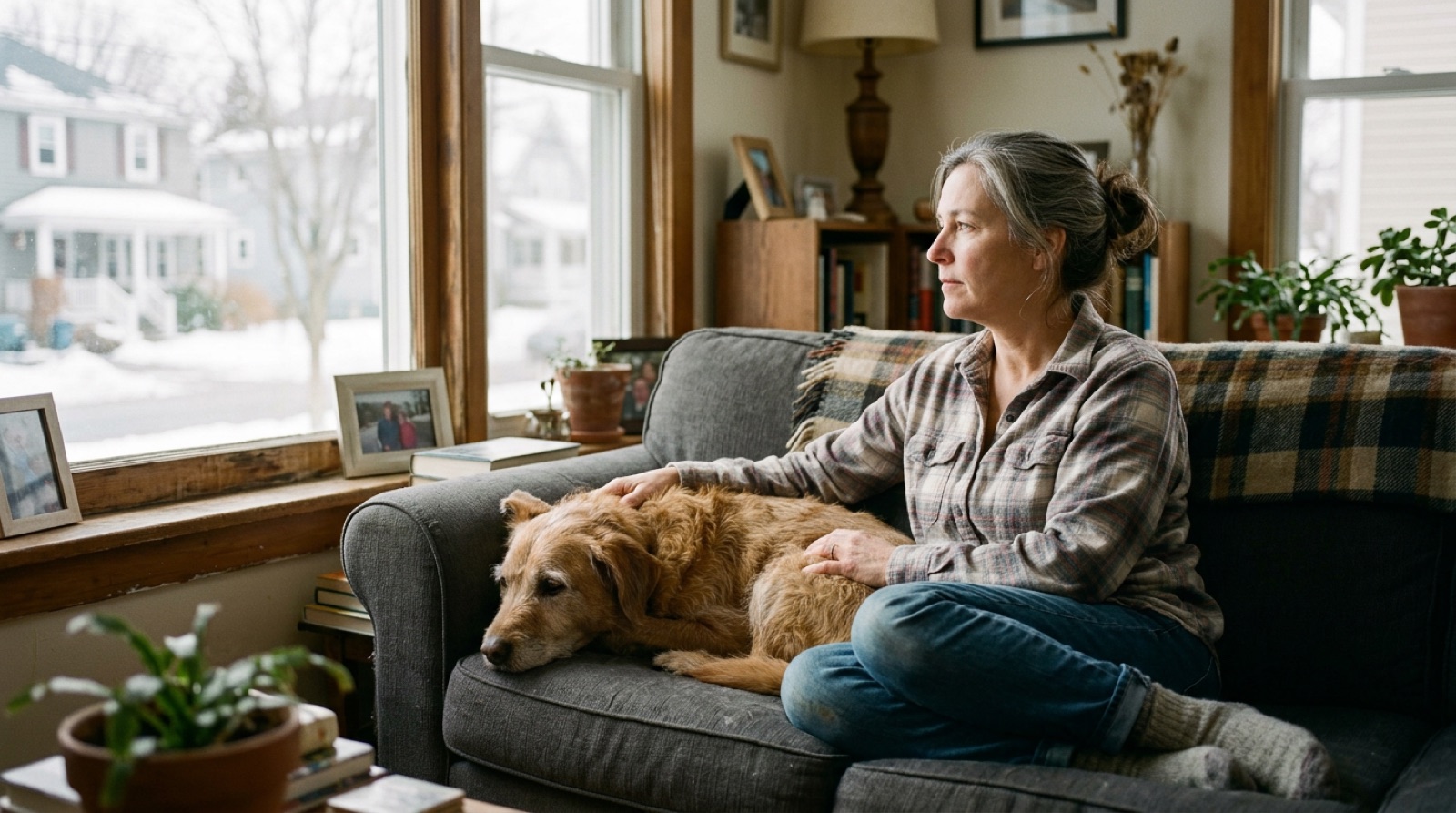
You're Not a Bad Owner
If you are reading this at midnight with a knot in your stomach, start here: needing to rehome a dog does not make you a failure. Rents jump. Relationships end. Health collapses. A baby arrives and the dog cannot cope. A landlord changes the rules. The people who work in Newfoundland rescue have heard every version of this, and the owners they worry about are not the ones sitting up researching how to do it properly.
Choosing a careful, screened rehoming over a desperate one is an act of care for your dog. This guide exists so you can do it safely, and so you know about the local support that occasionally makes rehoming unnecessary at all.
First: Is the Problem Fixable?
Not always, and no judgement if not. But it is worth one honest pass before you list, because a few of the most common triggers have local answers:
- An unaffordable spay or neuter: SPCA St. John's runs an income-tested subsidy program with published prices, including $140 for a dog neuter. Our spay and neuter guide covers who qualifies and how to apply.
- Behaviour problems: most surrender-triggering behaviours, including pulling, reactivity, and destruction when left alone, respond to structured training. Ask your vet for a trainer referral before you conclude the dog cannot stay.
- A vet bill you cannot cover: ask your clinic directly about payment plans. Many practices offer them and few advertise it. Phoning three clinics for quotes also matters more than people expect, because prices genuinely differ.
- A temporary crisis: a hospital stay, sudden travel, a housing gap between leases. Ask friends and family directly, because people say yes more often than you expect, and tell any organisation you contact that the need is short term. Temporary help is a different ask than surrender.
- A housing rule rather than a dog problem: get the actual clause in writing before you act. Weight and breed limits are sometimes narrower in rumour than in the lease.
Your 3 Options in St. John's
Option 1: Private Rehoming
You find the new home yourself, through your own network or by listing free on LocalPetFinder. You screen the applicants, you choose the family, and your dog goes straight from your home to theirs with no kennel time in between.
Pros
- ✓ You choose the new family
- ✓ No shelter stay, no kennel stress
- ✓ Free to list on LocalPetFinder
- ✓ You can set a rehoming fee
- ✓ No waitlist, you start today
Cons
- • The screening work is yours
- • Typically takes 1 to 4 weeks
- • You feel the goodbye directly
Option 2: Shelter Surrender
SPCA St. John's at 120 East White Hills Road accepts owner surrenders by appointment for a $30 fee. It is the right route when the dog genuinely has to leave and no private option exists, and the SPCA is good at rehoming: it treats medical issues, assesses temperament, and spays or neuters every animal before adoption. The municipal Animal Care and Adoption Centre on Higgins Line is the other shelter in the city, though it holds roughly 20 dogs and is largely occupied by strays, so phone 709-576-6126 before assuming space exists.
Pros
- ✓ Professional handoff, the shelter handles everything after
- ✓ Medical treatment and temperament assessment included
- ✓ A large, established adoption audience in the province
Cons
- • $30 surrender fee, appointment required
- • Summer and autumn intake backs up badly
- • You lose all say in who adopts
- • Kennel environments stress most dogs
- • Severe behaviour problems may be declined
How it works: email info@spcastjohns.org with details about your animal and the shelter sends back a form. All surrenders are by appointment. Between July and October you may be asked to keep caring for your pet until a slot opens, because injured and sick animals take priority. General line: (709) 726-0301. Full policy at spcastjohns.org. Never leave an animal at the centre after hours; the SPCA states that this is illegal and unsafe for the animal.
Option 3: Rescue Intake (Foster-Based)
Foster-based rescues place dogs into volunteer homes rather than kennels, which is the gentlest surrender outcome available. In this province they tend to be small, volunteer-run, and often breed-specific: Beagle Paws, based in St. John's since 2003, takes beagles and beagle mixes. The catch across all of them is arithmetic. A foster-based rescue can only take in as many dogs as it has free foster homes, and those are chronically scarce.
Pros
- ✓ A foster home rather than a kennel
- ✓ Temperament work before adoption
- ✓ Careful, match-led placement
Cons
- • Intake capped by foster availability, waits can be long
- • Often breed-specific, so most dogs do not qualify
- • You lose say in the final placement
How it works: contact the organisation directly with a complete, honest picture of your dog: age, size, temperament, medical history, and the real reason for rehoming. Expect a wait, or a no if foster homes are full. That is capacity rather than judgement, and it is the most common answer in a province this size.
“I Called Every St. John's Rescue and No One Will Take My Dog”
This is the moment that brings most people to this page, so here is the true thing plainly: when the SPCA says its next appointment is weeks away and the foster networks say they are full, that is the system being full. It is almost never a verdict on your dog.
The municipal centre on Higgins Line holds around 20 dogs and is mostly committed to strays coming in from across the metro region. The SPCA books surrenders by appointment and says openly that between July and October it may need you to keep caring for your pet until a slot opens. Foster-based rescues can take exactly as many dogs as they have empty spare rooms. Healthy, well-loved dogs get turned away here regularly, purely for space, and their owners hang up the phone convinced they have run out of road. You have not. Your dog does not need a kennel space. A kennel space is only one route to adopters, and there is a direct one.
St. John's Surrender Intake (Quick Reference)
| Organisation | Accepts owner surrenders? | How to enquire |
|---|---|---|
| SPCA St. John's | Yes, by appointment, $30 fee. Backs up July to October. May decline severe behaviour cases | spcastjohns.org / (709) 726-0301 |
| City of St. John's Humane Services | Municipal shelter, roughly 20 dog spaces, largely committed to strays. Phone to ask about your situation | stjohns.ca / 709-576-6126 |
| Beagle Paws | Beagles and beagle mixes only, foster-based, capped by foster availability | beaglepaws.com / (709) 738-7297 |
| Other foster-based rescues | Case by case, usually full. Small volunteer groups operate across the Avalon and the wider province | Contact each directly; capacity changes weekly |
Capacity changes week to week and this table is a starting point rather than a promise. If everyone says no, the next move is private rehoming, not despair.
Skip the waitlist: rehome privately
A LocalPetFinder rehoming listing takes about ten minutes and costs nothing. Your dog appears alongside rescue dogs, in front of the same St. John's adopters already browsing the shelters, without waiting for a kennel to empty.
Start Your Free Listing →Why Private Rehoming Is Usually the Best Choice
It is not only a fallback for when the shelters are full. Even with space available, private rehoming solves three problems at once:
- For your dog: home to home, with no kennel stay in between. No shelter stress, no exposure to kennel illness, no behavioural backslide from weeks in a run. Your dog sleeps in its own bed until the day the new family takes over.
- For the shelter system: one fewer dog competing for the small number of spaces this city has. In a shelter holding around 20 dogs, the space your dog does not use goes to a stray or an emergency case with nowhere else to go.
- For you: you meet the family. You ask the questions, watch how they handle your dog, and say yes only when your gut agrees. Nobody who surrenders gets that, and it is the part owners tell us mattered most afterwards.
The honest cost is effort and a slower goodbye. For the small number of situations where the dog must be gone this week, or where safety is involved, the shelter route exists for good reason. For everyone else, the couch-to-couch path wins.
How to Rehome Your Dog on LocalPetFinder
Submit Your Listing
Fill out the rehoming form: name, breed, age, size, temperament, compatibility with children, cats, and other dogs, the reason for rehoming, and at least one clear photo. Honesty is the whole strategy. The listing that admits “pulls on the lead, hates thunder” finds the adopter who shrugs at both.
We Review Within 24 to 48 Hours
Every listing is reviewed for completeness, photo quality, and red flags before it goes live. Once approved, your dog appears alongside rescue dogs on the St. John's adoption listings with an Owner Rehoming badge, so adopters know exactly what they are looking at.
Adopters Contact You
Interested adopters reach out through the platform and your email is never shown publicly. You decide who to answer, who to meet, and how quickly to move. Your dog stays home with you the whole time, which removes the pressure to say yes to the first message that arrives.
Meet, Transition, Done
Talk to your shortlist, check a vet reference, then meet somewhere neutral. A quiet corner of Bowring Park works well, and a walk together tells you more in twenty minutes than an hour of messages. See their home or do a video walkthrough. When it feels right, hand over the records, the food, and the favourite toy, collect the rehoming fee, and update the microchip registration. Most rehomings here complete in one to four weeks.
Tips for a Successful Rehoming
Take Photos Worth Stopping For
Natural light, eye level, face visible, and at least one shot that shows personality. Given the local weather, wait for a clear hour rather than shooting through drizzle, because a bright photo taken on the one sunny morning that week outperforms five grey ones. Adopters scroll fast, and the photo decides whether they read a word of your careful description.
Write the Honest Description
The good and the hard parts, both. “Molly is a velcro couch dog who needs a slow introduction to other dogs and cannot live with cats” finds the right home. “Friendly with everyone” finds a return in two weeks. Include energy level, tolerance for being alone, and the household you think fits. People here respect directness and notice when it is missing.
Set a Rehoming Fee
Somewhere between $50 and $200. It filters out impulse takers and the people who collect free animals to resell, and it signals a considered transfer rather than a giveaway. You can quietly waive it for the adopter who turns out to be ideal. Never advertise a dog as free to a good home.
Screen Properly, Without Apologising for It
Ask about their household, their hours, their experience with dogs, and whether they own or rent. Ask for a vet reference if they have had pets before, and actually phone it. Good adopters expect these questions and are reassured by them. Anyone offended by being asked has told you something useful.
Do a Trial Walk, Not Just a Meeting
Twenty minutes on a lead around Quidi Vidi Lake or the Rennie's River trail shows you far more than a sitting-room visit. Watch how they handle the lead, how they react when the dog pulls, and whether the dog settles near them. That is the real interview.
Prepare the Handover Pack
Vet records, rabies certificate, microchip number, a week of current food, the familiar bed or blanket, a favourite toy, and a written page of quirks. Update the microchip registration to the new owner the same week, and remind them to sort a city licence within 20 business days. Our bylaw guide covers that in one page.
Red Flags to Watch For
Walk away from any of these, however keen you are to get this done:
- Anyone who will not let you see where the dog will live. A video walkthrough is a reasonable compromise. A flat refusal is not.
- Pressure to hand the dog over immediately, especially from someone who found the listing an hour ago.
- Vagueness about who else lives there, or answers that change between messages.
- Wanting the dog as a surprise gift for someone who has not agreed to it.
- Cash offers well above your fee, or an eagerness to take any dog, any breed, any age.
- Refusal to give a vet reference despite claiming years of dog ownership.
- Interest in an unaltered dog specifically, particularly a female. Ask why, and listen carefully to the answer.
- Any transaction pushed to happen in a car park at night, with no address and no follow-up contact.
Free-to-good-home posts on classifieds sites are the single biggest source of these encounters, which is why the fee matters. If you use a classifieds site alongside your listing, treat every reply with the same scrutiny you would apply to handing over a car, and remember that you are allowed to say no without a reason.
St. John's-Specific Resources
Before You Rehome: Explore Alternatives
If the pressure point is a specific bill rather than the dog itself, check what exists first. The SPCA subsidy program prices a dog neuter at $140 for qualifying households. Clinics often have payment plans they do not advertise. A trainer costs less than most people assume and solves more than most people expect. And a short-term crisis is worth naming as short term when you ask for help, because the answer is often different.
Who to Contact
SPCA St. John's, 120 East White Hills Road, (709) 726-0301, info@spcastjohns.org, for surrender enquiries and the spay and neuter subsidy. City of St. John's Humane Services, 81 Higgins Line, 709-576-6126, humaneservices@stjohns.ca, for licensing, strays, and animal control questions. Beagle Paws, (709) 738-7297, for beagles and beagle mixes specifically.
Practical Local Notes
Meet-and-greet walks work best around Bowring Park, Quidi Vidi Lake, or the Rennie's River trail, all leashed under the city bylaw. Adopters travelling in from Mount Pearl, Paradise, Conception Bay South, or Torbay is normal and worth encouraging; the metro area is your real audience, not just the city proper. Build extra time into your plans for a fog day, because visibility here genuinely cancels things.
Wider Reading
The American Veterinary Medical Association publishes a practical guide to rehoming a pet responsibly, which covers the screening and handover questions in more depth than any one article can.
Frequently Asked Questions
How much does it cost to rehome a dog in St. John's?+
What is the difference between rehoming and surrendering?+
How do I surrender my dog to SPCA St. John's?+
Why will nobody take my dog?+
How long does it take to rehome a dog in St. John's?+
Can I rehome my dog for free?+
Should I charge a rehoming fee?+
What should I send with my dog?+
Can I check on my dog afterwards?+
What if my dog has bitten someone?+
Is there help so I can keep my dog instead?+
What happens if I just give my dog away online?+
Related St. John's Guides
Ready to Start?
Listing your dog takes about ten minutes and costs nothing. You stay in control of who says yes, and your dog stays home with you until the right family turns up.
List Your Dog Free →New dog? Start with these care guides
Everything a new adopter needs to set up a safe, happy home.