Showing 7 cats
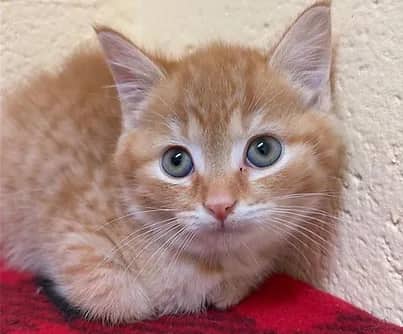
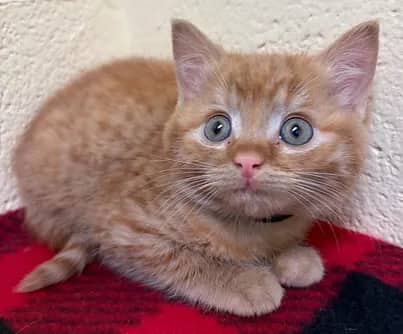
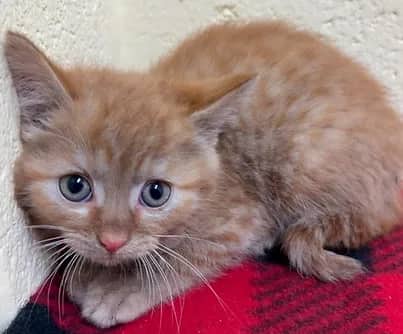
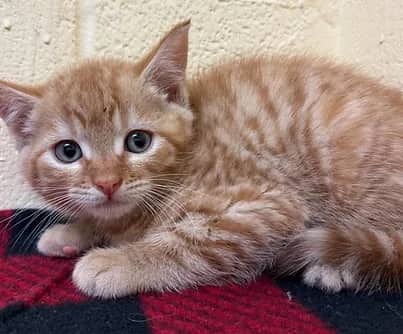
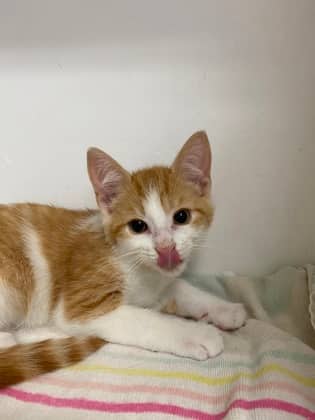
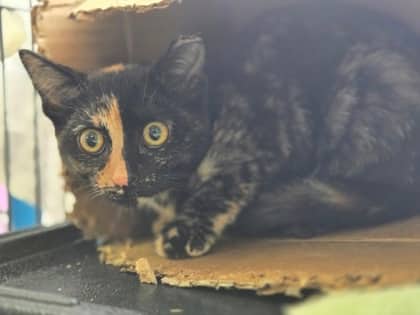
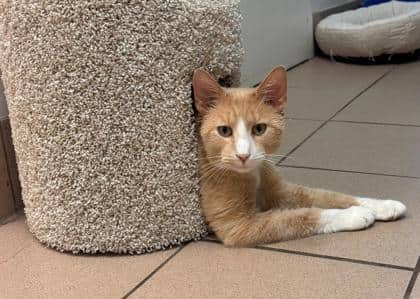
Get notified when an Orange Cat is listed
We will email you the moment an Orange Cat becomes available in Nova Scotia, from a rescue or an owner rehoming.
Why most orange cats are male
The orange gene sits on the X chromosome. A male has one X, so a single copy makes him orange, while a female needs it on both of her X chromosomes to come out fully orange rather than tortoiseshell or calico. The result is a well-documented skew of roughly four males to every female. If you specifically want a female ginger, expect a wait, and expect the rescue to know it is unusual.
Almost every orange cat is also a tabby in some form. A truly solid orange cat is rare, because the orange gene does not suppress the underlying tabby pattern the way solid black does. Look at a ginger in daylight and you will nearly always find stripes, swirls or spots.
The friendly-ginger reputation
Orange cats are widely said to be affectionate, food-driven and a bit daft. It is a charming story with no solid evidence behind it. The likeliest explanation is the sex skew: most gingers are male, neutered males do tend to be somewhat more sociable and larger, and the colour gets the credit for the sex.
So judge the individual, as with any colour. Ask the foster how the cat greets strangers, how it takes being picked up, and what it does when the house is empty. That is worth more than the coat.
Living with a ginger in Nova Scotia
Ordinary domestic shorthair care, indoors, which is the Maritime default given coyotes, rural roads and tick pressure through the warmer months. A pale-coated cat that suns itself in a window is worth an occasional look at the ear tips and nose for any crusting.
Orange cats are food-motivated often enough that weight is the thing to watch. Free-feeding an indoor neutered male is the standard route to an overweight cat, and weight is the biggest single lever you control on long-term feline health. Ask the rescue what and how much the cat has been eating.
Looking more broadly? Browse every adoptable cat across the province on Cat Adoption Nova Scotia.
The rescues that most often list Orange Cats across the province are Nova Scotia SPCA.
Orange Cat Adoption FAQ — Nova Scotia
Tap a question to expand
How many Orange Cats are available for adoption in Nova Scotia?▼
Where can I adopt an orange cat near me in Nova Scotia?▼
Are orange cats always male?▼
Are orange cats friendlier?▼
How much does it cost to adopt an Orange Cat in Nova Scotia?▼
Popular cat breeds in Nova Scotia
Orange Cat adoption by city in Nova Scotia
Each city page lists only the orange cats available from rescues serving that city.