The short answer
Manage the freeze-thaw, not just the cold. Halifax cycles between storm, thaw, and refreeze, which makes ice underfoot and road salt the two things you handle daily: pick footing carefully, use paw balm or booties, and rinse and towel the paws at the door after every walk. Coat the short-coated, small, senior, and post-surgery dogs, and leave the double coats bare. Residential sidewalks carry a 36-hour clearing target, so have indoor enrichment ready before the storm. And stay off lake and pond ice entirely.
Heads up: This article is informational and is not veterinary advice. Cold tolerance varies enormously by breed, age, and health, so ask your own vet what is right for your dog. For suspected frostbite, hypothermia, or antifreeze ingestion, contact an emergency veterinary hospital immediately rather than waiting for symptoms.
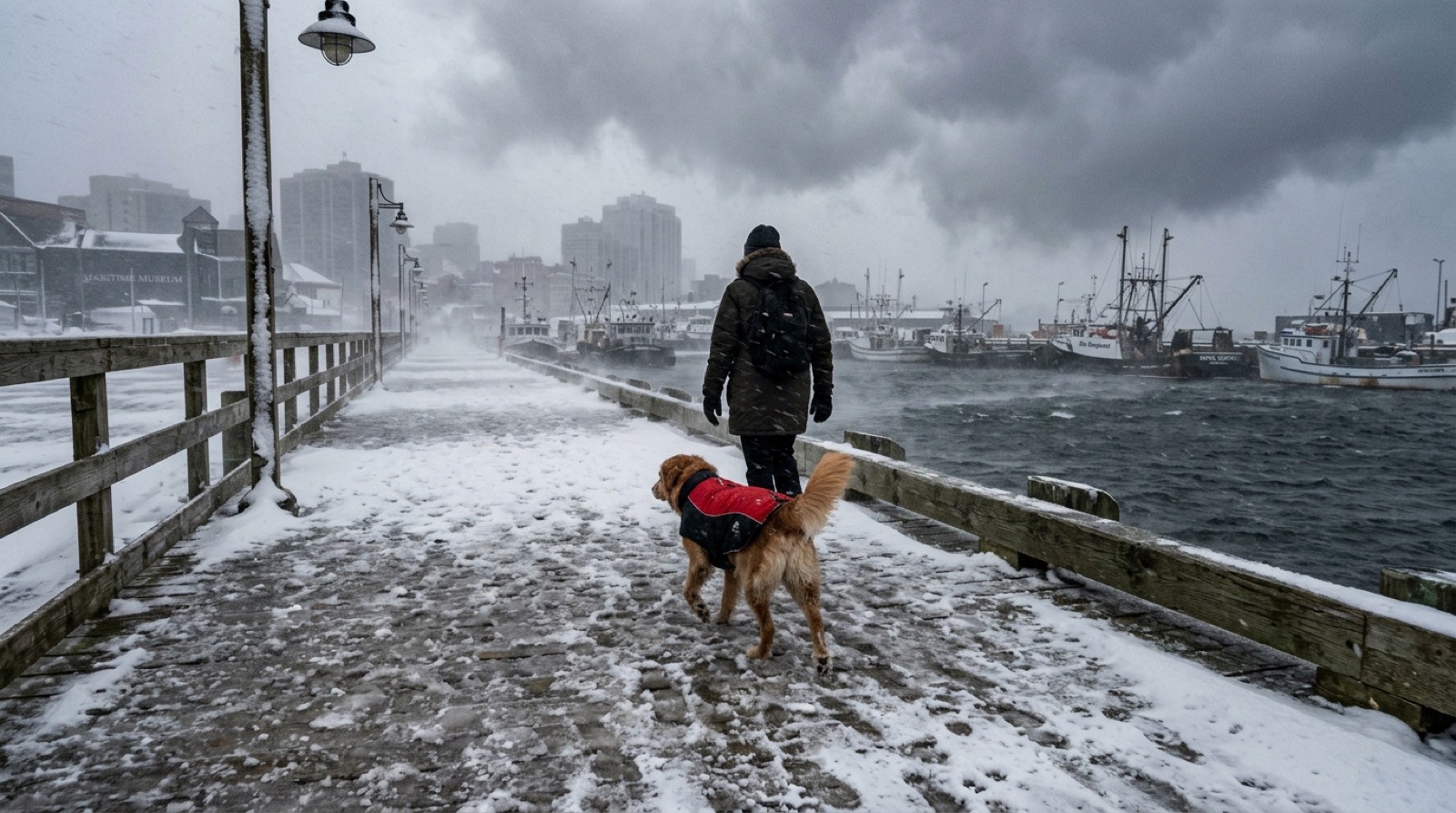
Ask a prairie dog owner about winter and they describe cold: deep, dry, predictable cold you dress for once. A Halifax winter is a different animal. A nor'easter arrives, dumps snow, then the temperature climbs, everything turns to slush, and overnight the slush becomes glass. Sometimes twice in a fortnight.
HRM says the same thing in its own language. Its snow clearing service standards note that timelines stretch during rapidly changing conditions such as sudden freezing after rain, wet snow packed to ice, and freezing rain. Those three phrases describe most of what a Halifax dog actually walks on between December and March.
The other thing worth knowing early is the scale of the operation and what that means for your street. Crews handle roughly 4,322 lane kilometres of road and about 1,000 kilometres of sidewalk every event, and they work a priority system. Downtown gets cleared first. Your residential sidewalk does not. Plan around it and winter here is genuinely pleasant. Assume otherwise and you spend February frustrated.
The Three Real Hazards
1. Ice, the freeze-thaw signature
Refrozen melt and freezing-rain glaze are the injuries waiting to happen. Dogs slip and strain shoulders and cruciates, and owners fall while holding leads, which is where most of the human injuries come from. Manage it with route choice, favouring snow over sheen and grass edges over polished pavement, a slower pace on suspicious stretches, and traction aids on your own boots.
The absolute rule: no dogs on lake or pond ice, ever. In a climate that thaws every other week, ice here does not become reliable, and a dog through the ice becomes two emergencies because owners follow them in.
2. Salt and brine, applied before the storm
This is the part specific to how HRM operates. Crews begin work before the weather event starts, applying salt or brine to streets and sidewalks across the region, then keep treating through it. The result is that treated pavement is the normal condition of a Halifax winter, not the exception, and paws are in contact with it every day.
The routine: balm or booties before salted routes, a warm-water paw rinse and towel at the door every time, and a weekly look at the pads for cracks. The chemical exception is antifreeze, which is sweet-tasting and life-threatening in small amounts.
3. Wet cold and coastal wind
Atlantic cold is humid cold, and a damp coat loses its insulation almost entirely. A soaked dog at a mild-looking temperature can be colder than a dry dog in a much deeper freeze, and an onshore wind finishes the job, especially on exposed ground like Point Pleasant or the Dartmouth Common.
What to do: towel-dry after wet outings, chest and belly included, dry the dog's coat and jacket between walks, and cut sessions short when the wind is doing the talking. Watch for the tells: shivering, lifted paws, tucked tail, a dog that stops and turns for home.
When Your Sidewalk Actually Gets Cleared
| Sidewalk type | Clearing begins | Target from end of event |
|---|---|---|
| Downtown Halifax and Dartmouth | After 5 cm | 12 hours |
| Main arterials and school drop-off zones | After 15 cm | 12 hours |
| Transit routes | After 15 cm | 18 hours |
| Residential sidewalks and walkways | After 15 cm | 36 hours |
HRM service standards as published July 2026. Snowfalls over 30 cm, blizzard conditions, and rapidly changing weather all extend these timelines. Residential targets are described as mostly bare with salt for traction, not bare pavement.
Who Needs What
| Dog | Winter reality | Gear call |
|---|---|---|
| Double-coated dogs | Built for this. Watch overheating in a coat and footing on ice at speed | No coat. Booties only if salt bothers them |
| Short-coated and lean dogs | Chill fast, faster still when wet. Shorter outings in wind | Water-resistant insulated coat, plus balm or booties |
| Small dogs | Closest to wet ground and slush, lose heat quickest, vanish in deep snow | Coat routinely. Favour cleared routes |
| Seniors and arthritic dogs | Damp coastal cold flares joints. A fall on glaze is high consequence | Coat, shorter and more frequent walks, traction-first routes |
| Puppies and post-surgery dogs | Poor temperature regulation. Shaved surgical sites lose heat fast | Quick outings only. A recovery suit or sweater |
The Door Routine
- Before the walk: paw balm or booties for salted routes, coat on the dogs who need one, reflective gear on both of you, and a check of the lead and clip. Wet hardware freezes and fails.
- On the walk: footing first, distance second. Trim the outing when the wind bites, and skip the glazed days entirely. A missed walk costs nothing a puzzle feeder cannot repay.
- At the door: warm-water paw rinse or a dunk and wipe, toes spread to clear packed snow and brine, then a towel over belly, chest, and legs. Check the pads weekly for cracks and cuts.
- Between walks: dry the coat and booties fully, because damp gear is cold gear. Keep nails trimmed too, since long nails splay the feet on ice.
Storm Days: Mileage Swapped for Brain Work
When a nor'easter parks over the region, the day flips: quick leashed bathroom breaks outside, everything else indoors. Have the kit ready before the storm rather than improvising during it.
Food puzzles. Stuffed Kongs, frozen for longer sessions, snuffle mats, puzzle feeders, or kibble scattered through a rolled towel. Feed whole meals this way on the worst days.
Nose games. Hide treats around a room and release the dog to search. Start obvious, get sneaky. Ten minutes of sniffing beats thirty of pacing.
Training blocks. Two or three ten-minute sessions on something genuinely new. Learning tires a dog harder than a walk does.
And then the reward. The clear, cold, blown-out day after a storm is the best dog day of the year, and the winter-use sports fields listed in our off-leash parks guide exist precisely for the November to May stretch.
Cold injuries: when it stops being a gear problem
- Frostbite: pale, grey, or bluish skin on ears, tail tip, or paws, sometimes swelling or blistering later. Warm gradually with dry blankets. Never rub the tissue or apply direct heat.
- Hypothermia: hard shivering and lethargy progressing to stumbling, shallow breathing, and unresponsiveness. Wrap in dry blankets and go.
- Antifreeze: do not wait for symptoms. Early treatment is the whole game.
- Ice-fall injuries: sudden limping, a yelp on a slip, or a leg the dog will not load deserves a same-day call.
Coastal Care Veterinary Emergency and Referral Hospital at 168 Hobsons Lake Drive provides emergency services 24 hours a day. Tartan Tails Veterinary Hospital in Dartmouth also lists a second emergency clinic on Brownlow Avenue among its after-hours partners; confirm current numbers and hours with your own clinic and save them in your phone before you need them.
Adopting in Winter Works Better Than You Think
Winter adoptions have a quiet advantage: the season enforces exactly the routine a new rescue dog needs. Short predictable walks. Long quiet indoor stretches. No busy off-leash park temptation. Everybody home in the evenings. The first-week decompression plan and a Halifax January schedule are close to the same document.
Two winter-specific cautions for new adopters. Escape risk rises, because a spooked new dog on ice with snowbanks shortening every fence is a flight case, so keep the harness and lead on everywhere and confirm the microchip registration and the HRM dog licence in week one. And skip the parks until spring. A new dog's first off-leash experience should not involve sheet ice and a pack of strangers.
Browse adoptable Halifax dogs
Plenty of dogs in Nova Scotia rescue were built for this weather and will out-walk you in February. Meet them before the next thaw.
See Available Halifax Dogs →Frequently Asked Questions
How cold is too cold to walk a dog in Halifax?+
What makes a Halifax winter different for dogs?+
Does my dog need booties in Halifax?+
Which dogs struggle most here?+
How long until the sidewalks are cleared after a storm?+
Is road salt actually dangerous for dogs?+
Should my dog wear a coat?+
How do I exercise my dog during a nor'easter?+
What about the overnight winter parking ban?+
How do I know if my dog has frostbite or hypothermia?+
Do dogs need more food in winter?+
Any winter advice for a newly adopted rescue dog?+
Related Halifax Guides
Winter Is Better With a Dog In It
Fresh snow at Shubie, a warm floor after. Find the Nova Scotia rescue dog to share the season with.
Browse Available Halifax Dogs →New dog? Start with these care guides
Everything a new adopter needs to set up a safe, happy home.