The short answer
Keep your cat indoors in Guelph. An indoor cat lives far longer here, because roads, coyotes along the Speed and Eramosa rivers, hard winters and cat-to-cat disease all take a heavy toll on roaming cats. Guelph also licenses cats and has examined restricting cats at large, so containment is where the city is heading anyway. You do not have to choose between safety and a good life. A tall cat tree, a window perch, daily play and a catio or harness cover it.
The old idea that a cat needs to roam to be happy is one Guelph owners can safely retire. This is a busy, growing city ringed by county roads and river corridors, not a quiet farm lane, and the hazards a cat faces outside here are real and stacked. The question is not whether outdoor life is riskier. It plainly is. The question is how to make indoor life rich enough that your cat does not miss it.
Start with the honest list of what an outdoor cat is up against locally, then look at the fixes. If you are still choosing a cat, the live Guelph cat listings note which cats are already settled as indoor-only, refreshed regularly.
What an outdoor cat faces in Guelph
| Hazard | Where | Why it matters |
|---|---|---|
| Traffic | City arterials and county roads | The single biggest killer of outdoor cats |
| Winter cold | Hard Ontario cold snaps | Frostbite and hypothermia, plus antifreeze and salt |
| Coyotes and wildlife | Speed and Eramosa river corridors | Cats are prey, most active at dawn and dusk |
| Disease and fights | Other cats, raccoons, skunks | Feline leukemia, FIV, abscesses, rabies exposure |
| Bylaw and neighbours | Guelph licenses cats | The city has looked at restricting cats at large |
Traffic, coyotes and the rivers
Cars are the leading killer of outdoor cats everywhere, and Guelph has plenty of traffic between its city arterials and the county roads that ring the edges. A cat has no concept of a road, and drivers rarely see one in time. These are not rare, freak events. They are the ordinary way outdoor cats die young, often within a block or two of home.
Coyotes are established in and around Guelph and hunt along the Speed and Eramosa river corridors and the green spaces that thread through the city. To a coyote, a small cat is prey, and the highest-risk hours are dawn and dusk, exactly when many outdoor cats are out. An injured cat that survives any of this still means a frightening dash to an emergency clinic and a large bill. Keeping the cat inside removes the whole category of risk.
Winter, disease and the wider toll
Winter is its own hazard. Ontario cold snaps can cause frostbite and hypothermia, cats crawl into warm engine bays and get hurt when the car starts, and antifreeze and road salt do their own damage. Free-roaming cats also pick up and pass on feline leukemia and FIV through fights and contact, which is why rescues test for both.
There is a wider toll too. Conservation groups such as Nature Canada point out that free-roaming cats take a heavy toll on local birds and small wildlife, which is one more reason the indoor choice is the responsible one. In a city that already licenses cats and has weighed restricting cats at large, keeping yours in is both the safe choice and the neighbourly one.
Giving an indoor cat a full life
Go vertical. Cats want height. A tall tree, a run of wall shelves or a cleared bookcase top gives a cat somewhere to climb, survey and nap, and it makes a small apartment feel bigger to the cat.
Play like a hunter. Two short wand-toy or food-puzzle sessions a day beat a basket of ignored toys. Let the cat catch the toy at the end so the hunt feels finished.
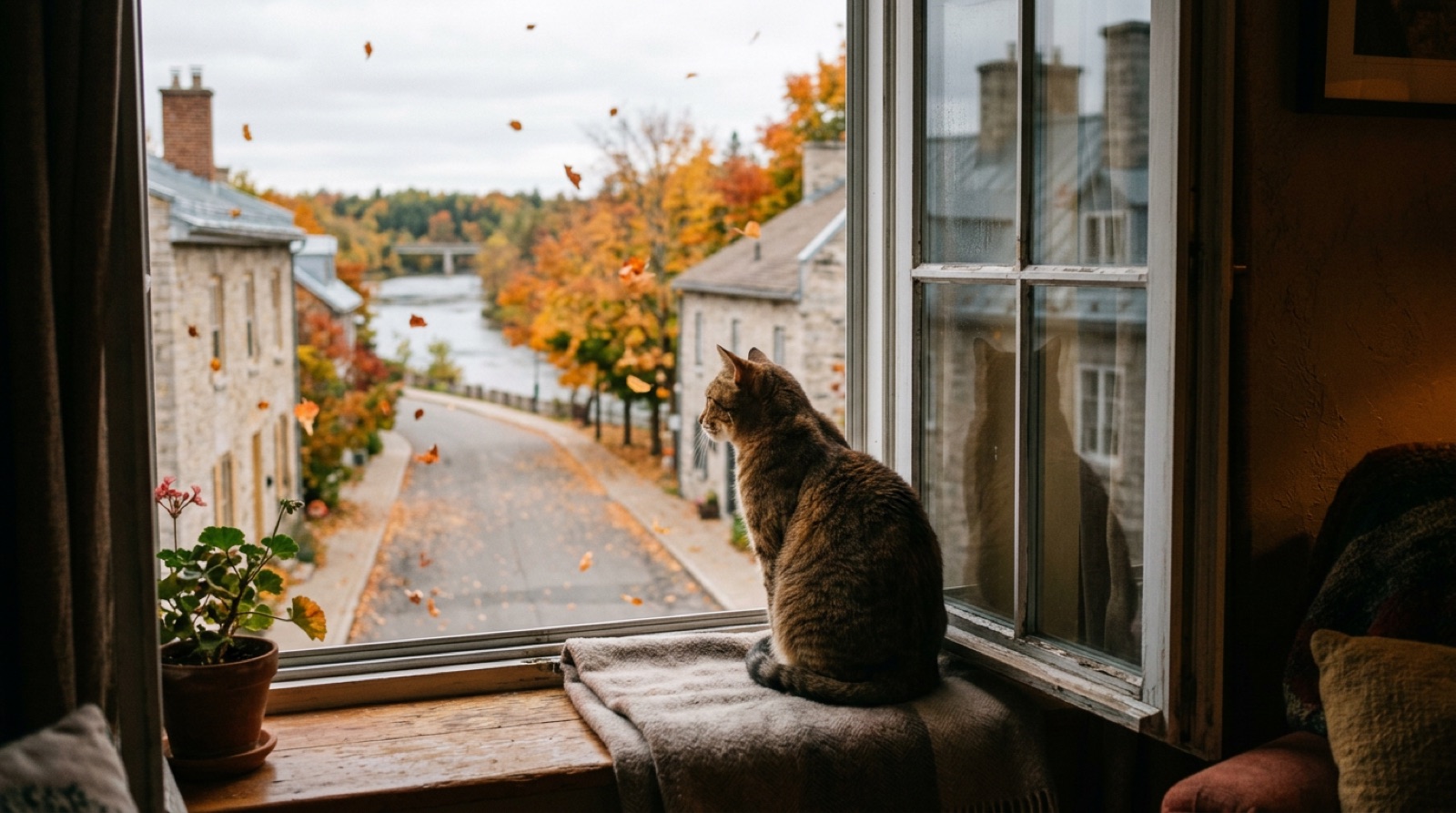
Build a window. A perch at a window onto the yard or street, ideally with a bird feeder outside the glass, occupies a cat for hours. This is cat television, and it works.
Add a catio or harness. A screened catio or a harness walk on a quiet street gives outdoor stimulation without the roaming risk, and keeps a licensed cat contained. Introduce either one slowly.
Consider a second cat. Two settled cats entertain each other through a long winter. Our first week guide covers introductions.
Find an indoor-ready cat in Guelph
Many Guelph rescue cats are already settled as happy indoor companions. Browse who is available, refreshed regularly.
See Available Guelph Cats →Frequently Asked Questions
Is it safer to keep a cat indoors in Guelph?
Yes, clearly. An indoor cat in Guelph typically lives far longer than one allowed to roam, and the reasons are all around the city. Busy roads and county highways, coyotes along the Speed and Eramosa rivers, hard winters, and disease passed between free-roaming cats all shorten an outdoor cat's life. Indoor cats avoid nearly all of it. The trade-off people worry about, a bored or frustrated cat, is real but solvable with a bit of vertical space, daily play and a window to watch. Safety and a good life are not in conflict here, and Guelph's cat rules lean the same way.
Does Guelph have rules about cats going outside?
Guelph requires every cat to be licensed, which is not the case in some nearby cities, and the city has publicly examined restricting cats at large as part of responsible pet ownership. That does not mean an indoor-only law today, but it does mean the direction of travel is toward keeping cats contained, and it means a roaming cat that gets picked up needs a licence and a microchip to get home. Practically, most Guelph rescues place cats as indoor-only for the safety reasons, and licensing plus a chip is what reunites the ones that do slip out. Keeping a cat in keeps you on the right side of all of it.
What are the biggest dangers to an outdoor cat here?
Cars first, always. Traffic kills more outdoor cats than anything else, and Guelph has plenty of it between city arterials and the county roads at the edges. After that come the local hazards: coyotes that hunt along the Speed and Eramosa river corridors at dawn and dusk, and winters cold enough to cause frostbite or worse. Add disease and fight injuries from contact with other cats and wildlife, and antifreeze and road salt in winter, and you have a stack of risks a cat cannot judge for itself. Indoors removes almost all of them at once.
My cat has always gone outside. Can I bring it indoors now?
Yes, and plenty of Guelph owners have done it, usually after a scare. The trick is to replace what the outdoors gave the cat rather than simply shutting the door. Add vertical space with a tall tree or wall shelves, put a perch at a window that looks onto the yard or the street, schedule two short play sessions a day with a wand toy, and consider a harness for supervised time outside. Do it gradually and give the transition a few weeks. A cat that resists at first almost always settles once the indoor world becomes interesting enough to hold its attention.
What is a catio, and does it work in Guelph?
A catio is an enclosed outdoor space, anything from a window box to a full screened structure, that lets a cat feel the breeze and watch birds without being able to roam or be reached by a coyote. They work very well here. In the warmer months a catio gives your cat the sunshine, smells and stimulation of outdoors with none of the traffic or predator risk, and in winter it simply goes unused while the cat stays warm inside. You can buy modular kits or build one to fit a balcony, a porch or a patio door. It is the best of both worlds for a Guelph household, and it keeps a licensed cat contained.
Can I walk my cat on a harness in Guelph?
Many cats take to it, though not all, and it is worth trying if your cat is curious and confident. Use a proper cat harness, not a collar, since cats back out of collars in a heartbeat. Start indoors, let the cat wear the harness around the house first, then progress to a quiet yard before anywhere busier. A calm residential street or a quiet corner of a park is gentler than anywhere near traffic. Never tie a harnessed cat up and leave it, and keep well clear of dogs. For a nervous cat, a catio is the calmer option that gets you the same fresh air.
How do I keep an indoor cat from getting bored?
Think vertical, interactive and routine. Cats want height, so give them a tall tree, a few shelves or the top of a bookcase to survey the room from. They want to hunt, so trade in a wand toy or a food puzzle for a few minutes twice a day rather than leaving a pile of toys they ignore. And they want a view, so a window perch onto the yard or a bird feeder outside the glass can occupy a cat for hours. A second cat helps too, since two settled cats entertain each other through a long Ontario winter when nobody is going outside much.
Are indoor cats really healthier, or just safer?
Both, and the two feed each other. Indoor cats avoid the trauma injuries and the infectious diseases that come with roaming, so they visit the emergency clinic far less. They are also easier to monitor, which matters more than people realise. When a cat lives inside, you notice quickly if it stops eating, changes its litter habits or starts hiding, and those early signals are how problems get caught while they are still cheap to treat. An outdoor cat can hide illness for days before you spot it. Indoors, you are effectively watching your cat's health every single day.
What about winter specifically?
Winter is the season that turns a tolerable risk into a serious one. Ontario cold snaps can bring frostbite and hypothermia to a cat caught out, and cats seeking warmth crawl into wheel wells and under car hoods, then get badly hurt when the engine starts. Road salt irritates paws and antifreeze is a sweet-tasting poison that kills quickly. Even a cat that copes fine in summer is exposed in January. The simplest answer is to keep the cat in through the cold months, and if you feed any outdoor or community cats, provide an insulated shelter rather than assuming they will find one.
Will an indoor cat try to dash out the door?
Some do, especially young ones and former outdoor cats, so build a couple of habits early. Keep the cat well fed and well played-with so the outdoors holds less pull, and put something interesting near the entryway to redirect attention at the moment you come and go. Teaching a cat that the door area is boring, and that good things happen away from it, works better than scolding. If you have a determined door-dasher, a screen door or a baby gate buys you a buffer. Most cats lose interest in the door once indoor life is genuinely rich enough to compete with it.
I found a cat living outside. Should I bring it in?
Slow down and check first, because an apparently stray cat is often someone's roaming pet, and in Guelph a lost cat may carry a licence tag and a microchip. Look for a collar and tag, and have it scanned for a microchip at a Guelph clinic before assuming it is homeless. Post in local lost-and-found groups. The Guelph Humane Society provides animal control for the city, so it is the right first call about a found cat. Do not bring an unknown cat straight in to meet resident pets, since untested cats can carry feline leukemia. Our rescue guide covers who to call.
Related Guelph Guides
Adopt a cat that will thrive indoors
Browse adoptable cats from across Guelph, many already living happily inside.
Browse Available Guelph Cats →New cat? Start with these care guides
Everything a new adopter needs to set up a safe, happy home.