The short answer
Give your new cat one quiet safe room with a litter box, food, water, a hiding spot and a bed, and leave it alone to decompress. Keep the same food and litter the rescue used, and change nothing quickly. Expect hiding for the first few days. Follow the 3-3-3 rule and let the cat set the pace. Book a Waterloo Region vet visit within a week or two, and know that the Emergency Vet Clinic of Waterloo Region in Cambridge is open around the clock if something goes wrong.
The day you bring a rescue cat home is exciting for you and terrifying for the cat. It has just lost everything familiar, again, and landed somewhere that smells wrong and sounds strange. Almost every new cat responds the same way: it finds the smallest, darkest hiding spot it can and stays there. This is not a sign you picked the wrong cat. It is the first, normal step of settling in.
Your job in week one is not to bond. It is to make the cat feel safe enough that bonding becomes possible. That means less, not more, than most people expect. Here is how to do it, and what to watch for. If you are still choosing, the live Kitchener cat listings are refreshed regularly.
The 3-3-3 rule at a glance
| Phase | What you may see | What to do |
|---|---|---|
| First 3 days | Hiding, barely eating, wary | Leave the cat alone in the safe room, keep it quiet |
| First 3 weeks | Learning the routine, testing the space | Keep feeding and litter consistent, let the cat set the pace |
| First 3 months | Settling into its real personality | Expand access to the home, build trust and play |
Set up the safe room first
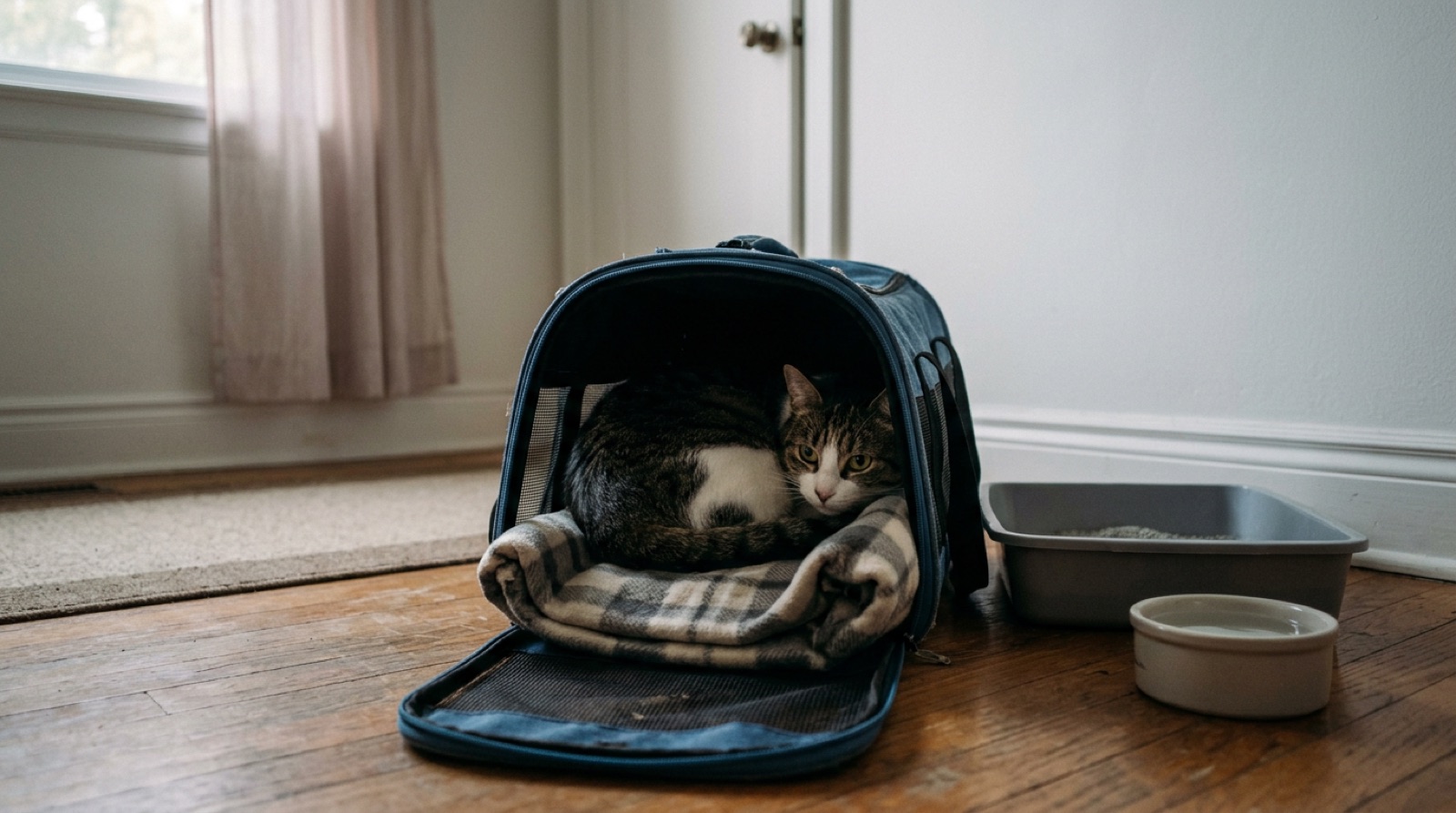
Before the cat arrives, prepare one quiet, closeable room. A spare bedroom or a bathroom is ideal. Put a litter box in one corner and food and water well away from it in another, since cats will not happily eat next to their toilet. Add a couple of hiding spots, an open carrier or a box on its side, a scratching post and a soft bed.
Keep the room calm and dim, and keep the door shut so the cat meets the house one room at a time rather than all at once. This room is the cat's base for the first few days, and it stays a retreat even after the cat has the run of the place. Getting this right is the single most useful thing you can do in the first week.
Keep everything the same at first
Ask the rescue what food and litter the cat has been using, and buy the same. A cat coping with a move does not need a diet change on top of it, and a sudden switch is a common cause of stomach upset or a litter box strike in the first days. If you want to change food or litter later, do it gradually over a week or two once the cat has settled.
Keep the litter box clean and in a quiet spot, feed at consistent times, and resist the urge to introduce visitors, other pets or the whole house at once. Consistency is what tells a nervous cat the ground is finally stable. Our cost guide covers the litter and food budget once you are past week one.
Find a vet and book a first visit
Line up a regular Waterloo Region clinic within the first week or two and book a wellness visit. Ask the rescue or local Kitchener cat groups for a clinic they trust, and pick one reasonably close so a sick-cat trip is short. Bring the paperwork the rescue gave you, including vaccination records, the spay or neuter note and the microchip number.
That first appointment establishes care, confirms the cat is healthy, and is the moment to sort out parasite prevention and any questions specific to your cat. Having a clinic in place before you need one is what makes an emergency less frightening. Speaking of which, keep the number for the Emergency Vet Clinic of Waterloo Region saved now, not later.
Signs that mean go tonight
Most of week one is patience, but a few signs need action. Get urgent veterinary help for laboured or open-mouth breathing, repeated vomiting, ongoing diarrhoea, extreme lethargy, or a cat that stops eating for more than a day, since fasting can trigger a serious liver problem, especially in a heavier cat. A male cat straining in the litter box or unable to pass urine is a true emergency to act on right away.
After hours, the Emergency Vet Clinic of Waterloo Region at 405 Maple Grove Road in Cambridge is open 24 hours, phone 519-650-1617. If you are unsure whether something counts, call and describe it rather than waiting to see if it passes.
Still choosing your cat?
Browse adoptable cats from across Waterloo Region, with temperament notes from the rescues that know them. Refreshed regularly.
See Available Kitchener Cats →Frequently Asked Questions
My new rescue cat is hiding and will not come out. Is that normal?
Completely normal, and pushing it makes things worse. A cat that has just moved from a shelter or foster home to a strange house is overwhelmed, and hiding is how cats cope with that. Give it a small, quiet safe room with everything it needs and let it come out on its own schedule. Most cats spend the first few days tucked behind or under something, then start venturing out at night when the house is still. Sit in the room and read quietly so the cat gets used to you without pressure. Do not drag it out or crowd it. Patience in week one saves you weeks of setbacks.
What is the 3-3-3 rule?
It is a rough timeline for how a rescue cat settles, and it keeps new owners calm. Give it three days to decompress, when the cat is likely to hide, barely eat and stay wary. Give it three weeks to learn the routine, when it starts to relax, explore and show more of itself. And give it three months to fully settle into its real personality, once it trusts that this is home. The exact timing varies, and a confident cat may skip ahead while a shy one takes longer, but the pattern holds. Knowing it stops people panicking on day two when the cat is still under the bed.
How do I set up a safe room?
Pick one quiet, closeable room, a spare bedroom or a bathroom works well, and put everything the cat needs in it. A litter box in one corner, food and water in another well away from the litter, a couple of hiding spots like an open carrier or a box on its side, a scratching post, and a soft bed. Keep it calm and dim, and keep the door closed so the cat is not overwhelmed by the whole house at once. This is where the cat lives for the first few days, and where it retreats to even after it has the run of the house. It is the single most useful thing you can do in week one.
When should I let the cat explore the rest of the house?
Follow the cat, not the calendar. Once it is eating well, using the litter box reliably and moving around the safe room with confidence, usually after a few days to a week, open the door and let it explore on its own terms. Do it when the house is quiet, supervise at first, and leave the safe room set up so the cat can retreat to it. Expand access gradually rather than all at once. A cat that gets the whole house on day one often bolts back into hiding, so slow is faster here. If you have other pets, keep introductions separate and scent-based at first.
Should I change the cat's food and litter right away?
No, change nothing at first, then change it slowly. Ask the rescue what food and litter the cat has been using and buy the same to start. A cat that is already stressed by a move does not need a sudden diet change on top of it, which is a fast route to stomach upset or a litter box strike. If you want to switch to a different food or litter, do it gradually over a week or two, mixing more of the new in with the old each day. Keep the litter box scrupulously clean and in a quiet, low-traffic spot, since litter box problems in week one are usually about stress or setup, not the cat.
How do I find a good vet in Waterloo Region?
Book a first wellness visit within the first week or two, both to establish care and to catch anything the rescue could not. Ask the rescue, or neighbours and local Kitchener or Waterloo cat groups, for a clinic they trust, and choose one reasonably close so a sick-cat trip is not a cross-region drive. Bring whatever paperwork the rescue gave you, including vaccination and spay or neuter records and the microchip number. That first visit is also when you sort out parasite prevention and ask any questions about the specific cat. Having a regular clinic in place before you need one is what makes an emergency less frightening.
What symptoms mean I should see a vet urgently?
Some signs cannot wait for a routine appointment. Get veterinary help promptly if your cat stops eating for more than a day, especially a larger or overweight cat, since fasting can trigger a serious liver problem. Go urgently for laboured or open-mouth breathing, repeated vomiting, ongoing diarrhoea, extreme lethargy, or a cat that is hiding and clearly unwell rather than just shy. And treat a male cat straining in the litter box or unable to pass urine as an emergency to act on immediately. When in doubt, phone a vet and describe what you are seeing rather than waiting to see if it passes.
It is after hours and something is wrong. Where do I go?
Go to the Emergency Vet Clinic of Waterloo Region at 405 Maple Grove Road in Cambridge, which is open 24 hours, phone 519-650-1617. It serves Kitchener, Waterloo, Cambridge and the surrounding area, so it is the region's after-hours option when your regular clinic is closed. Keep the number saved in your phone before you ever need it, because the worst time to be searching for an emergency vet is at 2 a.m. with a sick cat. If you are unsure whether something counts as an emergency, call them and describe it. They can tell you whether to come in now or wait for your own vet in the morning.
How do I introduce a rescue cat to my existing cat?
Slowly, through a closed door first. Keep the new cat in its safe room and let the two cats smell each other under the door and through scent swapping, trading a blanket or a sock between them, before they ever meet face to face. After a few days of calm scent exchange, try brief visual contact through a cracked door or a baby gate, then short supervised meetings, rewarding calm behaviour with treats. Watch for relaxed body language rather than forcing proximity. Rushing this is the most common reason two cats never get along, while a patient introduction over a couple of weeks usually ends in peace, and often in friendship.
My new cat is not using the litter box. What now?
In week one this is almost always stress or setup, not a medical or behaviour problem, so start there. Make sure the box is in a quiet, low-traffic spot, not next to a noisy appliance, and that it is the same litter the cat used before. Use one box per cat plus one spare, keep them clean, and avoid covered boxes for a nervous newcomer that wants to see around it. If the cat is otherwise well and settling, give it a few days with a simpler setup. If problems persist beyond that, or the cat is straining, crying or passing blood, that shifts into vet territory and should be checked promptly.
How long until my rescue cat feels like my cat?
Usually weeks, sometimes a couple of months, and then one day it just clicks. The 3-3-3 timeline is the honest guide: relaxed within three weeks, fully itself by around three months. The cat that hid under your bed and flinched at every sound becomes the one sprawled on your lap while you watch television through a Southwestern Ontario winter. The shift is rarely dramatic. It happens in small steps, a first purr, a first time it seeks you out, a first proper play session. Let the cat set the pace, keep the routine steady, and the bond builds itself.
Related Kitchener Guides
Bring home a Waterloo Region rescue cat
Browse adoptable cats from across Kitchener, Waterloo and Cambridge in one place.
Browse Available Kitchener Cats →New cat? Start with these care guides
Everything a new adopter needs to set up a safe, happy home.