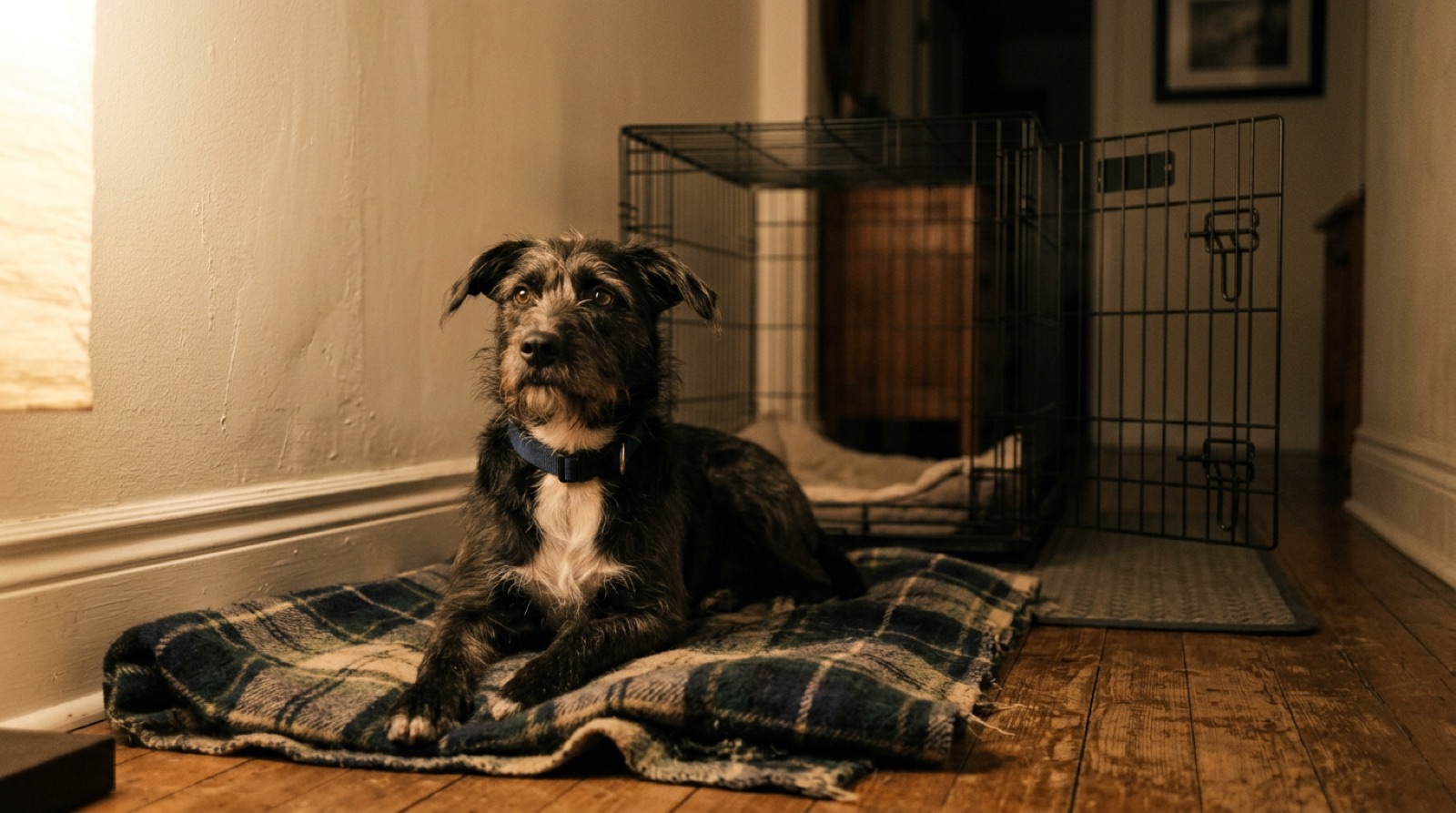
The short answer
Keep week one small. No visitors, no dog parks, no long adventures. Same meals, same short walk, a crate or quiet room the dog can retreat to. Expect the 3-3-3 pattern: three days of shock, three weeks before the real personality appears, three months to feel at home. Book a vet visit early to establish care. And put a 24-hour emergency clinic in your phone tonight, because bloat is measured in hours.
The most common mistake new adopters make is enthusiasm. The dog arrives, everyone is delighted, and by Sunday it has met eleven people, two other dogs and the entire waterfront. Then on Tuesday it will not come out from under the table and nobody understands why.
A rescue dog arriving in your house has usually lost its home, then a shelter or foster placement, then that too. It does not know your rules, your smell, your schedule, or whether you are staying. Almost everything that goes wrong in week one comes from asking too much of a dog that is still working out where it is.
The rest of this guide is what to do instead, in order.
The 3-3-3 Pattern
| Stage | What you often see | What helps |
|---|---|---|
| First 3 days | Shut down, sleeping, off food, hiding | Quiet, routine, no demands, no visitors |
| First 3 weeks | Personality appears, new behaviours start | Consistent rules, start basic training |
| First 3 months | Dog settles, bonds, relaxes properly | Widen the world gradually, build recall |
A widely used rescue framework, not a clinical schedule. Dogs with harder histories take considerably longer, and that is normal.
Day One, Hour by Hour
Before you collect the dog, set up the crate or quiet space, put the food and water bowls where they will live permanently, and dog-proof the room the dog will spend most time in. Decide the house rules now, as a household, because changing them in week three is much harder than agreeing them in hour zero.
On arrival, take the dog to the garden or a small quiet patch of grass on lead before going inside. Then in, on lead, and let it explore one or two rooms at its own pace. Do not follow it around. Sit down and let the dog come to you.
First evening. Small meal, short garden trip, lights down early. Some dogs sleep for fourteen hours. Some pace. Both are normal.
First night. Put the crate where you sleep, or sleep near the dog. A dog left alone in a strange kitchen on night one learns that being alone here is frightening, and unlearning that costs weeks.
Walking a New Dog in Hamilton
Gear first. A properly fitted harness, plus a collar with a tag, and clip the leash to both for the first fortnight. A frightened dog backing out of a collar on a lower-city one-way is the nightmare scenario, and the Main and King corridors do not offer much margin for error. Hamilton also requires a leash under two metres in public, so leave the retractable at home.
Same route, short, twice a day. Repetition builds a map. A dog that recognises the corner and the hedge is a dog that is starting to feel located.
Save the good stuff. The escarpment stairs, the rail trails, Bayfront Park and the waterfalls are genuinely great with a dog and they will still be there in a month. So will Gage Park on a Saturday, which is exactly the kind of stimulation a week-one dog cannot process.
Watch the ground. Summer pavement on the Mountain gets hot enough to burn pads, and winter salt on lower-city sidewalks irritates feet and is worth rinsing off. In tick season, check the dog after any trail walk near Cootes Paradise or the Dundas Valley.
Week One Checklist
1. Update the microchip. The chip is registered to the rescue until you change it. A chip with the previous holder's details is close to useless. Do this on day one.
2. Get the municipal licence. Hamilton requires it under By-law 12-031 and Animal Services handles it at 905-574-3433. The licensing guide covers the discounts.
3. Book a vet. Establish care with a clinic now, while nothing is wrong, so you are an existing client when you need an urgent appointment later.
4. Save two emergency numbers. Programme them into your phone before you need them, not while you need them.
5. Keep the same food. Change diets gradually over a week or more, and only after the dog has settled.
6. Take a photo. A clear current photo of your dog is the thing you will want if it goes missing, and nobody has one on the day it matters.
Go to an emergency vet now, not in the morning
A hard, distended abdomen with unproductive retching in a deep-chested dog can be bloat, or gastric dilatation-volvulus. It is life-threatening and it is measured in hours, not days. Go straight to an emergency hospital, do not wait to see if it passes. The same applies to collapse, breathing difficulty, pale gums, seizures, suspected poisoning, repeated vomiting with lethargy, or bleeding you cannot stop. Hamilton Region Emergency Veterinary Clinic, 50 Dundurn Street South, 905-529-1004, open 24/7/365. Burlington Veterinary Emergency & Referral, 775 Woodview Road, 905-637-8111, 24/7 with specialty referral. Phone ahead if you can so they are ready when you arrive.
Browse adoptable Hamilton dogs
Still choosing? Foster-based rescues can tell you how a dog handles stairs, being alone and a busy household before you commit to week one. Refreshed regularly.
See Available Hamilton Dogs →Frequently Asked Questions
What should I do the first week with a rescue dog?
What is the 3-3-3 rule for rescue dogs?
Why is my new rescue dog not eating?
Should I crate train a rescue dog?
How do I house train an adult rescue dog?
When should I take my new dog to the vet in Hamilton?
When is a new rescue dog an emergency?
How long should I wait before walking a new rescue dog?
When can I take my rescue dog to a leash-free park?
Should I let my kids play with a new rescue dog right away?
How do I introduce a rescue dog to my other dog?
What if my rescue dog growls at me?
Related Hamilton Guides
Meet the Dogs
Week one is easier when the dog was the right match to begin with.
Browse Available Hamilton Dogs →New dog? Start with these care guides
Everything a new adopter needs to set up a safe, happy home.