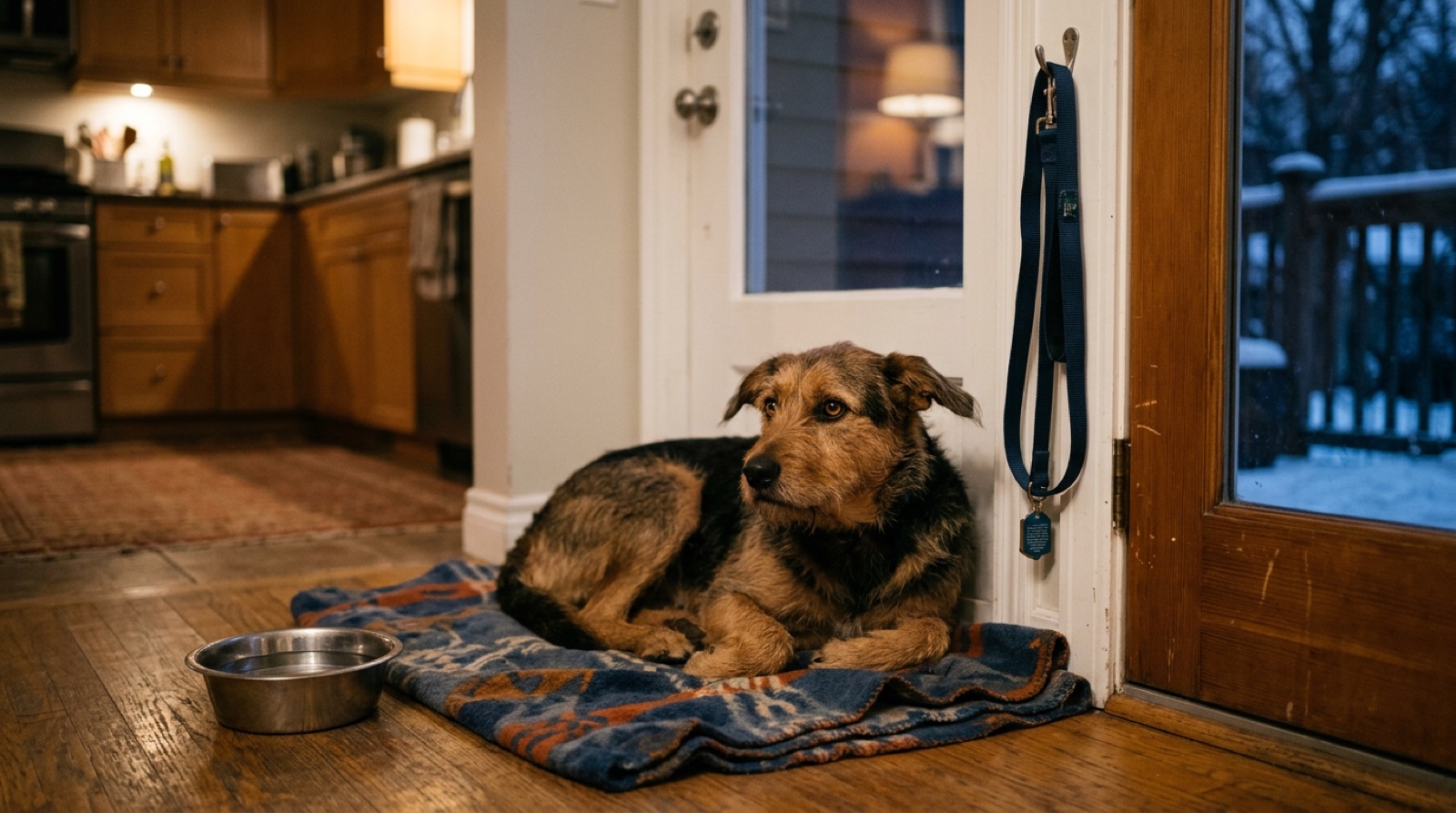
The short answer
Keep week one quiet, small and predictable. No visitors, no off-leash parks, no long outings. Short leash walks, the same food the rescue was feeding, a crate or quiet space, and a consistent toilet schedule. Expect about three days of decompression before the dog starts acting like itself. Book a Kingston vet within a fortnight. Register the licence and the microchip in the first few days.
The most common mistake new adopters make is enthusiasm. You have waited weeks for this dog, the application took a fortnight, and now you want to show it the waterfront, introduce it to your parents and take a hundred photos at Lake Ontario Park. Every one of those is a good instinct and a bad week-one plan.
A dog that arrived at your house today has lost every reference point it had. The people, the smells, the floor surfaces, the sound of your furnace, the route it walks, the time it eats. Nothing is familiar. What helps is not stimulation. It is boredom and repetition.
What follows is a day-by-day plan, the training that matters in week one, the Kingston-specific things to set up, and a plain list of symptoms that should send you to a vet rather than to a forum.
The 3-3-3 Rule
Three days to decompress. The dog may sleep an enormous amount, refuse food, hide, or seem strangely calm. That calm is often shutdown rather than contentment, which is why owners get surprised later. Do not read much into behaviour in this window, good or bad.
Three weeks to learn the routine. The dog works out when meals happen, where the door is, what your leaving-for-work noise sounds like. This is when the real personality shows up, and when some households discover a behaviour nobody mentioned. That is normal, not a bait-and-switch by the rescue.
Three months to feel at home. Confidence, play, proper attachment. Dogs with harder histories take longer, and a rescue that told you the dog needs time meant it literally.
Week One, Day by Day
| Day | Do | Do not |
|---|---|---|
| Day 1 | Toilet break on leash, quiet space, water, sleep | Tour the house, invite anyone over |
| Days 2 to 3 | Fixed meal times, short leash walks on your own street | Off-leash areas, busy trails, dog meetings |
| Days 4 to 5 | Start crate games, register licence and microchip | Leave the dog alone for long stretches |
| Days 6 to 7 | First vet appointment, slightly longer quiet walks | Book a training class just yet |
The Kingston Set-Up Jobs
Register the licence. Kingston licenses dogs through DocuPet and your first licence is free if the dog is spayed or neutered, which a rescue dog will be. Ten minutes online. The details are in our Kingston dog licensing guide.
Update the microchip. The rescue chipped the dog, but the chip registry may still list the organisation. Find the number on your adoption paperwork and register it in your name with the manufacturer database. A chip pointing at the wrong contact is close to useless.
Pick a vet and phone them. Get on file before you need to be. Ask what their after-hours arrangement is, because that answer is the one you want at 11pm rather than at 11am.
Learn the leash rules before your first proper walk. Dogs must be leashed in public in Kingston outside the designated off-leash areas, which covers the waterfront paths, City Park and the K&P Trail.
Buy winter paw protection if you adopt between November and March. Road salt downtown is hard on pads and the problem arrives faster than people expect.
Crate and House Training
The crate is a den, not a consequence. Feed meals inside it with the door open. Toss treats in when the dog is not looking. Let it become the place the dog chooses before it is ever the place the dog is shut into. Never crate a dog as punishment for an accident or a chewed shoe, because you will poison the one tool that would have helped you.
Assume no house training. Even a dog described as reliable in foster may have accidents in a new house with different flooring and a different door routine. Out first thing, after meals, after naps, last thing at night. Praise the second the dog finishes outside, not when it comes back in.
Clean accidents properly. Enzymatic cleaner, not ammonia-based products, which smell like urine to a dog and mark the spot as a toilet.
Do not punish accidents. A dog that gets told off for toileting learns to hide it behind the sofa, which is worse for everyone.
Go to emergency tonight, not tomorrow
A distended or hard belly with unproductive retching, restlessness and obvious distress can mean bloat, which is life-threatening within hours and is more common in deep-chested breeds. That is an emergency drive, not a morning appointment. The same applies to laboured breathing, collapse, seizures, uncontrolled bleeding, suspected poisoning, an inability to pass urine, or pale gums. Kingston's after-hours option is Kingston Regional Pet Hospital at 1381 Midland Avenue, 613-634-5370, which runs a split schedule rather than continuous 24-hour coverage. Call as you leave so you know they are open and they know you are coming. Never give a dog human medication.
What Week Two Looks Like
Once the dog is eating normally, sleeping through the night and toileting on a predictable schedule, you can widen the world. Slightly longer walks. A quieter section of the K&P Trail at an off-peak hour. One visitor at a time rather than a household of them.
Around week three, book a group training class. Ask the organisation you adopted from which local trainers they trust, because both the Kingston Humane Society and Kingston Animal Rescue hear the follow-up from dozens of local placements. Look for force-free methods.
If something is not going well at week three, phone the rescue rather than the internet. Both organisations would far rather talk you through a problem now than take the dog back in month four.
Browse adoptable Kingston dogs
Still deciding? See the dogs currently available across Kingston-area rescue organisations in one place. Refreshed regularly.
See Available Kingston Dogs →Frequently Asked Questions
What is the 3-3-3 rule for rescue dogs?
What should I do on the first day with a rescue dog?
Should I crate train a rescue dog?
How long does house training take with an adopted dog?
When should I take my new rescue dog to the vet in Kingston?
How do I introduce a rescue dog to my existing dog?
Should I take my new dog to a Kingston off-leash park?
My rescue dog will not eat. Is that normal?
What emergency symptoms mean I should not wait until morning?
How do I keep a new rescue dog safe in a Kingston winter?
What if my rescue dog is destroying things or barking when left alone?
When should I start training classes in Kingston?
Related Kingston Guides
Ready When You Are
A quiet first week is the best gift you can give a dog that has had a loud few months.
Browse Available Kingston Dogs →New dog? Start with these care guides
Everything a new adopter needs to set up a safe, happy home.