The short answer
Never let a Greyhound off-leash in an unfenced area, ever. As a sighthound, a Greyhound hits 45 mph in a few strides after any moving trigger and will not stop for recall, no training overrides the prey drive. Walk on-leash and run only in fully fenced spaces (fenced dog parks, secure yards, rentable fenced fields). Use a martingale collar (their narrow heads slip out of flat collars) plus optionally a harness, and a long line for controlled freedom (not full sprints). Reassuringly, Greyhounds are low-energy couch potatoes content with a couple of leashed walks plus occasional fenced sprints, so the leash rule is the breed’s only real management demand and easy to live with.
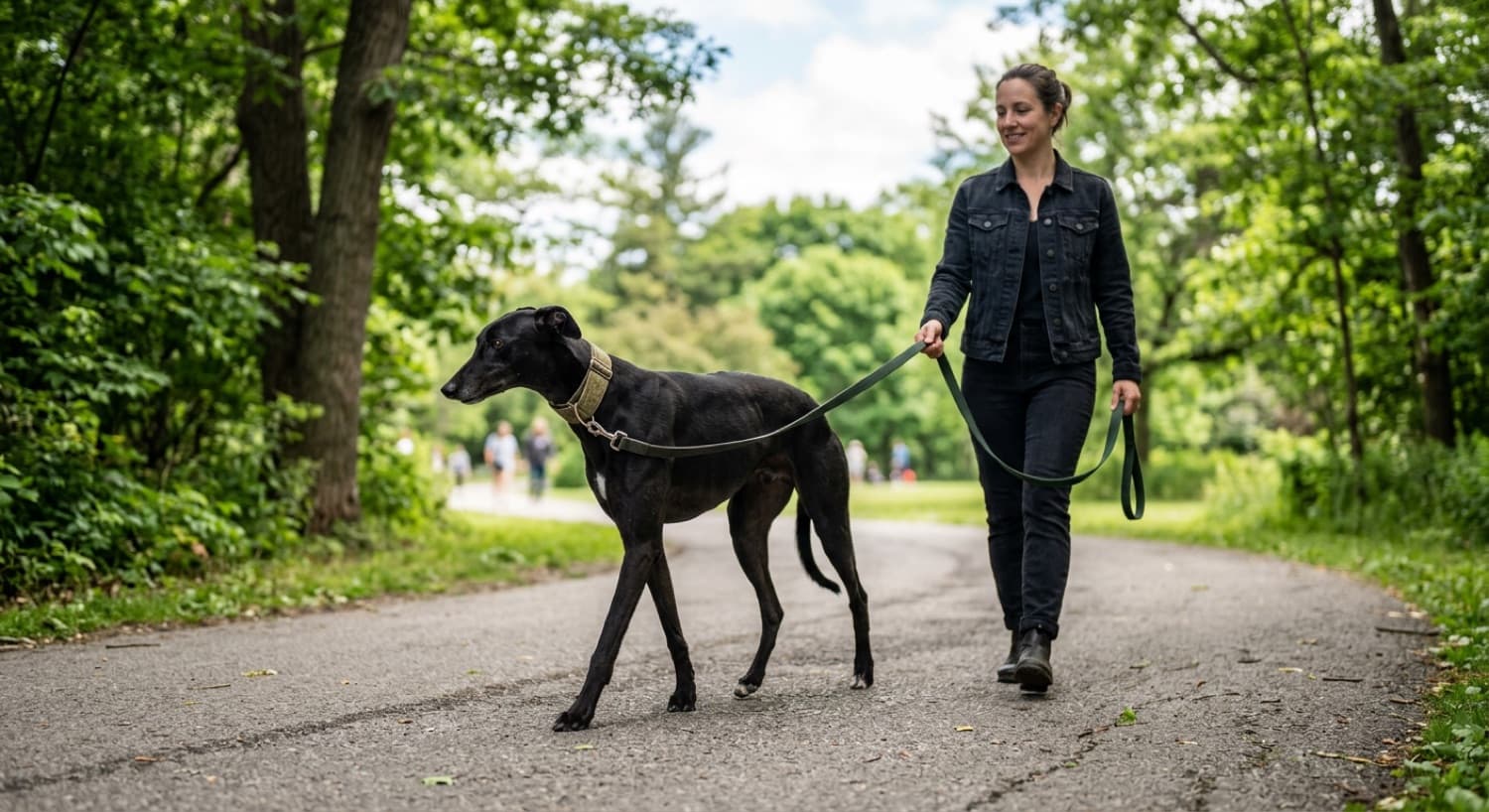
If a Greyhound gets loose
Do not chase it (it triggers more running and outpaces you). Get low, call excitedly and run away to trigger the dog to follow, use food, and enlist help. Prevention is everything: a secure martingale collar (narrow heads slip flat collars), strict door discipline, never off-leash unfenced, and a current microchip + Ottawa licence tag. If your greyhound goes missing, contact your adoption group immediately, they have loose-greyhound recovery protocols, plus local shelters and lost-pet networks.
Why the rule is absolute
The Greyhound is a sighthound, the Canadian Kennel Club describes the breed as built for speed, bred over millennia to spot movement and run it down. When the chase instinct fires, at a squirrel, rabbit, cat, or a bag blowing across a field, the dog accelerates to 45 mph in a few strides and is committed, focused entirely on the chase and deaf to your calls, potentially hundreds of metres away across a road before you react.
You cannot train this out of a sighthound; it is hard-wired instinct in a dog built to outrun almost anything. So the rule is not “train a good recall and hope”, it is manage the environment: on-leash walks, fenced running only. Reputable greyhound adoption groups make this a condition of adoption for good reason, and it is the single most important thing to accept before bringing a Greyhound home. Settling a new retired racer safely (including door discipline) is covered in our first-week rescue dog guide.
Safe running, gear, and modest exercise needs
Let a Greyhound run only in fully enclosed, securely fenced spaces, fenced dog parks (confirm the fencing is complete), secure yards, or rentable fenced fields some owners use for safe sprinting, and even there, mind the speed and any small dogs that could trigger prey drive. For gear, a martingale collar is standard (a narrow greyhound head slips out of a flat collar), often paired with a harness, and a long line allows controlled sniffing and trotting but not full sprints, and never replaces a fence.
Happily, the leash rule fits the breed perfectly, because Greyhounds need far less exercise than their build suggests. They are sprinters, not endurance runners, famously low-energy couch potatoes content with two moderate on-leash walks plus occasional fenced sprints. The modest exercise need is a big reason greyhounds adapt so well to apartment and family life, and it means the never-off-leash rule is the breed’s only real management demand, an easy habit for the ease of the dog you get. More on the breed’s easy temperament in our Greyhound adoption guide.
Find your Greyhound in Ottawa
If on-leash walks and fenced sprints suit your routine, a rescue Greyhound is one of the easiest, gentlest large dogs to live with. Browse available Greyhounds and retired racers from Ottawa and NCR rescues and greyhound groups.
See Available Greyhounds →Frequently Asked Questions
Can Greyhounds ever be trusted off-leash?
The firm, near-universal rule among greyhound owners and adoption groups is no, not in unfenced areas, ever. A Greyhound is a sighthound bred for centuries to spot movement and chase it down at up to 45 miles per hour, reaching that speed in just a few strides, and once the chase instinct is triggered by a squirrel, rabbit, cat, or even a plastic bag blowing across a field, the dog is gone, deaf to recall, and can be hundreds of metres away, across a road, before you finish calling. This is not a training deficiency you can overcome; it is hard-wired instinct in a dog built to outrun almost anything. So Greyhounds are walked on-leash and allowed to run only in fully enclosed, securely fenced spaces. Reputable greyhound adoption groups make this a condition of adoption, and it is the single most important safety rule of the breed. A Greyhound that gets loose in an unfenced area is in genuine danger.
Why is a Greyhound’s recall so unreliable once it starts chasing?
Because you are not competing with disobedience, you are competing with one of the most powerful, single-minded instincts in the dog world, running at a speed no human or recall can interrupt. When a sighthound locks onto moving prey, its entire focus narrows to the chase, and the sheer speed (0 to 45 mph in a few strides) means that by the time you react, the dog is already committed and far away. Even a Greyhound with an otherwise lovely temperament and decent everyday recall in calm settings will not stop mid-chase. This is why the breed’s recall is described as unreliable "when it matters", it may come when called in the living room or a quiet fenced yard, but not when a rabbit bolts across an open field. You cannot train the prey drive out of a sighthound, so responsible ownership means managing the environment (leashes and fences) rather than relying on recall to override instinct. Accepting this keeps the dog alive.
Where can I safely let my Greyhound run in Ottawa?
Only in fully enclosed, securely fenced spaces where a chase cannot lead the dog into danger. Options in the Ottawa area include fully fenced off-leash dog parks (confirm the fencing is complete and secure before letting the dog off), securely fenced private yards, and, where available, greyhound or sighthound group "playdates" and rentable fenced fields (sometimes called sniff-spot-style spaces) that some owners use specifically for safe off-leash sprinting. Even in a fenced dog park, be mindful of the greyhound’s speed and the risk of collision with people or other dogs, and of small dogs that might trigger prey drive. For everyday exercise, a Greyhound is content with a couple of good on-leash walks plus occasional fenced sprints, they are low-energy couch potatoes, not endurance athletes needing hours of running. A long line in an open area lets a greyhound trot and sniff with control, but it is not a substitute for a fence when it comes to a full-speed chase, so reserve real running for enclosed spaces.
How much exercise does a Greyhound actually need?
Far less than their athletic build suggests, this surprises new owners. Despite being the fastest dog breed, Greyhounds are sprinters, not endurance runners, and they are famously low-energy couch potatoes who spend most of the day sleeping. A typical Greyhound is well exercised by two moderate on-leash walks a day plus, ideally, occasional opportunities to sprint in a fenced area, and that is plenty; they do not need or want hours of activity. In fact, over-exercising is more of a risk than under-exercising for many greyhounds. This modest exercise requirement, combined with their calm indoor demeanour, is a big part of why greyhounds adapt so well to apartment and family life. The important point is that the low exercise need does not change the off-leash rule: even a dog that only wants a couple of gentle walks will still chase at 45 mph if a squirrel bolts, so the leash-and-fence rule applies regardless of how mellow the dog is day to day.
Should I use a long line and a martingale collar with my Greyhound?
Yes to both, they are standard greyhound equipment. A martingale collar (a limited-slip collar that tightens gently and safely when the dog pulls) is the standard for greyhounds because their narrow heads can slip out of an ordinary flat collar, precisely the escape you must prevent in a chase-prone breed, and a properly-fitted martingale prevents backing out while remaining humane. Many owners use a martingale plus a harness for extra security. A long line (a 15 to 30-foot leash) is useful for letting a greyhound trot, sniff, and stretch its legs with more freedom in an open area while you keep control, but understand its limits: a long line lets a greyhound reach significant speed before hitting the end, which can jolt both dog and handler, so it is for controlled exploration, not full sprints, and it is never a substitute for a fence when a real chase could happen. The combination of a secure martingale, a leash for walks, a long line for controlled freedom, and a fence for running keeps a Greyhound safe.
What happens if my Greyhound gets loose?
It is a genuine emergency, because a loose Greyhound can cover enormous distances at speed, cross roads, and be far away in moments, so prevention is everything. If a Greyhound does get loose, do not chase it (chasing triggers more running and the dog easily outpaces you); instead, try to stay calm, avoid startling it toward roads, and use tactics greyhound groups recommend, such as getting low, calling excitedly and running away from the dog to trigger it to follow, or using food, and enlist help to track and contain it. Because the risk is so high, the prevention measures matter enormously: a secure martingale collar that cannot slip off, careful door discipline (greyhounds can bolt through an open door), never off-leash in unfenced areas, a microchip that is registered and current, and the City of Ottawa licence tag on the collar. If your greyhound ever goes missing, contact your adoption group immediately, they often have experienced volunteers and protocols for recovering loose greyhounds, and alert local shelters and lost-pet networks fast.
Does the never-off-leash rule mean a Greyhound is high-maintenance?
Not at all, in fact the opposite. The never-off-leash rule is really the only significant management demand of an otherwise remarkably easy breed, and once you build your routine around it, it becomes second nature and no burden. Greyhounds are calm, quiet, clean, low-energy, and gentle, they need modest exercise, adapt beautifully to home and apartment life, and are famously undemanding companions. The off-leash rule simply means walks are on-leash and running happens in fenced spaces, which suits the breed’s modest exercise needs perfectly, most greyhounds are more than content with leashed walks and naps. So do not let the leash rule put you off: it is a single, manageable safety habit, not a sign of a difficult dog. For the right household, a Greyhound is one of the easiest large breeds to live with, and the leash-and-fence routine is a small price for the joy of a gentle, elegant, affectionate couch companion.
Related Guides
New dog? Start with these care guides
Everything a new adopter needs to set up a safe, happy home.