The short answer
The Boston is moderately brachycephalic, healthier and more athletic than a bulldog or pug but still sharing some flat-faced considerations: some breathing compromise and heat sensitivity, plus vulnerable prominent eyes (prone to ulcers and injury), patellar luxation, allergies, and some deafness. Lifespan is 11 to 15 years. The highest-impact things you control: manage heat and cold, protect the eyes and get prompt care for any eye issue, keep the dog lean, and use a harness. Insure while young and healthy. None of this is a reason to avoid the breed, only to care for it knowingly. Browse adoptable Toronto dogs.
Breathing, heat, and cold
The Boston's flat-faced build drives its main health notes, but far less severely than the extreme brachycephalics. Some Bostons have narrowed airways causing snoring and reduced exercise and heat tolerance (and BOAS surgery can help affected dogs), but many breathe reasonably well and are athletic. Heat is the key management issue: Bostons cool themselves less efficiently and can overheat, so Toronto summers call for air conditioning, shade, and cool-hour-only exercise. Their short single coat also means they get cold fast, so a winter coat helps. Keep the dog lean (weight worsens breathing) and use a harness, not a collar. The VCA guide to brachycephalic syndrome is worth reading, and our temperament guide covers exercise and manners.
Eyes, knees, and allergies
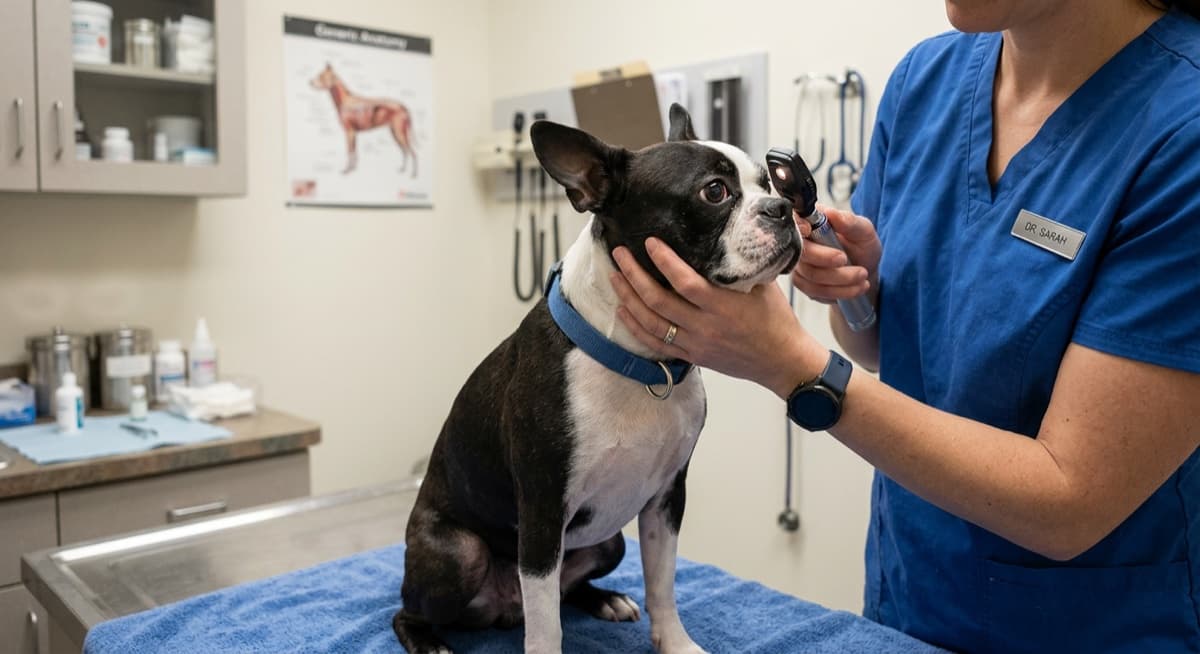
The Boston's prominent eyes are its most distinctive health vulnerability: because they protrude, they are prone to corneal ulcers and injury (which need prompt vet care), plus cataracts, glaucoma, and cherry eye, so watch for squinting, redness, cloudiness, or pawing at the eye and act fast, eye problems worsen quickly. Beyond the eyes, patellar luxation (slipping kneecaps) is common and ranges from mild to surgical, keeping the dog lean protects the knees. Bostons are also prone to allergies and skin sensitivities, and some, especially heavily white dogs, have congenital deafness. Adopting through a rescue that has vet-checked the dog can flag any known eye, hearing, or skin issues up front.
Keeping a Boston healthy, and insurance
The care that matters most is consistent: manage heat and cold, protect the eyes and get prompt care for any eye issue, keep the dog lean, use a harness, keep up dental care, address allergies, and keep up with routine vet checkups so eye, knee, breathing, and other issues are caught early. On the money side, pet insurance is worth considering, because eye surgery or ulcer treatment, airway surgery, patella surgery, or allergy management can run into the thousands, and the key is to insure while the dog is young and healthy, before anything is diagnosed and excluded (important given the eye and breathing tendencies). Our cost guide has the full Toronto picture. With sensible care, most Bostons are active, healthy companions well into their teens.
Browse adoptable Boston Terriers in Toronto
Boston Terriers and Boston mixes from Toronto shelters and rescues, with foster notes on breathing, eyes, and health.
See Available Boston Terriers →Frequently Asked Questions
What health problems are Boston Terriers prone to?
As a moderately brachycephalic (flat-faced) breed, Boston Terriers carry some flat-faced considerations plus a few other predispositions, though they are generally healthier and more athletic than extreme flat-faced breeds. The main ones: some degree of brachycephalic airway compromise and heat sensitivity; eye conditions (their prominent eyes are prone to corneal ulcers and injury, plus cataracts, glaucoma, and cherry eye); patellar luxation (slipping kneecaps); allergies and skin sensitivities; deafness in some dogs (particularly those with a lot of white); and, in females, birthing difficulties. Some Bostons also get brain tumours and certain heart conditions at higher rates than average. None of this means a Boston will be unhealthy, many are active dogs living 11 to 15 years, but heat management, eye protection, weight control, and routine vet care all help.
Do Boston Terriers have breathing problems?
Boston Terriers are moderately brachycephalic, so they can have some degree of the breathing compromise seen in flat-faced breeds, but importantly, they are far less extreme than the English Bulldog or Pug, and many Bostons breathe reasonably well and are quite athletic. That said, some Bostons do have narrowed nostrils or an elongated soft palate that cause snoring, snorting, noisy breathing, and reduced exercise and heat tolerance, and in more affected dogs, BOAS (Brachycephalic Obstructive Airway Syndrome) surgery can help. The practical takeaways for every Boston owner: manage heat carefully (they overheat more easily than a normal-nosed dog), avoid strenuous exercise in heat or humidity, keep the dog lean (excess weight worsens breathing), use a harness rather than a collar, and have your vet assess the airway if your Boston shows significant breathing difficulty. Most Bostons manage well with sensible care.
Why are Boston Terriers prone to eye problems?
The Boston’s large, round, somewhat prominent eyes are a defining feature and, unfortunately, a health vulnerability, which is why eye care deserves special attention. Because the eyes protrude, they are more exposed and prone to injury and corneal ulcers (a scratch or trauma to the eye surface), which need prompt veterinary treatment. Bostons are also predisposed to cataracts (including a juvenile hereditary form), glaucoma, cherry eye, and dry eye. The practical care: watch for squinting, redness, cloudiness, excessive tearing, pawing at the eye, or any change, and see the vet promptly, since eye problems can worsen fast and early treatment protects vision. Protect the eyes from hazards (branches, rough play, irritants), and keep up regular vet checks that include the eyes. Many Bostons never have serious eye trouble, but the breed’s eye vulnerability makes prompt attention to any eye issue especially important.
Are Boston Terriers sensitive to heat and cold?
Yes, on both ends, and it is easy to manage in Toronto. Heat is the bigger concern: as a flat-faced breed, Bostons cool themselves less efficiently by panting and can overheat and suffer heatstroke more easily than a normal-nosed dog, so Toronto summers call for air conditioning on hot days, shade and water, and exercise only in the cool of early morning or evening, never strenuous activity in heat or humidity. Cold is the other end: their short, single coat offers little insulation, so a Boston gets cold quickly in a Toronto winter and benefits from a warm coat for walks, and their low exercise needs make shorter cold-weather outings fine. Learn the signs of heat distress (heavy frantic panting, drooling, bright-red gums, weakness) and treat overheating as an emergency. With sensible seasonal management, a Boston is comfortable year-round.
How long do Boston Terriers live and how do I keep mine healthy?
Boston Terriers typically live 11 to 15 years, and attentive care helps them thrive. The highest-impact things: manage heat rigorously and protect against cold; keep the dog lean (weight control protects the breathing, joints, and overall health); protect the eyes and get prompt care for any eye issue; use a harness rather than a collar; keep up dental care; watch for and address allergies and skin issues; and keep up with routine vet checkups so eye, knee, heart, and breathing issues are caught early. If your Boston has significant breathing difficulty, have the airway assessed. Adopting from a rescue that has done a vet check gives you a clearer starting point on any breathing, eye, or hearing issues. With sensible care, most Bostons are active, healthy companions well into their teens.
Should I get pet insurance for a Boston Terrier?
Pet insurance is worth serious consideration for a Boston Terrier. While generally healthier than extreme flat-faced breeds, they are prone to conditions that can be costly, eye surgery or ulcer treatment, BOAS airway surgery, patella surgery, allergy management, and certain cancers among them, and a single major issue can run into the thousands. As with any breed, the key is to insure while the dog is young and healthy, before any condition is diagnosed and excluded as pre-existing (relevant here given the eye and breathing tendencies). Compare Canadian providers on their coverage of brachycephalic, hereditary, and eye conditions specifically, read the exclusions carefully, and weigh insurance against a dedicated savings fund. For a companion you plan to keep for over a decade, having a financial plan for the occasional big vet bill, especially an eye emergency, is simply prudent.
Boston Terrier Adoption in Toronto
Where to adopt, costs, and the honest Boston reality.
Boston Terrier Temperament & Training
Personality, training, and apartment manners.
New dog? Start with these care guides
Everything a new adopter needs to set up a safe, happy home.