The short answer
Dalmatians come through Toronto rescue regularly, often after popularity-driven impulse adoptions, with fees $150 to $700 (versus $1,500 to $3,000 from a breeder). This is a high-energy coach dog bred to run for miles, so serious daily exercise is non-negotiable, and under-exercise is a top rescue reason. Expect heavy year-round shedding, and know two breed specifics: possible deafness (very manageable) and a unique urate-stone diet need. Dazzling and devoted in an active home. Browse adoptable Toronto dogs.
Not a movie dog, a coach dog
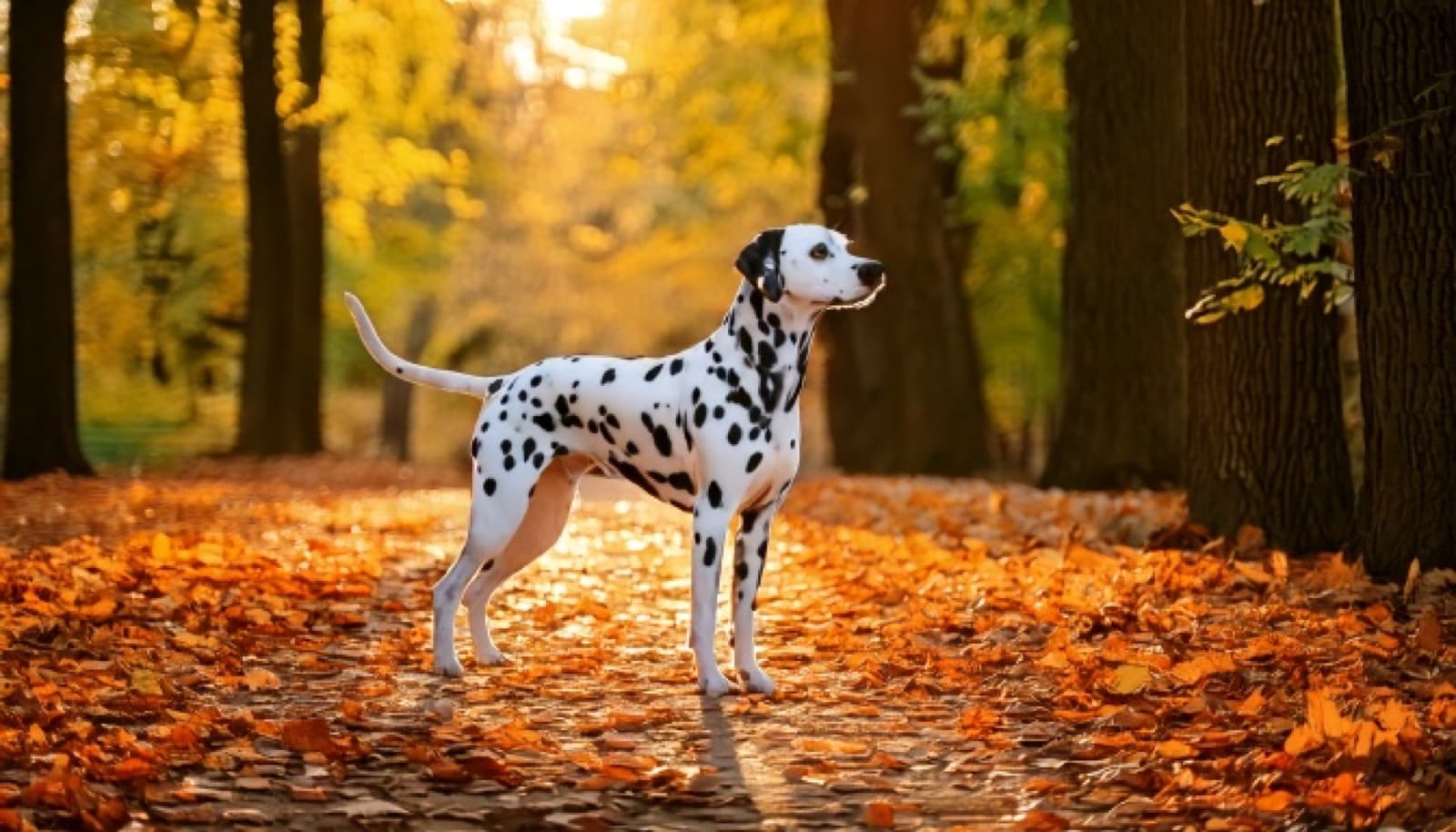
To understand a Dalmatian, understand its job. The breed was developed as a coach or carriage dog, bred to trot and run alongside horse-drawn carriages for many miles, guarding them along the way, and that working history hard-wired the Dalmatian for exceptional endurance and a genuine drive to move. The Canadian Kennel Club describes an outgoing, energetic, dignified dog. That energy is the source of most Dalmatian behaviour problems: a Dalmatian that does not get enough vigorous exercise has nowhere to put its considerable stamina, and it comes out as destructiveness and difficulty. The glamorous spots draw people in; the coach-dog reality is what they must be ready for, and a good rescue helps match the dog honestly.
Energy, shedding, and training
Three realities shape daily life with a Dalmatian. First, the exercise: plan on one and a half to two-plus hours of vigorous daily activity plus mental work, and know that a well-exercised Dalmatian is calm and well-mannered at home while an under-exercised one is a handful, our exercise and energy guide covers how to meet it in the city. Second, the shedding: those short white hairs come out heavily year-round and get everywhere, so this is not a breed for the fastidious. Third, the training: Dalmatians are intelligent but can be stubborn, so they need positive, consistent methods and thorough socialisation, and deaf dogs (the breed has a relatively high deafness rate) train beautifully with hand signals.
The two health specifics: deafness and urate stones
Beyond energy, two genuinely Dalmatian-specific health considerations are worth knowing before you adopt. Congenital deafness is relatively common in the breed, but a deaf Dalmatian makes a wonderful pet with hand-signal training and sensible management, so it need not be a dealbreaker. And every Dalmatian has a unique uric-acid metabolism that makes urate bladder stones a lifelong management item, handled with plenty of water, an appropriate diet, and vet monitoring. Neither is a reason to avoid the breed; both are manageable with the right knowledge, and our Dalmatian health guide walks through both in detail.
Costs, legality, and getting started
Dalmatians are legal in Ontario with no breed restrictions, and their size rarely triggers condo limits, the real city consideration is exercise, not paperwork. Adoption fees run the usual Toronto ranges ($150 to $700, spay or neuter and shots included), a fraction of a breeder’s $1,500 to $3,000, and beyond that, budget for the urate-stone diet, giant amounts of activity, and pet insurance given the stone risk (our cost guide helps). See the breed page, be honest about your activity level, and if it fits, a rescue Dalmatian is a dazzling, devoted companion.
Browse adoptable Dalmatians in Toronto
Dalmatians and Dalmatian mixes from Toronto shelters and rescues, with foster notes on energy, hearing, and how each dog does with other pets.
See Available Dalmatians →Frequently Asked Questions
Where can I adopt a Dalmatian in Toronto?
Dalmatians and Dalmatian mixes turn up in Toronto rescue, often surrendered by owners who fell for the spots without grasping the energy. Check the City of Toronto Animal Services, the Toronto Humane Society, and foster-based rescues like Save Our Scruff, TEAM Dog Rescue, Fetch + Releash, Redemption Paws, and Hopeful Tails, and breed-specific Dalmatian rescues sometimes have them. LocalPetFinder aggregates adoptable Toronto dogs in one place. Be open to an adult or even a deaf dog (deaf Dalmatians make wonderful pets), and lean on the foster notes for energy level and hearing before you commit.
Are Dalmatians good family dogs?
For the right, active family, they are wonderful. Dalmatians are affectionate, playful, loyal, and people-oriented, and a well-socialised Dalmatian often does well with children and thrives on being part of an energetic family. The big caveat is energy: this is a coach dog bred to run for miles, and it needs serious daily exercise, without which it becomes destructive and difficult. They are also large and exuberant, so supervision around small children is wise, and they shed heavily year-round. An active family that hikes, runs, and plays will love a Dalmatian; a sedentary household will not keep up.
How much exercise does a Dalmatian need?
A great deal, more than most people expect. Dalmatians were bred as coach or carriage dogs to run for miles alongside horses, so they have exceptional stamina and need one and a half to two-plus hours of vigorous daily exercise, running, off-leash play, fetch, plus real mental work, not just a walk. An under-exercised Dalmatian becomes restless and destructive, and much of what lands the breed in rescue traces back to unmet energy needs. Adult Dalmatians make excellent running partners once grown (build up gradually with a puppy). If you cannot commit to serious daily activity, this is not the breed for you.
Are Dalmatians often deaf, and can a deaf Dalmatian be a good pet?
Dalmatians have a relatively high rate of congenital deafness, a consequence of the same genetics behind their white coat, and a dog can be deaf in one ear or both. The reassuring news is that a deaf Dalmatian can absolutely be a wonderful, happy pet, it is a manageable difference, not a barrier. Deaf dogs are trained with hand signals and visual cues, learn beautifully, and adapt well; the main adjustments are keeping the dog leashed or securely fenced (no voice recall) and approaching it gently so as not to startle it. Many deaf dogs are overlooked in rescue and make devoted companions, so do not rule one out, ask the rescue about a dog’s hearing.
What is the Dalmatian urate-stone diet issue?
This is genuinely Dalmatian-specific: unlike almost all other dogs, every Dalmatian has a unique uric-acid metabolism that makes the breed prone to urate crystals and bladder stones. This can cause straining to urinate, blood in the urine, and, in a serious emergency (more common in males), a urinary blockage, which is life-threatening and needs immediate care. Management is a normal part of responsible Dalmatian ownership: ensure constant access to fresh water, feed an appropriate diet on your vet’s advice, allow frequent urination, and know the warning signs, treat an inability to urinate as an emergency. It is very manageable with the right knowledge, and our health guide covers it in full.
Why do Dalmatians end up in rescue?
Almost always a mismatch of energy and expectations. The breed’s fame drives impulse adoptions by people drawn to the spots who underestimate the reality, a high-energy coach dog that needs miles of exercise, sheds heavily, and can be stubborn to train. When those needs go unmet, the dog becomes destructive and difficult, and an overwhelmed owner surrenders it. A Dalmatian who reaches a good rescue is usually a fundamentally sound, dazzling dog who was simply in the wrong home, and comes with honest foster notes about energy, hearing, and temperament.
How much does it cost to adopt and keep a Dalmatian?
Adoption fees run the usual Toronto ranges: roughly $150 to $350 at municipal animal services and $200 to $700 at rescues, with spay or neuter, vaccines, and a vet check included. A breeder Dalmatian is more, commonly $1,500 to $3,000. Grooming is cheap (short coat, though heavy shedding), but budget for the things active dogs need, plus the breed-specific urate-stone diet and the potential for stone-related vet costs. Our Toronto cost guide has the full picture, and pet insurance is worth considering given the urate-stone risk.
Dalmatian Exercise and Energy
A former carriage dog built for distance: safe running, building endurance, brain work and settling.
Dalmatian Health Issues: Deafness, Urate Stones
Dalmatian health issues to plan for: congenital deafness and the BAER test, urate bladder stones every Dalmatian is prone to, glaucoma, skin and hips.
New dog? Start with these care guides
Everything a new adopter needs to set up a safe, happy home.