The short answer
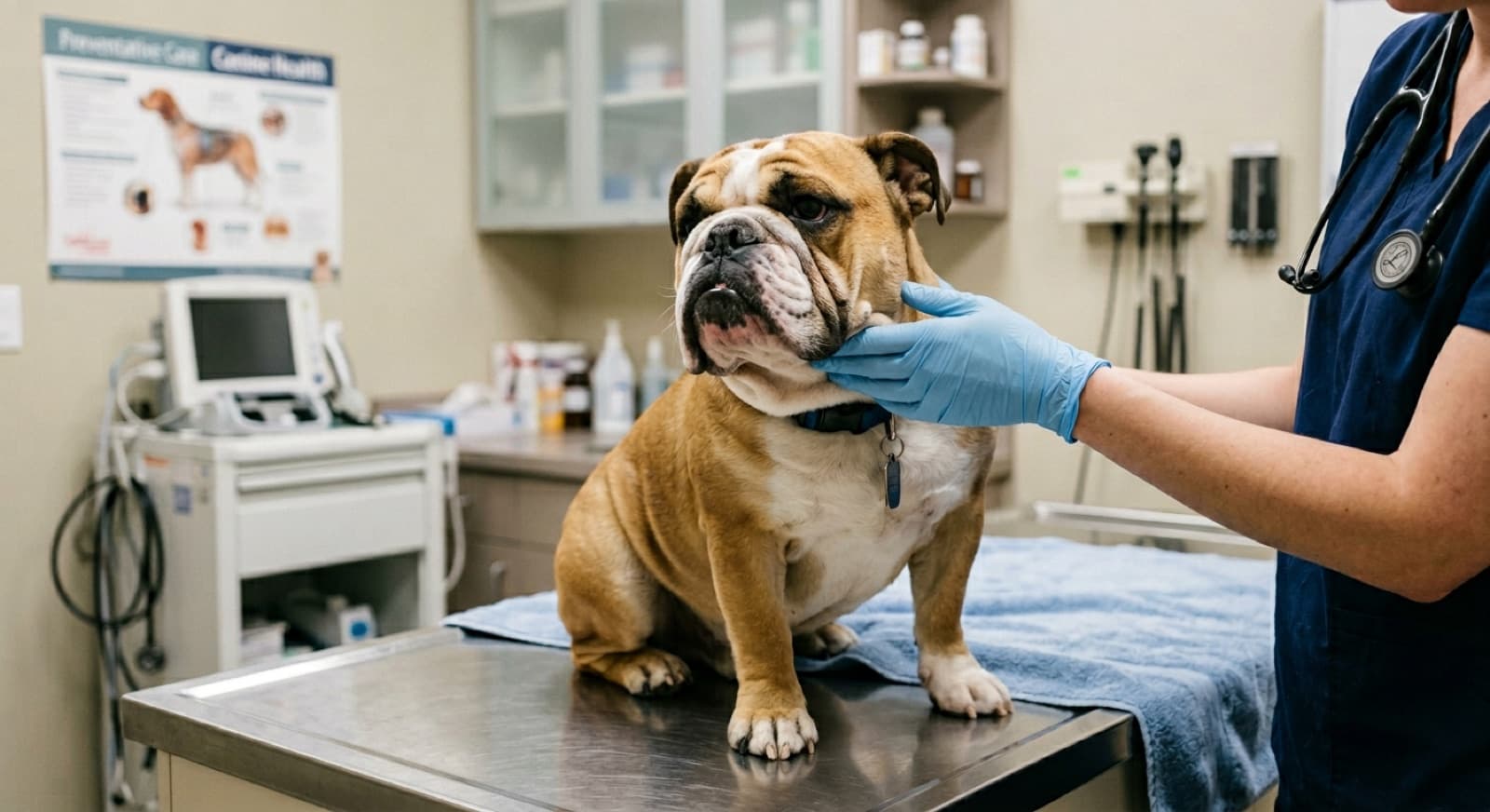
The bulldog's flat-faced build drives its health profile: BOAS and breathing difficulty, dangerous heat intolerance (a real Toronto summer risk), skin-fold infections, hip and joint problems, and eye and dental conditions. Lifespan is around 8 to 10 years, and this is one of the most vet-intensive, expensive breeds to own, many need airway surgery. The highest-impact things you control: keep the dog lean, manage heat rigorously, clean the skin folds routinely, and treat breathing problems with your vet. Insure while young and healthy. None of this is a reason to avoid the breed, only a reason to go in prepared. Browse adoptable Toronto dogs.
Breathing and heat: the core issues
Everything about bulldog health starts with the airway. As an extreme brachycephalic breed, bulldogs commonly have narrowed nostrils, an elongated soft palate, and a narrowed windpipe, collectively BOAS, which makes breathing harder and cooling far less efficient. That inefficient cooling is why heat is dangerous: a bulldog can progress to fatal heatstroke far faster than a normal-nosed dog, making Toronto summers a genuine safety concern that demands air conditioning, shade, and cool-hour-only exercise. Many bulldogs benefit from BOAS surgery to widen the nostrils and shorten the soft palate. The VCA veterinary library explains brachycephalic syndrome well, and our daily-care guide covers heat management.
Skin, joints, eyes, and teeth
Beyond the airway, skin-fold dermatitis is the most common day-to-day issue, the facial wrinkles and tail pocket trap moisture and infect if not cleaned routinely (largely preventable with a simple wipe-and-dry habit). Orthopedically, bulldogs are prone to hip and elbow dysplasia, luxating patellas, and arthritis, worsened by any excess weight. Eye conditions are common too: cherry eye, dry eye, and entropion. And the shortened jaw crowds the teeth, so dental care matters. Underlying nearly all of it is obesity, the single biggest modifiable risk, which worsens breathing, joints, and heat tolerance all at once. Keeping a bulldog lean is the most important daily health choice an owner makes.
Costs, insurance, and a good life
This is one of the most expensive breeds to own over a lifetime, and many bulldogs will need airway surgery, skin treatment, joint care, or eye procedures, so a financial plan is not optional. Insure while the dog is young and healthy, before any condition is diagnosed and excluded as pre-existing, and compare Canadian providers on brachycephalic and hereditary coverage specifically. Budget for routine vet care plus a surgery fund. Adopting through a rescue that has assessed the dog's health gives you a clearer starting point, and our cost guide has the full Toronto picture. With a prepared home, a bulldog lives a happy, comedic, deeply affectionate life.
Browse adoptable English Bulldogs in Toronto
Bulldogs and bulldog mixes from Toronto shelters and rescues, with foster notes on breathing, skin, and health.
See Available English Bulldogs →Frequently Asked Questions
What health problems are English Bulldogs prone to?
English Bulldogs are predisposed to a substantial list, mostly driven by their extreme brachycephalic (flat-faced) build. The major categories: Brachycephalic Obstructive Airway Syndrome (BOAS) and breathing difficulty; serious heat intolerance and heatstroke risk; skin-fold dermatitis and infections in the facial wrinkles and tail pocket; orthopedic problems including hip and elbow dysplasia, patellar luxation, and a tendency to arthritis; eye conditions such as cherry eye, dry eye, entropion, and cherry-eye-related irritation; dental crowding from a shortened jaw; and a strong tendency to obesity, which worsens everything. Bulldogs are one of the most health-intensive breeds there is, and prospective owners should assume higher-than-average lifetime vet costs, often including surgery. This is manageable with a prepared, well-funded home, but it should never be a surprise.
What is BOAS in an English Bulldog?
BOAS stands for Brachycephalic Obstructive Airway Syndrome, and it is the defining health issue of flat-faced breeds like the bulldog. Because the skull is compressed, bulldogs often have narrowed nostrils (stenotic nares), an elongated soft palate, a narrowed windpipe, and other airway abnormalities that make breathing harder. Signs range from noisy breathing, snoring, and snorting to exercise intolerance, gagging, and in severe cases collapse or life-threatening airway crises, especially in heat or with exertion. Many bulldogs benefit from BOAS surgery (widening the nostrils and shortening the soft palate), which can dramatically improve quality of life, so a vet assessment of airway function is worthwhile. Weight control matters enormously, since even mild obesity worsens BOAS. Any bulldog owner must understand this is the core of the breed’s health profile.
Why are English Bulldogs so sensitive to heat?
Heat sensitivity is a direct consequence of the brachycephalic anatomy, and it is genuinely dangerous. Dogs cool themselves primarily by panting, moving air over moist airway surfaces, but a bulldog’s compressed, obstructed airway makes panting far less effective, so they cannot shed heat well and can progress to fatal heatstroke much faster than a normal-nosed dog. This means Toronto’s hot, humid summers require real management: air conditioning, constant shade and water, and exercise only in the cool of early morning or evening, never any exertion in the heat of the day. Learn the early signs of heat distress (excessive panting, drooling, bright-red gums, distress, weakness) and treat overheating as the emergency it is. Our daily-care guide covers heat management in detail, it is one of the most important skills for keeping a bulldog safe.
Do English Bulldogs have skin problems?
Yes, skin-fold dermatitis is one of the breed’s most common and manageable issues. The facial wrinkles, nose rope, lip folds, and the tail pocket (the fold of skin around a screw or inset tail) trap moisture, debris, and bacteria or yeast, and without routine cleaning they become red, smelly, irritated, or infected. The good news is that this is largely preventable with a simple daily or every-few-days routine: wipe the folds clean, dry them thoroughly, and keep them dry, since moisture is the trigger. The tail pocket in particular is easy to overlook and can become badly infected if neglected. Bulldogs may also have allergies and general skin sensitivity. Our skin-folds-and-daily-care guide walks through the exact fold-cleaning routine, it is a core part of bulldog ownership, not an optional extra.
How long do English Bulldogs live and how do I keep mine healthy?
English Bulldogs typically live around 8 to 10 years, shorter than many breeds, largely because of the health burden of their build. You cannot change the genetics, but attentive care makes an enormous difference. The highest-impact things: keep the dog lean (obesity worsens breathing, joints, and heat tolerance, so this is the single most important daily choice), manage heat rigorously, clean the skin folds routinely, address breathing problems with your vet (including considering BOAS surgery), stay current on eye and dental care, and keep up with vet checkups so problems are caught early. Adopting a bulldog from a rescue that has assessed its health, and budgeting for the breed’s real vet costs, sets you up to give it the best possible life within the limits of the breed.
Should I get pet insurance for an English Bulldog?
For an English Bulldog, pet insurance is strongly recommended, arguably more so than for almost any other breed, because this is one of the most expensive breeds to own over a lifetime and many will need airway surgery, skin-infection treatment, joint care, or eye procedures. The critical rule is to insure while the dog is young and healthy, before any conditions are diagnosed, because insurers exclude pre-existing conditions, and a bulldog that already has a diagnosed BOAS or skin issue may find that condition uncovered. Compare Canadian providers on brachycephalic and hereditary coverage specifically, read the exclusions carefully, and treat either insurance or a substantial dedicated vet fund as a non-negotiable part of bulldog ownership. Going in without a financial plan for the breed’s health is the mistake that lands bulldogs in rescue.
English Bulldog Adoption in Toronto
Where to adopt, costs, and the honest bulldog reality.
Skin Folds & Daily Care
Fold cleaning, tail pocket, heat, and weight management.
New dog? Start with these care guides
Everything a new adopter needs to set up a safe, happy home.