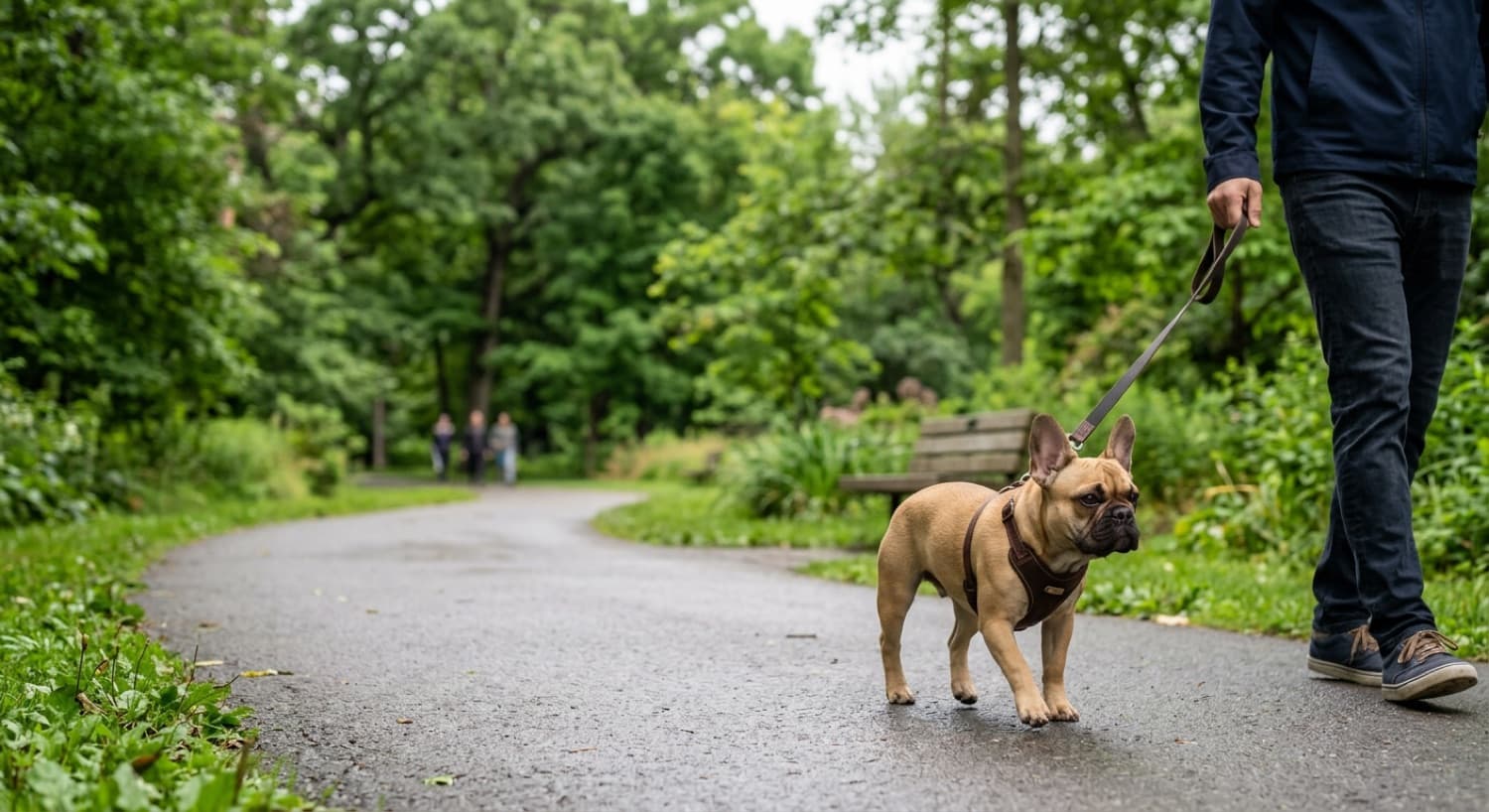
The short answer
A Frenchie's flat face crowds its airway (a condition called BOAS), so it works harder to breathe, cannot cool itself well, and overheats dangerously fast. Most cannot swim safely and many cannot fly in cargo. Learn the warning signs (laboured breathing, blue or grey gums, collapse are emergencies), walk only in the cool hours, always carry water, never leave a Frenchie in heat, and ask your vet about corrective airway surgery. This is general information, not veterinary advice; in a breathing crisis, get to a vet immediately.
What BOAS actually is
Brachycephalic obstructive airway syndrome is the umbrella term for the breathing problems that come from a flat-faced skull. A French Bulldog has been bred to have a very short muzzle, but the soft tissue inside, the nostrils, palate, and throat, was not shortened to match, so it is crowded into too small a space. In practice that usually means some combination of narrowed nostrils (stenotic nares), an elongated soft palate that hangs into the airway, and, over time, secondary changes as the airway is strained. The everyday result is the snorting and snoring the breed is known for; the serious result is a dog that struggles to move enough air when it exercises or gets hot. It is important to understand this is structural. A Frenchie that breathes loudly is not unfit, it is working with a compromised airway, and no amount of conditioning changes the anatomy.
The warning signs, and when it is an emergency
Some noise is normal, so learn the line between the breed's usual sounds and genuine trouble:
- Normal: light snorting, snoring while asleep, a bit of snuffling.
- See your vet: breathing that is louder or more laboured than usual, frequent gagging or retching, poor exercise tolerance, or breathing that clearly worsens in heat or after mild activity.
- Emergency, go now: a bluish or grey tinge to the gums or tongue (poor oxygen), obvious struggle to breathe, or collapse. These need a vet immediately.
The reason to know these cold is that a Frenchie in respiratory distress, especially combined with heat, can deteriorate quickly. When in doubt, treat breathing trouble as urgent rather than waiting to see if it settles.
How surgery can help
Many Frenchies benefit from corrective airway surgery. The common procedures widen the nostrils and shorten or trim the overlong soft palate, and sometimes address other airway structures, all to reduce the obstruction and let more air through. Owners often report that a Frenchie breathes more easily, exercises better, and tolerates heat noticeably better afterward, and many vets prefer to assess for surgery sooner rather than letting the airway strain worsen over years. Whether your dog is a candidate, and the timing, is a decision to make with your veterinarian, ideally one experienced with brachycephalic airways. The AKC Canine Health Foundation supports research into brachycephalic airway disease. If you are adopting, ask the rescue whether the dog has already been assessed or had airway surgery.
Heat: the number one danger
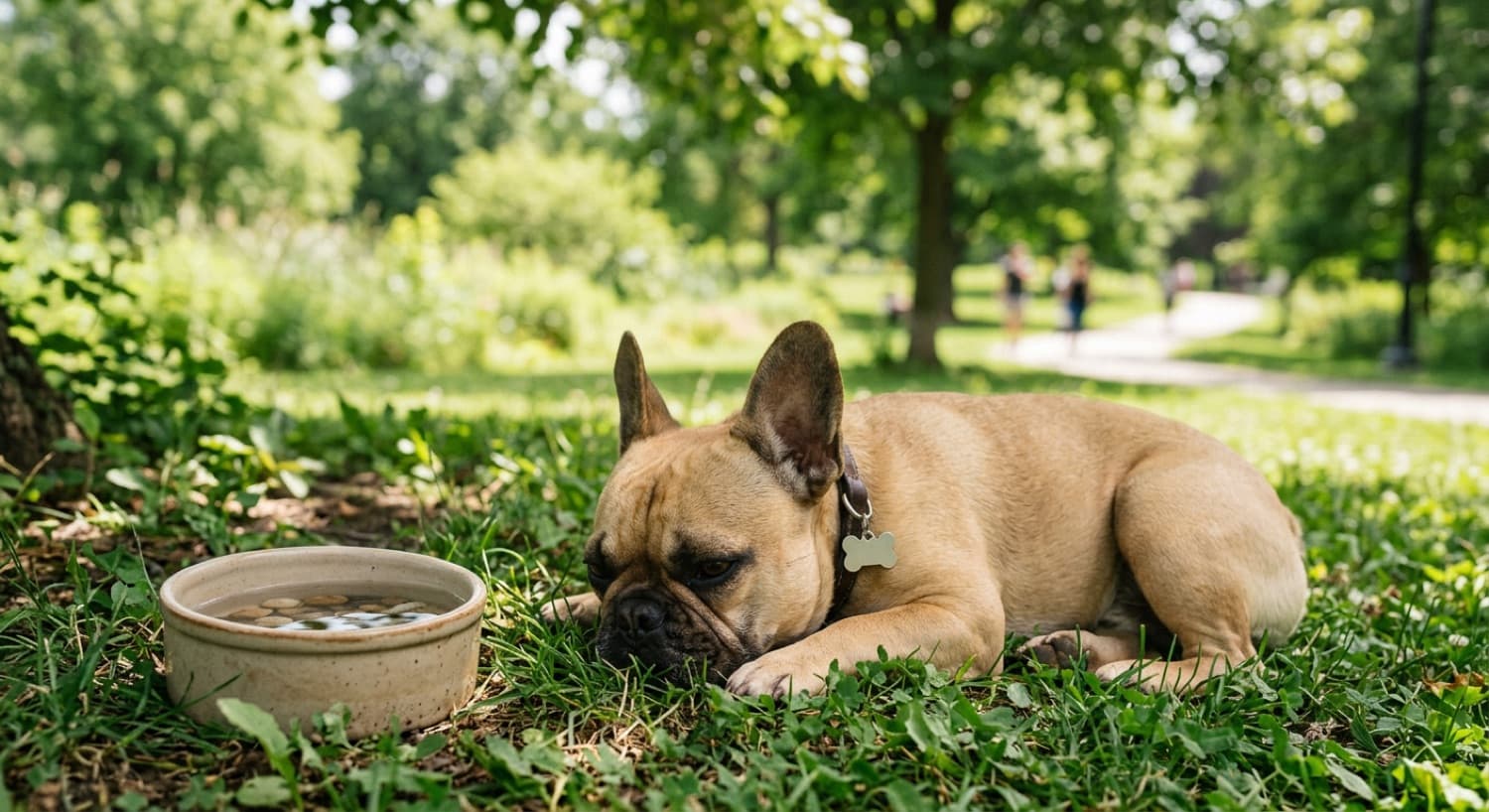
Because panting is how dogs shed heat, and a Frenchie's crowded airway makes panting far less effective, the breed cannot cool itself well and is at high risk of heat stroke, sometimes in weather other dogs handle easily. In a humid Toronto summer this is the danger that matters most. Walk only in the cool early morning or after dusk, keep outings short on warm days, always bring water, and check the pavement, hot sidewalks burn paws and radiate heat up at a low dog. Never leave a Frenchie in a parked car or a hot, still room, even for a few minutes. Learn the heat-stroke signs, frantic or distressed panting, heavy drooling, weakness, vomiting, and collapse, and if you see them, move the dog to shade, cool it with room-temperature water (not ice-cold, which can be counterproductive), offer water, and get to a vet immediately. The AVMA warm-weather guidance is a good primer. On the worst days, the right walk is no walk.
Water, travel, and living with the limits
Two more limits round out the picture. Most Frenchies cannot swim, their dense, front-heavy build and flat face make water a drowning risk, so they must never be left unsupervised near a pool, and a canine life jacket is wise around open water (a shallow paddling pool or a wet towel is a safer way to cool off). And most Frenchies cannot fly in cargo, because many airlines restrict brachycephalic breeds for exactly the reasons above; some allow a small Frenchie in-cabin, but policies vary, so check well ahead if you plan to travel. The Canadian Kennel Club breed profile is a useful reference on the breed. None of these limits make a Frenchie any less of a wonderful companion; they simply define how to keep one safe. For the wider medical picture, see our Frenchie health guide.
Browse adoptable French Bulldogs in Toronto
Understanding the breathing and heat reality is the best preparation for giving a rescue Frenchie a safe, happy home. Meet the adoptable French Bulldogs and Frenchie mixes near you.
See Available French Bulldogs →Frequently Asked Questions
Why do French Bulldogs have trouble breathing?
Because of their shape. A Frenchie has a normal amount of soft tissue packed into a shortened skull, so the airway is physically crowded. This is called brachycephalic obstructive airway syndrome (BOAS), and it usually involves some combination of narrowed nostrils (stenotic nares), an elongated soft palate that partly blocks the throat, and, over time, other airway changes. The result is that a Frenchie works harder to move air than a long-nosed dog does, which is why they snort and snore, tire quickly, and are so vulnerable to heat. It is a structural issue, not a fitness one.
What are the warning signs of breathing trouble in a Frenchie?
Some noise is normal for the breed, but learn the line between normal and worrying. Everyday snorting and snoring is typical. Signs that need veterinary attention include laboured or louder-than-usual breathing, gagging or retching, low exercise tolerance, a bluish or grey tinge to the gums or tongue (a sign of poor oxygen, and an emergency), and collapse. Breathing that worsens noticeably in heat or after mild activity is a red flag. If you ever see blue or grey gums, or a Frenchie struggling to breathe, treat it as an emergency and get to a vet immediately.
Can surgery help a French Bulldog breathe better?
Often, yes. Corrective airway surgery for BOAS typically widens the nostrils and shortens or trims the elongated soft palate, and sometimes addresses other airway structures, to open up airflow. Many Frenchies breathe, exercise, and tolerate heat noticeably better afterward, and vets often recommend assessing for it earlier rather than waiting for the airway to worsen. Whether your dog is a candidate, and when, is a decision for your veterinarian or a veterinary surgeon, ideally one experienced with brachycephalic airways. If you are adopting a Frenchie, ask the rescue whether the dog has been assessed for BOAS.
Why do French Bulldogs overheat so easily?
Dogs cool themselves mainly by panting, which moves air across the moist surfaces of the mouth and airway to shed heat. A Frenchie's compromised, crowded airway makes panting far less effective, so it simply cannot dump heat the way a long-nosed dog can. That is why brachycephalic breeds are at high risk of heat stroke, sometimes in conditions that would be fine for other dogs. In a humid Toronto summer this is a genuine danger: walk only in the cool early morning or after dusk, always carry water, keep outings short on warm days, and never leave a Frenchie in a parked car or a hot room, even briefly.
Can French Bulldogs swim?
Most cannot, and water is a real drowning risk for the breed. A Frenchie is dense and front-heavy with a flat face, a body shape that makes staying afloat and keeping the nose above water very difficult, so many Frenchies sink rather than swim. They should never be left unsupervised near a pool, and around any open water a canine life jacket is a sensible precaution. This does not mean a Frenchie cannot enjoy a cool-off, a shallow paddling pool, a hose, or a wet towel on a hot day are all great, but active swimming is not something to assume this breed can do safely.
Can French Bulldogs fly on airplanes?
Usually not in cargo, and you should plan around this. Many airlines restrict or outright refuse to carry brachycephalic breeds like French Bulldogs in cargo holds, because the stress, heat, and reduced airflow pose a serious risk to a dog that already struggles to breathe. Some airlines allow small Frenchies to travel in-cabin under the seat, subject to size and carrier rules, but policies vary and change, so anyone planning to travel with a Frenchie should check the specific airline's brachycephalic policy well in advance. For many owners, this simply means a Frenchie is a stay-home or drive-with-us dog, which is worth knowing before you adopt.
How do I keep my French Bulldog safe in a Toronto summer?
Treat heat as the number one seasonal risk. Walk only in the cool parts of the day, early morning and after sunset, and keep summer outings short. Always bring water and offer it often. Watch pavement temperature, since hot sidewalks burn paws and radiate heat up at a low dog. Provide shade and airflow at home, and use cooling aids like a wet towel or a cooling mat on hot days. Learn the heat-stroke signs, frantic or distressed panting, drooling, weakness, vomiting, collapse, and if you see them, cool the dog with room-temperature (not ice-cold) water and get to a vet immediately. When in doubt on a hot day, stay in.
French Bulldog Health Issues
Spine, skin, eyes, and the full Frenchie health picture.
French Bulldog Adoption in Toronto
Where to adopt, the ethics, and the real costs.
New dog? Start with these care guides
Everything a new adopter needs to set up a safe, happy home.