The short answer
Treat a Shiba as a permanent flight risk. They are independent, high-prey-drive escape artists whose recall is never fully reliable, so never off-leash in unfenced areas, ever. Contain rigorously: a secure 5-to-6-foot fence that is dig-proofed and checked for gaps (no invisible fences), self-latching gates, door-dash management, and an escape-proof harness on walks (Shibas back out of collars). Train recall on a long line with high-value rewards as one safety layer, not the safety net. Keep the microchip and ID current. If your Shiba gets loose, do not chase, run away to make it chase you, or lure it calmly. Browse adoptable Toronto dogs.
Never off-leash in unfenced spaces
If there is one non-negotiable rule of Shiba ownership, it is that the Shiba is a flight risk, and containment is what keeps it alive. More Shibas are lost or killed through escape and bolting than through any health issue, and almost all of it is preventable. Even a well-trained Shiba can spot a squirrel and be gone in an instant, ignoring every command and running toward traffic, this is breed wiring, not a training gap. Off-leash freedom belongs only inside a securely fenced area; everywhere else, the leash stays on, every time. This single rule prevents the most common and most tragic Shiba accidents.
Contain first, train recall as backup
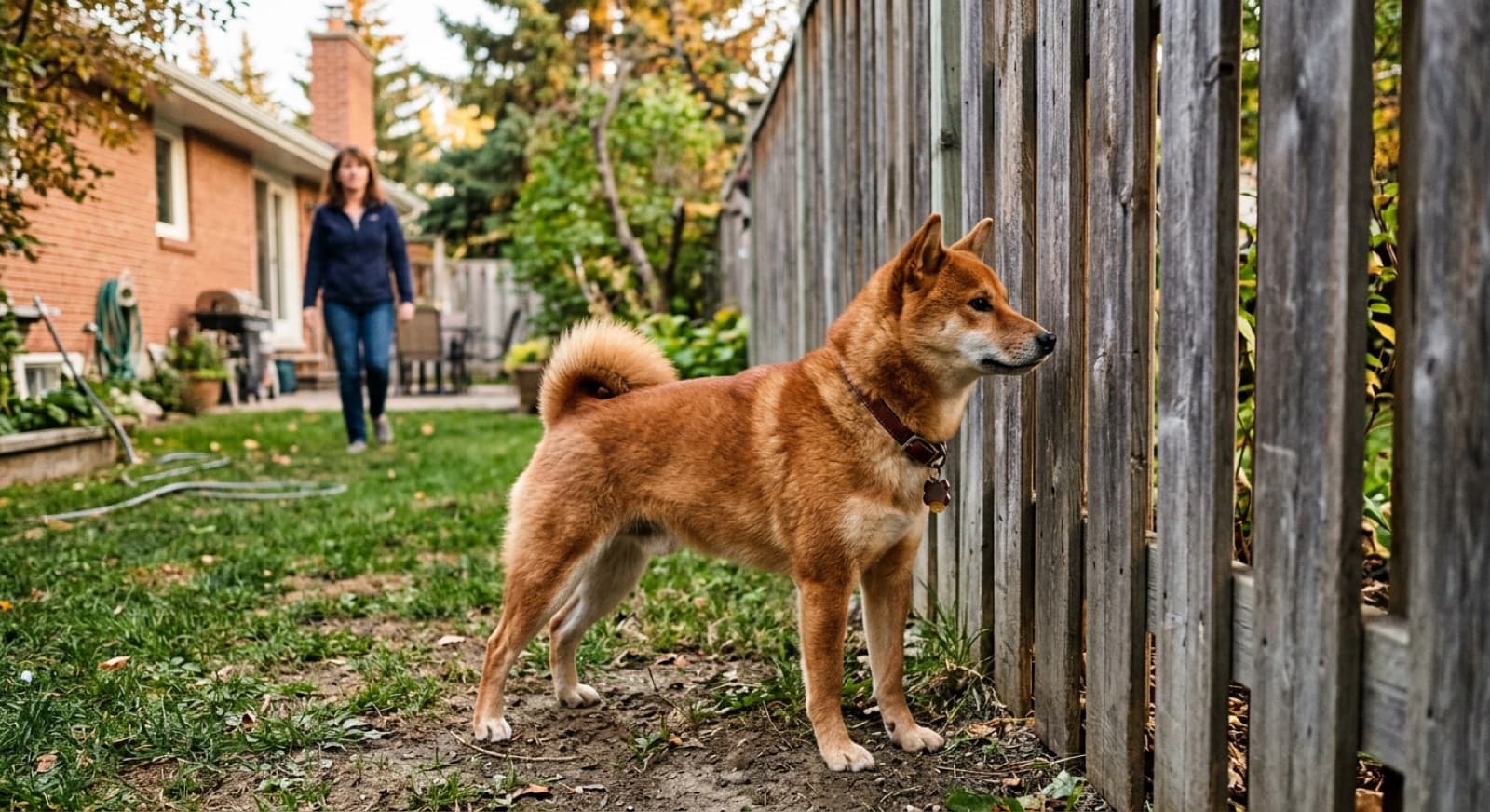
Shibas escape because they are independent, athletic, clever, and prey-driven, and they will test a fence for weak points. Contain accordingly: a secure physical fence at least 5 to 6 feet tall, dig-proofed and checked regularly, with reliable self-latching gates. Manage doors at home to prevent dashing, and on walks use a properly fitted escape-proof harness (Shibas back out of collars). Skip invisible fences: a prey-driven Shiba blows through the correction and is then stuck outside. Do train recall, it is a valuable safety layer, but with realistic expectations: use very high-value rewards, practise on a 15-to-30-foot long line in safe areas, never call the dog for something it dislikes, and accept that recall will likely never be fully reliable under distraction. Our Shiba adoption guide covers the wider temperament picture.
If a Shiba gets loose in the city
Prevention is everything, but have a loose-dog plan ready. The counterintuitive key is do not chase, a loose Shiba treats a chasing human as a game and runs further, so instead run away to make it chase you, drop to the ground and act calm, or lure it with a happy voice and a treat bag. Keep a recent photo, ensure the microchip and ID tag are current, and know the resources: in Toronto, contact the City of Toronto Animal Services, post immediately to local lost-and-found-pet groups, and alert neighbours, fast, wide notice recovers dogs. Because Shibas are such flight risks, every owner should have this plan in mind from day one, and manage containment so rigorously they never need it. The Canadian Kennel Club has more on the breed's independent heritage.
Ready to keep a Shiba safe?
If you can commit to rigorous containment and realistic training, a Shiba is a fascinating companion. Browse adoptable Shiba Inus and mixes from Toronto shelters and rescues.
See Available Shiba Inus →Frequently Asked Questions
Can Shiba Inus be trusted off-leash?
Honestly, no. The overwhelming consensus among experienced Shiba owners and trainers is that Shiba Inus should never be trusted off-leash in unfenced areas. Shibas are independent, high-prey-drive dogs with a strong bolting instinct and famously unreliable recall, and even a well-trained Shiba can, the moment it spots a squirrel or gets a whiff of something interesting, simply take off and ignore every command, sometimes running for kilometres or into traffic. This is not a training failure so much as a breed characteristic; Shibas were developed as independent hunters who make their own decisions, and that wiring does not switch off. The practical rule for Toronto: keep your Shiba leashed in all unfenced spaces, always, and provide off-leash freedom only within a securely fenced area. Train recall as one layer of safety, but never rely on it.
Why are Shiba Inus such escape artists?
Shibas combine several traits that make them exceptional escapers. They are intensely independent and driven, bred as agile hunting dogs who solve problems and act on their own initiative, so a Shiba that wants out will actively work at it. They are athletic and clever, capable of climbing, jumping, and squeezing through or under gaps that would stop a less determined dog, and they will test a fence for weak points. They have a strong prey drive and a wanderlust that makes the outside world highly tempting. And their unreliable recall means that once out, they do not come back. Put together, this makes the Shiba a genuine Houdini, and containment failures, an unlatched gate, a gap under a fence, a door left ajar, a slipped collar, are the leading way Shibas get lost or hurt. Assume your Shiba will exploit any weakness, because it will.
What fencing and harness does a Shiba need?
For fencing, a Shiba needs a secure, physical fence, and invisible or electric fences are strongly discouraged, because a high-prey-drive Shiba will often blow through the correction to chase something and then be trapped outside the boundary. A good Shiba fence is tall enough to prevent jumping (typically at least 5 to 6 feet), dig-proofed at the base, and checked regularly for gaps and dig spots, with reliable self-latching or lockable gates. For walks, use a properly fitted escape-proof harness rather than a collar, because Shibas are notorious for backing out of collars and even standard harnesses when they panic, and some owners use both a harness and a martingale collar with the leash clipped to both for redundancy. In a Toronto condo, an escape-proof harness is essential for the trips through lobbies and elevators. A well-fitted harness plus secure containment are the two most important pieces of Shiba safety gear.
Can you train recall in a Shiba Inu at all?
Yes, you can and should train recall, it is a valuable safety layer, but with realistic expectations, and never as the primary safety net. Because Shibas are independent and not naturally eager to please, recall training takes patience, consistency, and very high-value rewards (special treats the dog gets only for coming when called), plus a lot of repetition in gradually more distracting environments. Practise on a long line (a 15-to-30-foot training lead) in safe areas so the dog experiences freedom while you retain physical control, and never call your Shiba to you for something it dislikes, which teaches it that coming is a bad deal. Even with excellent training, accept that a Shiba’s recall will likely never be 100 per cent reliable under high distraction, so a trained recall becomes one layer in a system that also includes leashes, fences, and harnesses, not a substitute for them.
What do I do if my Shiba gets loose in Toronto?
First, prevention is everything, but if your Shiba does get loose, how you react matters, and the counterintuitive key is: do not chase. A loose Shiba often treats a chasing human as a game or a threat and runs further, sometimes into danger, so instead of running after the dog, try to get its attention and then run away from it (many dogs will chase you), or drop to the ground and act calm and interesting, or use a happy voice and the sound of a treat bag to lure it in. Have a plan ready before you ever need it: keep a recent photo, ensure the microchip registration and ID tag are current (a lost-dog lifeline), and know the local resources. If the dog is truly loose in Toronto, contact the City of Toronto Animal Services, post immediately to local lost-and-found-pet Facebook groups and neighbourhood networks, and alert neighbours. An up-to-date microchip and ID are the single best safeguards if the worst happens.
How do I manage a Shiba around Toronto’s dog parks and shared spaces?
Carefully, because the same prey drive and dog-reactivity that make containment essential also shape how a Shiba does in busy shared spaces. Many Shibas are not ideal dog-park dogs, they can show same-sex aggression and are often not tolerant of pushy strangers, so a fully-enclosed dog park should only be used after honest assessment of your individual dog, and many Shibas do better with structured walks and known, compatible playmates than with the free-for-all of a busy park. In a condo building, use the escape-proof harness in lobbies and elevators, give other dogs space, and never let the Shiba off-leash in shared outdoor areas that are not securely fenced. The good news is that Shibas have moderate exercise needs and are content with leashed walks and mental enrichment, so a rich, safe routine does not depend on off-leash freedom at all.
Shiba Inu Adoption in Toronto
Where to adopt, costs, and the temperament reality.
Shiba Inu Health Issues
Allergies, knees, and eyes.
New dog? Start with these care guides
Everything a new adopter needs to set up a safe, happy home.