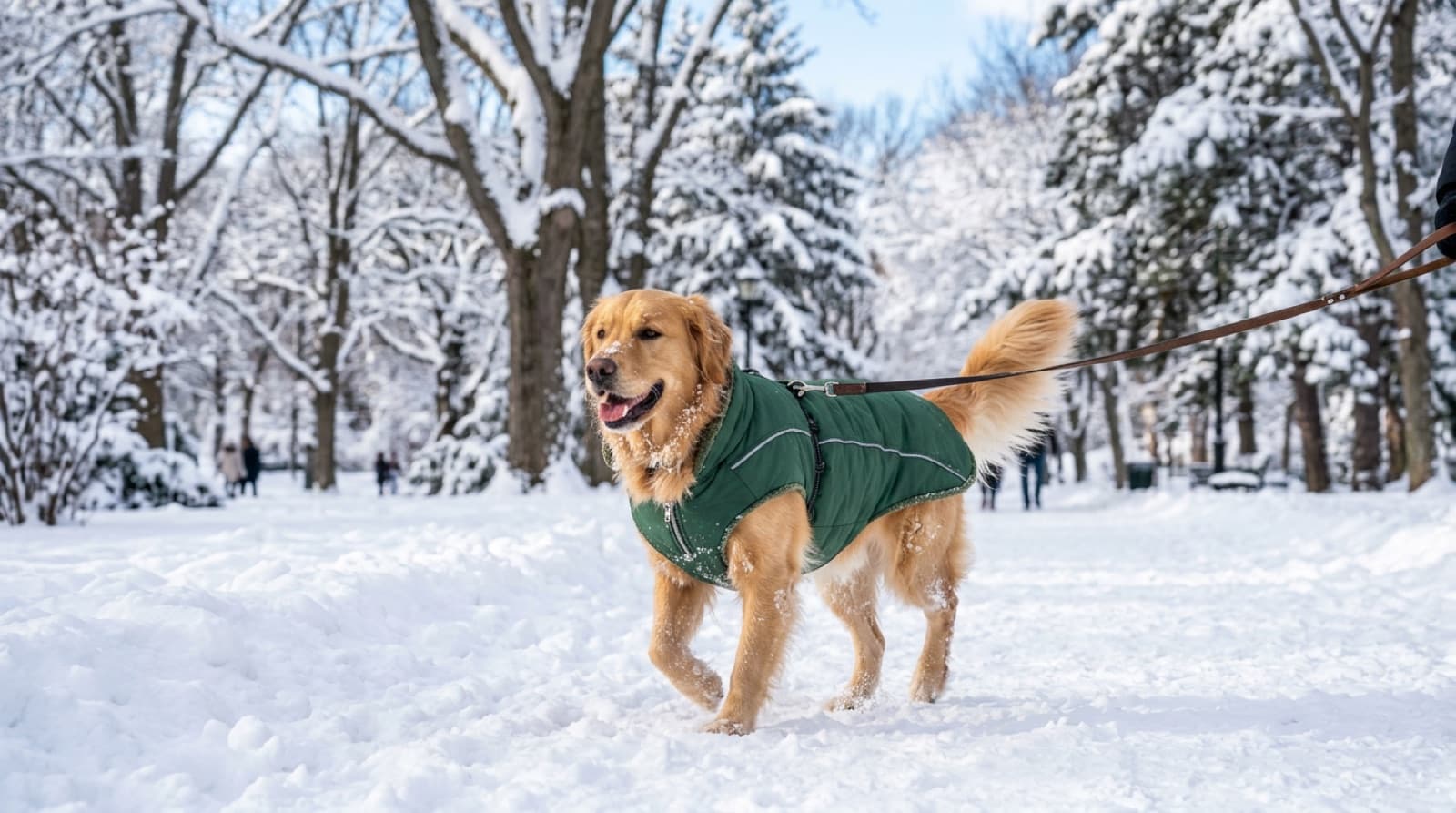
The short answer
Wipe salt off paws and belly after every walk (or use boots), give small and thin-coated dogs a proper coat, shorten walks below roughly minus 10 Celsius with wind chill, keep dogs away from antifreeze and thin ice, and move exercise indoors on dangerous days. Big double-coated breeds handle the cold well; small short-haired dogs need the most protection.
Salt and paws: the Toronto winter staple
Toronto salts its roads and sidewalks heavily, and salt is the single most common winter problem for city dogs. It irritates and cracks paw pads, and a dog that licks it off its feet can get sick. The fix is simple: wipe your dog's paws and belly with a warm damp cloth after every walk, use a paw balm before you head out, and consider boots if your dog will wear them (boots solve salt and ice in one). Check between the toes for packed ice and salt crystals, which cause limping if left.
Cold, coats, and how long to walk
Near or below minus 10 Celsius, and colder with Toronto's frequent wind chill, shorten walks and watch your dog closely. Small, thin-coated, senior, and young dogs feel it first and genuinely benefit from a warm, well-fitting coat, which is equipment rather than fashion for those dogs. Large double-coated breeds like Huskies and many Shepherds are built for it and usually need no coat. Shivering, lifted paws, or a dog that wants to turn back are your signals to head in. On the coldest days, several short trips beat one long march.
Hazards to keep in mind
Antifreeze is sweet and lethal in tiny amounts, so keep dogs off garage floors and driveway puddles. Ice on the ravine trails, the Lake Ontario shoreline, and pond paths can give way, so keep dogs leashed near any frozen water. Ice-melt chemicals and sharp frozen ground injure paws, and a parked car becomes a freezer, so never leave a dog inside one. None of this is cause for alarm; it is just the short list of things to route around.
Keeping an energetic dog sane indoors
A high-energy dog still needs to burn energy when it is minus 20 outside. On dangerous days, move the workout indoors: training games, puzzle feeders, snuffle mats, tug, and hallway fetch all take the edge off. Save the real outings for Toronto's milder winter days and use the off-leash parks when the weather allows. If you have just brought a dog home, pair this with our Toronto first-week guide so a new dog settles safely into the season.
Thinking of adopting this winter?
Winter is a great time to adopt: dogs are cozy indoors while you bond. Browse adoptable Toronto dogs and give one a warm home.
Browse Toronto Dogs →Frequently Asked Questions
How cold is too cold to walk a dog in Toronto?
It depends on the dog, but a useful rule of thumb: temperatures near or below minus 10 Celsius (and colder with wind chill, which Toronto gets often) call for shorter walks and extra care, especially for small, thin-coated, senior, or young dogs. Large double-coated breeds tolerate cold far better than a small short-haired dog. Watch your dog: shivering, lifting paws, or reluctance to keep going means it is time to head in. On the coldest days, several short trips beat one long one.
Is road salt bad for my dog's paws in Toronto?
Yes, and Toronto uses a lot of it. Road and sidewalk salt irritates and cracks paw pads, and dogs that lick it off their feet can get an upset stomach or worse. After every winter walk, wipe your dog's paws and belly with a warm damp cloth to remove salt and de-icer. Consider paw balm before walks to protect the pads, or dog boots if your dog will tolerate them. Booties also solve the salt problem entirely.
Does my dog need a winter coat in Toronto?
Some dogs do, some do not. Small, thin-coated, senior, and short-haired dogs genuinely benefit from a warm, well-fitting coat in a Toronto winter, and it is equipment, not fashion, for those dogs. Large double-coated breeds like Huskies and many Shepherds are built for the cold and usually do not need one. If your dog shivers, tucks its tail, or wants to cut walks short, a coat helps. Boots are a separate decision, mostly about salt and ice.
What winter hazards should Toronto dog owners watch for?
Beyond cold and salt: antifreeze (ethylene glycol) is sweet-tasting and lethal in tiny amounts, so keep dogs away from garage floors and driveway puddles. Frozen water on ravine trails, the Lake Ontario shoreline, and pond paths can give way, so keep dogs leashed near any ice. Ice-melt chemicals, sharp frozen ground, and hidden ice under snow all cause paw injuries. And a car is a freezer in winter, so never leave a dog in one.
How do I keep my dog exercised during a Toronto winter?
Shorten and multiply: several short walks in extreme cold are safer than one long one. On genuinely dangerous days, move the exercise indoors with training games, puzzle feeders, snuffle mats, and hallway fetch, since a Shepherd or other high-energy dog still needs to burn energy even when it is minus 20. Toronto's milder days are perfect for the off-leash parks, so use them when the weather allows. A tired dog is a calm indoor dog through the long winter.
Can my newly adopted dog handle its first Toronto winter?
Most can, with sensible precautions. A dog arriving from a warmer climate or a shelter may never have seen deep cold, so introduce winter gradually, keep early walks short, and use a coat and paw protection while it acclimatises. Watch for shivering and cut walks accordingly. If you have just adopted, pair this with our Toronto first-week guide so your dog settles and stays safe through the season.
Should I change my dog's food or water in winter?
Usually not the food, unless your vet advises it, but hydration still matters: dogs can drink less in winter yet still need water, and dry indoor heating is dehydrating. Keep fresh water available and watch that outdoor bowls do not freeze. Very active dogs that spend real time outdoors in the cold burn more energy staying warm, so ask your vet whether a modest food adjustment makes sense for your specific dog rather than guessing.
First Week With a Rescue Dog
Settling a new dog in, winter edition.
Toronto Off-Leash Parks
Where to run your dog on milder winter days.
New dog? Start with these care guides
Everything a new adopter needs to set up a safe, happy home.