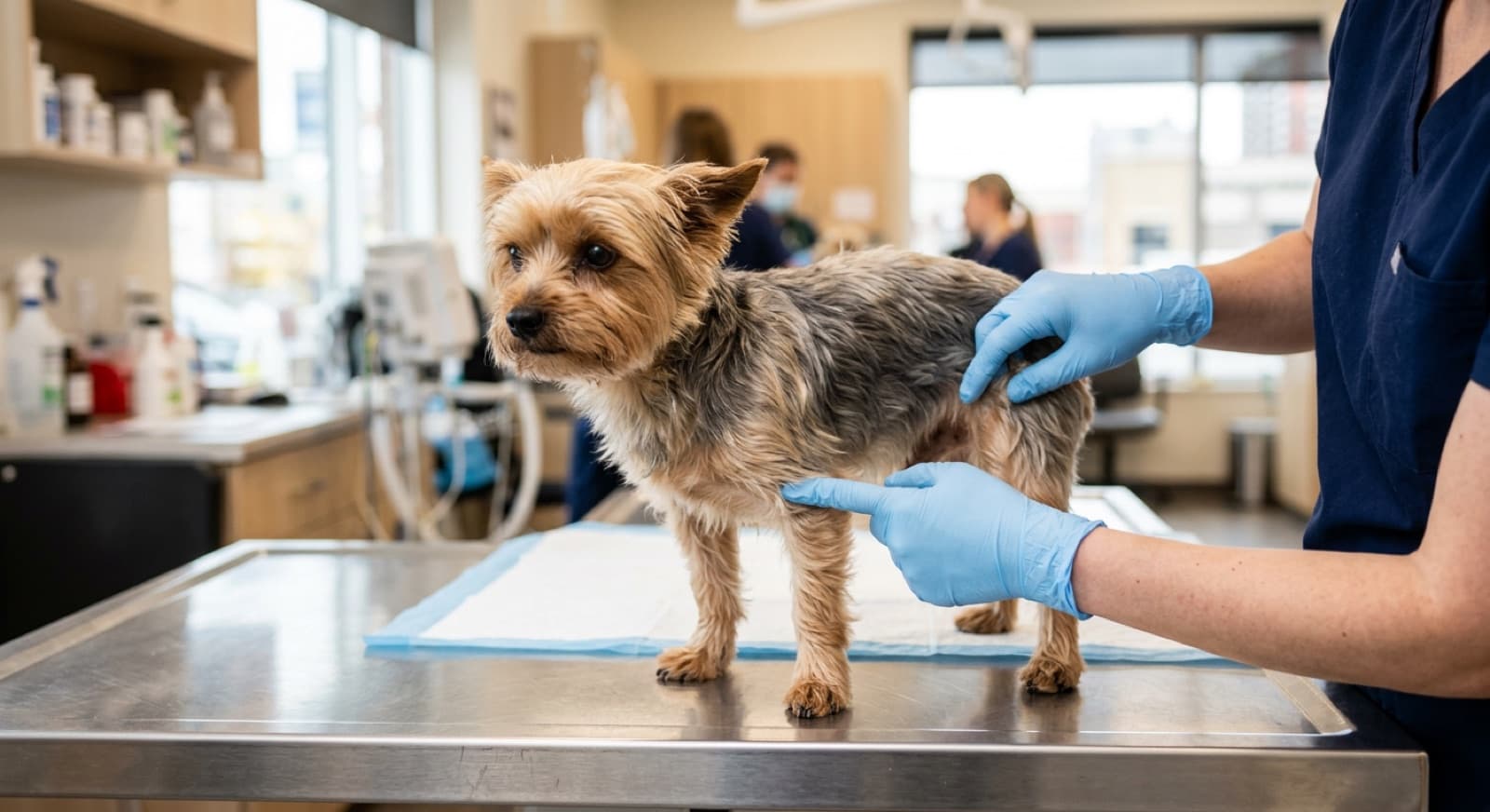
The short answer
Yorkies are generally healthy and long-lived (13 to 16 years) but prone to toy-breed issues: dental disease (the most common, and largely preventable), luxating patellas, collapsing trachea (use a harness, never a collar), hypoglycemia in tiny puppies, and liver shunts. The highest-impact things you control: brush the teeth, keep the dog lean, use a harness, protect them from Toronto cold, and use a vet experienced with toy breeds. Insure while young and healthy. None of this is a reason to avoid the breed, only to care for it knowingly. Browse adoptable Toronto dogs.
Teeth, knees, and the windpipe
Three issues sit at the centre of Yorkie health. Dental disease is the most common and the most preventable, tiny crowded mouths trap plaque, so brush regularly and keep up with professional cleanings, because untreated dental disease causes pain and can affect the heart. Luxating patellas (slipping kneecaps) are common in toy breeds and range from mild to surgical; keeping the dog lean protects the knees. Collapsing trachea, a weakening of the windpipe that causes a honking cough, is why every Yorkie should wear a harness rather than a collar, which presses on the trachea. The VCA guide to collapsing trachea is worth reading, and our grooming guide covers day-to-day care.
Hypoglycemia, liver shunts, and the very small
Two conditions relate to the Yorkie's tiny size. Hypoglycemia (dangerous low blood sugar) is a real risk in very young and very small puppies, whose minimal energy reserves can crash if they miss meals or get chilled, prevention is frequent small meals and warmth, and early signs (weakness, trembling, wobbliness) warrant immediate vet contact. Portosystemic liver shunt, a congenital blood-vessel abnormality Yorkies are notably prone to, can cause poor growth and neurological signs and may need surgery. Both risks are amplified in extreme “teacup” Yorkies, which is a strong reason to avoid that kind of breeding and to adopt a normal-sized dog from a reputable rescue instead.
Keeping a Yorkie healthy, and insurance
The care that matters most is simple and consistent: dental brushing and cleanings, weight control, a harness instead of a collar, cold protection in Toronto winters (tiny dogs chill fast, so a coat helps), regular vet checkups, and a vet experienced with toy breeds and their anesthesia sensitivity. On the money side, pet insurance is worth considering, because dental work, patella surgery, tracheal management, or a liver-shunt workup can run into the thousands, and the key is to insure while the dog is young and healthy, before anything is diagnosed and excluded. Our cost guide has the full Toronto picture. With attentive care, a Yorkie is a hardy, characterful companion for well over a decade.
Browse adoptable Yorkshire Terriers in Toronto
Yorkies and Yorkie mixes from Toronto shelters and rescues, with foster notes on temperament, coat, and health.
See Available Yorkshire Terriers →Frequently Asked Questions
What health problems are Yorkshire Terriers prone to?
Yorkies are generally long-lived but, like most toy breeds, carry a set of size-related predispositions every owner should know. The major ones: dental disease (the most common issue, their tiny, crowded mouths develop tartar and gum disease fast); luxating patellas (kneecaps that slip out of place); collapsing trachea (a windpipe that weakens and causes a honking cough); hypoglycemia (dangerous low blood sugar, especially in very young or very small puppies); portosystemic liver shunt (a congenital blood-vessel abnormality Yorkies are notably prone to); and various eye conditions. They can also be sensitive to anesthesia and cold. None of this means a Yorkie will be sickly, many live 13 to 16 years, but attentive care, especially dental care and weight control, plus a vet who knows toy breeds, makes a real difference.
Why is dental care so important for a Yorkshire Terrier?
Dental disease is the single most common health problem in Yorkies, and it is largely preventable, which is why it deserves special attention. Toy breeds have the same number of teeth as big dogs crammed into a tiny jaw, so crowding traps food and plaque, and tartar and gum disease develop early and fast. Left unmanaged, dental disease is not just bad breath and lost teeth, it causes real pain and the bacteria can affect the heart and other organs. Prevention is straightforward: brush the teeth regularly (ideally daily) with dog toothpaste, provide dental chews, and get professional dental cleanings under anesthesia as your vet recommends. Starting a brushing habit early and keeping up with vet dental checks is one of the highest-impact things a Yorkie owner can do for the dog’s long-term health and comfort.
What is a collapsing trachea in a Yorkshire Terrier?
Collapsing trachea is a condition where the cartilage rings supporting the windpipe weaken and flatten, narrowing the airway, and toy breeds like the Yorkie are among the most prone to it. The classic sign is a dry, honking cough (often described as goose-like), typically triggered by excitement, exercise, pulling on a collar, or drinking, and it can worsen over time. Management is usually possible and often very effective: crucially, use a harness rather than a collar (a collar presses directly on the trachea and can trigger or worsen coughing), keep the dog lean (excess weight worsens it), avoid smoke and irritants, and work with your vet, who may prescribe medication for flare-ups, with surgery reserved for severe cases. Many Yorkies with mild tracheal collapse live comfortable normal lives with a harness and weight control. If your Yorkie develops a honking cough, see the vet.
What is hypoglycemia and why does it affect Yorkie puppies?
Hypoglycemia is dangerously low blood sugar, and it is a real risk in very young and very small toy-breed puppies like Yorkies, because their tiny bodies have minimal energy reserves and can crash if they miss meals, get chilled, over-exert, or are stressed. Signs include weakness, wobbliness, lethargy, trembling, confusion, and in severe cases collapse or seizures, and it can become an emergency fast. Prevention in a young Yorkie puppy is about frequent small meals (not letting them go long without food), keeping them warm, and not over-exhausting them. If you see early signs, rubbing a bit of corn syrup or a sugar source on the gums can help buy time, but you should contact your vet immediately. This risk mainly applies to young puppies and the very smallest "teacup" Yorkies, adult, normal-sized Yorkies are generally past it, but it is a key reason to be wary of extreme-tiny breeding.
How long do Yorkshire Terriers live and how do I keep mine healthy?
Yorkies are long-lived, commonly reaching 13 to 16 years, and good care can help them live well throughout. The highest-impact things: prioritize dental care (brushing plus professional cleanings, since dental disease is their most common problem); keep the dog lean, which protects the knees, trachea, and overall health; use a harness rather than a collar to protect the windpipe; keep up with vet checkups so patella, heart, eye, or liver issues are caught early; protect them from cold (tiny dogs chill easily in Toronto winters, so a coat helps); and be cautious with anesthesia by using a vet experienced with toy breeds. Adopting from a rescue that has done a vet check and being wary of poorly bred "teacup" lines both start you off on a healthier footing.
Should I get pet insurance for a Yorkshire Terrier?
Pet insurance is worth serious consideration for a Yorkie. While they are not as vet-intensive as some breeds, they are prone to conditions that can be costly, dental work under anesthesia, patella surgery, tracheal-collapse management, and liver-shunt diagnosis or surgery among them, and a single major issue can run into the thousands. As with any breed, the key is to insure while the dog is young and healthy, before any condition is diagnosed and excluded as pre-existing. Compare Canadian providers on their coverage of hereditary and congenital conditions (relevant for liver shunts and patellas) and dental, read the exclusions, and weigh insurance against a dedicated savings fund. For a toy breed you plan to keep for 13-plus years, having a financial plan for the occasional big vet bill is simply prudent.
Yorkshire Terrier Adoption in Toronto
Where to adopt, costs, and the honest Yorkie reality.
Yorkshire Terrier Grooming
Brushing, the puppy cut, matting, and eye care.
New dog? Start with these care guides
Everything a new adopter needs to set up a safe, happy home.