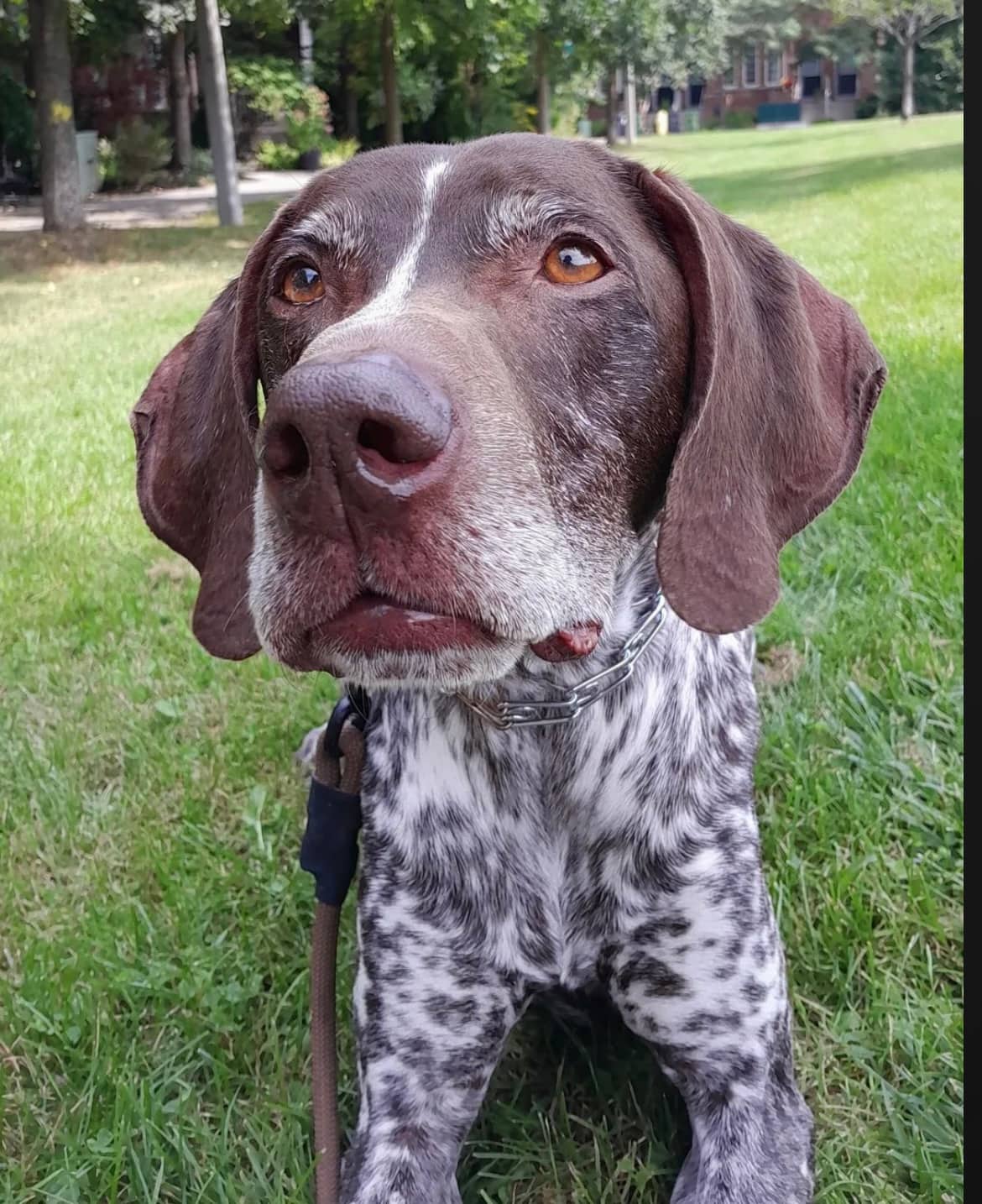
Get notified when a German Shorthaired Pointer is listed
We will email you the moment a German Shorthaired Pointer becomes available in Ontario, from a rescue or an owner rehoming.
Adopting a German Shorthaired Pointer in Ontario
German Shorthaired Pointers turn up regularly in Ontario rescue. The Toronto Humane Society, the Ottawa Humane Society, City of Toronto Animal Services, and Ontario SPCA branches see them frequently — usually 1 to 4 year old adolescents and young adults surrendered when the household runs out of energy to match the breed. GSPs are one of the most consistently surrendered sporting breeds in Ontario, and the surrender pattern is almost always exercise mismatch rather than temperament problem. A flexible adopter willing to drive across the province will find a match within weeks.
A reputable Ontario rescue will provide written notes on hip status, any cardiac screening, foster observations on prey drive and recall reliability, and the dog's behaviour around small dogs, cats, and children. GSPs are genuinely high-drive working dogs and the foster notes matter — apply within 24 to 48 hours of a dog appearing.
Exercise reality and the GSP zoomies
GSPs need 90 to 120 minutes of real daily exercise — off-leash running, structured field work, fetch with purpose, scent games — not a leashed neighbourhood walk. The breed was developed to point, retrieve, and track for full hunting days, and the working drive is genetically encoded. An under-exercised GSP turns destructive within days: counter-surfing, escape attempts, furniture destruction, neurotic pacing. The "GSP zoomies" — a frantic high-speed indoor sprinting episode triggered by pent-up energy — are diagnostic of the unmet exercise need and a leading reason owners surrender the breed in the first six months.
The Don Valley off-leash zones in Toronto, the NCC pathways in Ottawa, and rural off-leash areas across Ontario are good year-round venues. GSPs also excel at dog sports — agility, scent work, dock diving — and a structured outlet through a sport club is often what makes the breed work in a city home. GSPs are not first-time-owner dogs unless the owner is committed to the exercise schedule. Off-leash recall is reliable in trained dogs but the prey drive is high — squirrels, rabbits, and small dogs are real risk factors on city pathways.
Bloat, breed-specific conditions, and Ontario winter
The breed is predisposed to bloat or gastric dilatation-volvulus (a true emergency requiring surgery within hours, $5,000 to $8,000 at GTA emergency practices, prophylactic gastropexy at the spay or neuter visit worth discussing for any deep-chested dog), hip and elbow dysplasia, cone degeneration (CD — a hereditary retinal disorder for which an inexpensive DNA test is available, ask the rescue), lupoid dermatosis (a German breed-specific autoimmune skin disease that appears in adolescence), pannus or chronic superficial keratitis (a corneal inflammation), epilepsy, and certain cancers. The Ontario Veterinary College in Guelph and VCA Canada specialty branches handle the workups. Median lifespan is 12 to 15 years.
GSPs have a single short coat with minimal undercoat and almost no body fat — Toronto winter is harder on the breed than on most. From November through March a GTA or Ottawa GSP needs an insulated coat for outdoor time at minus 10 and below, booties for salted sidewalks (paw pad damage from road salt is a real issue for the breed), and sweaters indoors during cold snaps. Five-month sealed-home Ontario winter combined with cold-restricted outdoor time is a particularly hard combination for a high-drive sporting breed. Plan an indoor enrichment routine (scent boxes, puzzle feeders, tug games, structured trick training) before adopting.
Looking more broadly? Browse every adoptable dog across the province on Dog Adoption Ontario.
The rescues that most often list German Shorthaired Pointers across the province are Toronto Humane Society, Ottawa Humane Society, and Ontario SPCA (Ottawa Area). For breed-specific background, the Canadian Kennel Club is a useful reference.
German Shorthaired Pointer Adoption FAQ — Ontario
Tap a question to expand
How many German Shorthaired Pointers are available for adoption in Ontario?▼
Where can I adopt a German Shorthaired Pointer near me in Ontario?▼
How much exercise does a GSP actually need?▼
Can a GSP handle Toronto winter?▼
Should a GSP have prophylactic gastropexy?▼
How much does it cost to adopt a German Shorthaired Pointer in Ontario?▼
Can I get a German Shorthaired Pointer free to a good home in Ontario?▼
Are these German Shorthaired Pointers for sale in Ontario?▼
Where can I buy a German Shorthaired Pointer in Ontario, and should I?▼
Are there free German Shorthaired Pointers in Ontario, or german shorthaired pointers under $500?▼
Are there German Shorthaired Pointer puppies in Ontario, or only adults?▼
Where can I find a German Shorthaired Pointer near me in Ontario?▼
Popular dog breeds in Ontario
German Shorthaired Pointer adoption by city in Ontario
Each city page lists only the german shorthaired pointers available from rescues serving that city, with local adoption details.
Need to rehome a German Shorthaired Pointer?
If you can no longer keep your German Shorthaired Pointer, you can list them for free on LocalPetFinder. Your dog stays in your home until you find the right family, you screen who applies, and there is no surrender fee. Not sure yet? Our guide to surrendering a dog in Canada walks through every option first.
List your dog for free →