The short answer
Most Beagles can't be trusted off-leash in unfenced areas, on a scent, they go deaf to recall and wander off, a bred-in trait, not a training failure, so keep a Beagle on-leash or in securely fenced spaces. Train with patience, positive methods, and the breed's huge food motivation (high-value treats make a “stubborn” hound surprisingly willing), but don't rely on recall for off-leash safety. Channel the nose through sniffy walks, scent games, nosework, and food puzzles, as important as physical exercise. And manage the food obsession: disciplined feeding for health plus a food-secure home (Beagles are determined food thieves).
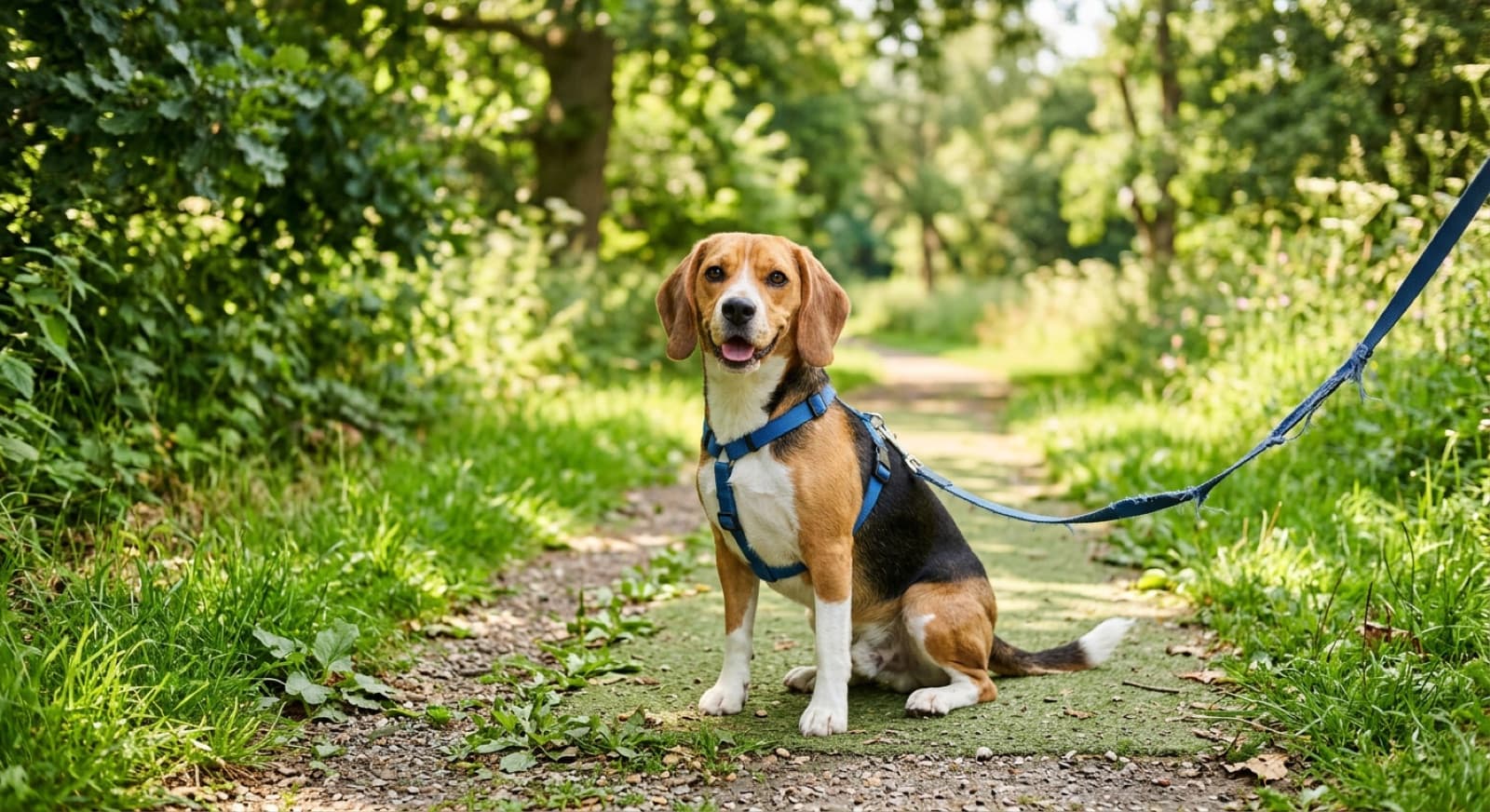
A Beagle is, above all, a nose with a dog attached. That scent drive is the source of the breed's charm and of its three biggest practical challenges: the unreliable recall, the food obsession, and the need for nose-based enrichment. The owners who thrive with Beagles are the ones who understand and work with these traits rather than fighting them. Here is how to do exactly that in Montreal.
The off-leash reality
Most Beagles cannot be reliably trusted off-leash in unfenced areas. Bred over centuries to follow a scent trail with single-minded determination, often at a distance from the hunter, a Beagle that catches an interesting scent will often put its nose down and go, becoming effectively deaf to recall and wandering off, sometimes a long way. This is the breed doing exactly what it was bred to do, a fundamental characteristic, not a training failure, and the consequences (getting lost, wandering into traffic) can be serious.
Most experienced Beagle owners and rescues advise keeping a Beagle on-leash in all unfenced areas, with off-leash exercise only in securely fenced spaces. You can and should still train general obedience and work on recall (a decent recall is worth having), but don't rely on recall for off-leash safety in an unfenced area, the risk is too high. Accepting that a Beagle is essentially a leashed-or-securely-fenced dog, and planning its exercise accordingly, is key to responsible ownership and essential for safety.
Training an independent scent hound
Beagles were bred to work independently of the handler, so they're naturally less owner-focused and can be stubborn, given a choice between a scent and your cue, they'll often choose the scent. They're still trainable, but it takes patience and the right approach, and your single most powerful tool is the food motivation: Beagles are so food-driven that high-value treats make reward-based training genuinely effective, and a “stubborn” hound becomes surprisingly willing.
Use positive, reward-based methods with tasty treats, keep sessions short and upbeat, be consistent, and set the dog up for success (work in low-distraction settings before expecting focus around scents, a Beagle's kryptonite). Invest in recall training with high-value rewards, but don't rely on it for off-leash safety. Harsh methods make an independent dog more resistant, stick with positive reinforcement. Channelling the nose (scent games, nosework) also makes a Beagle more responsive. Realistic expectations are key: you're working with an independent scent hound, not an eager-to-please working dog.
Channelling the nose through enrichment
Nose-based enrichment is one of the best things you can do for a Beagle, it satisfies the deepest instinct, provides excellent mental stimulation, and prevents boredom-related problems. Great activities:
- •Sniffy walks, letting the Beagle stop and thoroughly sniff and explore (rather than rushing it), mentally tiring and deeply satisfying, the simplest enrichment.
- •Scent games at home, hiding treats around a room or yard, “find it” games, and scattering food in grass or a snuffle mat to forage.
- •Nosework (scent work), a dog sport searching for scents, almost tailor-made for a Beagle, through classes or at home.
- •Food-puzzle toys and slow feeders, making the dog work for food, engaging the nose while helping slow a food-obsessed Beagle and manage weight.
The beauty of nose-based enrichment is that it works with the breed's nature rather than against it, giving a legitimate outlet for the scent drive that would otherwise lead the dog to wander or get into mischief. A Beagle that regularly gets to use its nose is more satisfied, better-behaved, and happier, and this mental enrichment is as important as physical exercise. In Montreal, sniffy walks in the parks plus scent games and nosework at home (or local classes) give ample means year-round.
Managing the food obsession
Beagles are among the most food-obsessed breeds, they overeat, beg relentlessly, and are determined, resourceful food thieves (counters, tables, garbage, cupboards). Two sides to managing it: weight management for health (measure food, resist begging, limit treats, use puzzle toys, monitor body condition, see our health guide), and practical food security, “Beagle-proof” your home: keep food off counters and tables, garbage in secure closed containers, and dog food/treats stored out of reach.
Don't underestimate a determined, food-obsessed dog, a Beagle left alone with accessible food will very likely eat it, sometimes with health consequences (if it gets into something harmful or a dangerous quantity). On the positive side, the same food drive is a huge training asset, high-value food rewards make a Beagle very motivated to work. So the food obsession, while requiring disciplined feeding and a food-secure home, is also a tool: channel it positively into training and enrichment.
Exercising safely in Montreal
Provide the breed's exercise while accounting for the off-leash reality. The foundation: on-leash walks and hikes (Montreal's parks and paths are ideal, make them sniffy walks), plus off-leash running only in securely fenced spaces. A long training lead gives more freedom to explore with control, a good middle ground. Combine physical exercise with nose-based enrichment, for a scent hound, the nose matters as much as the legs.
On containment: a securely fenced yard is valuable, but ensure it's secure (Beagles dig and are motivated to get out after a scent) and supervise. Across Montreal's seasons, the hardy Beagle copes well: in winter, continue on-leash walks (a coat helps this short-coated breed in extreme cold, protect the paws from salt and ice) and lean on indoor scent games when weather limits outdoor time; in summer, exercise in the cooler parts of the day with water. The key is a routine of on-leash walks and secure off-leash time plus plenty of nose-based enrichment, provided safely, keeping a Beagle well-exercised, satisfied, and above all safe. See our adoption guide.
Browse adoptable dogs in Montreal
Work with the nose, keep the dog on-leash, and secure the food, and a Beagle is a merry, satisfied companion. Refreshed regularly across Montreal-area organizations.
See Available Dogs →Frequently Asked Questions
Can a Beagle be trusted off-leash?
Most can't, in unfenced areas. On a scent, a Beagle goes deaf to recall and wanders off, a bred-in trait, not a training failure, with serious risks (traffic, getting lost). Keep a Beagle on-leash in unfenced areas and use only securely fenced spaces off-leash. Train recall, but don't rely on it for off-leash safety.
How do I train an independent scent hound?
With patience, positive methods, and, crucially, the breed's huge food motivation, high-value treats make a “stubborn” hound surprisingly willing. Keep sessions short and upbeat, set the dog up for success (low distraction first), and channel the nose. Realistic expectations: an independent scent hound, not an eager-to-please working dog.
How do I channel the scent drive?
Nose-based enrichment: sniffy walks (let the dog explore), scent games (hide treats, snuffle mats), nosework (a sport almost made for Beagles), and food-puzzle toys. It works with the breed's nature, gives a legitimate outlet, and is as important as physical exercise. A Beagle that uses its nose is happier and better-behaved.
How do I manage the food obsession?
Two sides: disciplined feeding for health (measure food, resist begging, limit treats, monitor weight) and a food-secure home (keep food off counters, garbage in secure containers, dog food out of reach), Beagles are determined thieves. The same food drive is a huge training asset, so channel it into training and enrichment.
How do I exercise one safely in Montreal?
On-leash walks and hikes (Montreal's parks and paths, made sniffy) plus off-leash running only in securely fenced spaces; a long training lead is a good middle ground. Combine with nose enrichment. In winter, continue on-leash walks (coat, paw protection) and use indoor scent games; in summer, exercise in cooler hours. Always safely, given the recall reality.
Related Montreal guides
Beagle Adoption in Montreal
Where to adopt in Montreal, the friendly scent-hound temperament, exercise, baying, real costs, and who it suits.
Beagle Health Issues
Obesity, ear infections, eye conditions, epilepsy, and the pet-insurance case.
Adoptable Dogs in Montreal
All currently available dogs across Montreal-area organizations, including Beagles and Beagle mixes. Updates regularly.
Montreal Dog Adoption Resources
All our Montreal dog adoption guides in one place.
New dog? Start with these care guides
Everything a new adopter needs to set up a safe, happy home.