The short answer
The Bichon's curly white double coat is low-shedding (it traps shed hair in the curls, like a Poodle, and is often better tolerated by allergy sufferers, though no dog is truly hypoallergenic) and, as the trade-off, high-maintenance: it grows continuously and mats readily, so it needs frequent brushing (ideally daily) plus professional grooming every 4 to 8 weeks, the breed's main commitment. Most owners sensibly keep a shorter puppy cut (lower-maintenance and far better for Montreal snow, salt, and slush). Manage tear staining on the white face (trim the eye-area hair, clean and dry the area, vet-check heavy tearing). In Montreal: a shorter clip, wipe paws for salt, dry a wet coat (it mats), and a winter coat for the small dog.
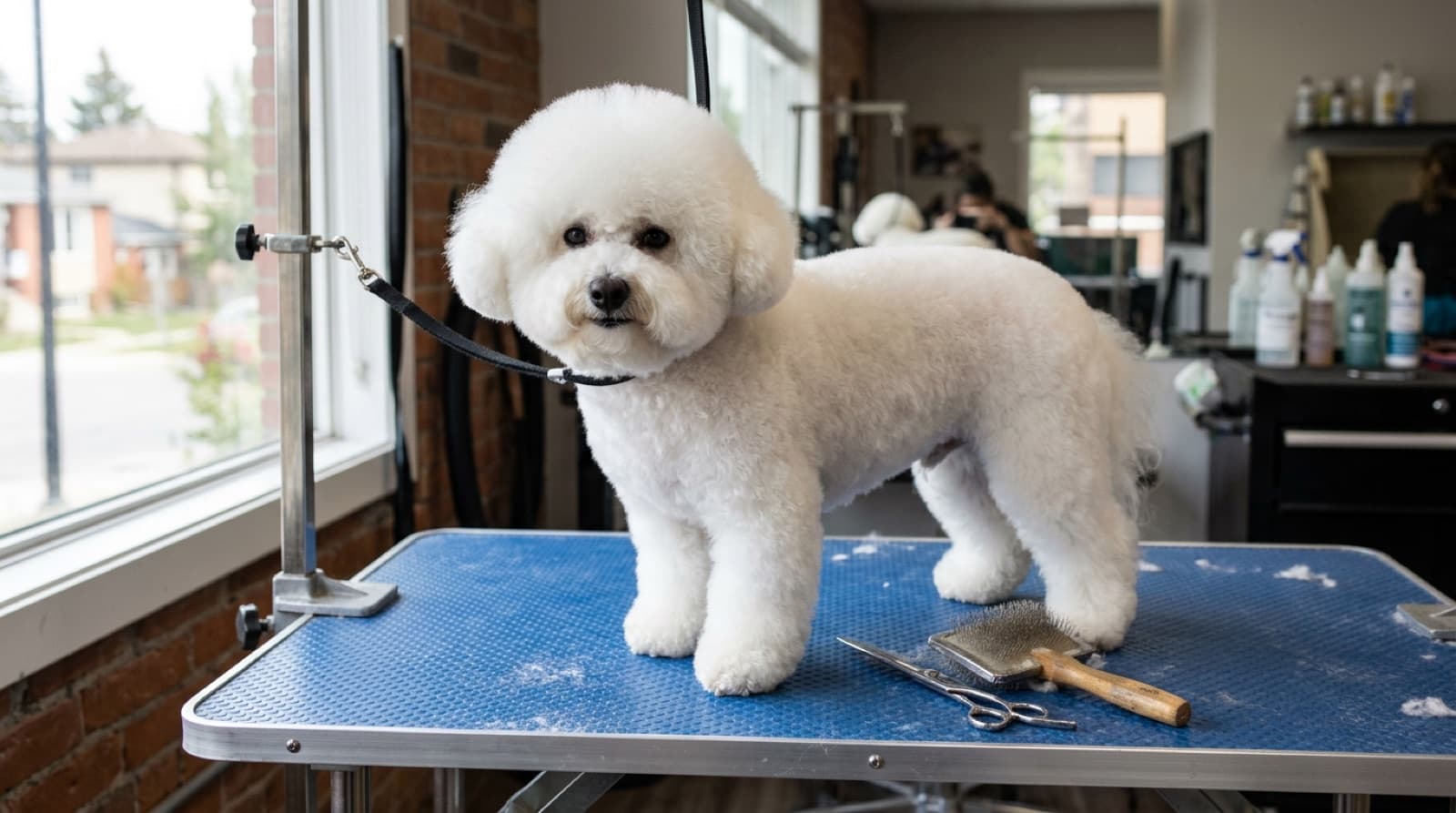
That cloud of white fluff is the whole Bichon look, and the whole job. The coat's low shedding is a genuine plus, but it comes at the price of real, ongoing grooming: this is a coat that mats if you let it, and it needs frequent brushing plus a professional groomer on the calendar. Here's how to keep it healthy, plus the face care and the Montreal-winter realities.
The curly coat, and “hypoallergenic”
The Bichon has a soft, curly double coat (dense undercoat under a curlier outer coat) giving the signature powder-puff look. Two defining traits: it's low-shedding (the curls trap shed hairs rather than dropping them, like a Poodle, so the breed is often called “hypoallergenic”, but no dog is truly 100% hypoallergenic, though the low shedding means less hair/dander around, which some allergy sufferers tolerate better, spend time with the specific dog first). And, as the trade-off, it's high-maintenance: continuously growing and mat-prone, needing regular, diligent grooming.
A neglected Bichon coat mats badly (mats trap moisture and debris against the skin, causing problems and discomfort, and severe matting may require shaving down). The coat is also almost always white, which looks lovely but shows dirt (and, in Montreal winters, salt and slush), needing regular cleaning to stay bright. So the coat is a genuine, ongoing commitment, the main practical commitment of the breed, prospective owners should love the fluffy look enough to commit to the grooming. See our health guide (grooming doubles as a skin/health check, and the breed is allergy-prone).
Brushing and professional grooming
Brush frequently, ideally daily (at minimum several times a week), because the curly coat traps shed hair and mats readily if brushing lapses, more demanding than many breeds. Brush all the way down to the skin (mats form close to the skin; a surface brush-over misses them), with a slicker brush and a metal comb (the comb checks you've reached the skin), focusing on the mat-prone areas (behind the ears, armpits, belly, collar, and rear). Work out mats gently (or have a groomer handle tight ones, never cut a mat out with scissors, you can cut the skin). Professional grooming every 4 to 8 weeks for a bath, clip/scissor, face/feet/sanitary tidy, nails, and ear care, a defining recurring cost.
Bichons are bathed regularly (at grooming, and sometimes at home), and the coat should be thoroughly dried and brushed out after bathing (a wet curly coat mats readily). Some dedicated owners learn to groom at home to save cost, though it takes skill. The bottom line: keeping the coat healthy requires frequent at-home brushing (ideally daily) plus regular professional grooming, and this commitment of time and money is the single most important practical consideration in owning the breed.
The puppy cut, especially practical in Montreal
For most pet owners, a shorter “puppy cut” or “teddy bear cut” (often keeping the face rounded for the cute look) is the sensible, popular choice over the full, high-maintenance show coat (the classic “powder puff”). Advantages: lower-maintenance (less intensive brushing, less coat to mat), and, importantly for Montreal, a shorter coat picks up far less snow, ice balls, mud, and salt and is easier to keep clean and dry, a real winter advantage. The full show coat is beautiful but demands intensive daily brushing and frequent skilled grooming.
For the vast majority of pet owners, and especially an adopted Bichon in an active Montreal home, a puppy cut is the sensible, low-fuss choice, discuss length and face shape with your groomer. Importantly, even with a puppy cut, the Bichon still needs regular brushing (the curly coat still mats, just less) and regular professional grooming, plus face, eyes, ears, feet, and sanitary care, the puppy cut reduces the grooming burden but doesn't eliminate the breed's real grooming commitment. There's no downside to a practical clip, and it's especially practical for a Montreal dog dealing with snow, salt, and slush.
Tear stains and face care
Tear stains, the reddish-brown discolouration below the eyes, are common and conspicuous on the Bichon's white coat, caused by tear overflow (the tears' porphyrin pigments stain light fur, and the damp fur can harbour yeast). Mostly cosmetic, but worth managing for comfort and appearance. Manage by keeping the eye-area hair trimmed (long facial hair wicks tears and irritates the eyes), gently cleaning the area daily and keeping it dry (damp fur is what stains), and keeping the whole face clean (wipe after eating/drinking).
Have a vet check heavy or sudden tearing, excessive tearing can have an underlying cause (blocked tear ducts, eye irritation, eyelid problems, or eye conditions), so persistent heavy tearing warrants a vet look rather than assuming it's just cosmetic. Be cautious with marketed tear-stain products (some are unsafe or ineffective), consult your vet before using anything near the eyes, and focus on the safe basics (trimming the hair, keeping the area clean and dry). Tear-stain and face care is a modest but real, ongoing part of grooming a white, facial-hair-prone breed. See the adoption guide.
Coat care through Montreal's seasons
Montreal's snow, salt, humidity, and mud add specific challenges for the curly white coat, season by season:
- •Winter: the coat readily picks up snow, ice balls, and salt (a full coat more so), so keep a shorter clip, wipe/rinse the paws and underside after walks (salt), trim paw hair to reduce ice-balling, and dry the coat if wet (a wet curly coat mats). The white coat shows salt and slush, so expect more cleaning; a coat/sweater helps the small dog stay warm and cleaner.
- •Summer: humidity can promote matting and affect the (allergy-prone) skin, so stay on top of brushing and dry the coat after the dog gets wet; a shorter summer clip is more comfortable.
- •Wet, muddy spring and fall: the coat and feet pick up mud and moisture, so expect more frequent cleaning, drying, and brushing to prevent mats.
Year-round, the core commitments, frequent brushing (ideally daily), professional grooming every 4 to 8 weeks, and face/eye/tear-stain care, stay the same. The single most practical Montreal adaptation is a shorter clip, which greatly reduces the winter snow/salt/mud problems and keeps the dog cleaner and easier to care for while keeping the cute Bichon look.
Browse adoptable dogs in Montreal
If you're ready for the coat commitment, a Bichon is a cheerful, affectionate companion. Refreshed regularly across Montreal-area organizations.
See Available Dogs →Frequently Asked Questions
What kind of coat do they have, and is it hypoallergenic?
A soft, curly double coat that's low-shedding (the curls trap shed hair, like a Poodle), often better tolerated by allergy sufferers, but no dog is truly hypoallergenic (spend time with the specific dog first). The trade-off: it grows continuously and mats readily, so it's high-maintenance, needing frequent brushing plus professional grooming. Almost always white, so it shows dirt and needs regular cleaning.
How often should I brush and groom?
Brush frequently, ideally daily (at minimum several times a week), all the way down to the skin (with a slicker brush and comb), focusing on mat-prone areas, the curly coat mats readily if brushing lapses. Plus professional grooming every 4 to 8 weeks (bath, clip, face/feet/sanitary tidy, nails, ears), a defining recurring cost. Dry and brush out the coat thoroughly after any bath.
Should I keep mine in a puppy cut?
Most pet owners sensibly do. A shorter puppy/teddy-bear cut is lower-maintenance (less matting) and, importantly for Montreal, picks up far less snow, ice balls, mud, and salt than the full show coat and is easier to keep clean. The full “powder puff” coat is beautiful but demands intensive daily grooming. Even with a puppy cut, the Bichon still needs regular brushing and professional grooming.
How do I deal with tear stains?
Tear stains (reddish-brown fur below the eyes) are common and conspicuous on the white coat, caused by tear overflow. Manage by keeping the eye-area hair trimmed, gently cleaning the area daily and keeping it dry, and keeping the face clean. Have a vet check heavy or sudden tearing (it can have an underlying cause). Be cautious with marketed products, consult your vet, and focus on the safe basics.
How does Montreal's climate affect grooming?
In winter, the curly white coat picks up snow, ice balls, and salt and shows slush, so keep a shorter clip, wipe paws after walks, trim paw hair, and dry the coat if wet (it mats); a sweater helps the small dog. Humid summers promote matting (stay on top of brushing). Wet seasons mean more cleaning. A shorter clip is the single most practical Montreal adaptation.
Related Montreal guides
Bichon Frise Adoption in Montreal
Where to adopt, the cheerful affectionate temperament, apartment and climate fit, real costs, and who the breed suits.
Bichon Frise Health Issues
Allergies and skin issues, dental disease, luxating patellas, bladder/urinary stones, eye and ear issues, and the pet-insurance case.
Adoptable Dogs in Montreal
All currently available dogs across Montreal-area organizations, including Bichons and Bichon mixes. Updates regularly.
Montreal Dog Adoption Resources
All our Montreal dog adoption guides in one place.
New dog? Start with these care guides
Everything a new adopter needs to set up a safe, happy home.