The short answer
A Border Collie needs enormous physical exercise (well over an hour daily) AND, just as importantly, intense mental stimulation, and this is the key insight most owners miss: physical exercise alone won't satisfy the breed, and running it for hours can even build a fitter, more tireless dog while the real need (mental engagement) goes unmet. Bred to problem-solve while working sheep, the breed craves a job. Best outlets: dog sports (agility is tailor-made), training, puzzle toys, scent work, and jobs to do. Under-stimulation causes obsessive/compulsive behaviours, destruction, and anxiety, the top cause of surrenders. Montreal works year-round: outdoor activity when weather allows (Border Collies handle cold well), indoor mental work when it doesn't.
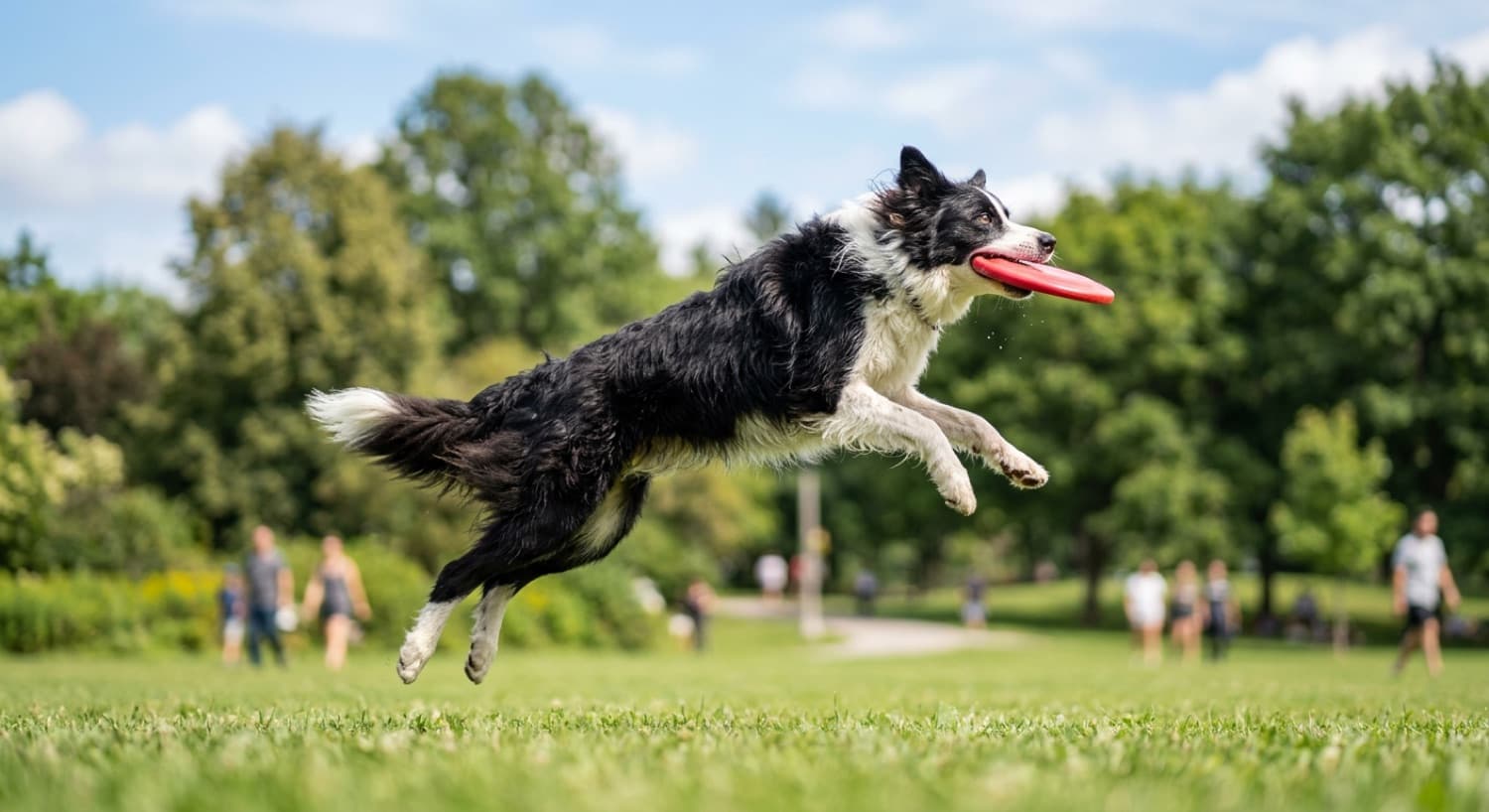
If there's one thing that determines whether Border Collie ownership succeeds or fails, it's this: understanding that the breed needs its mind worked as much as its body. The owner who grasps this has a calm, brilliant companion. The one who doesn't, who just runs the dog more and more, ends up baffled by a restless, obsessive, destructive dog. Here is how to get it right in Montreal.
Why mental work matters as much as physical exercise
A Border Collie needs intense mental stimulation just as much as physical exercise, and physical exercise alone, no matter how much, won't satisfy the breed. Bred to work sheep, an activity demanding constant problem-solving, decision-making, and focus for hours, the breed has a brilliant working mind that craves a job. This is why “just exercise it more” backfires: run a Border Collie for hours with no mental work and it stays restless, anxious, or destructive, and you may build a fitter, more tireless athlete whose physical needs keep growing while the real, unmet need remains.
A mentally understimulated Border Collie, even a physically exercised one, tends to develop obsessive and compulsive behaviours (shadow-chasing, light-chasing, spinning), destructiveness, anxiety, and frustration. The solution is to make mental work a core, deliberate part of the daily routine, alongside physical exercise, through training, sports, problem-solving games, and jobs. A Border Collie whose mind is genuinely engaged is calmer, happier, and far better behaved than one merely physically exercised. Understanding this distinction is the key to living with the breed.
How much physical exercise
A great deal, well over an hour of vigorous daily exercise and often much more, a tireless dog bred to work all day. Real, sustained activity: running, hiking, fetch (many are obsessive fetchers), active play, and ideally activities that also engage the mind. Ordinary walks won't come close for a healthy young Border Collie. But the caveat: physical exercise alone isn't the whole answer, and simply running the dog more can be counterproductive.
The best approach combines substantial physical exercise with mental engagement, activities that work body and mind together (dog sports, training in motion, games) are especially efficient. Needs vary with the individual, age, and line (a young working-bred dog is enormously energetic; an older or lower-drive one needs less), and puppies shouldn't be over-exercised while their joints develop. For a healthy adult, though, it's a substantial daily commitment of vigorous physical exercise plus mental work, every day, year-round, in Montreal's weather.
Best mental-stimulation activities
The best activities engage the breed's problem-solving mind and give it a job, and many also provide physical exercise. Great options:
- •Agility, almost tailor-made for the breed, combining intense physical exercise with mental focus and handler teamwork. The breed dominates the sport.
- •Other dog sports, obedience, rally, flyball, disc, herding (the original purpose), and treibball (“urban herding”).
- •Training and new skills/tricks, they learn an astonishing number and love the challenge, one of the best daily mental outlets.
- •Puzzle and food-dispensing toys, scent work, and “find it” games, engaging the mind, much of it doable at home.
- •Jobs and tasks, fetching named items, tidying toys, and other useful behaviours the breed can learn.
The key principle is variety and genuine mental challenge, rotate activities and keep teaching new things. Combining mental activities with physical exercise, ideally doing both at once, is the most effective way to meet the breed's needs. Montreal has an active dog-sports community with clubs and facilities offering agility, obedience, and more.
What happens without enough
An under-stimulated Border Collie develops serious behaviour problems, the leading cause of the breed being surrendered. The unmet needs come out as destructiveness, obsessive/compulsive behaviours (shadow-chasing, light-chasing, spinning, which can become entrenched and distressing), hyperactivity, anxiety, excessive barking, and inappropriate herding (herding and nipping children, pets, and moving things). Owners misread this as the dog being “crazy” or “hyper,” when it's a working animal expressing profound frustration and boredom.
Crucially, because the core unmet need is often mental rather than purely physical, these problems frequently persist even in dogs that get plenty of physical exercise but no mental engagement, which confuses owners who feel they're “exercising the dog enough.” The solution is almost always more and better mental stimulation alongside physical exercise. A Border Collie whose mind and body are both satisfied is typically calm and well-behaved, and the transformation when needs are finally met can be dramatic. If yours shows these problems, ask whether it's getting enough vigorous exercise AND, especially, enough genuine mental engagement.
Meeting the needs in Montreal, winter included
Montreal works year-round with commitment. Warmer months: parks, paths, and green spaces for running and fetch, plus the active dog-sports community (agility, obedience) for engaging body and mind together. Winter: Border Collies tolerate cold well (weather-resistant double coat) and many love snow, so outdoor exercise continues (protect the paws from salt and ice, watch for ice, adjust for extreme cold). Crucially, winter is when mental stimulation matters even more, lean on indoor training, puzzles, scent games, and indoor dog-sport facilities (many run year-round) when severe weather limits outdoor time.
Indoor mental work genuinely takes the edge off on a day when a long outdoor session isn't possible, which is why a strong mental-stimulation routine is so valuable in a winter city. On apartments: a Border Collie can live in one, but only with an exceptionally committed owner who fully meets the needs (no yard means all exercise is owner-provided), plus managing barking and being a considerate neighbour, and a lower-drive individual helps enormously. For many apartment situations a calmer breed is a better choice, but a truly dedicated owner can make it work. See our adoption guide.
Browse adoptable dogs in Montreal
If you'll engage the mind as well as the body, a Border Collie is a brilliant, devoted partner. Refreshed regularly across Montreal-area organizations.
See Available Dogs →Frequently Asked Questions
Why does mental stimulation matter as much as physical exercise?
Bred to problem-solve while working sheep, the Border Collie has a brilliant mind that craves a job. Physical exercise alone won't satisfy it, run it for hours with no mental work and it stays restless, and you may build a fitter, more tireless dog. Mental work must be a core, deliberate part of the daily routine.
How much physical exercise do they need?
Well over an hour of vigorous daily exercise, often much more, a tireless working breed. But physical exercise alone isn't the whole answer, combine it with mental engagement (activities that do both, like dog sports, are ideal). Needs vary with age and line; don't over-exercise puppies' developing joints.
What are the best mental activities?
Agility (tailor-made for the breed), plus obedience, rally, flyball, disc, herding, and treibball; training and new tricks; puzzle toys, scent work, and “find it” games; and giving the dog jobs. The key is variety and genuine challenge, rotate activities and keep teaching. Montreal has an active dog-sports community.
What happens without enough?
Serious problems, destructiveness, obsessive/compulsive behaviours (shadow/light-chasing, spinning), hyperactivity, anxiety, barking, and inappropriate herding, the leading cause of surrenders. Because the core need is often mental, problems persist even in physically-exercised dogs. The fix is more and better mental stimulation.
How do I manage in Montreal winter?
Border Collies tolerate cold well and many love snow, so outdoor exercise continues (protect paws from salt, watch for ice). Winter is when mental work matters even more, lean on indoor training, puzzles, scent games, and indoor dog-sport facilities when severe weather limits outdoor time.
Can they be happy in an apartment?
Possible, but only with an exceptionally committed owner who fully meets the needs (no yard means all exercise is owner-provided), plus managing barking and being a considerate neighbour. A lower-drive individual helps. For many apartment situations a calmer breed is better, but a truly dedicated owner can make it work.
Related Montreal guides
Border Collie Adoption in Montreal
Where to adopt in Montreal, the brilliant high-drive temperament, real costs, and who it suits.
Border Collie Health Issues
Hip dysplasia, eye conditions, epilepsy, the critical MDR1 drug-sensitivity gene, and the pet-insurance case.
Adoptable Dogs in Montreal
All currently available dogs across Montreal-area organizations, including Border Collies and herding mixes. Updates regularly.
Montreal Dog Adoption Resources
All our Montreal dog adoption guides in one place.
New dog? Start with these care guides
Everything a new adopter needs to set up a safe, happy home.