The short answer
The Boxer is playful, exuberant, affectionate, and clownish, a “perpetual puppy” (slow to mature) that's famously wonderful with children and deeply devoted. It's high-energy, mouthy, and people-oriented. The keys to enjoying one: meet the substantial exercise and mental needs (most of a young Boxer's “difficult” energy is just under-exercise, and manage heat in Montreal summers), train with positive methods (especially polite greetings/no jumping, impulse control, and appropriate play for the mouthiness), supervise around small children (a bouncy young Boxer can knock a child over), and provide plenty of companionship (they don't do well left alone long).
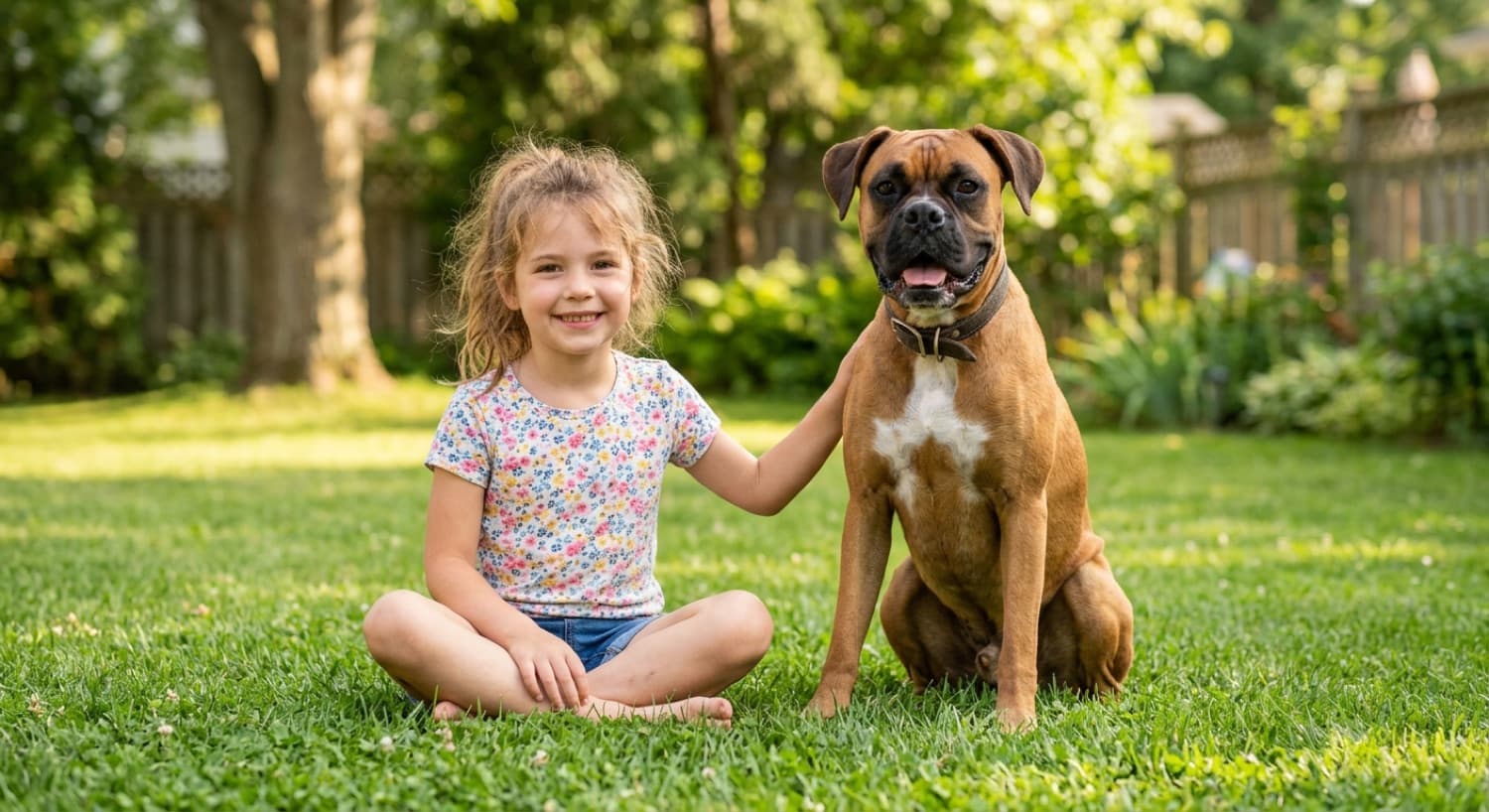
The Boxer is one of the most joyful, family-loving dogs there is, and one of the most exuberant. Living happily with one comes down to understanding its clownish, forever-young temperament, meeting its considerable energy needs, and training the bounce and mouthiness. Get those right and you have a devoted, hilarious, patient companion. Here is how, in Montreal.
The exuberant clown
Boxers are playful, exuberant, affectionate, devoted, and clownish, fun-loving, high-spirited dogs full of goofy charm, famous for their comical antics and deep devotion. A defining feature: they're “perpetual puppies” (slow to mature, often not settling until around three, retaining a playful spirit into old age). Intensely people-oriented and very affectionate (enthusiastic cuddlers despite their size), usually friendly and sociable, with a particular reputation for being wonderful with children, and a watchful, protective side.
Intelligent but a little stubborn or silly, they respond best to positive, patient, fun training. The main thing to understand is the energy: high-energy, bouncy, and mouthy, especially when young, so they need substantial exercise, training, and engagement to be well-behaved. Overall, the Boxer temperament, joyful, loving, playful, devoted, and energetic, makes them wonderful, entertaining companions for active people and families who enjoy a fun-loving, forever-young dog and can meet its needs.
Boxers and children
Boxers are famous for being excellent with children, often devoted, gentle, playful, and protective with their family's kids, and wonderful playmates for active children. The main consideration: the energy and exuberance, a big, bouncy young Boxer can easily knock over a small child in play (not aggression, just size and enthusiasm), so supervise interactions and train and exercise the dog to manage the exuberance. Boxers are also mouthy when young (they “box” with their paws and use their mouths in play), so teach appropriate play and bite inhibition.
As always, teach children to interact gently and respectfully, and supervise dog-child interactions. With those precautions, and provided the family can meet the exercise and companionship needs, a Boxer is a devoted, patient, joyful family dog, its bond with and protectiveness of children are wonderful. For a family adopting, an adult Boxer past the wildest, bounciest puppy stage, with a known good temperament around children, can be an especially good, calmer choice, ask the rescue about the dog's history with kids.
Managing the puppyish energy
Boxers stay puppyish and high-energy for years (often until around three or beyond). The key to managing it: meet the exercise and mental-stimulation needs, most of what makes a young Boxer overwhelming (bounciness, mouthiness, inability to settle, destructiveness) is an under-exercised, under-stimulated dog, and a well-exercised, engaged Boxer is far calmer.
Provide substantial daily physical exercise (at least an hour, more when young), while carefully managing heat in Montreal summers given the breed's heat sensitivity (exercise in the cool hours). Add mental stimulation (training, games, puzzle toys). Train to channel the energy and teach manners, impulse control, polite greetings (to counter jumping up, which a strong Boxer does with force), and appropriate play. Provide plenty of companionship (isolation worsens the energy problems). And be patient, Boxers do settle somewhat while keeping their playful spirit. Meeting the exercise, mental, training, and companionship needs turns the exuberance into joyful companionship. For those who'd skip the wildest phase, adopting an older Boxer is a great option.
Training a bouncy Boxer
Boxers are intelligent but can be a little stubborn, silly, or distracted, so training means a positive, fun, engaging approach. They respond very well to reward-based training (rewards, praise, play, food) and short, upbeat sessions, and poorly to harsh methods (which dampen their enthusiastic spirit). Key priorities: polite greetings and not jumping up (a strong Boxer greeting by jumping can knock people over, a common behaviour to address), impulse control and calm, appropriate play and managing mouthiness, and reliable obedience and leash manners (important for a strong dog).
Start early and keep it up, be consistent (everyone uses the same rules), and keep it fun, a Boxer's intelligence, food motivation, and desire to please make it a willing, if goofy, student. Puppy and obedience classes are worthwhile (training plus socialization), especially for a young, energetic Boxer. For an adopted Boxer, invest in positive training to build your bond, establish manners (especially greetings and jumping), provide mental engagement, and channel the energy, a well-trained Boxer is a joy. See our adoption guide.
Being left alone, and apartment living
Boxers are intensely people-oriented and don't do well left alone for long stretches, an isolated, under-stimulated Boxer becomes bored, anxious, lonely, and destructive, and can develop separation problems. They're best suited to households where they're not alone for very long and get plenty of companionship, or that can arrange company and enrichment (a dog walker, daycare, a family member) to break up long days.
On apartments: a Boxer can live in an apartment or condo (common in Montreal), their size is manageable and they're adaptable, but success depends on meeting the substantial exercise and companionship needs (no yard means all exercise is owner-provided), plus keeping the space cool enough in Montreal's hot summers (air conditioning helps, given the heat sensitivity). A Boxer can be a good apartment dog for a committed owner who provides ample exercise, companionship, and a comfortable environment, but a poor choice for someone away long hours. In all living situations, the breed's need for exercise, engagement, and companionship is the central consideration.
Browse adoptable dogs in Montreal
Meet the exercise and companionship needs and a Boxer is a devoted, hilarious family companion. Refreshed regularly across Montreal-area organizations.
See Available Dogs →Frequently Asked Questions
What is the temperament really like?
Playful, exuberant, affectionate, devoted, and clownish, fun-loving “perpetual puppies” (slow to mature), intensely people-oriented and very affectionate, usually friendly, with a reputation for being wonderful with children and a watchful side. The main thing to understand is the high energy, they need substantial exercise, training, and engagement.
Are they good with children?
Yes, famously, often devoted, gentle, playful, and protective with their family's kids. Supervise around small children (a bouncy young Boxer can knock a child over in play), teach appropriate play for the mouthiness, and provide exercise and training. An adult past the bounciest stage is an especially good, calmer family choice.
How do I manage the puppyish energy?
Meet the exercise and mental needs, most of a young Boxer's overwhelming energy is under-exercise. Provide substantial daily exercise (managing heat in summer), mental stimulation, training (impulse control, greetings, appropriate play), and companionship, and be patient as they mature. Adopting an older Boxer skips the wildest phase.
How do I train one?
With a positive, fun, engaging approach, they respond well to reward-based training and poorly to harsh methods. Priorities: polite greetings/no jumping, impulse control, appropriate play (for mouthiness), and reliable obedience. Start early, be consistent, keep it fun. Puppy and obedience classes are worthwhile.
Do they do well alone, and suit apartments?
Boxers are people-oriented and don't do well left alone long (they get bored, anxious, and destructive), so they need companionship or arranged company. They can live in apartments if the owner provides ample exercise and companionship and keeps the space cool in summer (heat sensitivity). A poor choice for someone away long hours.
Related Montreal guides
Boxer Adoption in Montreal
Where to adopt in Montreal, the playful temperament, exercise and heat sensitivity, real costs, and who it suits.
Boxer Health Issues
The high cancer risk, heart conditions (boxer cardiomyopathy), heat sensitivity, and the pet-insurance case.
Adoptable Dogs in Montreal
All currently available dogs across Montreal-area organizations, including Boxers and Boxer mixes. Updates regularly.
Montreal Dog Adoption Resources
All our Montreal dog adoption guides in one place.
New dog? Start with these care guides
Everything a new adopter needs to set up a safe, happy home.