The short answer
A well-bred, well-socialized, well-trained Corso is a stable, calm, discerning guardian, deeply devoted and often gentle with its family, watchful with strangers. But honestly: this is a powerful guardian breed that, if poorly bred, under-socialized, or mishandled, can be genuinely dangerous, which places a serious responsibility on the owner. That's why extensive socialization and professional, positive training are non-negotiable, not optional. It needs daily exercise, mental stimulation, secure containment, and careful management around children (supervision essential), unfamiliar dogs, and visitors. Responsible ownership in Montreal also means confirming housing/insurance allow the breed, winter care, and being a calm ambassador. Above all: assess honestly whether you're the right owner, if not, it's the wrong breed.
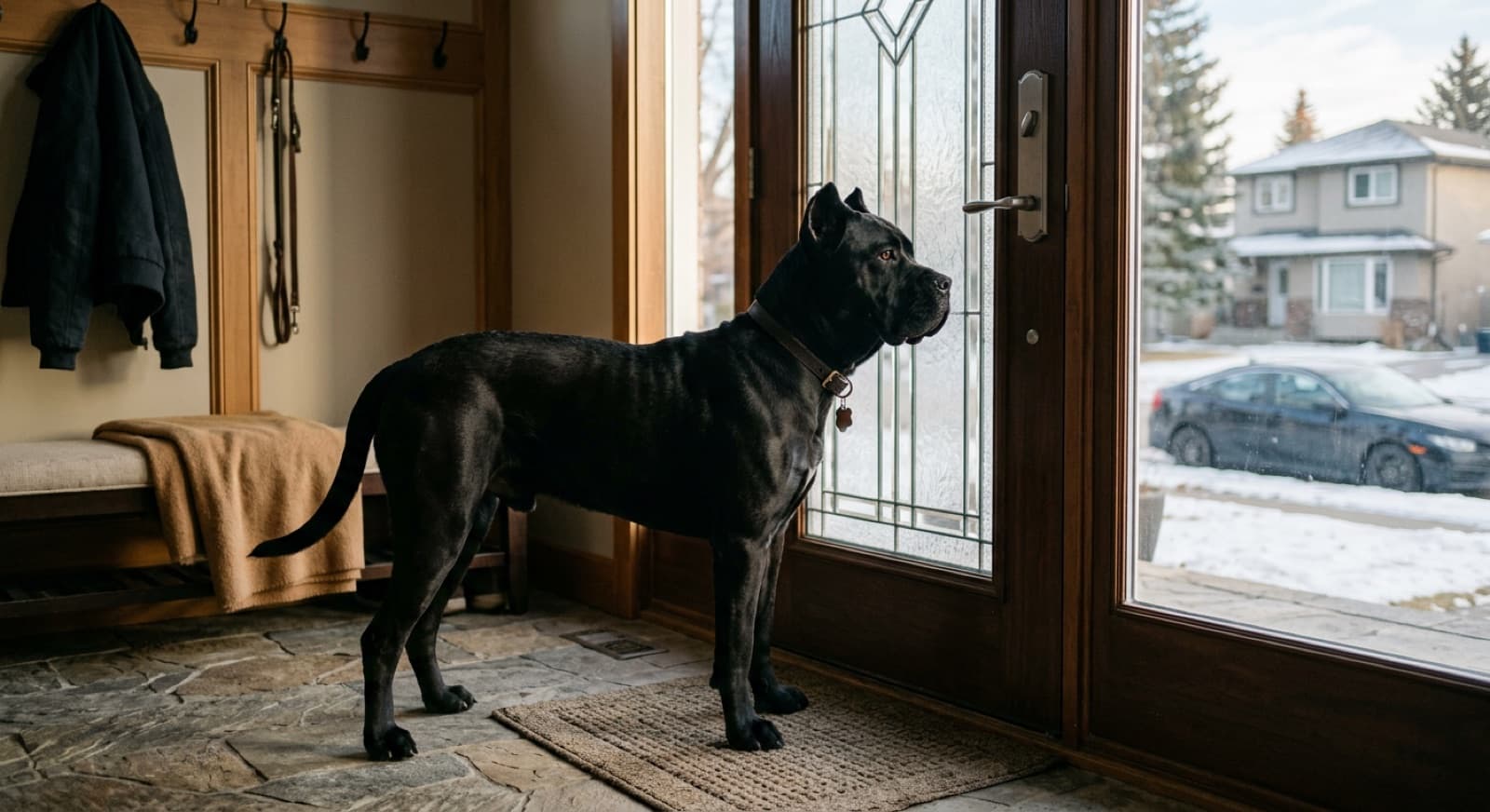
With most breeds, a temperament guide is about getting the best out of a good-natured dog. With the Cane Corso, it's about something more serious: understanding a powerful guardian breed honestly, and accepting the real responsibility that comes with it. This guide doesn't soften that. If you're considering a Corso, please read it with a clear head about whether you're the right owner.
Are Cane Corsos dangerous? An honest answer
Honestly: unlike breeds where the “aggressive” label is largely myth, with the Corso it's fair to say plainly that this is a serious, powerful dog that, if poorly bred, under-socialized, poorly trained, or irresponsibly owned, can be genuinely dangerous, because of its size, strength, and protective drive combined. That's not breed-bashing, it's the reality responsible Corso people themselves emphasize, and exactly why the breed demands experienced, committed ownership.
At the same time, a well-bred, well-socialized, well-trained Corso in knowledgeable hands is typically NOT indiscriminately aggressive, it's a stable, calm, confident, discerning guardian, deeply devoted and often gentle with its family, watchful and aloof with strangers, able to tell normal situations from genuine threats. Achieving that stability depends entirely on good breeding, extensive socialization, proper training, and responsible management. So: not inherently vicious, but a powerful guardian breed whose potential to be dangerous if mishandled is real, which is why it's not for inexperienced or casual owners, and why honest self-assessment is essential.
Why socialization and training are non-negotiable
For a Corso, extensive socialization and proper training are not optional, they are essential, non-negotiable requirements. Socialization: because the breed is territorial and protective, extensive, early, ongoing socialization is essential to raise a confident, discerning dog that distinguishes normal life from genuine threats, an under-socialized Corso, given its size and drive, can become fearful, suspicious, and dangerously reactive. Training: it needs calm, confident, consistent leadership and reliable obedience (impulse control, recall, manners) to be safely controlled, using positive, reward-based methods (harsh methods are counterproductive and dangerous with a powerful guardian breed).
Given the breed's size and seriousness, professional training is genuinely essential, not optional, seek an experienced, qualified, positive-reinforcement trainer (ideally one experienced with large guardian breeds; in Montreal, look for such a trainer). The combination of extensive socialization and proper professional training is what turns a powerful guardian breed into a stable, safe, well-mannered companion, and neglecting it, with a dog this size and drive, is genuinely dangerous. If you're not fully committed to and capable of providing both, the Corso is not the right dog for you.
Children and other animals
Well-raised and responsibly managed, a Corso can be deeply devoted to, and gentle with, its own children and can coexist with other animals, but the breed's size and guardian nature make the caveats serious. With children: supervision is absolutely essential and non-negotiable (a dog this large and powerful can easily, even unintentionally, injure a child, and the consequences are serious); teach children to be respectful; take care around visiting children and situations the dog might misread. Many experienced Corso people recommend the breed mainly for families with older children, always with vigilant supervision.
With other animals: a well-socialized Corso can live with other pets, especially if raised with them, but the breed can be same-sex dog aggressive, may have prey drive toward smaller animals, and, being territorial, can be wary of unfamiliar dogs, so careful, gradual introductions, socialization, and management are essential. For an adopted Corso, a reputable rescue's assessment of the individual dog's behaviour with kids and other animals is genuinely valuable, and can match you with a suitable dog or honestly advise against the breed for your situation.
Exercise, and responsible ownership in Montreal
The Corso isn't hyperactive, but as a working guardian it needs meaningful daily exercise (good walks plus some more vigorous activity) and, importantly, mental stimulation (training, puzzle toys, a “job”), a bored, under-exercised Corso can develop problems, which in a dog this size is serious. Exercise growing puppies sensibly (over-exercise harms developing giant-breed joints). Plan for year-round exercise in Montreal (a coat in very cold weather, heat precautions in summer).
Responsible ownership also means: honest self-assessment (the right, experienced owner); non-negotiable socialization and professional training; secure containment and reliable control (a powerful, territorial dog must not get loose, and must be managed around visitors, unfamiliar dogs, and children); exercise, mental stimulation, and inclusion as an indoor family member; appropriate space (a fenced yard, not a small apartment); a housing/insurance check (many landlords and insurers restrict powerful breeds, a real Montreal consideration); winter care; being a calm ambassador for a scrutinized breed; and lifelong commitment. See our adoption guide and health guide. Done right, the Corso rewards serious ownership immensely, but it genuinely demands it.
Browse adoptable dogs in Montreal
For a Corso, adopting a temperament-assessed adult from a reputable rescue, with honest guidance on fit, is the wisest route. Refreshed regularly across Montreal-area organizations.
See Available Dogs →Frequently Asked Questions
Are Cane Corsos dangerous or aggressive?
Honestly, this is a powerful guardian breed that, if poorly bred, under-socialized, or mishandled, can be genuinely dangerous, because of its size, strength, and protective drive. But a well-bred, well-socialized, well-trained Corso in knowledgeable hands is typically a stable, devoted, discerning guardian, not indiscriminately aggressive. Stability depends entirely on breeding, socialization, training, and responsible ownership, which is why it's not for inexperienced owners.
Why are socialization and training non-negotiable?
Because this is a large, powerful, protective breed whose stability and safety depend on being properly raised. Extensive early and ongoing socialization builds a discerning dog that isn't fearful or reactive; proper positive training gives the reliable control essential for a strong guardian. Professional training is genuinely essential. If you can't commit to both, the Corso isn't the right dog.
Are they good with children and other animals?
Well-raised, a Corso can be devoted to and gentle with its own children and coexist with other pets, but its size and guardian nature make the caveats serious. Supervision with children is absolutely essential (many recommend the breed for older children), and it can be same-sex dog aggressive or have prey drive, so careful introductions and management matter. A rescue's assessment helps match the right dog.
Do they need a lot of exercise and mental stimulation?
Yes, though not hyperactive, as a working guardian the Corso needs meaningful daily exercise (walks plus some vigorous activity) and mental stimulation (training, puzzles, a “job”). A bored, under-exercised Corso can develop problems, serious in a dog this size. Exercise growing puppies sensibly to protect developing joints. Plan for year-round exercise in Montreal.
What does responsible ownership involve in Montreal?
Honest self-assessment (the right, experienced owner), non-negotiable socialization and professional training, secure containment and reliable control, exercise, mental stimulation and companionship, appropriate space, confirming housing/insurance allow the breed (a real Montreal issue), winter care, being a calm ambassador for a scrutinized breed, and lifelong commitment. The breed rewards serious ownership but genuinely demands it.
Related Montreal guides
Cane Corso Adoption in Montreal
Where to adopt, the guardian temperament, the serious ownership commitment, housing considerations, real costs, and who the breed suits.
Cane Corso Health Issues
Hip and elbow dysplasia, bloat, heart conditions, eyelid issues, the giant-breed lifespan, and the pet-insurance case.
Adoptable Dogs in Montreal
All currently available dogs across Montreal-area organizations, including large breeds and mixes. Updates regularly.
Montreal Dog Adoption Resources
All our Montreal dog adoption guides in one place.
New dog? Start with these care guides
Everything a new adopter needs to set up a safe, happy home.