The short answer
The key to a happy Corgi: understand it's a genuine herding dog in a small body, smart, energetic, driven, and instinct-led, not a low-maintenance lap dog. It needs real daily exercise plus mental stimulation (a bored Corgi barks and misbehaves), and thrives on training, tricks, and dog sports. Expect and manage barking (a vocal herding trait, meet the dog's needs plus a “quiet” cue and not rewarding demand-barking; especially important in Montreal apartments) and the herding/nipping instinct (they try to “herd” people, especially running children, by nipping heels, redirect it to sports and training, teach alternatives, and supervise with kids). Corgis are highly intelligent and very trainable (with an independent streak), so use positive, engaging, consistent methods. Use a harness and keep exercise back-friendly (long back).
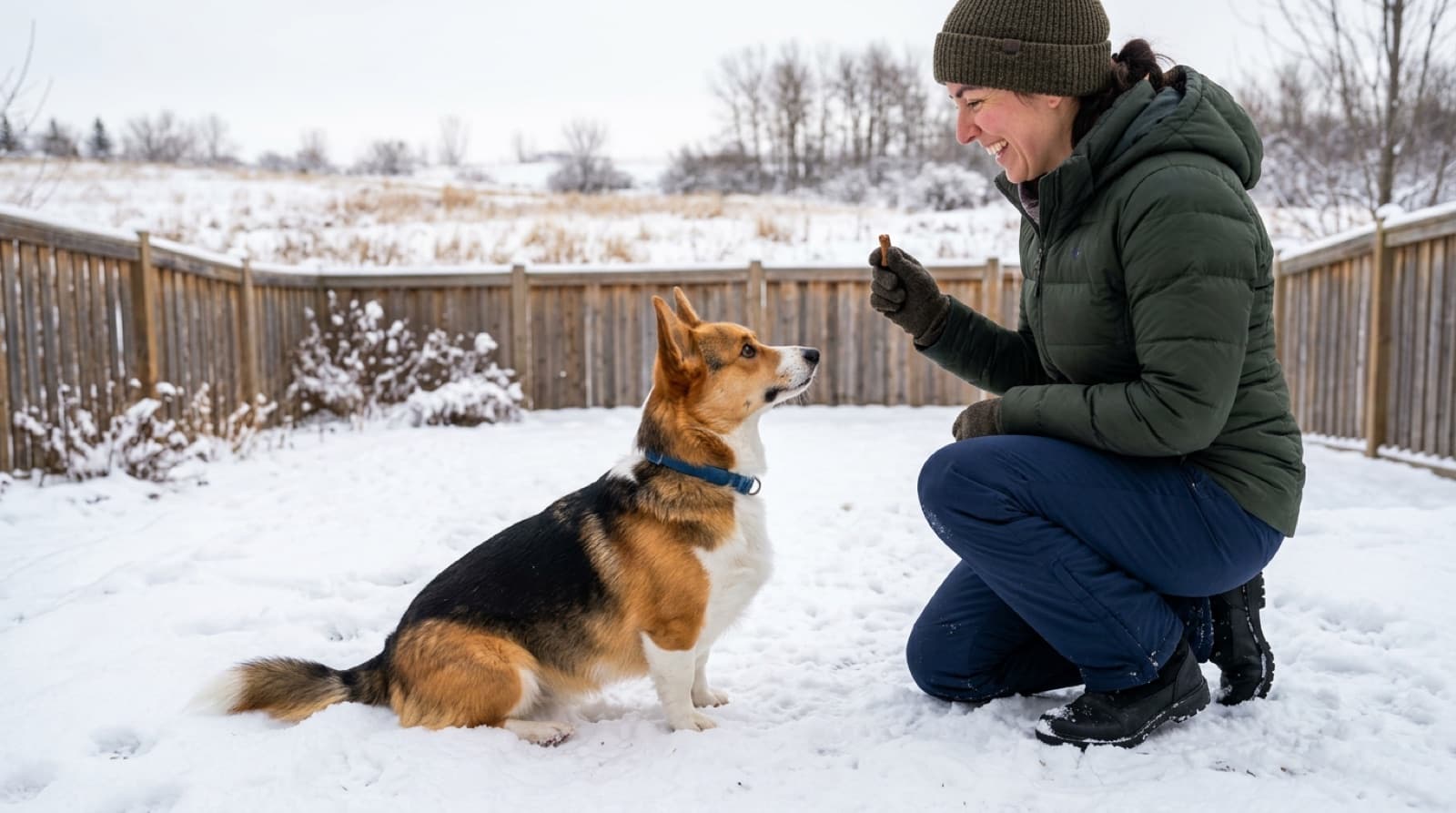
The biggest misunderstanding about Corgis is that they're cute little lap dogs. They're not, they're cattle-herding working dogs with big brains, real energy, and strong instincts, in a small, long-bodied package. Almost every “problem Corgi” is really an under-stimulated herding dog. Get the herding-breed reality right and the Corgi is a delight to live with and train. Here's how.
Yes, Corgis are real herding dogs
Understanding this is the single most important thing about owning a Corgi. Despite the size, short legs, and internet-famous cuteness, Pembrokes are genuine herding dogs, bred to herd and drive cattle by nipping at heels, and they retain a herding breed's intelligence, energy, drive, boldness, and work ethic in a small body. The biggest mistake people make is treating a Corgi as a low-maintenance lap dog when it's actually a driven working dog.
In practice this means: they need real exercise and mental stimulation (a bored Corgi is restless and problematic), they're highly intelligent and need training and a “job”, they have herding instincts (barking and nipping/heeling), and they can be bold, bossy, and independent-minded (benefiting from consistent, positive training and clear boundaries), and they're alert watchdogs (hence vocal). Owners who embrace the herding-breed reality find Corgis wonderfully smart, fun, trainable companions; those expecting a low-effort lap dog can be overwhelmed by the energy, barking, and drive. Understanding the herding-dog nature is the foundation of a happy life with a Corgi.
Exercise and mental stimulation
A Corgi needs more exercise and mental stimulation than its size suggests. Physically: meaningful daily exercise (good walking plus play and active games), more than a couple of short strolls. Two Corgi notes: keep it back-friendly (avoid excessive jumping that jars the long spine, see the health guide) and don't over-exercise a growing puppy. Mentally, just as important: engage the busy mind with training, puzzle toys, nose games, and ideally dog sports (obedience, agility, rally, herding, tricks), which the breed excels at and loves.
Combining physical and mental exercise (a walk with training, a thinking game) is ideal, and mental work tires a smart dog in a way physical exercise alone doesn't. The consequence of not meeting these needs is real: a bored, under-stimulated Corgi develops problem behaviours (excessive barking, destructiveness, restlessness), and many “problem” Corgis are simply under-stimulated herding dogs, this is also why a Corgi suits an apartment only if well-exercised and enriched. In Montreal, plan for year-round exercise: the double coat means winter cold is usually fine (with sensible care in extreme cold and for snow/salt on the low belly), and indoor mental enrichment is valuable in bad weather.
Managing the barking
Corgis are alert, vocal herding dogs (herders bark as part of their work), so a strong tendency to bark, at people, dogs, noises, activity, or for attention, is a real, breed-typical trait to expect and manage, especially important in Montreal apartment/condo living (neighbours, building rules). Some barking is inherent and can't be entirely eliminated.
Manage it by: meeting the dog's needs (a well-exercised, enriched Corgi barks less, much problem barking is boredom or excess energy); not inadvertently rewarding barking (don't give attention or what the dog wants for demand-barking; reward quiet, calm behaviour); using positive training (teach a “quiet” cue, and that one or two alerts are enough, then settle); managing triggers (reducing constant visual/auditory triggers); and socializing well (reducing reactive barking). A positive-reinforcement trainer can help with excessive barking. Set realistic expectations: good management significantly reduces and controls barking, but the breed is naturally vocal, so a Corgi will likely never be silent, and if your living situation can't tolerate any barking, the breed may not suit. Ask a rescue about an individual dog's vocal tendencies (they vary).
The herding and nipping instinct
Corgis are “heelers”, bred to herd cattle by nipping at heels, and this hardwired instinct often shows up in pet Corgis as trying to “herd” people (especially moving, running, or excited people, very commonly children) or other pets, by chasing, circling, and nipping at heels. This is normal herding behaviour, not aggression, but it needs managing, a herding nip can startle, annoy, or (with children) hurt or frighten, and unchecked it can become a problem.
Manage it by: not encouraging or rewarding it (don't let nipping/chasing become a fun game; calmly interrupt and redirect); redirecting the drive to appropriate outlets (training, fetch, tug with rules, and especially dog sports like herding trials, agility, or treibball that satisfy the instinct constructively, a herding dog with an outlet herds inappropriately less); training alternative behaviours and impulse control (teach “sit” or a “place” instead of chasing, plus a solid “leave it” and recall); and managing situations, especially with children (supervise, teach children not to run and shriek in triggering ways, and interrupt high-excitement herding-triggering situations). For families with young children, take the instinct seriously, with supervision, training, and management, most Corgis do well in families. Ask a rescue about an adopted dog's herding/nipping history and behaviour with children and pets.
Training a smart, bold dog
Corgis are highly intelligent and very trainable, a joy of the breed, but with an independent, sometimes stubborn or bossy streak (herders were bred to think and work on their own), so approach training as engaging a smart, willing, self-possessed partner, not drilling a pushover. They learn quickly, enjoy mental challenges, and excel at obedience, tricks, agility, rally, and herding.
Keys: use positive, reward-based methods (harsh methods make a bold, independent dog resist or shut down), keep training engaging, varied, and fun (a smart Corgi bores of repetitive drilling), be consistent with clear, fair boundaries (the sometimes-bossy Corgi does best with consistent rules delivered positively), start early, and channel the trainable mind into dog sports, tricks, and jobs (which also provide the mental stimulation the breed needs). Focus on foundation obedience and impulse control, a reliable recall, managing barking (a “quiet” cue), managing the herding/nipping instinct, and good manners.
Corgis are food-motivated (part of why they gain weight, see the health guide), so food rewards work great, just account for treats in the diet to avoid weight gain (which is bad for the back). On the physical side, use a harness rather than a neck collar for a long-backed dog, and keep exercise back-friendly. Channeling that trainable, busy mind into training, tricks, and dog sports is one of the best ways to have a happy, well-behaved, fulfilled Corgi. See the adoption guide.
Browse adoptable dogs in Montreal
If you appreciate a smart, driven herding dog and can meet its needs, a Corgi is a wonderfully fun, trainable companion. Refreshed regularly across Montreal-area organizations.
See Available Dogs →Frequently Asked Questions
Are Corgis really herding dogs?
Yes, genuinely, and understanding this is the single most important thing about the breed. Despite the size and cuteness, Pembrokes are real cattle-herding dogs with a herding breed's intelligence, energy, drive, and instincts in a small body. That means they need real exercise and mental stimulation, training and a “job,” and management of the barking and nipping instincts, they're not low-maintenance lap dogs.
How much exercise and mental stimulation do they need?
More than their size suggests: meaningful daily exercise (walking plus play, kept back-friendly, avoid excessive jumping) plus genuine mental stimulation (training, puzzles, and dog sports the breed excels at). A bored, under-stimulated Corgi develops problem behaviours (barking, destructiveness), most “problem” Corgis are simply under-stimulated. A Corgi suits an apartment only if well-exercised and enriched.
How do I manage the barking?
Corgis are naturally vocal herding dogs, so expect some barking (a real consideration in Montreal apartments). Manage it by meeting the dog's needs (a well-exercised Corgi barks less), not rewarding demand-barking, teaching a “quiet” cue and rewarding calm, managing triggers, and socializing well. Good management significantly reduces barking, but the breed is naturally vocal, so it'll never be silent.
How do I handle the herding and nipping instinct?
Corgis are “heelers” and often try to herd people (especially running children) or pets by nipping at heels, normal herding behaviour, not aggression, but it needs managing. Don't encourage it, redirect the drive to appropriate outlets (training, dog sports like herding or agility), teach alternative behaviours and impulse control, and manage situations, especially supervising with children and teaching kids not to trigger it.
Are they easy to train?
Corgis are highly intelligent and very trainable (they excel at obedience, tricks, agility, and herding), but with an independent, sometimes stubborn streak. Use positive, engaging, consistent methods (harsh methods backfire), keep it fun and varied, provide clear boundaries, and channel the mind into dog sports and jobs. Use a harness (not a collar) for a long-backed dog, and account for food-reward treats to avoid weight gain.
Related Montreal guides
Corgi Adoption in Montreal
Where to adopt, the smart bold herding temperament, exercise and family fit, real costs, and who the breed suits.
Corgi Health Issues
Back problems (IVDD), obesity, hip dysplasia, degenerative myelopathy, eye conditions, and the pet-insurance case.
Adoptable Dogs in Montreal
All currently available dogs across Montreal-area organizations, including Corgis and Corgi mixes. Updates regularly.
Montreal Dog Adoption Resources
All our Montreal dog adoption guides in one place.
New dog? Start with these care guides
Everything a new adopter needs to set up a safe, happy home.