The short answer
The modern well-bred Doberman is not the aggressive stereotype, it's a stable, sensitive, intensely devoted “velcro dog.” But it's a powerful, protective, highly intelligent breed whose stability depends on early, extensive socialization and consistent positive-reinforcement training (professional help is genuinely worthwhile). Its intense bonding means it can't be left alone all day (it's prone to separation anxiety), needs lots of companionship, and thrives on mental and physical exercise. Well-raised, it's typically good with its family's children and can live with other pets (supervise and introduce carefully). Responsible ownership in Montreal also means winter warmth (a cold-sensitive breed), cardiac health care, and being a calm ambassador for a misunderstood breed.
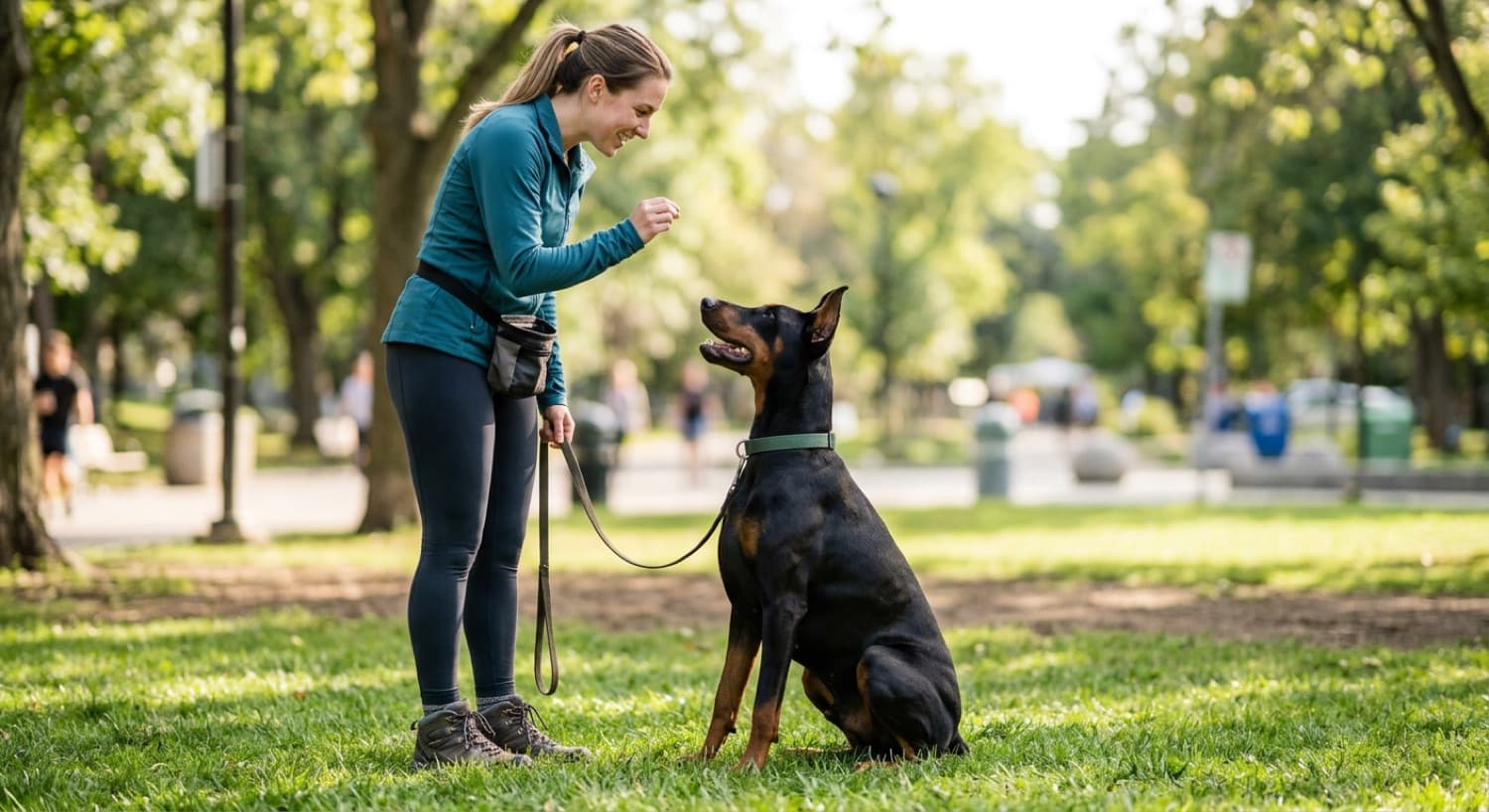
To live well with a Doberman, you have to understand what the breed actually is, beneath the tough reputation. It's a brilliant, sensitive, intensely attached companion that needs guidance to be its best self, and a powerful, protective dog whose stability is the owner's responsibility. Here's how to understand and raise one well.
Are Dobermans aggressive? The myth vs the reality
The modern well-bred, well-raised Doberman is not the aggressive dog of stereotype. Bred as a guardian, it's naturally alert and protective and makes an excellent guardian, but a well-bred, well-socialized, well-trained Doberman is stable, confident, discerning, affectionate, and good-natured. Temperament has been deliberately moderated over decades toward a stable family companion. The tough reputation comes from history and media, not the reality of a well-raised dog.
That said, temperament depends heavily on breeding, socialization, and training: a Doberman from poor breeding, or one under-socialized, poorly trained, or badly treated, can be fearful or over-reactive, and a powerful protective breed with a poor temperament is a real concern. This is exactly why those three things matter so much. The protective instinct is real, a well-raised Doberman may be watchful of strangers and protective if its family is genuinely threatened, but with stability and discernment, not indiscriminate aggression. Adopting an adult with an assessed temperament from a reputable rescue is a real advantage.
Socializing and training
Socialization: early, extensive, positive socialization (and continuing beyond puppyhood) to varied people, animals, places, and situations builds a confident, discerning dog. Training: Dobermans are highly intelligent and among the most trainable breeds, and respond very well to positive, reward-based training, harsh methods are counterproductive with a sensitive, powerful breed. Foundation obedience (reliable recall, impulse control, loose-leash walking) genuinely matters for a strong, protective dog.
Given the breed's intelligence and needs, professional training is genuinely worthwhile, classes or a qualified force-free/positive-reinforcement trainer (in Montreal, ideally one experienced with intelligent working or guardian breeds) helps with both skills and socialization. And mental stimulation matters as much as physical exercise (training, puzzle toys, dog sports), a bored Doberman can develop problems. Raising one well means committing to ongoing socialization, consistent positive training, plenty of exercise, and a close relationship.
The velcro bond and separation anxiety
Dobermans are famous “velcro dogs”, they bond intensely, follow you everywhere, and want to be constant companions, an endearing, defining trait. The flip side: they do NOT do well left alone for long or isolated, and the breed can be prone to separation anxiety (distress at being left, shown as destructiveness, vocalizing, pacing, or house-soiling). So the breed suits a household where the dog is included and not left alone all day.
To prevent or manage separation issues: include the dog in family life, provide enough exercise and mental stimulation, build up alone-time gradually and positively from the start, use enrichment (food puzzles) when leaving, and consider daycare, a dog walker, or company for long absences. If genuine separation anxiety develops, it's treatable, work with your vet and a positive-reinforcement trainer or behaviourist on a structured plan (sometimes with temporary medication alongside). For an adopted Doberman, ask the rescue about any separation-related history and plan a gradual, positive introduction to being alone.
Children, other pets, and responsible ownership
Well-raised, Dobermans are typically affectionate and often gentle with their own children and can live happily with other dogs and cats (especially if raised with them or properly introduced). As with any large, strong dog: always supervise dog-child interactions, teach children to be respectful, and introduce other pets carefully (some individuals have higher prey drive or less tolerance of unfamiliar/same-sex dogs). A reputable rescue can tell you an adult dog's known behaviour with kids and pets, and match you accordingly.
Responsible ownership in Montreal also means: winter warmth (the short single coat gives little insulation, so a coat for winter, short cold outings, and living indoors, see the adoption guide); prioritizing the breed's cardiac health care (regular DCM screening, see the health guide); keeping the dog well-trained and under control as a calm ambassador for a misunderstood breed; confirming your housing and insurance allow the breed; and committing for the long term (10 to 13 years). Do all this, and you'll have one of the most devoted, intelligent, rewarding companions there is.
Browse adoptable dogs in Montreal
Adopting an adult Doberman from a reputable rescue lets you know the temperament, and get guidance on training and fit. Refreshed regularly across Montreal-area organizations.
See Available Dogs →Frequently Asked Questions
Are Dobermans aggressive?
No, the modern well-bred, well-raised Doberman is stable, confident, and affectionate, not the aggressive stereotype. It's naturally alert and protective (an excellent guardian), but stability depends on good breeding, socialization, and training. A poorly-bred or under-socialized Doberman can be over-reactive, which is why those things matter so much. Adopting an assessed adult is a real advantage.
How do I socialize and train one?
Early, extensive, positive socialization to varied people, animals, and situations, plus consistent positive-reinforcement training (harsh methods backfire with this sensitive breed). Foundation obedience matters for a powerful dog. Professional training, classes or a qualified force-free trainer, is genuinely worthwhile, as is mental stimulation (a bored Doberman develops problems).
Why “velcro dogs,” and do they get separation anxiety?
They bond intensely and want to be with their people constantly. The flip side: they don't do well left alone for long and can be prone to separation anxiety. The breed suits a household where the dog isn't alone all day. Prevent issues by including the dog, providing exercise and enrichment, and building up alone-time gradually; genuine SA is treatable with a trainer or behaviourist.
Are they good with children and other pets?
Well-raised, typically yes, often affectionate and gentle with their own children, and able to live with other dogs and cats (especially if raised with them or properly introduced). As with any large dog, supervise dog-child interactions, teach respect, and introduce other pets carefully. A rescue can tell you an adult's known behaviour and match you accordingly.
What does responsible ownership involve in Montreal?
Socialization and training, substantial exercise and mental stimulation, lots of companionship (not left alone all day), winter warmth (a cold-sensitive breed, coat + indoor living), cardiac health care (DCM screening), being a calm ambassador for a misunderstood breed, confirming housing/insurance allows it, and a long-term commitment (10 to 13 years).
Related Montreal guides
Doberman Pinscher Adoption in Montreal
Where to adopt, the velcro temperament, family and cold-weather fit, real costs, and who the breed suits.
Doberman Health Issues
Dilated cardiomyopathy, von Willebrand's disease, wobbler syndrome, hip dysplasia, bloat, and the strong pet-insurance case.
Adoptable Dogs in Montreal
All currently available dogs across Montreal-area organizations, including Dobermans and Doberman mixes. Updates regularly.
Montreal Dog Adoption Resources
All our Montreal dog adoption guides in one place.
New dog? Start with these care guides
Everything a new adopter needs to set up a safe, happy home.