The short answer
Honestly, the English Bulldog is one of the breeds most affected by health problems, most driven by its extreme structure. The biggest and most defining: brachycephalic airway syndrome (BOAS) and dangerous heat intolerance, the flat face compromises breathing and cooling, so Bulldogs overheat easily (a potentially fatal welfare issue, air conditioning is essential in Montreal summers, never exercise in heat). Also: joint problems (hip/elbow dysplasia, luxating patellas), eye conditions (cherry eye, entropion, several needing surgery), and skin-fold infections (daily fold care). Lifespan is short, ~8 to 10 years. Levers you control: manage heat rigorously, keep the dog LEAN, do daily fold care, and address problems promptly. Given the high likelihood of expensive issues, insurance is strongly advised (but check brachycephalic exclusions), insure while young.
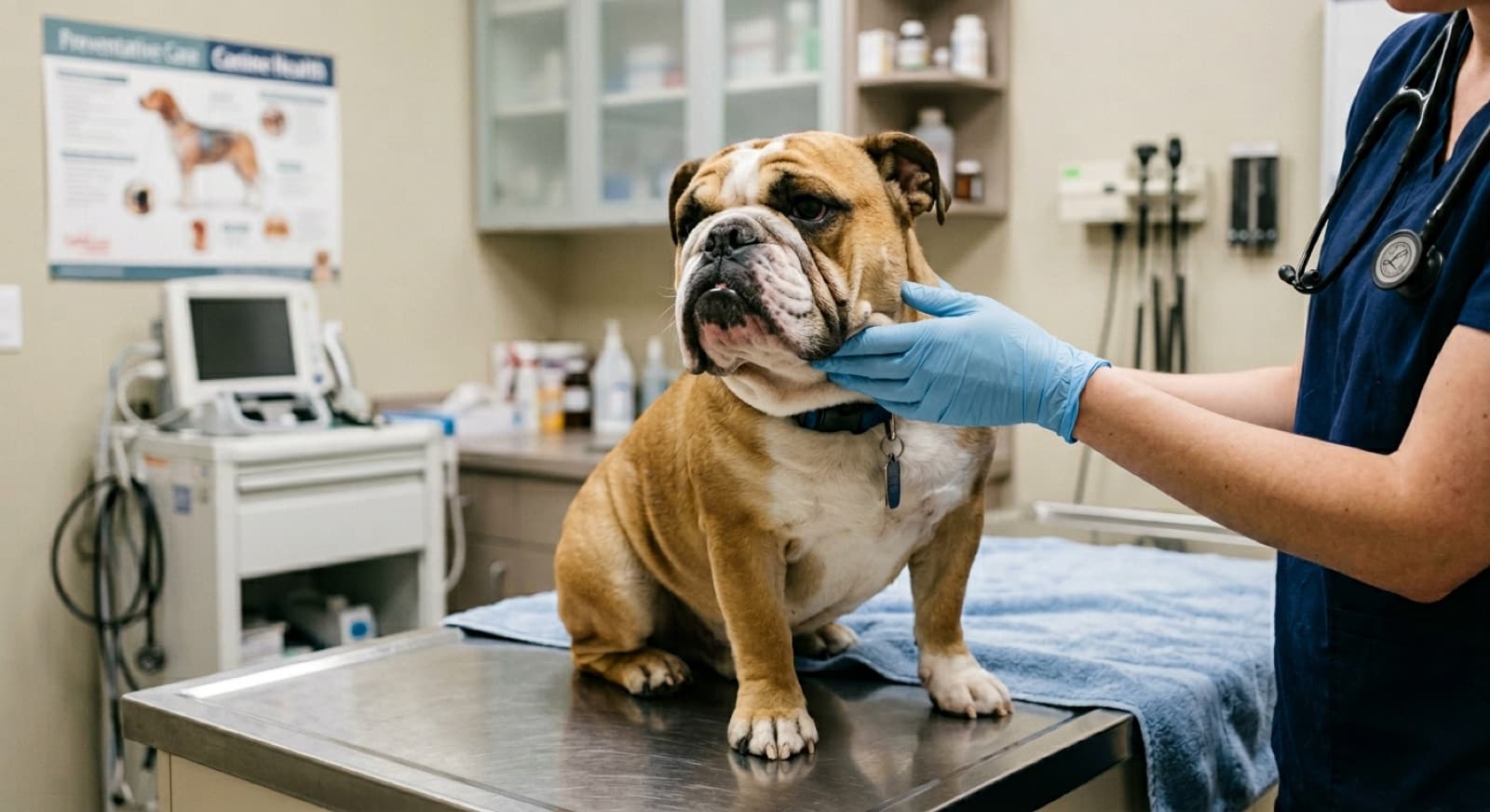
There's no way to write this guide honestly without being frank: the English Bulldog is one of the most health-challenged breeds, and most of its problems trace back to the extreme structure that gives it its distinctive look. Adopting a Bulldog means signing up to manage real health needs. Here's the picture, condition by condition, starting with the breed's defining issue.
Breathing (BOAS) and heat: the defining issue
As one of the most extreme brachycephalic (flat-faced) breeds, the Bulldog has a significantly compromised airway, a cluster of problems called brachycephalic obstructive airway syndrome (BOAS), causing noisy breathing (the famous snoring and snorting), breathing difficulty, exercise intolerance, and sometimes needing corrective airway surgery. Critically, the compromised airway means the Bulldog cannot cool itself efficiently by panting, so it's highly prone to overheating and heatstroke, a genuine, potentially fatal emergency.
This makes heat management absolutely critical, especially in Montreal's hot, humid summers: keep the dog cool (air conditioning is genuinely important, not a luxury), never exercise the dog in heat or leave it in a hot environment (no hot cars ever, no midday summer walks), exercise only in the cool hours and keep it gentle and short, provide shade and water, and know the signs of heatstroke (excessive panting/struggling to breathe, drooling, distress, weakness, bright red or bluish gums, collapse), an emergency needing immediate cooling and veterinary care. A Bulldog can overheat and die quickly, so this is the single most important welfare responsibility of the breed. Keep the dog lean too (excess weight worsens breathing).
Joint problems and eye conditions
Joints: the heavy, unusually-structured body makes the Bulldog very prone to hip and elbow dysplasia (among the highest rates of any breed), luxating patellas, and arthritis. Keep the dog lean (excess weight badly worsens joint strain), provide gentle heat-conscious exercise and good footing, and see your vet for stiffness or limping (management ranges from weight control and supplements to surgery). Eyes: the facial structure predisposes to cherry eye (often needing surgery), entropion/ectropion (eyelid problems, may need surgery), and dry eye (ongoing management).
Have any eye signs (redness, discharge, a visible red mass, squinting, rubbing, cloudiness) checked promptly, several eye conditions are painful, can threaten vision, and need surgical correction. Both joint and eye conditions are common and potentially costly, part of the strong insurance case. Reputable breeders screen joints (via OFA) and eyes. See our skin-fold care guide.
Skin folds and other conditions
Skin: the wrinkled folds (facial folds and the “tail pocket”) trap moisture, debris, and bacteria, making the breed very prone to skin-fold dermatitis, which is why regular, often daily fold cleaning is an essential care task (see the skin-fold care guide). Bulldogs can also have general skin allergies and infections. Other: dental problems (crowded teeth in a short jaw), certain heart conditions (monitor in routine care), reproductive difficulties (they typically need cesarean sections, a breeder concern), and a sometimes sensitive digestive system.
The breadth of potential issues, breathing, heat, joints, eyes, skin, dental, heart, is precisely why the English Bulldog is one of the higher-maintenance, higher-vet-cost breeds. The practical priorities: diligent daily skin-fold care, take dental care seriously, manage any skin allergies/infections with your vet, and include heart and general health in routine care. Good preventive care, diligent daily care (folds and heat above all), and financial preparedness are all genuinely important.
Lifespan and the strong insurance case
English Bulldogs have a relatively short lifespan, typically ~8 to 10 years, reflecting the breed's significant structural health issues. Give a Bulldog its best life by managing heat rigorously (the most important thing), keeping the dog LEAN (worsens breathing, joints, and heat if overweight), doing daily fold care, providing gentle heat-conscious exercise, taking dental care seriously, and addressing problems promptly. On insurance: worth considering more than for most breeds, given the high likelihood of expensive issues (BOAS surgery, joint surgery, eye surgery like cherry eye, chronic skin infections).
Two Bulldog-specific caveats: take out insurance while the dog is young and healthy, before conditions are diagnosed and excluded (especially important given how many issues Bulldogs develop); and note that some insurers charge more for, or specifically exclude, brachycephalic breeds (for example excluding BOAS-related conditions), so read policies carefully and understand exactly what's covered. If you self-insure, be realistic, a Bulldog may need a substantial fund. For an adopted adult or senior, some conditions are likely already present (and typically won't be covered), so go in financially prepared to manage the dog's health needs. The bottom line: the breed's significant health issues and short lifespan make diligent daily care and financial preparedness central, non-optional parts of responsible ownership. See the adoption guide.
Browse adoptable dogs in Montreal
A good rescue shares a dog's known health history, especially valuable for this health-challenged breed. Refreshed regularly across Montreal-area organizations.
See Available Dogs →Frequently Asked Questions
What are the main health problems?
Honestly, the Bulldog is one of the most health-challenged breeds, most issues stemming from its extreme structure. The biggest: brachycephalic breathing (BOAS) and dangerous heat intolerance, plus joint problems (hip/elbow dysplasia, luxating patellas), eye conditions (cherry eye, entropion), and skin-fold infections. Short lifespan (~8 to 10 years). Heat management, weight control, and daily fold care are the key protective steps.
Why do they have breathing problems and overheat?
As an extreme flat-faced (brachycephalic) breed, the Bulldog's airway is compromised (BOAS), causing noisy, difficult breathing and sometimes needing surgery. Crucially, it also can't cool itself efficiently by panting, so it overheats easily, a potentially fatal emergency. Heat management is critical: air conditioning in summer, never exercise or leave the dog in heat, and know the signs of heatstroke.
Are they prone to joint and eye problems?
Yes, the heavy structure makes them very prone to hip and elbow dysplasia and luxating patellas (keep the dog lean, provide good footing). And the facial structure predisposes them to cherry eye (often needs surgery), entropion/ectropion, and dry eye. Have any eye signs checked promptly, several conditions need surgery. Both are common and potentially costly.
What skin and other issues affect them?
The wrinkled folds (and the tail pocket) trap moisture and are very prone to skin-fold dermatitis, so daily fold cleaning is essential. Bulldogs can also have skin allergies, dental problems (crowded teeth), certain heart conditions, reproductive difficulties (they typically need cesareans), and a sensitive digestive system. The breadth of issues is why the breed is high-maintenance and high-vet-cost.
How long do they live, and is insurance worth it?
Relatively short, typically ~8 to 10 years. Insurance is worth considering more than for most breeds, given the high likelihood of expensive issues (BOAS surgery, joint surgery, eye surgery, chronic skin infections). Insure while young and healthy, and check carefully, some insurers charge more for or exclude brachycephalic breeds (e.g. BOAS). Or keep a substantial vet fund.
Related Montreal guides
English Bulldog Adoption in Montreal
Where to adopt, the affectionate mellow temperament, the climate and care realities, real costs, and who the breed suits.
English Bulldog Skin-Fold & Coat Care
The daily wrinkle-cleaning routine, the tail pocket, preventing fold infections, bathing, and coat care, the breed's defining care task.
Adoptable Dogs in Montreal
All currently available dogs across Montreal-area organizations, including Bulldogs and Bulldog mixes. Updates regularly.
Montreal Dog Adoption Resources
All our Montreal dog adoption guides in one place.
New dog? Start with these care guides
Everything a new adopter needs to set up a safe, happy home.