The short answer
German Shepherds are intelligent, loyal, confident, and protective, a serious working breed that needs training, socialization, and a job. They're among the easiest and most rewarding breeds to train with positive methods, but training isn't optional, it's a core need. Socialization is as important as obedience: it shapes the natural protectiveness into confidence rather than reactivity. They excel at dog sports (obedience, tracking, agility, protection sports). They handle Montreal winters well thanks to their double coat, so year-round exercise is very doable. Good with kids and pets with socialization and supervision.
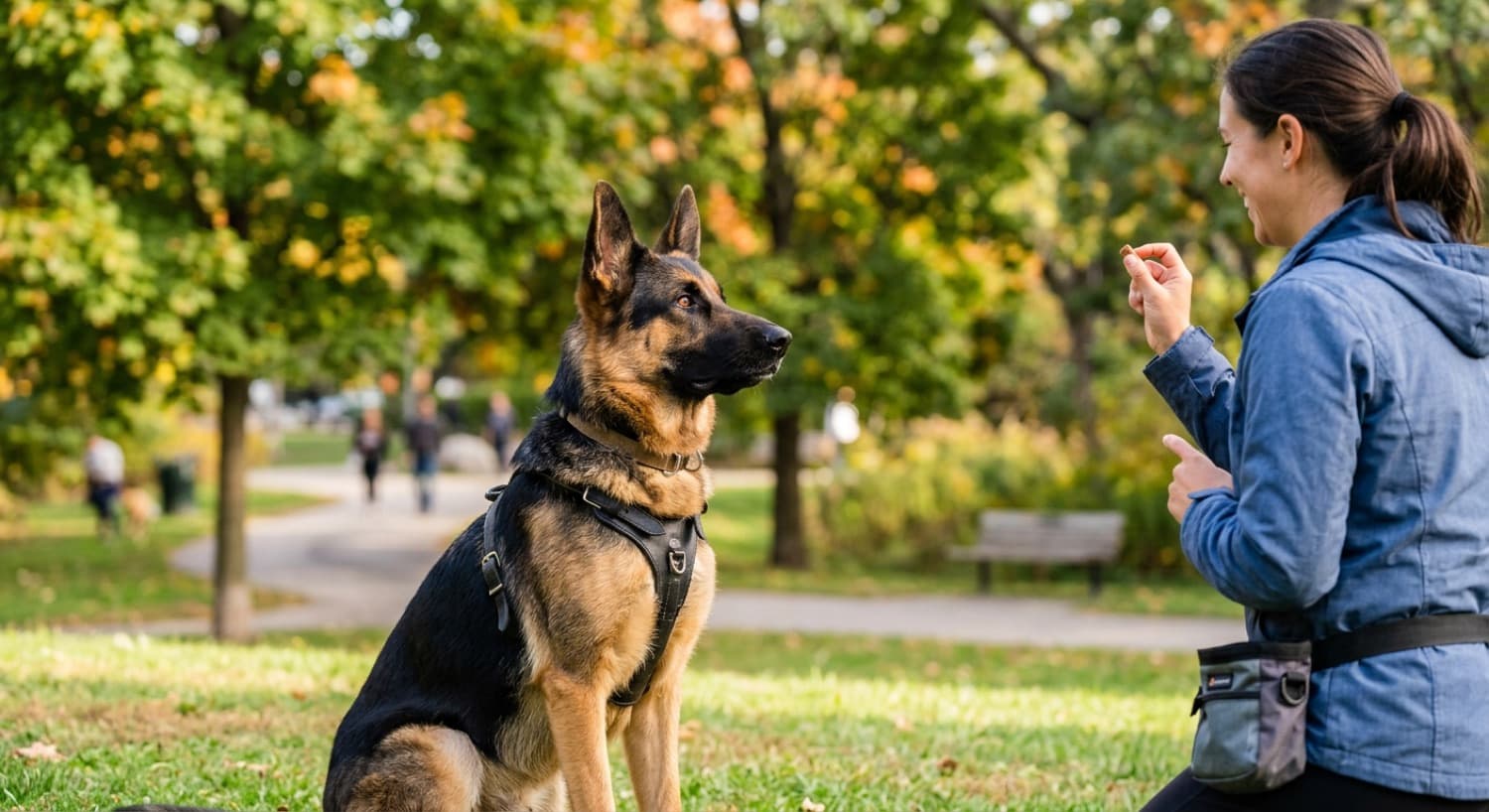
More than almost any other breed, the German Shepherd is what you make of it. The same intelligence, drive, and protectiveness that make it extraordinary in the right hands make it a handful in the wrong ones. The difference is training, socialization, and meeting the breed's needs. Here is how to get it right in Montreal.
The working temperament
German Shepherds are intelligent, loyal, confident, and versatile, developed to work closely with people. A well-raised one is a devoted “velcro” dog, confident and steady, alert, and often protective of family and home. They're exceptionally intelligent and genuinely need a job, thriving on training, problem-solving, and engagement. The temperament has a serious, businesslike side: they tend to be discerning, reserved with strangers until they warm up, and deeply bonded to their own people.
This is a wonderful temperament in the right hands, but it comes with responsibilities: the protectiveness and reserve must be shaped by good socialization into confidence (not fear or reactivity), and the intelligence and drive need constructive outlets or they turn into problems. A properly raised, socialized, trained, and exercised Shepherd is stable, confident, loyal, and capable; a poorly socialized or under-stimulated one can be anxious, reactive, or difficult. The breed rewards an owner who works with its working temperament.
Training an intelligent breed
German Shepherds are among the easiest and most rewarding breeds to train, exceptionally intelligent, quick, eager to work, and keen to please. But two caveats: their intelligence and drive mean training isn't optional, it's a core need (a smart, high-drive dog with no outlet finds its own unwanted jobs), and they're sensitive, so they do best with positive, reward-based methods and clear, consistent handling, not harsh, punitive ones (which damage trust and can create fear or reactivity).
The recipe: start early, use positive reinforcement, be consistent and clear, keep the dog mentally engaged with ongoing training and challenges (not just a puppy class and done), and channel the drive into constructive outlets like dog sports. For an adopted adult Shepherd, training is one of the best ways to build your bond, establish manners, provide mental stimulation, and work through any issues, a positive-methods trainer or class is a worthwhile investment, especially if the dog has gaps in its training or socialization.
Socialization: as important as obedience
Socialization is critically important, arguably as important as obedience, because the breed's natural protectiveness and reserve must be shaped into confident, appropriate behaviour rather than fear or reactivity. A well-socialized Shepherd is steady and discerning; a poorly-socialized one can become fearful, anxious, over-protective, or reactive, and given the breed's size and strength, those problems are more serious than in a small, easygoing breed.
Good socialization means exposing the dog, positively and gradually, to a wide variety of people, dogs, animals, places, sounds, and experiences, especially during puppyhood but continuing lifelong, always keeping it positive and below the fear threshold. For an adopted Shepherd whose history you may not know, ongoing socialization and confidence-building remain important, go at the dog's pace, and if it shows fear or reactivity, work with a positive-methods trainer or behaviourist. Montreal's parks, paths, and training classes offer plenty of opportunity. Skimping on socialization is one of the most common ways Shepherds develop behaviour problems.
Dog sports: a job for the working brain
Sports are some of the best ways to meet the breed's physical and mental needs at once and channel the drive constructively. Great options for the Shepherd:
- •Obedience and rally, they excel with their trainability and work ethic.
- •Tracking and scent work / nosework, tapping the breed's superb scenting ability, deeply satisfying.
- •Agility, their athleticism and intelligence suit it well.
- •Protection sports (IGP/Schutzhund), a traditional Shepherd sport combining tracking, obedience, and protection, through specialized clubs.
- •Herding, the breed's original purpose, through herding clubs.
Even outside formal sports, a Shepherd benefits from jobs and challenges: training sessions, puzzle toys, learning new skills, carrying a backpack on hikes. Montreal and the surrounding area have an active dog-sports and training community with clubs and facilities offering obedience, agility, nosework, and more. For an adopted Shepherd, taking up a sport or structured activity gives the working brain and body a job, meets the dog's needs, and builds your relationship.
Exercise in Montreal, winter included
A Shepherd needs well over an hour of real daily activity plus mental work, year-round. Warmer months: the city's parks, Mount Royal, path networks, off-leash areas, and swimming (a great low-impact joint workout). The good news for winter: German Shepherds are very well suited to cold weather, their double coat handles Montreal winters far better than many breeds, and many love the snow, so winter doesn't stop the exercise.
Winter considerations: protect the paws from road salt and ice (wipe or rinse after walks, consider balm or boots), watch for ice to avoid slips and joint strain (important for a dysplasia-prone breed), and on the very coldest, high-wind-chill days shorten outdoor sessions and add indoor mental work. On any weather-limited day, supplement with training, puzzle toys, and scent games to tire the mind. Because the breed handles Montreal's winters so well, an engaged owner can keep a Shepherd well-exercised and satisfied through every season. See our health guide on protecting the joints.
With children and other pets
Shepherds can be excellent with children and other pets, but it depends on the individual dog, its socialization and training, and management, and their size, strength, energy, and herding instincts mean supervision and sensible precautions matter more than with a small, placid breed.
With children: a well-raised Shepherd is often devoted to and protective of its family's kids, but its size can knock over a small child in play, and the herding instinct can lead to chasing or nipping at running children, so supervise interactions, teach children to interact respectfully, and train and socialize the dog around kids. With other pets: they can coexist well with dogs and even cats, especially when raised together or properly introduced, though some have stronger prey drive or can be same-sex dog-selective, so introduce carefully and supervise around smaller animals. For an adopted Shepherd, ask the rescue what's known about the individual dog's behaviour with children and animals, and match it honestly to your household.
Browse adoptable dogs in Montreal
If you'll put in the training, socialization, and exercise, a German Shepherd is a remarkable companion. Refreshed regularly across Montreal-area organizations.
See Available Dogs →Frequently Asked Questions
What is the temperament really like?
Intelligent, loyal, confident, and protective, a serious working breed that bonds deeply and needs a job. Devoted “velcro” dogs, discerning and reserved with strangers. Wonderful in the right hands, but the protectiveness needs shaping by socialization and the drive needs outlets, or problems develop.
Are they easy to train?
Among the easiest and most rewarding, exceptionally intelligent, quick, and eager to please. But training isn't optional, it's a core need, and they're sensitive, so use positive methods and consistent handling, not harsh ones. Start early, keep them engaged, and channel the drive into sports.
How important is socialization?
Critically important, arguably as important as obedience. It shapes the breed's natural protectiveness into confidence rather than fear or reactivity. Expose the dog positively and gradually to varied people, dogs, and places, lifelong. Skimping on it is a common cause of Shepherd behaviour problems.
What dog sports suit them?
Obedience, rally, tracking and nosework (tapping their scenting ability), agility, protection sports (IGP/Schutzhund), and herding. Sports meet physical and mental needs at once, channel the drive, and build the bond. Montreal has an active dog-sports and training community.
How do I exercise one in Montreal winter?
Shepherds handle cold well thanks to their double coat and often love snow, so winter exercise continues. Protect the paws from salt and ice, watch for slips (joint strain), and shorten sessions plus add indoor mental work on the coldest days. Year-round, combine physical exercise with mental engagement daily.
Are they good with children and other pets?
Can be excellent, but it depends on the individual, socialization, training, and management. Supervise around small children (size and herding instinct), teach kids to interact respectfully, and introduce other pets carefully. Ask the rescue what's known about the individual dog and match honestly to your home.
Related Montreal guides
German Shepherd Adoption in Montreal
Where to adopt in Montreal, the loyal working temperament, exercise and training, real costs, and who it suits.
German Shepherd Health Issues
Hip and elbow dysplasia, degenerative myelopathy, bloat, EPI, and the pet-insurance case.
Adoptable Dogs in Montreal
All currently available dogs across Montreal-area organizations, including Shepherds and Shepherd mixes. Updates regularly.
Montreal Dog Adoption Resources
All our Montreal dog adoption guides in one place.
New dog? Start with these care guides
Everything a new adopter needs to set up a safe, happy home.