The short answer
A Husky needs well over an hour of vigorous daily exercise, often much more, year-round, ideally running and pulling activities (canicross, bikejoring, and in winter, skijoring, the breed's ideal season). Under-exercise is the top cause of destruction and surrender. Huskies are also legendary escape artists: they dig under, climb over, and bolt through gaps and open doors, so you need a securely fenced yard (6+ feet, dig-proofed), self-latching gates, and household door vigilance. Crucially, Huskies generally cannot be trusted off-leash in unfenced areas, their prey drive and wanderlust override recall, so they're a leashed-or-securely-fenced dog. Watch summer heat, not winter cold.
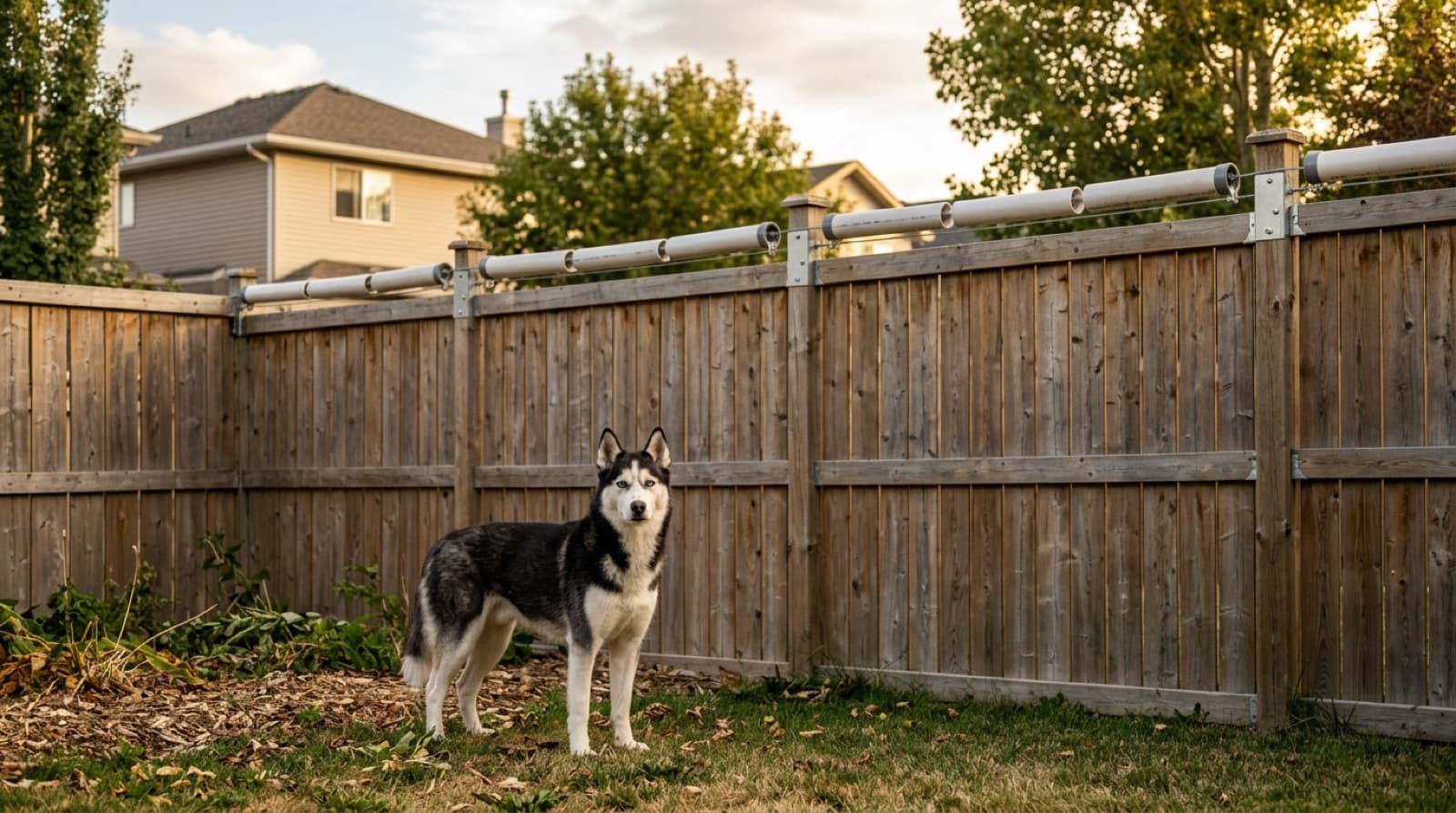
If you take away one thing about owning a Husky, make it this: the breed's enormous exercise needs and its escape-artist nature are the two make-or-break realities, and both must be planned for before you adopt, not discovered afterward. Almost every Husky that ends up back in rescue got there because one or both were underestimated. Here is how to get them right in Montreal.
How much exercise (and why it's non-negotiable)
A Husky needs well over an hour of vigorous daily activity, often much more, and it's not negotiable. Bred to pull sleds over long distances, they have extraordinary stamina and a hardwired need to run. A block walk, or even ordinary walks, doesn't come close. Under-exercise produces destruction, digging, escaping, howling, and hyperactivity, and most Husky behaviour problems trace directly to it.
The flip side: a well-exercised Husky is far calmer, happier, and better-behaved. Meeting the need takes genuine commitment and structure, built into your routine year-round, in all weather, using appropriate activities and secure spaces (a Husky can't simply be let off-leash to run). For an active owner who enjoys getting out, it can be a joy; for someone who can't commit, a Husky is the wrong breed. Before adopting, be brutally honest about whether you can provide this every day.
Best activities in Montreal
The best activities provide sustained, vigorous exercise and tap the breed's drive to run and pull. Montreal's geography and climate offer excellent options:
- •Canicross, running with the dog attached by a waist belt and bungee line, so it pulls you, an outstanding outlet many Huskies love.
- •Bikejoring, the dog pulling alongside or ahead of a bike.
- •Skijoring and recreational sledding-type activities in winter, a natural, wonderful fit for a cold-loving pulling breed, and Montreal's ideal season.
- •Long runs and hikes, a Husky makes a great running partner for a fit owner.
- •Off-leash running in securely fenced spaces, plus mental work (training, puzzles, scent games) to supplement, though for a Husky physical exercise is paramount.
A practical Montreal note: in the hot, humid summer months, exercise in the cooler parts of the day and watch for overheating, for a Husky, summer, not winter, is the season to be careful. The key is a year-round routine of substantial, appropriate exercise, with winter being the breed's ideal season.
Containing an escape artist
Huskies are legendary escape artists, driven by wanderlust and prey drive, and remarkably determined and resourceful. A Husky will dig under fences, climb or jump over them, squeeze through gaps, chew weak barriers, open unlatched gates, and bolt through any open door. Containing one requires serious measures: a securely fenced yard with a high fence (at least ~6 feet), dig-proofing (bury the fence bottom, an inward L-footer, or a paver barrier), self-latching gates, and household vigilance about doors and gates.
Many escapes happen through a door left ajar or a gate not fully latched, so everyone in the household must be aware. A yard is for supervised time and a bonus outlet, never a substitute for exercise or a place to leave a Husky unattended (a bored, unsupervised Husky in a yard is exactly the one that escapes). For an adopted Husky, assume it's an escape artist and set up secure containment before bringing it home. Countless Huskies go missing, and are injured or killed on roads, because owners underestimated this. Secure containment is genuinely a safety issue.
The off-leash reality
The honest answer: Huskies generally cannot be trusted off-leash in unfenced areas, and most experienced Husky people and rescues advise never letting a Husky off-leash except in a securely fenced space. Their strong prey drive plus independence, wanderlust, and a notorious lack of reliable recall mean that when the instinct to chase or run kicks in, recall evaporates, no matter how much training. This is a fundamental breed characteristic, not a training failure.
You can and should train a Husky in general obedience and manners (positive, reward-based methods work best for this independent breed), and training is valuable for management and relationship. But don't rely on recall to keep a Husky safe off-leash in an unfenced area, the risk (traffic, getting lost) is too high. In practice: keep a Husky on-leash in all unfenced areas, use a secure long-line for more freedom with control, provide off-leash running only in securely fenced spaces, and channel the running need into on-leash pulling activities. Accepting that a Husky is a leashed-or-securely-fenced dog is part of responsible ownership, and essential for the dog's safety.
Under-exercise, and the working-owner reality
An under-exercised Husky becomes a serious behaviour problem, relentless destruction, digging, escaping, howling, and an inability to settle, and it's the leading reason the breed ends up in rescue. Owners often mistake this for the dog being “bad,” when it's simply under-exercised. The solution is almost always more exercise and better outlets, not less, a genuinely tired Husky is calm and contented.
For a working person or family in Montreal, this can be managed, but only with commitment and planning: a vigorous outing before work, another substantial one after, and ideally a midday break (dog walker, daycare, or family) to break up a long day alone. Build the dog into activities you already do (running, biking, cross-country skiing), use dog-powered sports for efficient exercise, arrange secure off-leash running, and have a backup plan for busy periods. A Husky is manageable for a genuinely committed, organized active owner, and unmanageable for someone who isn't. If you work long hours, can't arrange midday relief, and aren't prepared to build significant daily exercise into your life year-round, a lower-energy breed would be a kinder choice for both of you. See our adoption guide.
Browse adoptable dogs in Montreal
If you have the routine, the secure fencing, and the will to keep a Husky on-leash, you'll have a happy, settled dog. Refreshed regularly across Montreal-area organizations.
See Available Dogs →Frequently Asked Questions
How much exercise do they really need?
Well over an hour of vigorous daily activity, often much more, and it's non-negotiable. Bred to pull sleds, they have extraordinary stamina. Ordinary walks aren't enough. Under-exercise produces destruction, escaping, and howling. A well-exercised Husky is far calmer. Be brutally honest about whether you can provide this daily.
What are the best activities in Montreal?
Running and pulling sports: canicross, bikejoring, and in winter skijoring (the breed's ideal season), plus long runs and hikes and off-leash running in fenced spaces. Mental work supplements but doesn't replace physical exercise. In hot, humid summer, exercise in the cool parts of the day, watch for overheating.
Why are they escape artists, and how do I contain one?
Wanderlust and prey drive make them dig under, climb over, and bolt through gaps and open doors. You need a securely fenced yard (6+ feet), dig-proofing (buried fence, L-footer), self-latching gates, and door/gate vigilance. A yard is never a substitute for exercise or a place to leave a Husky unattended. Set up containment before bringing one home.
Can they have reliable recall or be off-leash?
Generally no, most experienced Husky people advise never off-leash except in a securely fenced space. Prey drive, wanderlust, and notoriously unreliable recall mean that when the instinct kicks in, recall evaporates, no matter the training. It's a breed characteristic. Keep a Husky leashed in unfenced areas; use a long-line for more freedom with control.
What happens without enough exercise?
Serious behaviour problems, destruction, digging, escaping, howling, hyperactivity, the leading reason the breed is surrendered. Owners often mistake it for the dog being “bad,” when it's under-exercised. The fix is almost always more exercise and better outlets, not less. A genuinely tired Husky is calm and contented.
Is it manageable for a working person?
Yes, but only with commitment and planning: a vigorous outing before and after work, ideally a midday break (walker, daycare, family), year-round in all weather. Build the dog into activities you already do, use dog-powered sports, and have a backup plan. If you can't, a lower-energy breed is a kinder choice.
Related Montreal guides
Husky Adoption in Montreal
Where to adopt in Montreal, the demanding temperament, shedding, winters, real costs, and who it suits.
Husky Health Issues
Eye conditions, hip dysplasia, summer heat sensitivity, and the generally-healthy breed picture.
Adoptable Dogs in Montreal
All currently available dogs across Montreal-area organizations, including Huskies and Husky mixes. Updates regularly.
Montreal Dog Adoption Resources
All our Montreal dog adoption guides in one place.
New dog? Start with these care guides
Everything a new adopter needs to set up a safe, happy home.