The short answer
The true Rottweiler is confident, calm, steady, loyal, and protective, not the aggressive caricature, but that good temperament depends on breeding, socialization, training, and responsible ownership. Socialization is critical: thorough, early, ongoing, positive exposure shapes the guardian instinct into confidence rather than reactivity. Train with positive, reward-based methods and confident, consistent leadership (never harsh “dominance” methods); reliable obedience is a safety essential for a large dog, and professional training is worthwhile. Good with kids and pets with proper breeding, socialization, and supervision. And embrace responsible ownership: management, secure containment, by-laws, and being a good steward of a maligned breed.
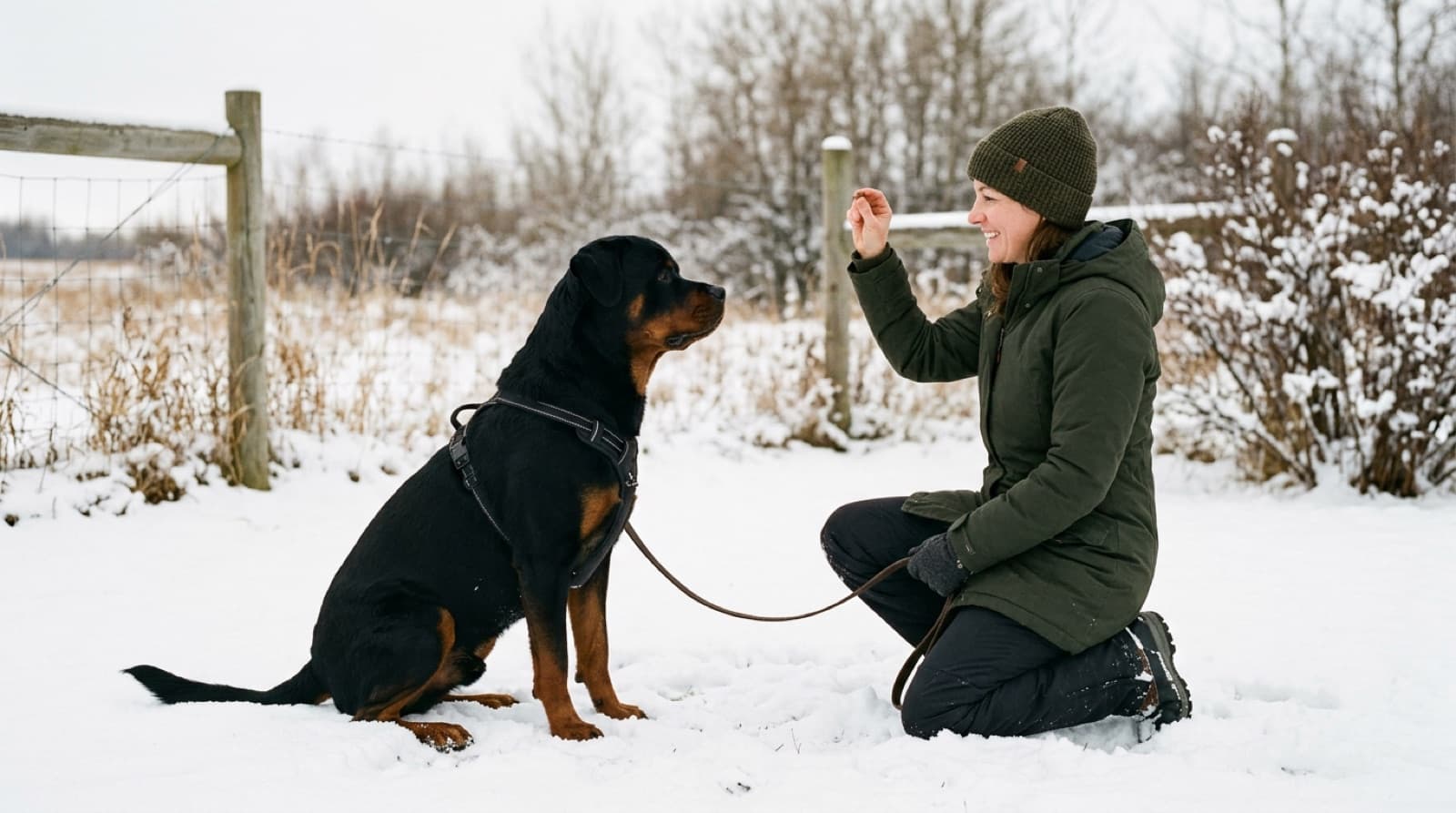
More than almost any breed, the Rottweiler is what its owner makes of it. The steady, loyal guardian temperament is real, but it isn't automatic, it depends on good breeding, thorough socialization, positive training, and genuine responsibility. Get those right and you have a magnificent companion; skimp on them and the same size and strength become a liability. Here is how to get it right in Montreal.
The true temperament
A well-bred, well-raised Rottweiler is confident, calm, steady, loyal, and courageous, not the vicious caricature the breed is unfairly given. Self-assured and level-headed (not nervous or reactive), deeply devoted and often surprisingly affectionate, gentle, and even goofy with its own people, intelligent and trainable, and naturally protective, a guardian at heart. But the ideal temperament depends heavily on breeding, socialization, and training: a poorly-bred, poorly-socialized, or poorly-trained Rottweiler can be fearful, over-protective, or reactive, and given the size and strength, that's more serious than in a small breed.
The breed is also strong-willed and needs confident, consistent leadership. Reputable breeders and rescues prioritize sound, stable temperament, and a well-adjusted Rottweiler, or a rescue assessed to have a sound temperament, raised with proper socialization and training, is typically a stable, confident, wonderful companion. The key takeaway: the genuine temperament is steady and loyal, not aggressive, but realizing it requires the right breeding, socialization, training, and responsible ownership.
Socialization: critical
Socialization is critically important, the guardian instincts and protectiveness must be shaped, through thorough, early, ongoing positive socialization, into confident, appropriate behaviour rather than fear, suspicion, over-protectiveness, or reactivity, and given the size and strength, getting it right is genuinely important. A well-socialized Rottweiler distinguishes genuine threats from normal situations and is protective only when warranted; a poorly-socialized one can become fearful or reactive, a serious problem in a large guardian breed.
Expose the dog positively and gradually to a wide variety of people, dogs, animals, places, and experiences, especially in puppyhood but lifelong, always positive and below the fear threshold (never expose the dog to things that frighten it, which backfires). For an adopted Rottweiler whose history you may not know, ongoing socialization and confidence-building remain important, go at the dog's pace, and if it shows fear, reactivity, or over-protectiveness, work with a positive-methods trainer or behaviourist experienced with the breed. Montreal's classes, walks, and city life offer opportunity. Skimping on socialization is one of the most common and serious ways Rottweilers develop problems.
Training a powerful breed
Training is essential, the breed thrives on it, and a large, powerful dog needs reliable obedience for safety. Rottweilers are intelligent and trainable; the key is method. Use positive, reward-based methods and confident, consistent, fair handling, they do NOT do well with harsh, punitive, heavy-handed methods (which damage trust and can make things worse). The outdated idea that you must “dominate” a Rottweiler is counterproductive, what the breed needs is confident, consistent, positive leadership, not harshness.
Start early and keep it up lifelong, be consistent (everyone uses the same rules), teach solid, reliable obedience (a safety issue for a large dog), keep the dog mentally engaged (they enjoy a job and sports), and build a trusting relationship. Given the breed's size and characteristics, professional training is genuinely worthwhile, a good positive-methods class or trainer experienced with large/guardian breeds, especially for a less experienced owner (and it provides socialization). For an adopted Rottweiler, invest in ongoing positive training. A well-trained Rottweiler is a credit to the breed; an untrained large guardian dog is a liability, so training is not optional.
With children and other pets
Rottweilers can be good with children and other pets, and many are devoted, gentle family dogs, but it depends on the individual, breeding, socialization, and training, and given the size and strength, supervision and management are especially important. A well-raised Rottweiler is often loving, loyal, and gentle with its own children, but even a friendly one can knock over a small child, so supervise all interactions, teach children to be gentle and respectful, and socialize and train the dog around kids.
This isn't because a good Rottweiler is dangerous to children (it isn't), but because responsible management of a large, powerful dog around children is simply prudent. With other pets: they can coexist well, especially raised together or properly introduced, though some are dog-selective or have prey drive, so introduce carefully and supervise. For an adopted Rottweiler, ask the rescue what's known about the dog's behaviour with children and animals, and match it honestly to your household. Thoughtful management and supervision, especially around young children, are essential rather than optional.
Responsible ownership
Owning a large guardian breed comes with real responsibilities, to the dog, to those around it, and to the breed's reputation. Responsible ownership means: thorough socialization and positive training; the substantial exercise and mental stimulation the breed needs; ensuring the dog is always safely managed and under control in public (reliable obedience, appropriate leashing); supervising around children and others; secure containment; handling the practical/legal responsibilities (municipal by-laws, licensing, housing and insurance considerations); good health care; and being a conscientious, informed owner.
It also means being honest with yourself before adopting about whether you can meet these responsibilities, a Rottweiler is a significant commitment, not the right dog for someone unwilling or unable to provide the training, socialization, exercise, management, and responsible handling. There's also a responsibility to the breed itself: Rottweilers are sometimes unfairly maligned and face restrictions, and every well-owned, well-behaved Rottweiler helps counter the stereotypes while every poorly-managed one reinforces them. For those who embrace the responsibility, the reward is a magnificent, loyal, devoted companion, and the satisfaction of being a good steward of a wonderful but demanding breed. See our adoption guide on the housing and by-law considerations.
Browse adoptable dogs in Montreal
If you'll do the socialization, training, and responsible ownership, a Rottweiler is a magnificent, loyal companion. Refreshed regularly across Montreal-area organizations.
See Available Dogs →Frequently Asked Questions
What is the true temperament?
Confident, calm, steady, loyal, and courageous, not the aggressive caricature. Self-assured, deeply devoted and often gentle and goofy with their own people, intelligent, and naturally protective. But the good temperament depends on breeding, socialization, and training; a poorly-raised one can be fearful or reactive. Needs confident, consistent leadership.
How important is socialization?
Critically important, it shapes the guardian instincts into confidence rather than fear or reactivity. Expose the dog positively and gradually to varied people, dogs, and places, lifelong, always below the fear threshold. Skimping on it is a common, serious cause of Rottweiler behaviour problems, so make it a central priority.
How do I train one?
With positive, reward-based methods and confident, consistent, fair handling, never harsh “dominance” methods, which damage trust and can make things worse. Start early, teach reliable obedience (a safety essential for a large dog), keep them engaged, and get professional help, worthwhile for the breed. Training isn't optional.
Are they good with children and other pets?
They can be, and many are devoted, gentle family dogs, but it depends on the individual, breeding, socialization, and training, and supervision matters more given the size and strength. Supervise around young children (even a friendly one can knock a child over), teach gentle handling, and introduce other pets carefully. Management is essential.
What does responsible ownership involve?
Socialization and positive training, substantial exercise, always keeping the dog safely under control in public, supervising around others, secure containment, handling by-laws/licensing/housing/insurance, good health care, and being honest about whether you can meet these responsibilities. Every well-owned Rottweiler also helps counter the breed's unfair stereotypes.
Related Montreal guides
Rottweiler Adoption in Montreal
Where to adopt in Montreal, the loyal guardian temperament, exercise, housing and insurance considerations, real costs, and who it suits.
Rottweiler Health Issues
Hip and elbow dysplasia, the notable cancer risk, heart conditions, bloat, and the pet-insurance case.
Adoptable Dogs in Montreal
All currently available dogs across Montreal-area organizations, including Rottweilers and Rottweiler mixes. Updates regularly.
Montreal Dog Adoption Resources
All our Montreal dog adoption guides in one place.
New dog? Start with these care guides
Everything a new adopter needs to set up a safe, happy home.