The short answer
The Samoyed is fairly hardy (~12 to 14 years), but has characteristic considerations, including a genuinely breed-specific one. The key ones: hip dysplasia (keep the dog lean), several eye conditions (PRA, cataracts, glaucoma), the breed-specific hereditary kidney disease (Samoyed hereditary glomerulopathy, SHG), an elevated diabetes predisposition, and certain heart conditions (subaortic/pulmonic stenosis). Levers you control: keep the dog lean, watch for hip/eye/kidney/diabetes/heart signs, manage summer heat (the heavy coat), keep up grooming (which doubles as a health check), and maintain routine care. Given the range of potential (and potentially costly) conditions, insurance is worth considering, insure while young.
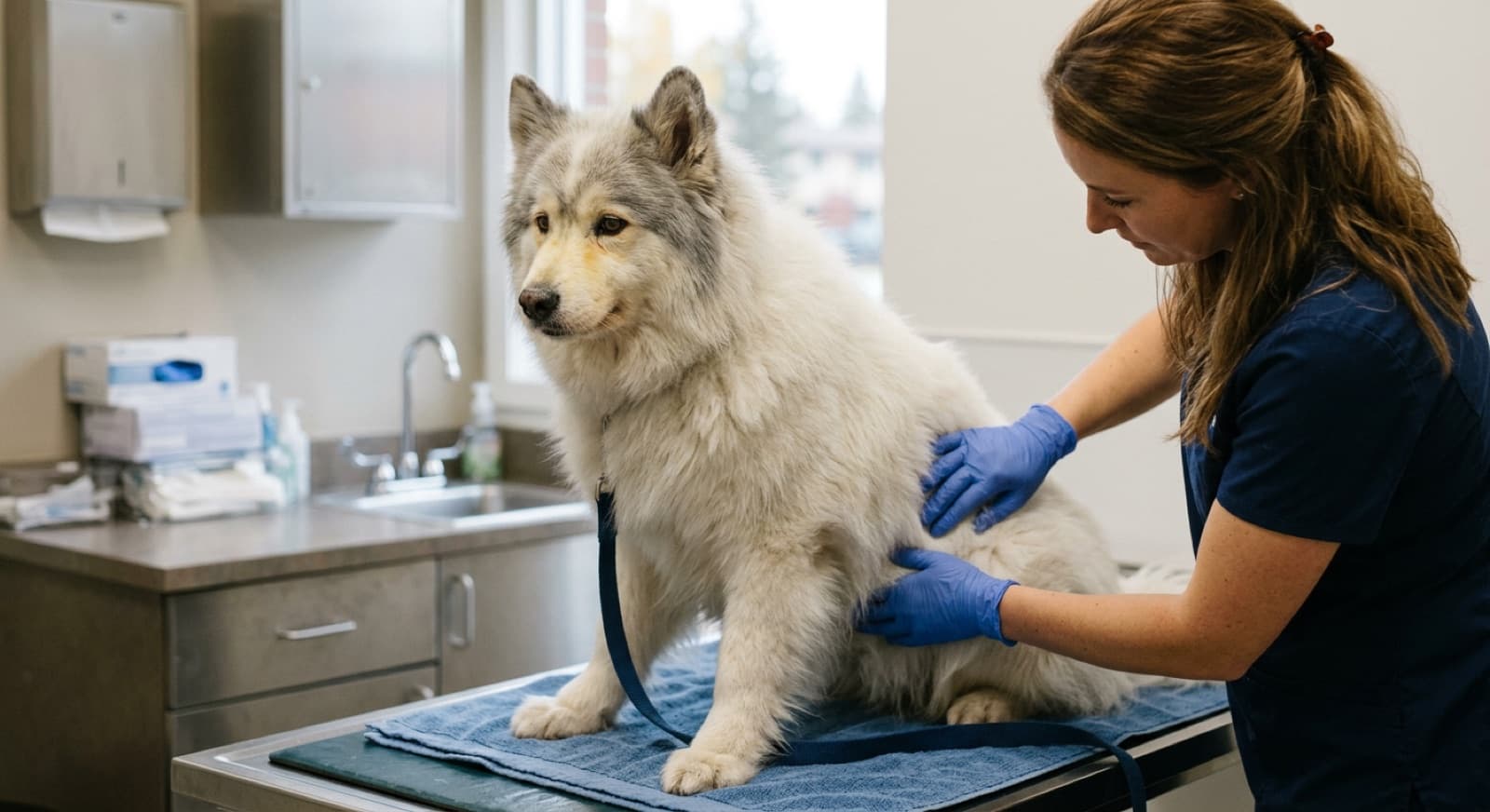
The Samoyed is a generally hardy breed, but it comes with a distinctive range of health considerations, including one that's genuinely unique to the breed (a hereditary kidney disease). Understanding them, and choosing a well-bred or well-assessed dog, helps. Here's the health picture, condition by condition.
Samoyed hereditary glomerulopathy: the breed-specific kidney disease
Samoyed hereditary glomerulopathy (SHG) is a serious, genuinely breed-specific inherited kidney disease largely unique to the Samoyed, and an important consideration. It affects the glomeruli (the kidneys' filtering units) and leads to progressive kidney damage and, ultimately, failure. Being X-linked, it typically affects males much more severely (affected males usually show signs in the first year or two and progress to fatal kidney failure young), while female carriers are usually mildly affected (they carry and pass on the gene but typically don't develop severe disease).
Signs of kidney disease include increased thirst and urination, weight loss, and poor appetite. The key responses are around breeding and awareness: responsible Samoyed breeders know their lines and work to avoid producing affected dogs (a major reason a responsible breeder matters if buying). For an owner or adopter, be aware SHG exists and is breed-specific, watch a young Samoyed (especially a male) for signs of kidney disease and seek veterinary care for concerns, and ensure routine care includes kidney-health attention (bloodwork/urinalysis). Many Samoyeds are not affected, particularly with responsible breeding, but it's a genuinely important, breed-defining consideration to know about and monitor for. Ask a rescue what's known about an adopted dog's kidney status.
Hip dysplasia and eye conditions
Hip dysplasia: like many medium-large breeds, a joint malformation leading to pain and arthritis, keep the dog lean, provide appropriate exercise (without overdoing high-impact activity in a growing puppy), and see your vet for stiffness or limping. Eyes: the breed can be prone to several conditions, progressive retinal atrophy (progressive vision loss), cataracts, glaucoma (painful, can threaten vision, sometimes an emergency), and others.
Support joint health by keeping the dog lean and, if signs appear, seeing your vet (management ranges from weight control and supplements to surgery). For eyes, include eye exams in routine care, watch for signs (redness, cloudiness, discharge, squinting, a changed eye, vision changes), and seek prompt, and for suspected glaucoma immediate, veterinary attention. Reputable breeders screen hips (via OFA) and eyes; Montreal has veterinary ophthalmology services. Both hip and eye conditions can involve real costs, part of the insurance case. See our grooming & heat guide (grooming doubles as a health check).
Diabetes and heart conditions
Diabetes: the Samoyed has an elevated predisposition to diabetes mellitus. Watch for increased thirst and urination, increased appetite with weight loss, and lethargy, and seek veterinary attention. The good news: canine diabetes is generally manageable (insulin injections, usually twice daily, plus diet and monitoring), though a lifelong commitment of care and cost, undiagnosed, it can cause serious complications, so recognizing the signs matters. Heart: the breed can be prone to congenital conditions, notably subaortic stenosis and pulmonic stenosis (narrowings that obstruct blood flow, mild to serious), so watch for a murmur, exercise intolerance, or fainting, and monitor heart health in routine care.
Keeping the dog lean and healthy supports metabolic health generally. Reputable breeders include cardiac screening; your vet can monitor and pursue a cardiac workup (potentially with a cardiologist, Montreal has these services) if a murmur or concern arises. Both diabetes (ongoing management) and heart conditions (diagnosis, monitoring, treatment) can involve real costs, part of the insurance case. See the adoption guide.
Lifespan and the insurance case
Samoyeds are fairly hardy, typically living ~12 to 14 years. Keep one healthy by keeping it lean, supporting joint health, monitoring eye, kidney, diabetes, and heart health, managing summer heat (the heavy coat), keeping up grooming, and good routine care. On insurance: worth considering, given the breed's range of potential (and potentially costly) conditions, hip dysplasia, eye conditions (glaucoma/cataract treatment or surgery), the hereditary kidney disease (SHG), diabetes (lifelong insulin and monitoring), and heart conditions, all can add up.
Take out insurance while the dog is young and healthy, before any condition is excluded, worth doing early given the range of conditions the breed can develop (some over time). If you self-insure, keep a solid vet fund in mind given that range. For an adopted adult or senior, some conditions may already be present, so go in aware. Overall, the Samoyed's general hardiness and reasonable lifespan are appealing, but the range of potential issues (hip, eye, the breed-specific kidney disease, diabetes, heart) makes good preventive care, awareness of the breed-specific conditions, and financial preparedness genuinely worthwhile, alongside the substantial grooming and summer heat management the breed also needs.
Browse adoptable dogs in Montreal
A good rescue shares a dog's known health history, including any kidney, eye, or heart considerations. Refreshed regularly across Montreal-area organizations.
See Available Dogs →Frequently Asked Questions
What are the main health problems?
A fairly hardy breed (12 to 14 years), but with characteristic considerations including a breed-specific one: hip dysplasia, several eye conditions (PRA, cataracts, glaucoma), the breed-specific hereditary kidney disease (SHG), an elevated diabetes predisposition, and certain heart conditions (subaortic/pulmonic stenosis). Plus heat sensitivity from the heavy coat. Weight/joint management, eye/kidney/heart monitoring, and heat care are key.
What is Samoyed hereditary glomerulopathy?
A serious, breed-specific inherited kidney disease largely unique to the Samoyed, affecting the kidneys' filtering units and leading to progressive failure. Being X-linked, it affects males much more severely (often young), while female carriers are usually mildly affected. Addressed mainly through responsible breeding and owner awareness, watch a young Samoyed (especially a male) for kidney-disease signs and include kidney health in routine care.
Are they prone to hip dysplasia and eye problems?
Yes. Hip dysplasia (a joint malformation, keep the dog lean, watch for stiffness or limping), and several eye conditions, progressive retinal atrophy (progressive vision loss), cataracts, and glaucoma (painful, can threaten vision, sometimes an emergency). Include eye exams in routine care, watch for signs, and seek prompt care (immediate for suspected glaucoma). Reputable breeders screen hips and eyes.
Are they prone to diabetes and heart conditions?
Yes. The Samoyed has an elevated predisposition to diabetes (watch for increased thirst/urination, appetite changes with weight loss, and lethargy; it's manageable with insulin, diet, and monitoring, but a lifelong commitment). And it can be prone to congenital heart conditions (subaortic and pulmonic stenosis), so watch for a murmur, exercise intolerance, or fainting, and monitor heart health in routine care.
How long do they live, and is insurance worth it?
Fairly hardy, typically 12 to 14 years. Insurance is worth considering given the breed's range of potential, costly conditions, hip dysplasia, eye conditions (glaucoma/cataract surgery), the hereditary kidney disease, diabetes (lifelong insulin and monitoring), and heart conditions. Insure while young and healthy (before conditions are excluded), or keep a solid vet fund given that range.
Related Montreal guides
Samoyed Adoption in Montreal
Where to adopt, the friendly social temperament, family and climate fit, real costs, and who the breed suits.
Samoyed Grooming, Shedding & Heat
The thick double coat and heavy shedding, the grooming routine, why never to shave, and heat safety for a cold-loving spitz in Montreal summers.
Adoptable Dogs in Montreal
All currently available dogs across Montreal-area organizations, including Samoyeds and spitz mixes. Updates regularly.
Montreal Dog Adoption Resources
All our Montreal dog adoption guides in one place.
New dog? Start with these care guides
Everything a new adopter needs to set up a safe, happy home.