The short answer
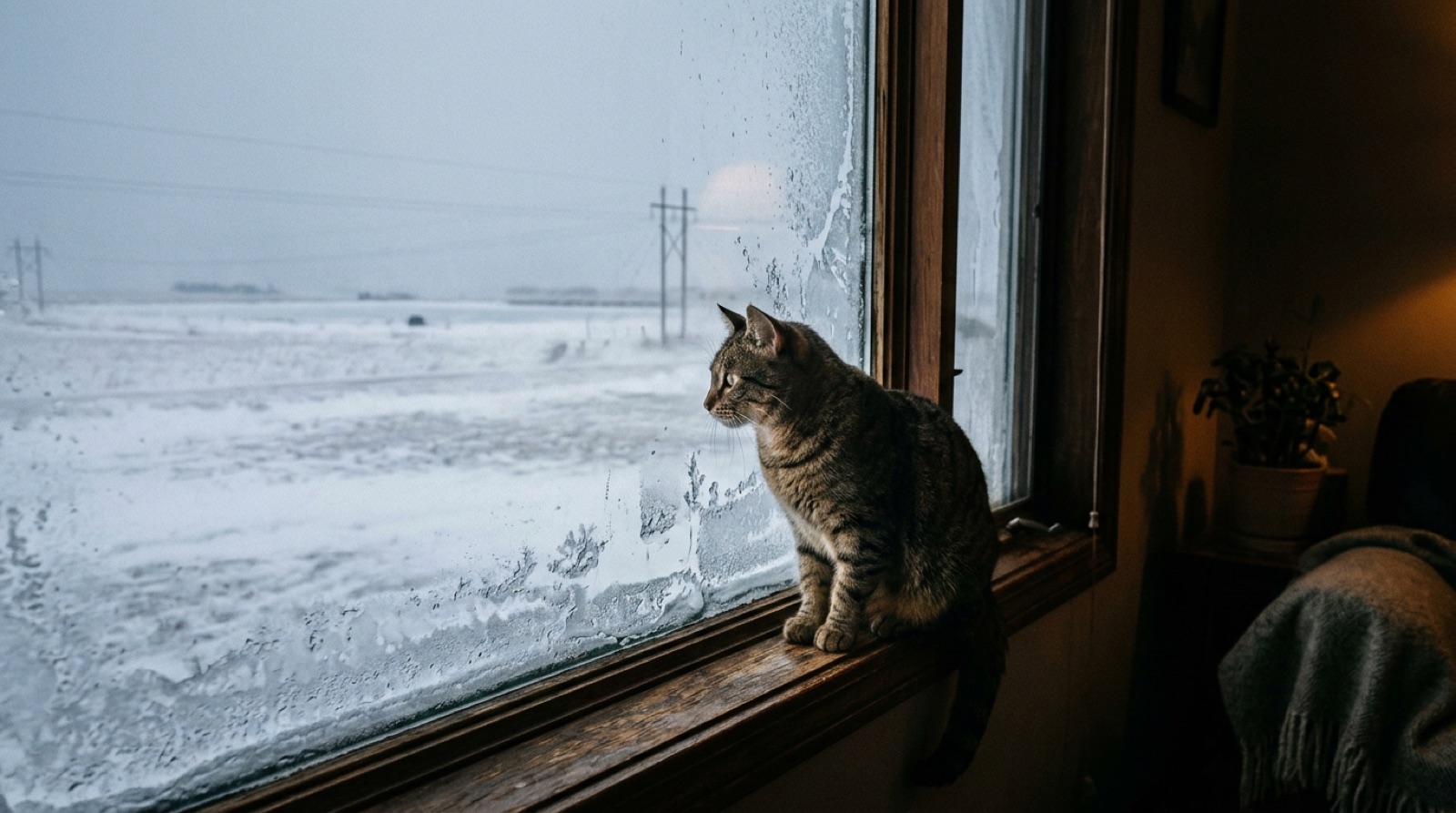
Indoor cats in Estevan live years longer than free-roaming cats, and the reasons are all around you: winter cold, coyotes and raptors, Highway 39 traffic, engine bays and industrial chemicals. The City of Estevan also licenses cats and enforces at-large rules. A cat kept indoors with a cat tree, a window, a scratching post and daily play is not missing out. It is safe, and it gets to grow old.
On a prairie property, letting the cat out is the default nobody questions. It is worth questioning. The outdoor life that looks free is the reason so many Estevan-area cats never reach middle age.
This is not a city-versus-country lecture. It is the specific list of what actually kills outdoor cats around Estevan, what the bylaw says, and how to give an indoor cat a life it genuinely enjoys.
What the outdoors actually costs a cat here
Winter cold
Southeast Saskatchewan winters run deep, dry and long. Frostbite on ears, tail and paw pads is real, and a cat locked out overnight in a cold snap can die of exposure.
Predators
Coyotes work the farmland and the edges of town, and owls and other raptors hunt cats at dusk and dawn. A house cat is prey, and it has no defence against either.
Highway 39 and grid roads
Traffic moves fast on the highway and the surrounding grid roads, and a cat crossing at night is nearly invisible to a driver. Vehicle strikes are a leading cause of outdoor-cat death.
Engine bays
On cold mornings cats climb into warm engine compartments and wheel wells. Starting the vehicle is often fatal. Bang the hood before you turn the key in winter.
Poisons and industry
Antifreeze, rodent bait, farm chemicals, and equipment across coal and oil country are everywhere. Cats are curious and small, and any of them can kill quickly.
Water hazards
The Souris River, the Boundary Dam and Rafferty reservoirs, and irrigation and dugout water draw cats and wildlife alike, and thin ice in shoulder seasons is a real danger.
What the Estevan bylaw says
The City of Estevan licenses cats, not just dogs, and enforces running-at-large rules on them. A cat found at large without a licence can be picked up and taken to the Estevan Humane Society if the owner cannot be located.
Licensing your cat earns a waived impound fee and one waived at-large fine for the year, which is the city's way of nudging owners to keep cats controlled. Proof of vaccination is required when you licence, and a fixed, vaccinated cat sits in the cheaper tier.
The takeaway is simple. A licensed, tagged, indoor cat sidesteps all of this. A roaming cat risks fees and is exposed to every threat above. For the current cat licence rate and rules, check with Estevan City Hall.
Keeping an indoor cat genuinely happy
An indoor cat needs a job, a view and something to climb. Give it those and the door stops being interesting.
Put a tall cat tree or a couple of shelves by a window so the cat can watch the yard from a safe perch. Add a solid scratching post, because a cat that cannot scratch will find your furniture. Feed part of the day's food through a puzzle feeder so a meal becomes a hunt. And play with a wand toy for ten minutes twice a day, letting the cat catch it at the end so the hunt resolves.
A screened catio or a secure window box gives fresh air with none of the risk, and it is a genuinely good middle ground for an Estevan cat. Two cats that get along are the easiest enrichment of all, since they entertain each other while you are out. If you are adopting, ask the shelter about a bonded pair.
Winter is the deadliest season
An Estevan winter is not a challenge a cat toughs out. Once it drops below freezing a cat outside is at risk, and in a deep cold snap exposure can kill within hours. Cats hide distress, so frostbite on ears and paw pads develops before you notice.
On cold mornings, bang the hood of any vehicle before you start it. Cats climb into warm engine bays overnight, and starting the engine is often fatal. If you feed community cats, an insulated straw-filled shelter out of the wind can be the difference between life and death.
Browse adoptable Estevan cats
Indoor cats live longer, and a bonded pair keeps each other company all winter. See who is available right now. Listings refreshed regularly.
See Available Estevan Cats →Frequently Asked Questions
Are indoor cats really safer in Estevan?
Yes, and the gap is wide in a prairie catchment. Indoor cats routinely live into their mid-teens and beyond, while free-roaming cats live dramatically shorter lives on average. In Estevan the outdoor threats stack up fast: deep winter cold, coyotes and raptors, Highway 39 and grid-road traffic, engine bays on cold mornings, and industrial and farm chemicals across coal and oil country. None of these exist indoors. An indoor cat with enough to do is not a deprived cat. It is a cat that gets to grow old, which is the whole point of bringing one home.
Is it against the bylaw to let my cat roam in Estevan?
It is regulated, and roaming carries real consequences. The City of Estevan licenses cats and enforces running-at-large rules on them, so a cat found at large without a licence can be picked up and taken to the Humane Society if the owner cannot be found. Licensing your cat earns a waived impound fee and one waived at-large fine for the year, which tells you the city expects owners to keep cats controlled. If your cat wears a tag and stays home, none of this is a problem. If it roams, you risk fees and expose the cat to everything outside. Confirm current rules and fees at City Hall.
My cat has always gone outside. Can I bring it indoors now?
Yes, though an established outdoor cat takes patience to convert. Do it gradually. Add climbing shelves, a tall cat tree by a window, puzzle feeders and daily play with a wand toy so the cat has something to hunt indoors. A second cat for company helps some cats enormously. Expect some yowling at the door for a week or two while the habit breaks. Feeding on a strict indoor schedule gives the cat a reason to stay in. Most cats settle within a month, and they are safer every single day of it.
What about a barn cat for the mice?
This is common prairie thinking, and it deserves an honest answer. A working barn cat can have a decent life if, and only if, it has a genuinely warm insulated shelter, reliable food and water that does not freeze, and it is spayed or neutered so it does not produce more cats. Without those, a barn cat is just an outdoor cat with a shorter life. If you want a mouser, talk to the Estevan Humane Society about a cat that is genuinely unsuited to indoor life rather than putting a friendly house cat outside. And fix it, because an unfixed barn cat is how the next colony starts.
How cold is too cold for a cat outside?
Colder than most people think, and Estevan regularly gets there. Once temperatures drop below freezing, a cat outdoors is at risk, and in a deep prairie cold snap exposure can be fatal within hours. Wind chill on open ground makes it worse. Cats hide their distress, so a cat that seems fine can be developing frostbite on its ears and paw pads. The safe rule in a southeast Saskatchewan winter is simple: cats stay indoors. If you have community cats you feed, an insulated straw-filled shelter out of the wind can be the difference between life and death.
Will my indoor cat get bored or depressed?
Only if you leave it with nothing to do, and that is easy to fix. Cats need vertical space, a window to watch, something to scratch, and a daily hunt. A cat tree, a couple of window perches, a scratching post and ten minutes of wand play twice a day cover most of it. Puzzle feeders turn a meal into a job. Two cats that get along entertain each other while you are out. A bored cat finds trouble; a stimulated cat sleeps, plays and thrives. Enrichment is cheaper than a vet bill and far cheaper than a lost cat.
Can I let my cat out on a harness or in a catio?
Yes, and both are good middle-ground answers for Estevan. A secure catio, even a small window box or a screened section of deck, lets a cat feel the air and watch the yard without exposure to coyotes, traffic or cold beyond what you allow. Harness training works for some cats, especially if you start young, though plenty of cats never take to it. Both give the outdoor experience people worry their cat is missing, with none of the fatal risks. Supervised time outside is completely different from free roaming.
What if my indoor cat slips out?
Prepare for it before it happens, because a door-dasher eventually gets out. A microchip and a collar with a tag are what get a cat home, so keep both current, and a licensed cat picked up as at-large is far easier to reunite than an anonymous one. If your cat goes missing, phone the Estevan Humane Society and the City, post in local groups, and search at dawn and dusk when a frightened cat moves. Most lost indoor cats hide close to home rather than travelling far. Check under decks, in sheds and in the immediate neighbourhood first.
Do outdoor cats really kill that much wildlife?
Yes, and it is a real reason beyond the cat's own safety. Free-roaming cats are significant predators of songbirds and small mammals, and around the Souris River and the reservoir wetlands there is a lot of vulnerable wildlife. Keeping a cat indoors protects the birds as well as the cat. It is one of those rare choices with no downside: the cat lives longer, the wildlife survives, the neighbours are not finding your cat in their garden, and you are not risking an at-large fine. Everyone comes out ahead.
Where do I go if my outdoor cat is hurt after hours?
Know this before it happens. The local clinic, Prairie Animal Health Centre, runs an after-hours answering service, but the on-call vet may be in Weyburn and you may have to travel. The nearest full overnight hospital is the South Saskatchewan Animal Hospital in Regina, about two hours away. This is one more reason the indoor choice matters here: an injury that a city cat survives with a quick ER visit can be far more serious when the nearest emergency care is a long drive on a dark prairie highway. Prevention is not just kinder, it is more practical.
Related Estevan Guides
One search, every Estevan cat
Adoptable cats and kittens from the Estevan area, in a single list.
Browse Available Estevan Cats →New cat? Start with these care guides
Everything a new adopter needs to set up a safe, happy home.