The short answer
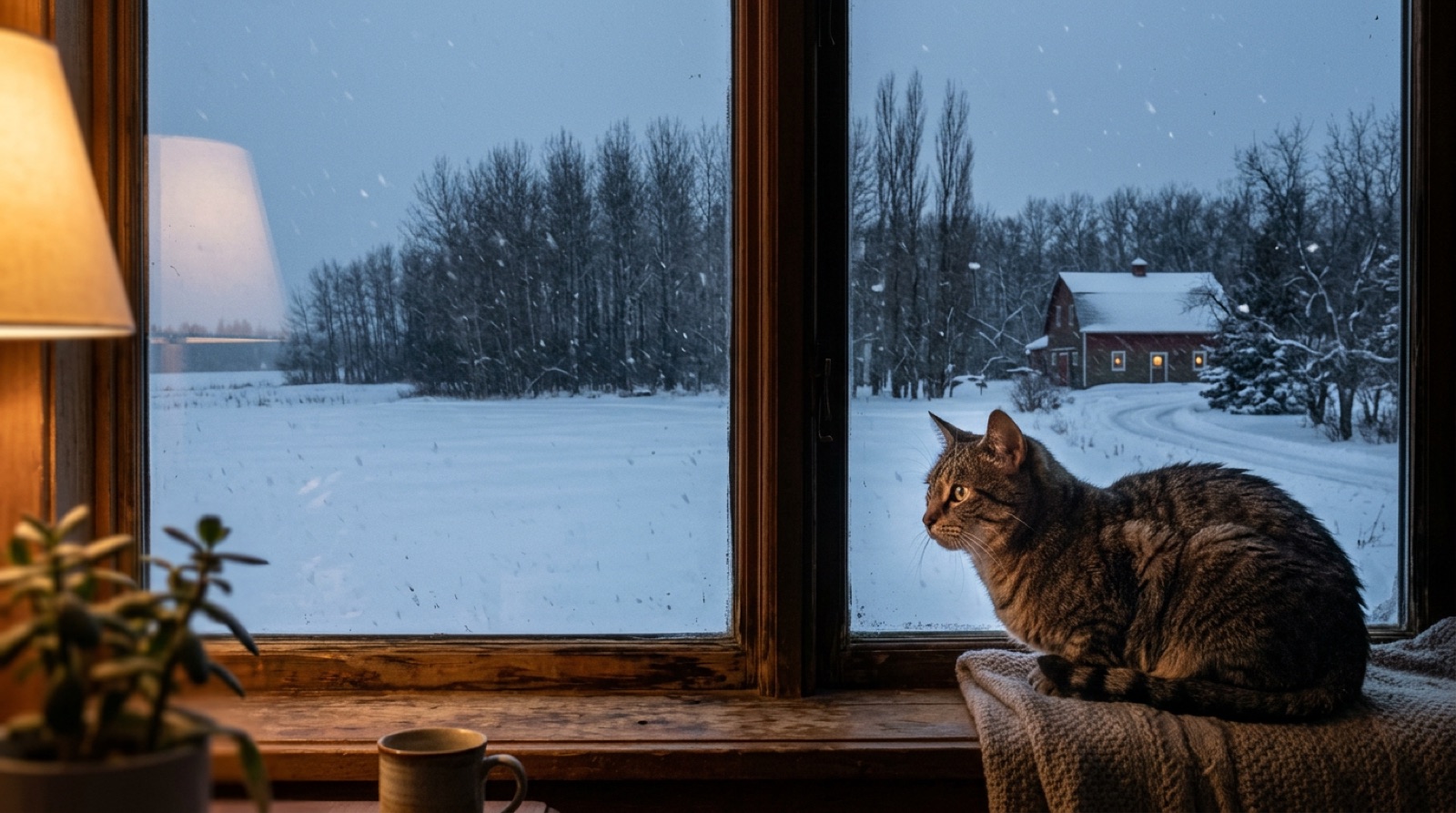
In Melfort, an indoor cat is the longer-lived cat, and it is not close. Parkland winters below -30C, coyotes and owls, engine bays and highway traffic all kill outdoor cats, and the city collects cats found at large. Keeping a cat inside is not depriving it, as long as you give it vertical space, a window, daily play and a scratching post. If you want your cat to enjoy fresh air, do it safely with a catio or a harness. The outdoors is a set of risks a cat cannot judge for itself.
The indoor-versus-outdoor question feels like a matter of opinion until you look at what actually happens to cats outside on the prairies. Then it stops being a debate. Outdoor cats live dramatically shorter lives than indoor cats, and in a place like Melfort the gap is wider than the national average because of the cold and the predators.
This is not an argument that cats hate fresh air or that a sunny window is a punishment. It is an argument about risk. A cat cannot weigh a coyote against a warm afternoon, so that judgement falls to you.
The good news is that a well-set-up indoor life gives a cat everything it needs. The rest of this guide covers the specific prairie dangers, the Melfort bylaw, and exactly how to keep an indoor cat busy and content.
What actually kills outdoor cats here
| Danger | Why it matters in Melfort |
|---|---|
| Parkland winter cold | Melfort routinely drops below -30C. Frostbite on ears, paws and tail comes fast, and a cat shut out overnight can freeze. |
| Coyotes and owls | Coyotes work the edges of town and rural yards, and great horned owls take small cats. A house cat has no defence against either. |
| Engine bays | In winter cats crawl into warm engine compartments. The next cold start is fatal. Bang the hood before you drive. |
| Highway 3 and Highway 41 traffic | Melfort sits where two highways meet. Cars are the leading cause of death for outdoor cats, and a cat has no road sense. |
| Farm equipment and chemicals | On acreages, machinery, antifreeze, rodenticides and grain-storage poisons all kill cats that roam. |
| Disease and parasites | Fights spread FIV and FeLV, and outdoor cats pick up worms, fleas and ticks that indoor cats never meet. |
The Melfort bylaw angle
Melfort is not a town where letting a cat roam is treated as harmless. The City's animal services rules require cats to be licensed and to wear a collar with the tag when off the owner's property, and a cat found running at large is collected by the Animal Control Officer and taken to the North East SPCA.
The practical message is the same as the safety message. A cat outside is a cat that can be picked up, and an unlicensed one is harder to reunite with its owner. A licensed cat with a tag, if it ever gets loose, comes home fast.
This is the strongest reason to licence even a strictly indoor cat. Doors get left open and screens fail, and the tag is what turns a scary escape into a phone call. See our Melfort cat costs guide for the licence fees.
How to keep an indoor cat genuinely happy
- ✓A tall cat tree or a cleared windowsill for watching the yard and the birds
- ✓Daily play with a wand toy, ten minutes twice a day, to burn hunting energy
- ✓A rotation of cheap toys and a few cardboard boxes, swapped so they stay novel
- ✓A scratching post tall enough to stretch out on, near where the cat sleeps
- ✓A screened catio or a harness-and-leash routine if you want safe outdoor time
- ✓A second cat, if your budget and space allow, for company while you are out
The theme is simple: give a cat something to climb, something to watch, and something to hunt. Cats are ambush predators, and a wand toy in the evening scratches the same itch a mouse in the yard would, minus the coyote. The Cornell Feline Health Center has good, plain-language guidance on indoor enrichment if you want to go deeper.
Winter is the deadline that does not wait
A cat that slips out in a Melfort cold snap does not have days, it has hours. Frostbite and hypothermia set in fast below -30C, and cats hide when they are scared, which makes them hard to find in exactly the weather that is trying to kill them.
Before winter, check that screens are secure and get everyone in the house into the habit of counting the cat before a door stays open. In winter, bang on the car hood before you start the engine, because a cat sheltering in a warm engine bay is a common and preventable tragedy. Keep the North East SPCA number handy so a lost cat gets reported the same day.
Looking for a calm indoor companion?
Many North East SPCA cats are settled adults that want nothing more than a warm window. Browse who is available in the Melfort area. Listings refreshed regularly.
See Available Melfort Cats →Frequently Asked Questions
Should cats be kept indoors in Melfort?
For nearly every Melfort cat, yes. Indoor cats live much longer than cats that roam, and the reasons are especially sharp on the prairies. Winter cold below -30C, coyotes and owls, engine bays that turn deadly on the next cold start, and traffic where Highway 3 meets Highway 41 all stack against the outdoor cat. An indoor cat with a window, a scratching post and daily play gets everything it actually needs. The outdoors is not a requirement for a happy cat, it is a set of risks a cat cannot judge for itself.
Is it cruel to keep a cat inside all the time?
No, provided you give the cat things to do. Cats are not built to need territory to patrol the way dogs need walks, but they do need stimulation. A bored indoor cat gets destructive or overweight, and that is a care problem, not proof the cat needs to be outside. Fix it with vertical space to climb, a window to watch, daily wand play, and toys you rotate. Plenty of cats live long, content, entirely indoor lives. What is genuinely unkind is exposing a cat to a Saskatchewan winter and a coyote it cannot escape.
Does Melfort have a cat-at-large bylaw?
Melfort's animal rules require cats to be licensed and to wear a collar with the tag when off the owner's property, and a cat found running at large is collected by the Animal Control Officer and taken to the North East SPCA. So letting your cat roam is not treated as harmless in Melfort the way it is in some towns. A licensed cat that gets loose can be returned to you quickly, which is the strongest practical argument for licensing even an indoor cat. Confirm the current bylaw details with the City, since rules change.
My cat was a barn cat or a stray. Can it adjust to indoor life?
Most can, with patience. A cat used to roaming may pace or cry at the door for a while, and the fix is enrichment rather than giving in. Add vertical space, play hard twice a day to tire the cat out, feed on a schedule so mealtimes anchor the day, and consider a catio or a harness so outdoor time happens safely. It can take a few weeks. Barn cats placed as working cats through the North East SPCA are a different case, cats genuinely suited to outdoor life with heated shelter provided, and that is a deliberate placement, not a house cat let loose.
What about letting my cat out just in summer?
Summer is safer than winter but not safe. The coyotes, owls, traffic, cars, disease and parasite risks are all still there, and a cat that gets a taste of outdoors in July is a cat that fights harder to get out in January, exactly when it is most dangerous. If you want your cat to enjoy the warm months, do it with control: a screened catio, a secure yard enclosure, or a harness and leash. You get the enrichment without handing your cat over to everything on the prairie that would happily eat it.
How do I keep an indoor cat from getting bored and fat?
Move the food and move the cat. Feed measured meals rather than leaving a full bowl out all day, because free-feeding is how indoor cats gain weight. Then build in daily activity: a wand toy for ten minutes twice a day, a tall cat tree, a window perch, and toys you rotate so they stay interesting. Food puzzles make the cat work for kibble and slow down fast eaters. A cat that hunts a toy every evening and climbs during the day is a cat that stays lean and content indoors.
Do indoor cats still need vaccines and vet visits?
Yes. An indoor cat is exposed to less, but not nothing, and it still needs core vaccines, parasite prevention appropriate to its lifestyle, and a yearly checkup that catches problems early. Cats hide illness well, so the annual visit is often how dental disease, weight changes or early kidney trouble get spotted. Indoor life lowers the risk of the diseases that spread through fighting and roaming, which is one more quiet reason to keep your cat in. Talk to your Melfort vet about the right schedule for your specific cat.
What should I do if my indoor cat escapes in winter?
Act fast, because a Saskatchewan winter is unforgiving. Search at dawn and dusk when it is quiet, and check close to home first, since frightened cats usually hide within a few houses rather than running far. Look under decks, in sheds and in any warm nook. Call the North East SPCA to report it and ask them to watch for it, and post in local lost-pet groups with a clear photo. This is exactly why licensing and a collar tag matter: a found cat with ID gets home in hours instead of ending up an unclaimed impound.
Related Melfort Guides
One search, every Melfort cat
Adoptable cats and kittens from the Melfort area, in a single list.
Browse Available Melfort Cats →New cat? Start with these care guides
Everything a new adopter needs to set up a safe, happy home.