The short answer
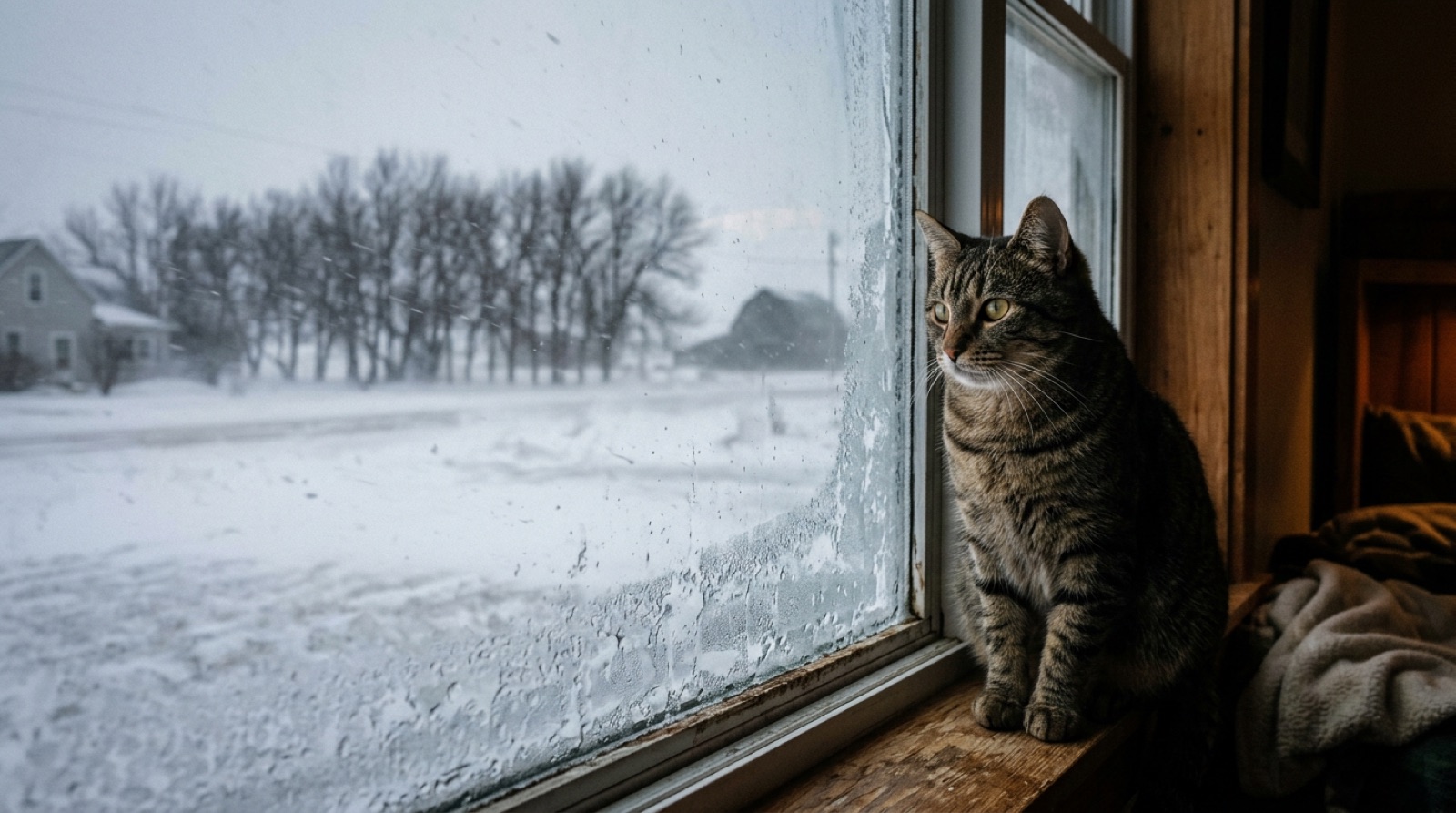
Indoor is the right default in Moose Jaw. Winter cold, the Trans-Canada, coyotes, antifreeze and warm engine bays all take cats here. Moose Jaw does not licence cats, but the Cat Control Bylaw lets an Animal Control Officer issue a neighbour a trap over a nuisance complaint between 1 March and 1 October, and an impounded cat is held five days. A catio or harness gives a cat the outdoors without any of that.
Plenty of people in this city grew up with cats that came and went as they pleased. That was normal, and for a fair number of those cats it ended badly in ways nobody wrote down.
The case for keeping a cat in is not about being precious. It is that Moose Jaw specifically stacks the odds: brutal winters, highway traffic on the city edge, coyotes along Wakamow Valley, and a bylaw that gives an irritated neighbour a legal route to your cat.
Here is what the risks actually are, what the bylaw says, and what to do instead.
What actually happens to outdoor cats here
| Risk | Why it matters in Moose Jaw |
|---|---|
| Extreme cold | Moose Jaw winters run well below -30C with wind. Frostbite hits ear tips, tail and paw pads first, and a cat that cannot get back indoors does not survive a bad night. |
| Warm engine bays | A cold cat climbs into a parked vehicle for the heat. The injuries that follow when the engine starts are severe and often fatal. Bang the hood before starting in winter. |
| Traffic | The Trans-Canada runs along the north edge of the city and the main arteries carry steady truck traffic. A cat does not judge closing speed on a road like that. |
| Coyotes and owls | Coyotes move through the river valley and the edges of town, and great horned owls take cats at night. A cat is prey-sized in both cases. |
| Antifreeze and road salt | Antifreeze is sweet, lethal in tiny amounts, and pools in driveways all winter. Salt and de-icer irritate paw pads and gets licked off. |
| Disease and parasites | Fighting spreads feline leukaemia and abscesses. Outdoor cats carry higher parasite loads and need more prevention, which costs more every year. |
| Getting trapped or impounded | Under the City Cat Control Bylaw a neighbour can be issued a trap for a nuisance cat, and an impounded cat is held five days before it may be adopted out or euthanised. |
What the Cat Control Bylaw actually says
Moose Jaw does not require a cat licence, which catches people out because the City does licence dogs. What it has instead is a Cat Control Bylaw built entirely around nuisance.
A nuisance is defined widely. It includes fighting with other cats, trespassing on private property, defecating or spraying on someone else's property without permission, howling or hissing at night, and digging in flower beds or garbage containers. In practice, almost anything a roaming cat does in a neighbour's yard fits.
On a complaint, an Animal Control Officer may issue the complainant a trap between the 1st of March and the 1st of October, or seize the cat directly. The trap comes with conditions: hourly checks, no use below 0C or above 25C, no setting on statutory holidays, immediate contact with the Officer if a cat is caught, and return of the trap two days after issuance.
An impounded cat is held five days. Reclaiming it means proving ownership and paying a $40 impoundment charge plus $20 per day of housing. After five days the pound keeper may adopt the cat out or euthanise it. Fines under the bylaw run up to $1,000.
None of that is aimed at responsible owners. It is aimed at the situation where a cat is causing a problem and nobody knows who owns it. But if your cat roams, it is the system it is roaming inside.
Winter is the part that kills
Ice fog, wind off the open prairie and stretches below -30C are ordinary here, not exceptional. A cat that gets shut out on a night like that has hours, not days. Frostbite takes ear tips, tail and paw pads, and it is often permanent.
The engine bay problem is the one people forget. A cold cat climbs onto a warm engine block and stays there. Bang on the hood and check underneath before starting a vehicle in winter. It takes three seconds and it is the difference between a startled cat and a catastrophic injury.
Better ways to give a cat the outdoors
A catio. Anything from a window box to a screened section of deck. It gives a cat sun, air and smells with no traffic and no coyotes. Useful from roughly May to October here, which is the season a cat wants it anyway.
Harness and lead. Start indoors, let the cat wear the harness for short spells, then try a quiet yard. Plenty of cats take to it. Crescent Park on a calm morning suits a confident cat once it is used to the gear.
Window perches. The cheapest enrichment there is. A sunny sill with a shelf and a bird feeder outside occupies most cats for hours.
Vertical space indoors. Cat trees, shelves and cleared window ledges. Cats want height more than they want ground area, and an indoor cat with nothing to climb is a bored cat.
Play that mimics hunting. Two short wand sessions a day beats a basket of toys the cat ignores. Finish on a catch so the sequence completes.
The Canadian Veterinary Medical Association position statement on free-roaming cats names catios, enclosures and harness training as the recommended alternatives to unsupervised roaming.
If a cat turns up on your property
Resist the urge to scoop it up straight away. The Moose Jaw Humane Society points out that a lost cat is around ten times more likely to get home if it is left in its own neighbourhood than if it is taken to the shelter. Moving a cat two kilometres is often what turns a temporary wander into a permanent loss.
Look at the animal instead. A well-fed, friendly, confident cat almost certainly belongs to someone nearby, and a collar with a bell usually means the owner knows it is out. A thin, matted, frightened cat that is losing condition is a different case and worth reporting to the shelter.
If the cat is injured, clearly unwell or genuinely causing a problem on your property, contact the Moose Jaw Humane Society rather than trying to sort it yourself. And if you end up keeping it, get it fixed. That is where the $25 subsidised programme becomes relevant.
Browse adoptable Moose Jaw cats
Plenty of shelter cats are already happy indoor cats, which makes the transition simple. Listings refreshed regularly.
See Available Moose Jaw Cats →Frequently Asked Questions
Does Moose Jaw require a cat licence?
No. Moose Jaw licences dogs, not cats. The City dog licence is $15 for an altered dog and $40 for an unaltered one and is sold through the Humane Society, but there is no equivalent annual registration for cats. That surprises people arriving from cities like North Battleford, where cats are licensed alongside dogs. It also means your cat carries no municipal identification by default, which makes a microchip and a collar tag more important here, not less.
Are cats allowed to roam free in Moose Jaw?
There is no blanket ban on cats being outdoors, but there is a Cat Control Bylaw built around nuisance behaviour. The bylaw defines a nuisance broadly, including fighting with other cats, trespassing on private property, defecating or spraying on someone else's property, howling or hissing at night, and digging in flower beds or garbage. So a roaming cat is not automatically an offence, but the moment a neighbour objects, the bylaw gives them a route to act. That is a meaningful difference from simply being legal.
Can my neighbour trap my cat?
Under the Cat Control Bylaw, if an Animal Control Officer receives a nuisance complaint they may issue a trap to the complainant between the 1st of March and the 1st of October, or seize the cat themselves. The person with the trap has to sign a permit agreement, check the trap every hour it is set, and contact the Animal Control Officer immediately if a cat is caught. Traps cannot be used below 0C or above 25C, cannot be set on statutory holidays, and must be returned two days after issuance.
What happens if my cat is impounded?
The pound keeper holds the cat for five days unless the owner claims it sooner, and makes an attempt to notify the owner if known. To get the cat back you provide reasonable proof of ownership and pay the fees in the bylaw schedule, which sets a $40 impoundment charge plus $20 per day or part day of housing. If nobody claims the cat within five days, it may be adopted out or euthanised. A microchip and a tag turn that from a crisis into a phone call.
How cold is too cold for a cat outside?
Far warmer than most people assume. A healthy adult cat with shelter copes with mild frost, but Moose Jaw does not do mild for long. Once wind chill takes it below about -15C, an outdoor cat is at real risk of frostbite on ears, tail and paws, and at -30C with ice fog a cat that gets shut out overnight often does not make it. Kittens, thin cats, seniors and short-haired cats have far less margin than a big fluffy adult.
Do indoor cats actually live longer?
The veterinary consensus is clear on this. The Canadian Veterinary Medical Association recommends that veterinarians discourage unsupervised roaming because of the health and welfare risks, noting that outdoor cats experience higher rates of death and illness from trauma, infectious disease and parasites. They also point to catios, outdoor enclosures and harness training as ways to give a cat outdoor experience without the risk. On a prairie winter alone, the argument here is stronger than in most of Canada.
My cat has always gone outside. Can I bring it in now?
Usually yes, though it takes a few weeks and some patience. Start by feeding indoors only, then extend the indoor time gradually rather than shutting the door overnight. The two things that make it work are enrichment and a clean litter box. Add vertical space, a window perch, food puzzles and a couple of short play sessions a day. Expect protest at the door for a week or two. Most cats settle once the routine is predictable and the entertainment is good enough.
What is a catio and is it realistic in Saskatchewan?
A catio is an enclosed outdoor space, anything from a window box to a fenced run, that lets a cat be outside without roaming. In Moose Jaw it works beautifully from May to October and sits unused in January, which is fine. A simple screened structure off a back door or a secured section of deck gives a cat fresh air, sun and smells with no traffic, no coyotes and no trapping risk. Harness training is the small-space alternative and plenty of cats take to it.
What about a barn cat on an acreage outside the city?
That is a different situation and a legitimate one, but it comes with obligations. A working barn cat needs an insulated shelter it can actually reach in a blizzard, unfrozen water, food that does not depend on rodents, and above all it needs to be fixed. An unspayed barn cat is how a small colony becomes twenty animals in three years. The City bylaw does not apply outside city limits, but the winter does, and so does the arithmetic.
I found a cat outside. Should I bring it in?
Check whether it is lost before you rescue it. The Moose Jaw Humane Society makes the point that a lost cat is roughly ten times more likely to find its way home if it is left in its own neighbourhood than if it is brought to the shelter, so talking to neighbours and posting locally does more good than an immediate pickup. An owned outdoor cat is usually well fed, friendly and comfortable. If the cat looks thin, injured, matted or frightened, that is when to contact the shelter.
How do I tell a stray from a feral cat?
A lost house cat is often hiding, scared, hungry and hard to approach even though it wants help, and over time it loses weight and its coat gets dull or matted. An owned outdoor cat is healthy, confident and usually approachable, often with a collar. A community cat sits between the two: it may have lived indoors once, may be skittish, may be surviving on neighbourhood feeding. A truly feral cat was born wild, avoids people entirely and is often in decent condition. The shelter's guidance is to monitor rather than grab.
Is it cheaper to keep a cat indoors?
Yes, and noticeably. Indoor cats need less parasite prevention, get in fewer fights, pick up fewer infections and end up at the vet less often for trauma. In a province that charges 6% PST on veterinary services on top of GST, every avoided visit is worth about 11% more than the sticker price suggests. The trade is that indoor cats need enrichment to stay healthy and happy, which costs a little in toys and time. That is a much better deal than a wound abscess in February.
Related Moose Jaw Guides
One search, every Moose Jaw cat
Adoptable cats and kittens from the Moose Jaw area, in a single list.
Browse Available Moose Jaw Cats →New cat? Start with these care guides
Everything a new adopter needs to set up a safe, happy home.