The short answer
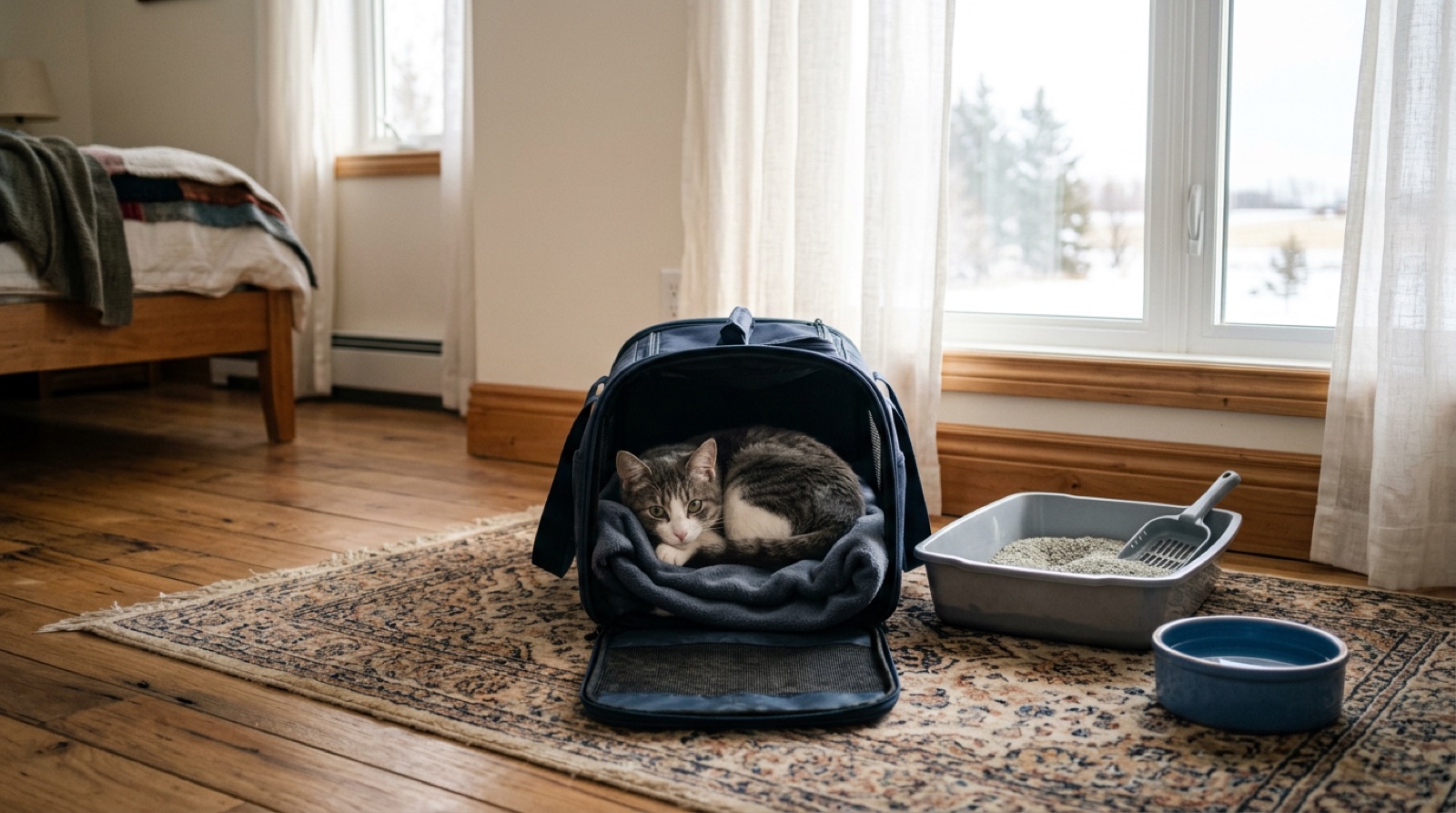
Give the cat one quiet room with food, water, a litter box and a hiding spot, then leave it alone. Hiding for two or three days is normal. Not eating for more than 24 hours is not, and needs a vet call. Keep the shelter's food and litter for the first week. Register with a North Battleford clinic early, and know your after-hours plan, because the nearest 24-hour hospital is in Saskatoon.
The most common mistake new adopters make is enthusiasm. You have been waiting for this cat, the family wants to meet it, and the natural instinct is to give it the run of the house and a proper welcome.
From the cat's side, it has just lost every familiar smell and sound it had, been driven somewhere unknown, and been placed in a building full of strangers. A big welcome is the last thing it can process.
Boring works. One room, a predictable routine, and no pressure. Cats given that settle faster than cats given the whole house on day one, and it is not close.
Buy This Before Pickup
| Item | Why it matters |
|---|---|
| Litter box and litter | Match the litter the shelter used, then change gradually if you want to. Cats object to sudden litter changes more than owners expect. |
| Food the shelter was feeding | Ask before pickup. Switching food and homes in the same week is how you get diarrhoea on day two. |
| Two shallow bowls | Water away from food. Many cats drink more when the bowl is not beside dinner. |
| A hiding spot | A covered bed, a box on its side, or a blanket over a chair. This is the single most important purchase. |
| A scratching post | Put it where the cat actually spends time, not in a spare room. Sisal beats carpet. |
| A hard-sided carrier | Top-opening makes vet visits easier, and it survives a Saskatchewan winter drive far better than cardboard. |
| A wand toy | The fastest way to build trust with a nervous cat without touching it. |
Your adoption from the Battlefords Humane Society includes a starter bag of supplies, so ask what is in it before duplicating purchases.
Setting up the safe room
A spare bedroom, an office or a quiet bathroom all work. What matters is that it is low-traffic and has a door you can close.
Put the litter box in one corner and the food and water in another, as far apart as the room allows, because cats will avoid eating beside a toilet. Add a hiding spot at floor level and something to climb, since a cat that can get high feels safer than one that cannot.
Check the room before the cat arrives. Close window wells, tuck away blind cords, block gaps behind furniture where a frightened cat can wedge itself somewhere you cannot reach, and make sure the window screens are solid.
Then bring the carrier in, open the door, and go make a cup of coffee.
What the First Weeks Look Like
| When | What to expect |
|---|---|
| Day 1 | Carrier goes into the safe room, door opened, and you leave. Do not lift the cat out. Food, water and litter are already in the room. Expect the cat to disappear under something within seconds. That is a healthy response. |
| Days 1 to 3 | Hiding, eating at night, using the box when nobody is watching. Sit in the room quietly reading aloud so your voice becomes ordinary. No handling unless the cat comes to you. |
| Days 3 to 7 | The cat starts moving around while you are present. Wand toy play becomes possible. Still no whole-house access, no visitors and no other pets meeting face to face. |
| Week 2 | Open the door and let the cat explore on its own terms with the safe room still available. Begin scent swapping with resident pets. Most cats are visibly more relaxed now. |
| Month 1 to 3 | Real personality shows up, often quite different from the cat you brought home. The 3-3-3 pattern holds: three days to stop hiding, three weeks to trust a routine, three months to feel at home. |
When to phone a vet instead of waiting
Hiding is normal. These are not. Call a vet if your cat has eaten nothing for more than 24 hours, is vomiting repeatedly, has diarrhoea lasting more than a day, is breathing with effort, or seems painful when touched.
One symptom outranks the rest. A male cat straining in the litter box and producing no urine is a possible urinary blockage. That is life-threatening within hours, not days, and it needs a vet immediately rather than overnight observation. Never give a cat human medication, and never wait to see whether it passes.
Both local clinics list an emergency contact line. The nearest 24-hour facility is the WCVM Veterinary Medical Centre in Saskatoon, about an hour and a half away, and they ask people to phone ahead. Put all three numbers on the fridge in week one.
Registering with a local vet
Do this in the first week or two even though your shelter cat arrives already vaccinated, dewormed, microchipped and fixed. The point is having a clinic that knows your cat before the day you urgently need one.
Battlefords Animal Hospital is at #7A 11204 Railway Ave. East, 306-446-8387, with an emergency line at 306-480-8318. Lakeland Veterinary Services is at 10020 Thatcher Ave, 306-445-3757, open weekdays 8:00 to 5:30 and Saturday mornings, with an emergency line at 306-441-5141.
Your adoption includes a free vet visit at select clinics, so ask the shelter which ones and use it. Bring the medical records that came with your cat.
While you are sorting paperwork, update the PetLink microchip registration with your own contact details, and buy the City cat licence. Both take minutes and both are what get a lost cat home.
Bringing a cat home in a prairie winter
If you are adopting between November and March, a few extra details matter. Warm the car before loading the carrier, and put a blanket over the carrier for the drive without covering the ventilation. A hard-sided carrier handles cold and snow far better than a cardboard box.
At home, make sure the safe room is genuinely warm. Rooms above garages and basement corners run cold, and a stressed cat that is also chilly settles more slowly.
Winter is also the easiest season to establish that this is an indoor cat. There is no argument to be had about outdoor access when it is -32C outside, and by the time spring arrives the routine is already set. If you want the full picture on why that matters here, we cover indoor versus outdoor cats in the Battlefords separately.
Browse adoptable North Battleford cats
Adult cats settle into a quiet room faster than kittens do, and they are the animals waiting longest. See who is available right now. Listings refreshed regularly.
See Available North Battleford Cats →Frequently Asked Questions
What do I do on the first day with a rescue cat?
Set up one quiet room before the cat arrives, carry the carrier in, open the door and walk away. Do not tip the cat out or try to hold it. The room needs food, water, a litter box away from the food, a hiding spot and somewhere to climb. Then leave the cat alone. Nearly everything that goes wrong in week one comes from an owner who is excited and wants to introduce the cat to the house, the kids and the dog on day one. Boring and quiet is what actually works.
My new cat is hiding and will not come out. Is that normal?
Completely normal, and it is not rejection. A shelter cat has just lost every familiar smell, sound and routine it had, and hiding is how cats process that. Most stay hidden for the first two or three days and come out at night when the house is quiet. Leave the food, leave the box, sit in the room and talk quietly without reaching for the cat. The cat that hides for four days and then decides you are safe usually becomes a confident, affectionate pet within a month.
When should I actually worry in the first week?
Hiding is fine. Not eating is not. If your cat has eaten nothing for more than 24 hours, call the vet, because cats that stop eating can develop serious liver problems in a way dogs do not. Also call for repeated vomiting, diarrhoea lasting more than a day, laboured breathing, obvious pain, or any straining in the litter box with nothing produced. That last one in a male cat is a possible urinary blockage, which is a life-threatening emergency measured in hours. Phone a vet immediately rather than waiting for morning.
Which vet should I register with in North Battleford?
Two clinics serve the city. Battlefords Animal Hospital is on Railway Avenue East at 306-446-8387, with an emergency line at 306-480-8318. Lakeland Veterinary Services is on Thatcher Avenue at 306-445-3757, with an emergency line at 306-441-5141, and is open weekday daytimes plus Saturday mornings. Register in the first week or two even though your shelter cat is already vaccinated. Establishing a relationship before you need one urgently is the point, and your adoption came with a free vet visit at select clinics.
Where is the nearest emergency vet at 2am?
Sort this out now rather than while your cat is in trouble. Both local clinics list an emergency contact number, so write both on the fridge today. The nearest full 24-hour facility is the WCVM Veterinary Medical Centre in Saskatoon, roughly an hour and a half southeast, and they ask people to phone before coming because intake can be limited overnight. Living in a small city means the emergency plan takes five minutes to make and can save an hour of panic later. Make it in week one.
Should I change the food and litter my shelter cat was using?
Not in the first week. Ask the shelter what they were feeding and what litter they used, and buy the same before pickup. A cat is already coping with a new home, new smells and new people, and adding a diet change on top is how you get diarrhoea on day two. If you want to switch, wait until the cat is settled and eating normally, then mix the new in with the old over seven to ten days. Same principle for litter. Cats have strong opinions about texture and will simply stop using a box they dislike.
How do I introduce a rescue cat to my existing cat?
Slowly, and by smell before sight. Keep them completely separated for the first week with the new cat in its safe room. Swap bedding between them so each learns the other's scent as an ordinary part of the house. Then feed them on opposite sides of a closed door, moving the bowls closer over several days. Only after that do you allow brief supervised visual contact. Rushing this is the most common reason two cats that could have got along end up in a lasting standoff.
What about introducing a cat to a dog?
The same principle, with an extra safety rule: the cat must always have an escape route and a high place the dog cannot reach. Start with scent swapping and a closed door. When you do the first visual introduction, keep the dog on a leash and let the cat choose whether to approach. Never let the dog chase, not even once and not even playfully, because a cat that has been chased will treat that dog as a predator for months. Keep sessions short and end them while everyone is still calm.
How long until my cat behaves normally?
The 3-3-3 pattern is the guide most rescues use and it holds up well. Roughly three days to stop hiding, three weeks to start trusting a routine, three months to genuinely feel at home. Plenty of adopters get a shy cat in week one and a completely different animal by month three, which is why judging a cat by its first few days is the biggest mistake people make. Give it a quiet room, predictable feeding times and no pressure, and let the cat set the pace.
Do I need to licence my new cat right away?
Yes. The City of North Battleford requires all dogs and cats owned in the city to be licensed and wearing a tag, which catches out adopters who have only lived in cities that licence dogs. A sterilized cat is $20 a year and your shelter cat comes home already fixed, so you qualify for the cheaper rate automatically. Licences run the calendar year and there is an extra $20 if you register after January 31. You can buy it online through the City portal or in person at City Hall on 101st Street.
Should I let my cat outside once it settles?
No, and in the Battlefords the reasons stack up quickly. Winter cold drops well below -30C and causes permanent frostbite injuries, coyotes and great horned owls hunt the river valley and surrounding farmland, and highway-speed traffic runs through town. The City bylaw is also explicit that no owner shall permit a cat to be at large, and a cat found loose can be impounded. If you want your cat to have outdoor time, use a harness and leash in the mild months or build a secure catio.
What if my new cat and my old cat are not getting along after a month?
Slow down rather than pushing through it. Go back to full separation and restart scent swapping and door-feeding, this time over weeks rather than days. Make sure you have enough resources spread through the house, meaning one litter box per cat plus one, separate feeding stations and multiple high perches, because most cat conflict is competition over space rather than genuine hatred. If there is real fighting with injuries, phone the Battlefords Humane Society and talk it through. They would far rather advise early than hear about it after a rehoming.
Related North Battleford Guides
One search, every Battlefords cat
Adoptable cats and kittens from the Battlefords area, in a single list.
Browse Available North Battleford Cats →New cat? Start with these care guides
Everything a new adopter needs to set up a safe, happy home.