The short answer
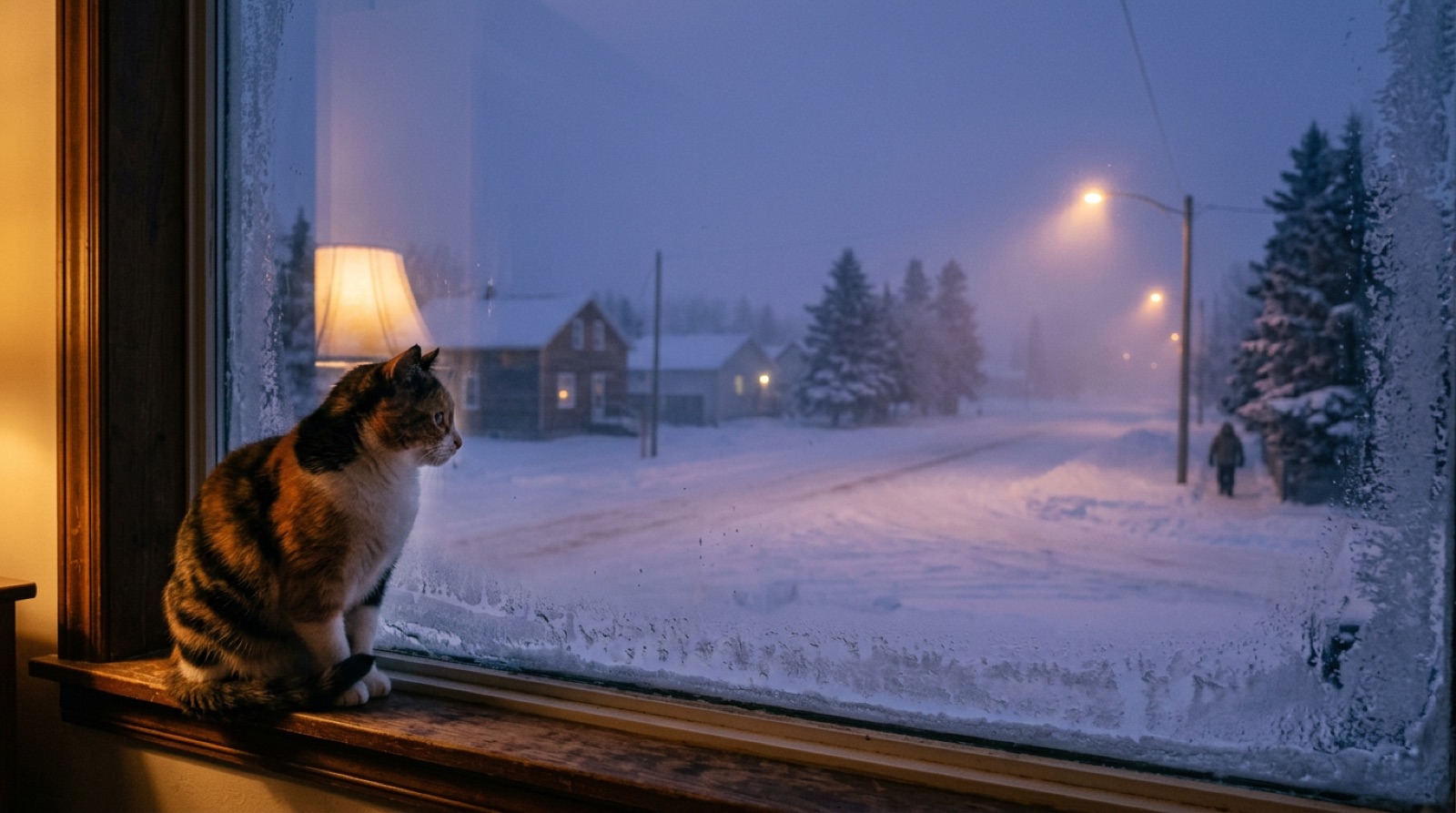
Indoor, and in the Battlefords the case is unusually strong. Winter cold below -30C causes permanent frostbite injuries, coyotes and great horned owls hunt the river valley and surrounding farmland, and highway-speed traffic runs through town. The City's Animal Protection Bylaw also states that no owner shall permit a cat to be at large, and a cat found loose can be impounded. An indoor cat with height, a window and daily play routinely lives into its late teens.
This is the question that divides prairie cat owners more than any other, and it is worth answering carefully rather than preachily. On farmyards and acreages across west-central Saskatchewan, cats have gone in and out of barns for generations. Plenty of people reading this grew up with exactly that arrangement.
The honest response is not that those people were careless. It is that the arrangement carried a cost nobody was measuring. Cats vanished and were replaced. There was always another kitten.
The Battlefords have specific hazards worth naming, and a bylaw most owners have never read. Here is the full picture, and what to do instead.
What an Outdoor Cat Faces Here
| Risk | Why it matters in the Battlefords |
|---|---|
| Extreme cold | Battlefords winters drop well below -30C with wind on top. Frostbite takes ear tips, tail tips and toe pads, and those injuries are permanent. |
| Coyotes | Common along the river valley and on farmland right up to the edge of town. A cat is prey, and coyotes hunt at dawn and dusk when cats are most active. |
| Great horned owls | Resident year round in the river valley and shelterbelts. They hunt at night and take animals of cat size. |
| Traffic | Territorial Drive and the Yellowhead carry highway-speed traffic. A cat crossing at night is not seen in time. |
| Engine bays | A parked vehicle's warm engine is the most attractive spot in the neighbourhood at -30C. The injuries that follow are severe. |
| Ice, river and snow | The North Saskatchewan and its banks are dangerous in every season. Ice near open water is unreliable, and deep snow hides everything. |
| Other cats and disease | Free-roaming cats fight. Abscesses, and viruses spread by bites, are ordinary outcomes rather than rare ones. |
| Impoundment | A cat found at large can be seized under the City bylaw and taken to the Humane Society, with fees before release. |
The bylaw most owners have not read
North Battleford's Animal Protection Bylaw covers cats as thoroughly as dogs, which surprises people who assume cat rules are looser. It defines a cat as any cat over three months of age, and it states that no owner of a dog or cat shall permit the animal to be at large.
Being at large means off your property and not under proper control. An Animal Control Officer may seize and impound any animal found at large, and the Humane Society is one of the bodies that receives impounded animals. Your cat must also wear a collar with a valid licence tag whenever it is off your premises.
Licensing is separate and also mandatory. The City requires all dogs and cats owned in the city to be licensed, at $20 a year for a sterilized cat and $60 for one that is not. The bylaw also sets a household limit of five animals.
None of this is enforced door to door. It becomes real the day your cat is picked up, and then you are paying fees to get it back.
Bang on the hood before you start the car
Between November and March, a recently driven engine is the warmest thing on the street. Cats find it, curl against the block, and are severely injured when the engine turns over. This is not a rare freak accident on the prairies. It is a predictable winter pattern.
Bang on the hood and give it a second before starting. It costs nothing. Do it even if your own cat lives indoors, because your neighbour's might not.
The farm cat conversation, honestly
Free-roaming cats are a genuine part of prairie farm culture, and pretending otherwise makes this article useless to the people who most need it. So let us be straight about it.
A barn cat is the same animal as a house cat. It faces the same coyotes, the same owls, the same machinery and the same -35C night. The reason farm cats seem to manage is that the ones who did not manage were simply replaced, and no one tracked it. That is also a large part of why the shelter here runs so full.
If you genuinely need a working cat for a grain building, do it properly. Provide an insulated shelter with a small entrance that keeps wind and predators out, water that does not freeze, real food rather than the assumption the cat will hunt enough in February, and get the cat spayed or neutered. Then talk to the shelter, because they occasionally have cats genuinely unsuited to indoor life. That is a far better match than putting a friendly house cat outdoors and hoping.
Making indoor life genuinely good
A bored indoor cat is a real problem, and it is entirely solvable. Cats need height, a view, hunting-shaped play and food that takes some effort. Give them those and the behaviour complaints people blame on indoor life mostly disappear.
- ✓Vertical space. A tall cat tree or a few wall shelves gives a cat more usable territory than a whole yard does.
- ✓A window perch with a view of a feeder. Prairie birds in winter are better television than anything you own.
- ✓Two short play sessions a day with a wand toy, ending in a meal. That sequence mirrors hunt, catch, eat and settles cats properly.
- ✓Puzzle feeders instead of a bowl. Food that takes work fills the hours a roaming cat would have spent hunting.
- ✓Scratching posts in the rooms the cat actually uses, not tucked in a basement corner.
- ✓Rotate toys weekly. Five toys in circulation beat twenty available at once.
- ✓A harness and leash for supervised outdoor time, introduced slowly and only in the mild months.
- ✓A secure catio or screened balcony if you have the space. All the smells and none of the coyotes.
For more on feline behaviour and environmental needs, the Cornell Feline Health Center is a reliable place to read further.
Summer is not automatically safe
People often compromise on summer access, which removes the cold and leaves nearly everything else. Coyotes are feeding pups through spring and summer, so they hunt harder rather than less. Owls do not migrate away. Traffic does not pause.
The Battlefords also get heavy mosquito seasons near the river valley and standing water, and ticks are worth a conversation with your vet about prevention. Summer heat in a parked vehicle or a shed is its own hazard.
If you want your cat to have outdoor time in the mild months, harness and leash walking works better than most people expect when introduced slowly. A secure catio or screened balcony works even better. Both give the cat the smells, the grass and the sun without the parts that end badly.
Browse adoptable North Battleford cats
Shelter cats come home spayed or neutered, vaccinated and microchipped, which is exactly the setup an indoor cat needs. See who is available right now. Listings refreshed regularly.
See Available North Battleford Cats →Frequently Asked Questions
Is it against the bylaw to let a cat roam in North Battleford?
Yes. The City of North Battleford's Animal Protection Bylaw states that no owner of a dog or cat shall permit the animal to be at large, and an Animal Control Officer may seize and impound any animal found at large. Being at large means off your property and not under proper control. The bylaw also requires that a cat wear a collar with a valid licence tag whenever it is off your premises. Many owners here have never read this because they assume cat rules mirror the looser conventions of decades past. They do not.
How cold is too cold for a cat outside?
Far warmer than most people assume, and Battlefords winters routinely sit well past that line. Deep cold here drops below -30C before wind chill, and frostbite claims ear tips, tail tips and toe pads. Those injuries do not grow back. A cat with a thick coat looks equipped for it and is not, particularly since the animals most likely to be outside are the ones without a warm place to retreat to. If you would not stand in it in a jacket, your cat should not be in it either.
What predators actually take cats around here?
Coyotes and great horned owls are the two that matter most. Coyotes are common along the North Saskatchewan River valley and on the surrounding farmland right up to the edge of town, and they hunt at dawn and dusk when cats are most active. Great horned owls are resident year round in the river valley and shelterbelts, hunt at night, and take animals of cat size. Neither is unusual or dramatic. They are ordinary prairie wildlife doing ordinary prairie things, and a free-roaming cat is inside that food chain.
Why do people say to check under the hood in winter?
Because a recently driven engine is the warmest place within reach at -30C, and cats find it. A cat curled against a warm engine block that starts is severely injured or killed, and the injuries are the kind nobody forgets. Bang on the hood before starting the car in cold weather, and give it a moment. It costs three seconds. Around here, where free-roaming cats are still common on residential streets and acreages, it is worth doing every single time between November and March.
Everyone here has barn cats. Is a farm cat different?
The cat is the same animal, and it faces the same coyotes, owls, machinery and cold. Free-roaming is normalised on prairie farmyards, which is a cultural pattern rather than evidence that it works well for the cat. If you genuinely need a working cat for a building, provide an insulated shelter with a small entrance, unfrozen water, real food rather than the assumption it will hunt enough, and get it spayed or neutered. And talk to the shelter, because they sometimes have cats truly unsuited to indoor life, which is a better match than putting a friendly house cat outside.
Will an indoor cat be bored or unhappy?
Not if the indoor environment gives it something to do, and that is on you rather than on the cat. Cats need height, a view, hunting-shaped play and food that takes some work. Give them a tall cat tree, a window seat facing a bird feeder, two short wand-toy sessions a day ending in a meal, and puzzle feeders instead of a bowl. Cats set up that way are calmer and less destructive than cats with the run of a yard. The behaviour problems people blame on indoor life are almost always boredom problems with a simple fix.
How much longer do indoor cats live?
Substantially longer, and the reason is not mysterious. Indoor cats are not hit by vehicles, not taken by coyotes or owls, not fighting other cats, not freezing and not climbing into engine bays. A healthy indoor cat in the Battlefords routinely lives into its late teens with routine veterinary care. Outdoor cats in a climate with deep winter cold and abundant predators live dramatically shorter lives on average. You are not trading quality of life for length here. You are removing the specific events that end cats' lives early.
Can I let my cat out just in summer?
Summer removes the cold but leaves everything else, and adds a few things. Coyotes and owls are still hunting, in fact coyotes are feeding pups through spring and summer. Traffic does not pause. Mosquitoes are heavy near the river valley and carry their own parasite concerns, and ticks are worth discussing with your vet. If you want your cat to have outdoor time in the mild months, use a harness and leash or build a secure catio. Supervised outdoor time gets you the good part without the part that ends badly.
My cat already goes outside. Can I transition it indoors?
Yes, and most cats manage it better than their owners expect. Do it gradually rather than overnight. Start by moving meals indoors and closing the door for longer stretches, and add the enrichment before you cut access rather than after. Expect protest for one to two weeks, including yowling at doors, because you are changing an established routine. Hold the line, keep play sessions consistent, and it settles. Winter is honestly the easiest season to make the switch, since the outdoors is already much less appealing.
What if my cat gets out and disappears?
Move fast and start close. Most lost cats are hiding within a few properties of home rather than travelling far, so search under decks, in sheds, in window wells and under vehicles at dawn and dusk when it is quiet. Call the Battlefords Humane Society, because a cat picked up at large is taken there. Phone both local vet clinics in case someone brought it in injured. Put the litter box outside your door, since the smell carries and cats do come back to it. A licence tag and a registered microchip are what turn this into a phone call rather than a search.
Does a microchip help if my cat gets out?
It is the single most useful thing you can have, and every cat adopted from the Battlefords Humane Society comes home with a PetLink microchip already implanted. The catch that catches people out is registration. A chip only works if the contact details attached to it are current, so if you have moved or changed your phone number since adopting, update the registry today. A collar tag can come off. A chip cannot, and it is what lets a clinic or the shelter identify your cat and call you within minutes.
What about cat traps if a neighbour's cat is on my property?
Do not set one on your own. The City's bylaw is specific: cats shall not be trapped without a permit first issued by an Animal Control Officer, complete with approval of the trap being used. You can obtain an approved trap from the Animal Control Officer, and you provide your name, address and telephone number when you request it. Failing to comply with the permit terms is an offence. Start by phoning the City, and phone the Humane Society too if you think the cat is a stray rather than a neighbour's.
Related North Battleford Guides
One search, every Battlefords cat
Adoptable cats and kittens from the Battlefords area, in a single list.
Browse Available North Battleford Cats →New cat? Start with these care guides
Everything a new adopter needs to set up a safe, happy home.