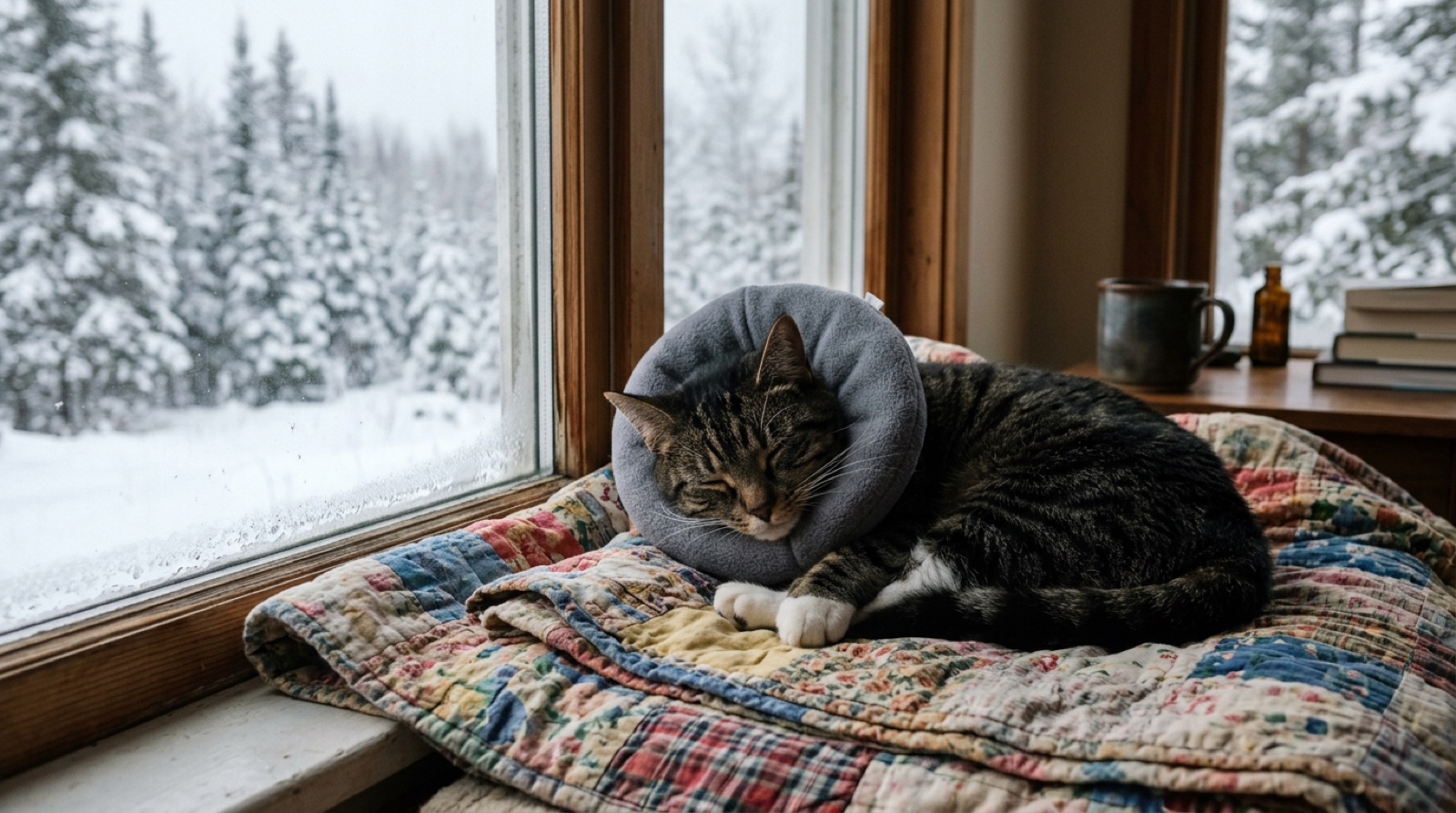
The short answer
Prince Albert has a feline low-income spay and neuter programme run by the SPCA and funded partly by cat licence sales, with surgery done at participating clinics. Phone the SPCA at 306-763-6110 to ask how it works. Everyone else books with South Hill Animal Clinic or Park Range Veterinary Services and should expect about 11% in GST and PST on the quote, because Saskatchewan taxes veterinary services.
If you adopted from the Prince Albert SPCA, the surgery is already done and this is background reading. If you took in a cat, inherited one, or are feeding something that turned up on your step, this is the appointment to make first.
The reason is not abstract. The SPCA serves a large northern region, and unfixed cats in the smaller communities around the city are the single biggest driver of intake. A shelter that stays full of cats is downstream of surgeries that never happened.
Here is what booking the surgery looks like in Prince Albert, including the subsidised route funded by the licences most people pay without thinking about.
The feline low-income programme
What it is. A feline-specific low-income spay and neuter programme run by the Prince Albert SPCA to reduce the number of unwanted and homeless cats in the city.
How it is funded. Revenue from cat licence sales, the SPCA Animal Care Centre, and participating veterinary clinics, with the surgery performed at those clinics.
Who it helps. Qualifying low-income residents of the City of Prince Albert. Because it is feline-specific, it does not cover dogs.
How to apply. Phone the Prince Albert SPCA at 306-763-6110 and ask about current eligibility and availability. Funding is finite, so the answer can change through the year.
Programme details verified July 2026 from the Prince Albert SPCA. Confirm eligibility by phone before planning around it. Pre-anaesthetic bloodwork is usually quoted separately, about $50 to $100, and is recommended for cats over 5. Ask for an itemized estimate before booking.
Where to book in Prince Albert
South Hill Animal Clinic
Full service clinic offering spay and neuter surgery. Open Monday to Thursday 8 to 7 and Friday 8 to 5:30, closed weekends. Phone for a surgical quote and to book, since a small city has limited slots.
Park Range Veterinary Services
Full service clinic offering spay and neuter surgery, open weekdays with after-hours instructions on its recorded line. Confirm hours and pricing by phone before planning around them.
Details verified July 2026, including from South Hill Animal Clinic. Confirm hours and pricing by phone, since surgical slots in a city this size fill.
What to ask when you phone
Is the quote all in? Ask whether it includes pre-anaesthetic bloodwork, pain medication to take home, and a cone or recovery suit.
Does it include tax? Saskatchewan charges PST on veterinary services, so a pre-tax quote lands about 11% higher once GST is added.
How far out is the booking? Two clinics serving the city and a wide northern catchment means surgical slots fill. Ask early.
What is the fasting instruction? Follow it exactly. Getting it wrong is the usual reason a surgery gets rescheduled on the morning.
What is the after-hours message? Know it before you leave, because there is no overnight hospital in the city.
Spay and neuter are not the same surgery
Neutering a male cat is a short external procedure. Most males are close to normal within a day or two and the incision is small.
Spaying a female is abdominal surgery. It takes longer, needs more anaesthetic time and monitoring, and heals over one to two weeks rather than a couple of days. That is why it costs more and why the recovery instructions are stricter.
On timing, ask your vet rather than following a rule of thumb from the internet. The American Association of Feline Practitioners endorsement on the age of sterilisation is worth reading first, and the Canadian Veterinary Medical Association position on free-roaming cats explains why unfixed outdoor cats are treated as a population problem rather than an individual one.
The recovery week
| When | What to expect |
|---|---|
| Day of surgery | Grogginess, wobbliness, sometimes a refusal of food. Keep the cat in a warm quiet room with a shallow litter tray and nothing to jump onto. |
| Days 1 to 2 | Appetite and energy usually return. Keep the cone on. Check the incision twice daily for swelling, discharge or gapping. |
| Days 3 to 7 | A spayed female is still healing internally even when she looks fine. Restrict jumping and rough play. Males are close to normal by now. |
| Days 7 to 14 | Female incisions finish closing. Follow the clinic's instructions on any recheck, and resume normal life when the vet says so rather than when the cat insists. |
General guidance only. Your clinic's discharge instructions override anything here. In a Prince Albert winter, pre-heat the car and keep a blanket over the carrier for the drive home.
Know your after-hours plan before you need it
A male cat straining in the litter box and producing nothing is a possible urinary blockage. That is life-threatening within hours, not days, and it needs a vet immediately. It is not something to watch overnight and not something to treat at home. Never give a cat human medication.
Prince Albert has no dedicated overnight animal hospital. The local clinics run daytime hours with after-hours instructions on their recorded messages, so know yours in advance. The nearest 24-hour facility is the WCVM Veterinary Medical Centre in Saskatoon, about 140 km south on Highway 2, which asks people to call first. Phone before you drive, especially if the highway is icy.
Why this matters here
The Prince Albert SPCA serves a service area far larger than the city itself, taking cats from acreages, small communities and the north. That is why the shelter runs cat-heavy through much of the year.
Free-roaming cats remain common outside the city, and a free-roaming unspayed female compounds fast. Nobody is counting until the number is obvious, and by then those cats are arriving at a shelter that is already busy.
None of that reflects badly on the animals. It is a supply problem, and every surgery shrinks the next wave. If a cat turned up on your property, getting it fixed is the highest-value thing available to you, and the licence-funded programme exists precisely so cost does not stop you.
If you would rather help by taking one home, there are adult cats waiting at the SPCA right now, and they arrive already fixed.
Browse adoptable Prince Albert cats
Every shelter cat comes home spayed or neutered, vaccinated and microchipped. The most expensive appointment is already handled. Listings refreshed regularly.
See Available Prince Albert Cats →Frequently Asked Questions
Is there a low-cost spay and neuter programme in Prince Albert?
Yes. The Prince Albert SPCA runs a feline low-income spay and neuter programme aimed at reducing the number of unwanted and homeless cats in the city. It is funded through cat licence sales, the SPCA Animal Care Centre and participating veterinary clinics, with the surgery done at those clinics. Because it is feline-specific, it is exactly what you want if you have taken in a cat you cannot easily afford to fix. Phone the SPCA at 306-763-6110 to ask how it works and whether you qualify, since programmes like this run on limited funding.
How is the programme funded and who does it help?
The funding model is worth knowing because it explains why licensing your cat matters. Revenue from cat licence sales feeds the programme, alongside the SPCA and participating clinics. So when you buy the mandatory City cat licence, part of that money cycles back into subsidised surgery for cats whose owners cannot afford it. The goal, in the SPCA's own framing, is to increase the number of sterilised pets and cut the number of unwanted and homeless cats. It is a small, self-reinforcing system, and it depends on people licensing their cats.
Where else can I get a cat fixed in Prince Albert?
Two clinics in the city handle cat surgery. South Hill Animal Clinic on 32nd Street West runs Monday to Thursday 8 to 7 and Friday 8 to 5:30, closed weekends. Park Range Veterinary Services on South Industrial Drive is open weekdays with after-hours instructions on its recorded line. Neither publishes surgical prices, so phone for a quote rather than trusting a number you read anywhere, including here. Book ahead, because a city this size has limited surgical slots and they fill.
How much does it cost to fix a cat in Saskatchewan?
No Prince Albert clinic publishes rates, so the honest answer is phone for a quote. What is certain is the tax. Saskatchewan applies 6% provincial sales tax to veterinary services on top of the 5% GST, so whatever you are quoted, budget about 11% more unless tax is already in the number. Ask whether the quote covers pre-anaesthetic bloodwork, pain medication to take home and a cone or recovery suit. Those three items are what turn a quote into a bigger bill at pickup.
Is a spay more expensive than a neuter?
Yes, usually by a noticeable margin. Neutering a male cat is a short external procedure. Spaying a female is abdominal surgery that takes longer, needs more anaesthetic time and closer monitoring, and heals over a week or two rather than a couple of days. Expect the female surgery to cost meaningfully more at any clinic. That difference is real, but it is dwarfed by the cost of one unplanned litter and the vet care that follows it.
At what age should a cat be fixed?
Talk to your vet, because the right timing depends on the individual cat. The American Association of Feline Practitioners has endorsed sterilisation by five months of age, and that endorsement is worth reading before the conversation. What is not in dispute is that a female cat can get pregnant far younger than most owners expect, which is exactly how one cat becomes a colony in a couple of seasons. If you are unsure, book the appointment to ask rather than waiting to see.
Does an indoor-only cat still need to be fixed?
Yes, and the reasons go well beyond preventing litters. Unneutered males spray urine that is genuinely hard to live with and roam persistently, so an indoor cat that slips out is far more likely to disappear, which in a Prince Albert winter can be fatal. Unspayed females go into heat repeatedly, which is loud and stressful for everyone. There are long-term health arguments your vet can walk you through as well. An unfixed indoor cat is simply a harder cat to live with. It also costs more to license.
What does recovery actually look like?
Quieter than most people fear, but it needs managing. The day of surgery your cat will be groggy and may skip a meal, which is normal. By day two appetite and energy usually return, and the hard part becomes stopping a cat who feels fine from jumping and reopening an incision. Females need real restriction for one to two weeks because the surgery is abdominal. Keep the cone on, check the incision twice a day, and phone the clinic about swelling, discharge, a gapping wound or a cat that stops eating.
My cat keeps licking the incision. Does it matter?
It matters a lot, and it is the most common reason a routine spay turns into a second vet visit. A cat can open an incision in minutes with persistent licking, and infection follows. That is what the cone is for, however much your cat objects. A soft recovery suit is an alternative that some cats tolerate better and clinics will often supply one. If your cat is getting past whatever you are using, phone the clinic rather than waiting to see what happens overnight.
When should I call the vet during recovery?
Call if the cat stops eating for more than a day, if the incision is swollen, hot, gapping or leaking, if there is bleeding, if the cat seems painful when touched near the site, or if it stays lethargic past the first day. Also call for anything urinary. A male cat straining in the litter box and producing nothing is a possible blockage, which is a life-threatening emergency measured in hours rather than days. That one needs a vet immediately regardless of any recent surgery.
What if something goes wrong overnight in Prince Albert?
Work this out before you need it, because Prince Albert has no dedicated overnight animal hospital. The local clinics run daytime hours with after-hours instructions on their recorded messages, so know which clinic you use and what their message says in advance. The nearest 24-hour facility is the WCVM Veterinary Medical Centre in Saskatoon, roughly 140 km south on Highway 2, which asks people to phone before coming. In winter, factor the drive and the road conditions into the decision, and phone ahead rather than turning up.
Do shelter cats come already fixed?
Yes. Every cat adopted from the Prince Albert SPCA is spayed or neutered, vaccinated and microchipped before it leaves. That is the quiet financial argument for adopting rather than taking a free kitten. The surgery is the single most expensive appointment a new cat owner would otherwise book, and it is already inside a $100 adult fee. It also puts you straight into the $25 licence tier for a fixed cat rather than the $75 rate for an unaltered one.
Why does fixing cats matter so much in Prince Albert specifically?
Because the SPCA serves a large northern catchment and the arithmetic is unforgiving. Free-roaming cats remain common on acreages and in the smaller communities around the city, and one unspayed female with outdoor access compounds fast across a couple of seasons. Those cats end up arriving at a shelter serving a service area far larger than the city itself. Every cat that gets fixed is not one cat. It is the reason the next intake wave is smaller, which is a far better outcome than more shelter space.
Related Prince Albert Guides
One search, every Prince Albert cat
Adoptable cats and kittens from the Prince Albert area, in a single list.
Browse Available Prince Albert Cats →New cat? Start with these care guides
Everything a new adopter needs to set up a safe, happy home.
Cat & Dog Spay/Neuter Cost in Canada
Standard and subsidised pricing by province, and how to find a low-cost clinic wherever you are.