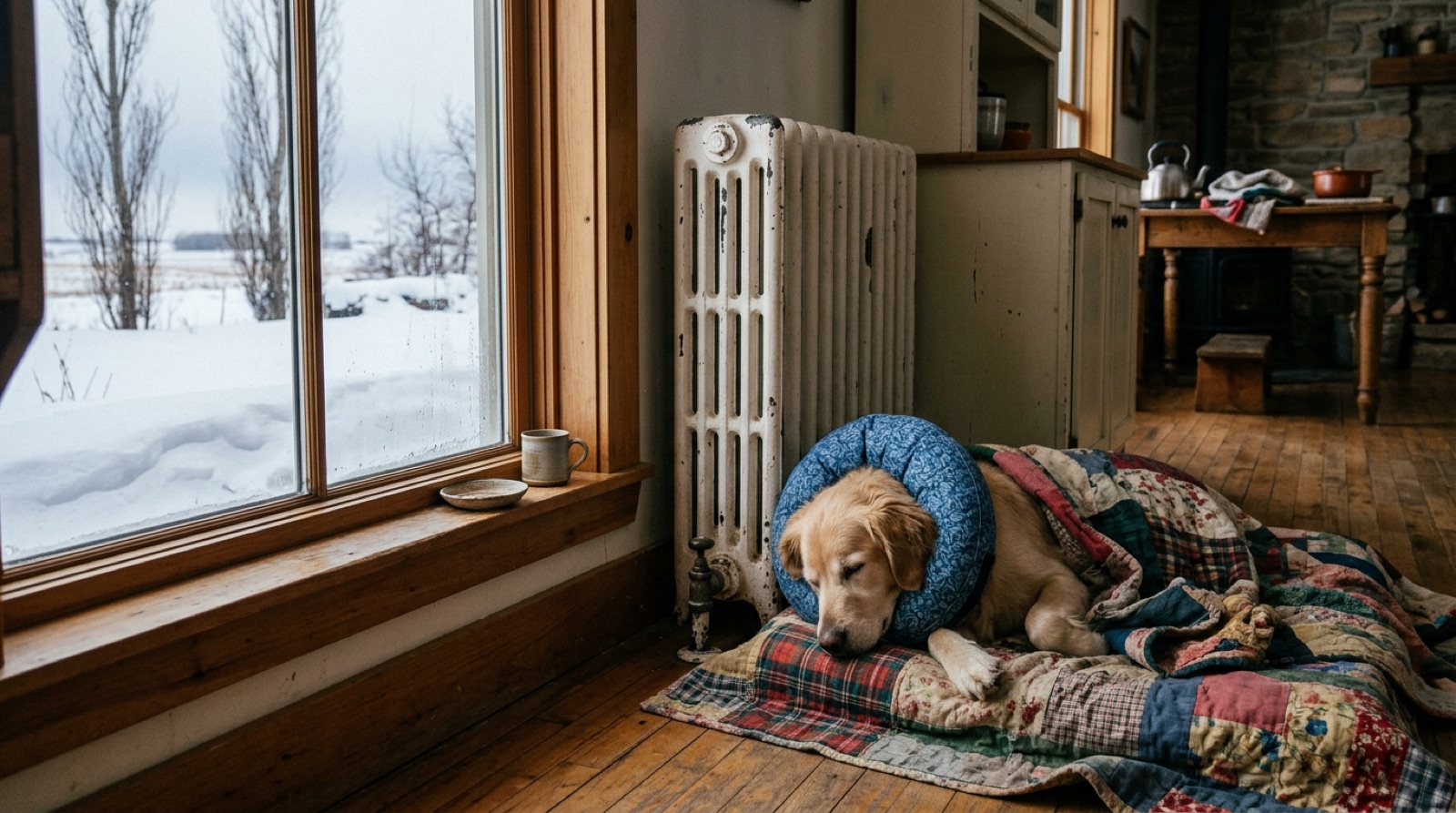
The short answer
Book with Battlefords Animal Hospital at 306-446-8387 or Lakeland Veterinary Services at 306-445-3757. Ask for a quote by weight and check it includes bloodwork, fluids, take-home pain relief and the recheck. Getting the dog fixed drops your Bylaw 1888 licence from $60 to $20 annually. Timing has moved later for large breeds, so ask your vet rather than defaulting to six months. Then plan fourteen days of restricted activity.
If you adopted from the Battlefords Humane Society, this is already sorted. Their adoption fee includes the spay or neuter, and the dog comes home with the surgery behind it. Find the certificate in your paperwork and put it somewhere safe, because you will need it in January for the cheaper licence.
This guide is for everyone else: people who took on a puppy, took in a dog from a neighbour or an acreage, or moved here with an unaltered dog.
Two questions come up. Where do I get it done, and when. The second one has a more nuanced answer than it did ten years ago, and the honest version is that it depends on your dog.
The Local Clinics
Battlefords Animal Hospital is reachable at 306-446-8387, with an emergency line at 306-480-8318. Lakeland Veterinary Services is at 306-445-3757, with emergency at 306-441-5141.
Ring both and compare. Not just on price, but on what is included and when they can fit you in. A two-week wait at one and a five-week wait at the other matters if you are trying to get a young dog done before a heat cycle.
Ask about weight-based pricing. Any clinic quoting one flat number regardless of size is giving you an average rather than a price. Give them your dog's actual weight when you call.
Ask about tax. Saskatchewan applies 6% PST to veterinary services on top of 5% GST, so a quote can be about 11% higher than the number you were told. Establish that up front so the bill is not a surprise.
Ask about monitoring. A trained person watching anaesthesia with proper equipment is not the line to economise on. Any accredited practice will explain their protocol happily.
What Getting Your Dog Fixed Saves You
| Item | Intact dog | Sterilized dog |
|---|---|---|
| Annual City licence | $60 | $20 |
| Over twelve years | $720 | $240 |
| Risk of pyometra in females | Present, rises with age | Removed |
| Unplanned litters | Possible, expensive | None |
| Roaming in open country | Higher, especially in males | Reduced |
Pre-anaesthetic bloodwork is usually quoted separately, about $60 to $120, and is recommended for older dogs. Ask for an itemized estimate before booking.
Licence figures from Schedule A of Bylaw 1888. Health effects are general and depend on the individual dog.
Timing, and Why It Changed
Six months used to be the answer for every dog. It is still reasonable for many small and medium dogs, and it remains standard practice in shelter medicine, where preventing litters is the overriding concern and it works.
For large and giant breeds the picture is more debated. There is genuine veterinary interest in whether waiting until closer to skeletal maturity reduces certain joint and orthopaedic problems. Professional bodies including the Canadian Veterinary Medical Association point owners toward individualised decisions rather than a single rule.
What that means for you. Take the breed, size, sex, household and management realities to your vet and decide together. If you have an intact female and cannot reliably prevent contact with intact males, that is a strong argument for going sooner regardless of size. In a rural setting with unfenced land, this is not a theoretical concern.
What is not a reasonable plan is indefinite delay. Every unaltered dog in this region is a potential contributor to the shelter's intake.
The Fourteen-Day Recovery Plan
| When | What to expect | What you do |
|---|---|---|
| Night of surgery | Groggy, unsteady, maybe off food | Quiet room, small meal, cone on |
| Days 1 to 3 | Appetite back, some bruising | All pain medication, exactly as prescribed |
| Days 4 to 7 | Dog feels fine and wants to run | The hardest stretch. Keep restricting |
| Days 8 to 14 | Incision closing, swelling settling | Lead only, no stairs, no baths |
| Recheck | Vet clears normal activity | Then, and only then, back to normal |
General guidance only. Follow the specific instructions your own veterinarian gives you.
Know your after-hours plan before surgery day
There is no 24-hour veterinary hospital in the Battlefords, and the nearest one is the Veterinary Medical Centre at the WCVM in Saskatoon, roughly ninety minutes down the Yellowhead, which may limit overnight intake to genuine emergencies. Before your dog goes in for surgery, ask your clinic exactly who to call at 2am and write it on the fridge. Locally that is 306-480-8318 for Battlefords Animal Hospital and 306-441-5141 for Lakeland. A complication you catch on the afternoon of day three is a phone call. The same complication at midnight on day four is a long drive.
Browse adoptable North Battleford dogs
Adopting skips this step entirely. Battlefords Humane Society dogs go home already spayed or neutered and microchipped, and straight into the $20 licence tier. Refreshed regularly.
See Available North Battleford Dogs →Frequently Asked Questions
Where can I get my dog spayed or neutered in North Battleford?
How much does it cost to spay or neuter a dog in the Battlefords?
Is there a low-cost spay and neuter programme in North Battleford?
Does spaying my dog reduce my licence fee?
What age should a dog be spayed or neutered?
Is spay and neuter surgery safe for dogs?
What should a spay or neuter quote include?
What does recovery look like after a dog is fixed?
How do I stop my dog licking the incision?
When should I phone the vet after surgery?
Does neutering fix behaviour problems?
Why does spay and neuter matter more in a rural area?
Related Battlefords Guides
Adopt a Dog That Is Already Sorted
Surgery done, chip in, records in hand. It is the best-value part of adopting here.
Browse Available North Battleford Dogs →Spay & Neuter Cost Across Canada
What the surgery costs by province, what subsidised clinics charge, and how to find one near you.
New dog? Start with these care guides
Everything a new adopter needs to set up a safe, happy home.