The short answer
Dachshunds turn up in Regina rescue fairly regularly, so set up alerts. Best rescues: the Regina Humane Society on Parliament Avenue, Bright Eyes Dog Rescue, SOS Prairie Rescue, and the Moose Jaw Humane Society. Adoption fee: about $200 to $600 (Regina Humane Society dog fees run lower, roughly $100 to $225) versus $1,500 to $3,500 from a breeder, plus the mandatory $25 Regina dog licence. Double-dapple Dachshunds are a health warning, not a premium (deaf/blind risk); teacup Dachshunds are a marketing red flag (Miniature is the real small size). Doxie crosses are common: Chiweenie, Doxle, Dorgi. Most surrenders are adults given up over back problems, difficult housetraining, barking, and stubbornness. The breed-defining issue is the back: Dachshunds have the highest disc-disease rate of any breed, so weight control and no jumping matter. Long-lived (12 to 16 years). For most households, an adult past the house-training phase is the right pick.
Where can I adopt a Dachshund in Regina?
Dachshunds and Doxie crosses turn up fairly regularly here. Best places to check: the Regina Humane Society on Parliament Avenue, Bright Eyes Dog Rescue, SOS Prairie Rescue, and the Moose Jaw Humane Society a short drive west. Browse all currently available Dachshunds and Doxie crosses on LocalPetFinder's Dachshund breed page. Listings update regularly. Because purebred Dachshunds go quickly, set up email alerts so you hear the moment one is listed.
For the full Regina rescue landscape and how each organisation works, see our best dog rescues in Regina guide. Browsing every adoptable dog at once is easy on the main Regina dog adoption listings.
How much does it cost to adopt a Dachshund in Regina?
Regina Dachshund rescue adoption fees range roughly $200 to $600, with the Regina Humane Society lower at around $100 to $225 depending on age. Fees include spay or neuter, vaccinations, microchip, deworming, and a basic vet workup. Senior Dachshunds are often reduced. Add the mandatory $25 Regina dog licence. Buying from a breeder: $1,500 to $3,500 or more, with dapple and rare-marketed colours priced higher. Annual care: roughly $1,500 to $2,800 per year, and Saskatchewan adds about 11 percent tax to vet services and pet food. The breed-specific budget concern is the back, because Dachshunds have the highest disc-disease rate of any breed and a serious event can cost thousands, so pet insurance is genuinely important, commonly $35 to $70 per month for a young healthy Dachshund.
| Source | Dachshund Fee Range | What's Included |
|---|---|---|
| Regina Humane Society | $100 to $225 | Spay or neuter, vaccines, microchip, vet check |
| Foster-based rescue (Bright Eyes, SOS Prairie) | $200 to $600 | Spay or neuter, vaccines, microchip, foster temperament plus medical history |
| Senior Dachshund (8+ years) | Often reduced | Same as above, at a lower fee |
| Regina dog licence | $25 | Mandatory city licence, one-time on adoption |
| Standard breeder puppy | $1,500 to $3,500 or more | Initial vaccines only |
| “Rare” dapple or teacup premium | $3,000 or more | Marketing premium and a health warning, not an upgrade |
For the full first-year budget with the Saskatchewan tax picture, see our Regina adoption costs guide.
The dapple, double-dapple, and teacup warnings
Double dapple is a genuine health warning, not a premium. Breeding two dapple (merle) Dachshunds together greatly increases the risk of deafness, blindness, and severe eye defects, so a double-dapple Dachshund, often mostly white, signals irresponsible breeding. Reputable breeders never breed dapple to dapple. Separately, teacup or micro Dachshund is a marketing label, not a real size, usually meaning a runt or a dog bred too small.
A single dapple or a piebald Dachshund can be perfectly healthy, and the Canadian Kennel Club recognises two real sizes, Standard and Miniature (11 lbs and under), with no teacup category. What you should not do is pay a premium for a rare colour or a teacup label, or support dapple-to-dapple breeding. If a listing leads with rare colour or extreme small size rather than health testing and back-conscious breeding, walk away. A standard rescue Dachshund is the real thing and sidesteps the whole marketing game.
Doxie crosses you will see in Regina rescue
Dachshund crosses are common in Regina rescue, and each keeps the long-bodied, short-legged build (so back care matters for all of them) while adding the other breed's traits.
- Chiweenie (Dachshund plus Chihuahua): tiny, bold, often vocal, a lively small companion.
- Doxle (Dachshund plus Beagle): adds a strong nose and scent-hound drive, so expect more sniffing and possibly baying.
- Dorgi (Dachshund plus Corgi): long and low from both sides, so back protection is especially important.
- Doxiepoo (Dachshund plus Poodle) or a Dachshund-Terrier cross: the Poodle mix sheds less but needs more grooming; the terrier mix tends to be feisty and high-energy.
All Doxie crosses tend to keep the stubborn streak, the digging and prey drive, and the vulnerable long back.
Browse adoptable Dachshunds in Regina
Live inventory from Regina rescues, including smooth, longhaired, and wirehaired Dachshunds, Standard and Miniature sizes, Chiweenie and Doxle crosses, and senior dogs at reduced fees. Refreshed regularly, so set up alerts.
See Available Dachshunds →Why Dachshunds end up in prairie rescue
Dachshund surrenders trace to a consistent set of breed traits that catch owners off guard:
Back problems and cost. The breed's high disc-disease rate can bring an expensive, frightening medical event.
Difficult housetraining. Dachshunds are notoriously slow and stubborn to house-train, made worse by prairie winters.
Barking. Alert, vocal little watchdogs that draw complaints.
Stubbornness and prey drive. Independence, digging, and chasing surprise people expecting an easy small dog.
Most Saskatchewan Dachshund surrenders are charming dogs whose owners were not ready for a stubborn, vocal, back-vulnerable hound. The back-care side is covered in our Dachshund back care and IVDD guide.
Frequently Asked Questions
Where can I adopt a Dachshund near me in Regina?
Dachshunds and Dachshund crosses turn up in Regina rescue fairly regularly, because the breed is popular and is surrendered at a meaningful rate over back problems, housetraining struggles, and behaviour. Best places to check: the Regina Humane Society on Parliament Avenue, Bright Eyes Dog Rescue, SOS Prairie Rescue, and the Moose Jaw Humane Society a short drive west. Browse currently available Regina Dachshunds and Doxie crosses on LocalPetFinder's Dachshund breed page, which updates regularly. Because a purebred Dachshund can be adopted quickly once listed, set up email alerts with the rescues so you hear the moment one appears. Most surrendered Regina Dachshunds are 1 to 7 year old adults given up over the breed's back issues, difficult housetraining, barking, or stubbornness, not because anything is wrong with the dog.
Is there a Dachshund-specific rescue in Saskatchewan?
There is no large registered Dachshund-only rescue based in Saskatchewan. Breed-specific rescue in Western Canada tends to run through volunteer networks and transport, and reach into Saskatchewan is thin. You rarely need one, because Dachshunds and Doxie crosses turn up in the general rescues: the Regina Humane Society, Bright Eyes Dog Rescue, and SOS Prairie Rescue all take them in through the year, usually with a full vet workup and a foster temperament assessment. If you do find a breed-specific Dachshund rescue claiming Saskatchewan placements, verify it before applying or paying: check the Canada Revenue Agency charitable registry, a physical address or named foster network, public vet references, and recent adoptable dog listings. The same checklist applies to any out-of-province group, because a popular breed like the Dachshund attracts scams.
How much does it cost to adopt a Dachshund in Regina?
Regina Dachshund rescue adoption fees run roughly $200 to $600, far below the $1,500 to $3,500 a breeder charges, with dapple and other rare-marketed colours priced even higher. Regina Humane Society dog fees sit lower, around $100 to $225 depending on age, and Bright Eyes Dog Rescue runs closer to $200 to $600. Those fees cover spay or neuter, vaccinations, microchip, deworming, and a basic vet workup, and senior Dachshunds are often reduced. Add the mandatory $25 Regina dog licence. Annual care for a Dachshund in Regina runs roughly $1,500 to $2,800 per year, and Saskatchewan adds about 11 percent tax to vet services and pet food. The breed-specific budget concern is the back: Dachshunds have the highest rate of intervertebral disc disease of any breed, and a serious disc event can mean thousands in treatment or surgery, so weight management is both a health and a cost issue, and pet insurance is genuinely important for this breed, commonly $35 to $70 per month for a young healthy Dachshund. Budget as if a back event is a real possibility.
Are dapple, piebald, or rare-colour Dachshunds worth more?
No, and one pattern is an outright health warning. Dachshunds come in many normal colours and patterns, and a single dapple (merle) or a piebald Dachshund can be a perfectly healthy dog, but breeders marketing them as rare to charge a premium are selling a story, not a better dog. The serious issue is double dapple, produced by breeding two dapples together, which greatly increases the risk of deafness, blindness, and severe eye defects, so a double-dapple Dachshund, often mostly white, is a red flag for irresponsible breeding, not a prize. Reputable breeders never breed dapple to dapple. If a listing leads with rare colour, dapple-to-dapple breeding, or an unusual pattern at a premium price rather than health testing and back-conscious breeding, walk away. A standard-coloured rescue Dachshund is the real thing at a fraction of the cost, and adopting one sidesteps the whole rare-colour marketing game.
Are mini or teacup Dachshunds real?
Miniature Dachshunds are real, but teacup Dachshunds are a marketing red flag. The breed has two recognised sizes: Standard, typically 16 to 32 lbs, and Miniature, typically 11 lbs and under, and both are normal, healthy Dachshunds at different points on the size range. Teacup, micro, or toy Dachshund, on the other hand, is not a recognised size: it is a marketing label for extra-small dogs, often runts or the product of breeding two undersized dogs, sold at a premium and sometimes with the fragility and health problems that come from deliberately breeding for tiny size. A genuine Miniature Dachshund from a responsible breeder or a rescue is a wonderful small dog, but the teacup label should make you cautious, not willing to pay more. If a listing leads with teacup or micro rather than health and temperament, treat it as a warning sign. In rescue you will see both Standard and Miniature Dachshunds and their crosses.
What are Dachshund crosses like: Chiweenie, Doxle, Dorgi?
Dachshund crosses are common in Regina rescue, and each keeps the long-bodied, short-legged Doxie build, which means back care matters for all of them, while adding the other breed's traits. A Chiweenie (Dachshund plus Chihuahua) is tiny, bold, and often vocal, a lively small companion. A Doxle (Dachshund plus Beagle) adds a strong nose and scent-hound drive, so expect more sniffing and possibly more baying. A Dorgi (Dachshund plus Corgi) is long and low from both sides, so back protection is especially important. A Dachs-Poo or Doxiepoo (Dachshund plus Poodle) may shed less but needs more grooming, and a Dachshund-Terrier cross tends to be feisty and high-energy. All Doxie crosses tend to keep the stubborn streak, the digging and prey drive, and the vulnerable long back, so read each rescue's temperament notes, because the other half changes size, energy, and coat substantially.
Why do Dachshunds end up in Regina and Saskatchewan rescues?
Dachshund surrenders trace to a consistent set of breed traits that catch owners off guard. Back problems and their cost lead the list, because the breed's high rate of disc disease can bring an expensive, frightening medical event that some owners cannot manage. Housetraining difficulty is a big one, as Dachshunds are notoriously slow and stubborn to house-train, and accidents frustrate owners, made worse in prairie winters when a small, low dog does not want to go out in the cold and snow. Barking draws complaints, since Dachshunds are alert, vocal little watchdogs. Stubbornness and independence surprise people expecting an easy small dog, and the breed's digging and prey drive can be a nuisance. Add impulse buys of a trendy dog that do not last, and you have the classic Dachshund surrender profile. Most Saskatchewan Dachshund surrenders are charming dogs whose owners were not ready for a stubborn, vocal, back-vulnerable hound.
Are Dachshunds good for first-time dog owners in Regina?
They can be, for an owner who understands what they are taking on, but they are not the easy small dog many people picture. Dachshunds are charming, brave, affectionate, and full of personality, and their size is manageable, but they are stubborn, notoriously hard to house-train, vocal, and, most importantly, prone to serious back problems that demand lifelong careful management. For a first-time Regina owner, the keys are committing to patient, consistent house-training, being ready for a vocal dog, using positive reward-based training for the stubbornness, and, above all, protecting the back through weight control, no jumping on and off furniture, and a harness rather than a collar. An adult rescue Dachshund past the demanding puppy and house-training phase, with a known temperament, is often the easiest entry point. If you can handle the stubbornness and commit to back care, a Dachshund is a wonderful, characterful companion. If you want an easy-to-train, low-maintenance dog, look elsewhere.
Should I adopt a senior Dachshund?
Absolutely consider it. Dachshunds are a long-lived breed, commonly reaching 12 to 16 years, so a senior Dachshund of 8 or 9 can have many good years ahead, more than a senior of a large breed. Senior Dachshunds appear in Regina rescues because owners passed away, downsized, or could no longer manage, and these dogs are usually calmer than their demanding younger years, often already house-trained (a real bonus for this breed), and still affectionate and characterful. Their small size and settled needs suit a prairie winter and a quieter household well. The main things to plan for are back care, which matters even more as a Dachshund ages, weight management, dental care, and routine senior vet checks, since the breed can develop heart and other age-related issues. Adoption fees are usually reduced. For a household wanting an affectionate, low-key companion with years of life left and the house-training already done, a senior Dachshund is a wonderful and often overlooked adoption.
Do Dachshunds handle Regina winters?
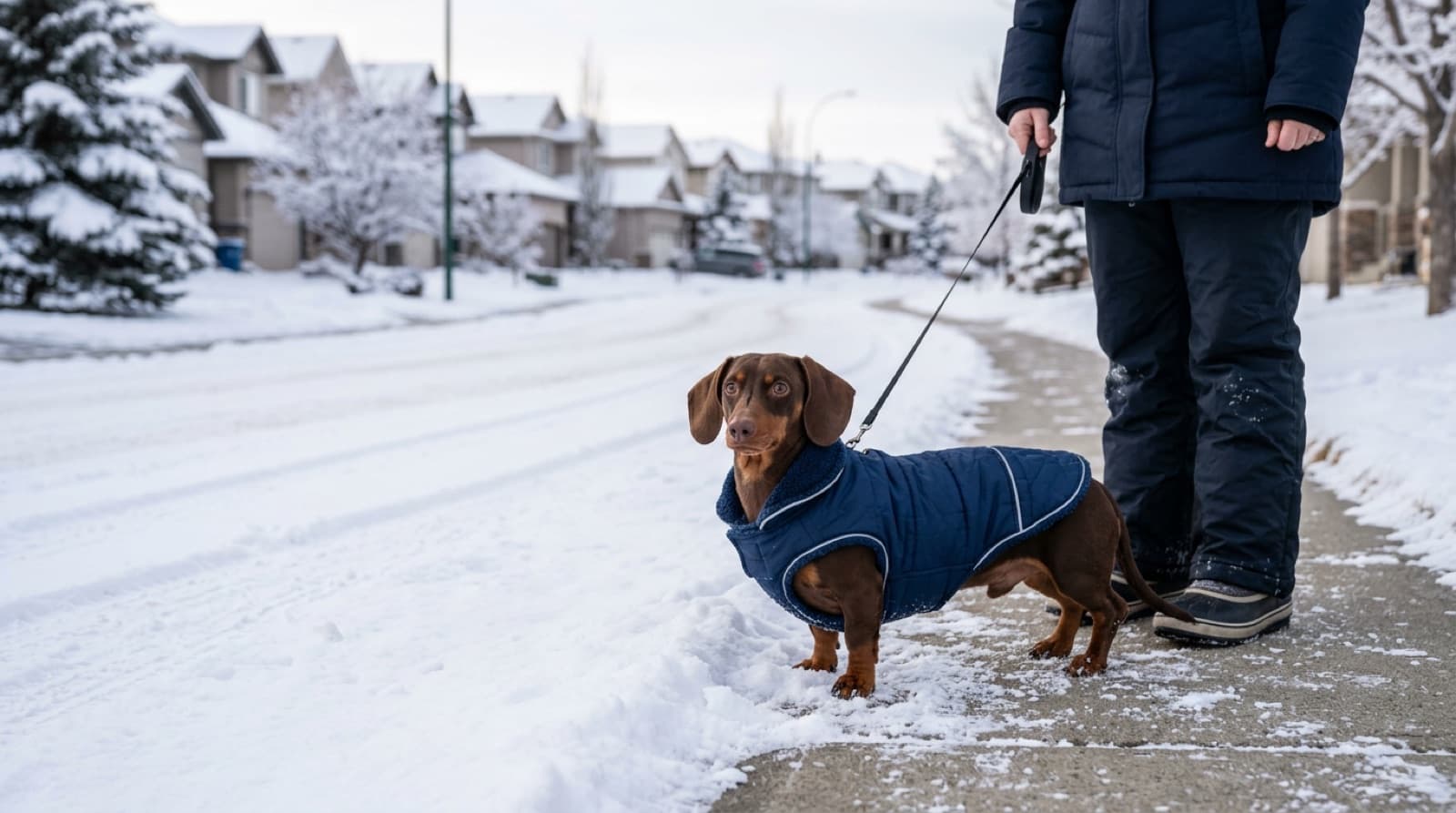
They need real help, more than most dogs, because of their build and coats. A Dachshund sits low to the ground, so its belly and chest are close to cold snow, and it tires quickly wading through deep snow on short legs. Coat type matters: a smooth-coated Dachshund has very little insulation and gets cold fast, so a warm, well-fitted coat or sweater is genuinely necessary for winter walks, while longhaired and wirehaired Dachshunds have a bit more protection but still benefit from a coat in deep cold. Keep winter outings short and on cleared or packed paths, pack a path in the yard for potty breaks, and wipe or rinse the feet after walks to clear salt and ice-melt. The cold also makes the breed's house-training challenge worse, because a small dog is reluctant to go out in the snow, so plan for that with patience and a sheltered potty spot. With a good coat, short outings, and indoor enrichment, a Dachshund manages a Regina winter, but it is a dog that needs bundling up.
Related Guides
New dog? Start with these care guides
Everything a new adopter needs to set up a safe, happy home.