The short answer
Keep your Dachshund lean, use ramps instead of jumps, gate the stairs and lift with the back level. If your dog yelps, hunches, wobbles or loses the use of its back legs, treat it as an emergency: veterinary surgeons consider a disc rupture a true surgical emergency. Follow your vet’s rest plan to the end, even when the dog feels better.
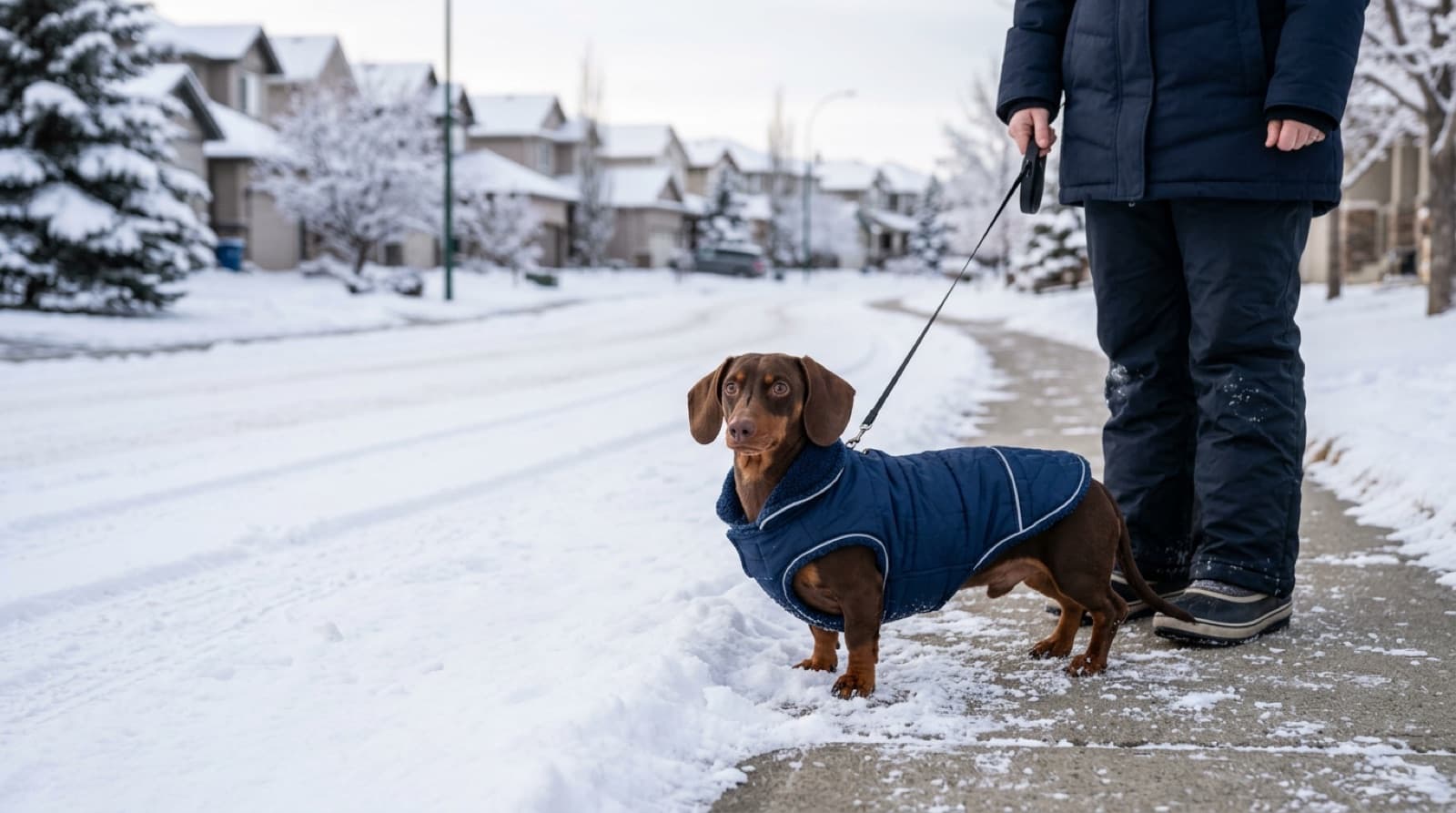
Why Dachshund backs are fragile
Dachshunds are chondrodystrophic: the gene behind their short legs also makes the discs between the vertebrae harden and degenerate early. A hardened disc can burst into the spinal canal and press on the cord. The American College of Veterinary Surgeons notes that Dachshunds account for 45 to 70% of disc-rupture cases.
A rupture can follow a jump or a twist, but it can also happen during an ordinary moment, because the disc was already weakened. That is why prevention lowers the odds rather than removing them.
The habits that protect the spine
Weight is the biggest one. Ask your vet for a target weight and measure meals. Beyond that, the goal is to reduce jumping, twisting and steep climbing.
- Ramps or pet steps for the couch, bed and car.
- Baby gates on stairs, especially in a multi-level home.
- Lift with one hand under the chest and one under the hindquarters, keeping the back horizontal. Never lift by the front legs.
- A harness instead of a collar on walks.
- Rugs or runners on slippery floors, and nails kept short for grip.
- Steady walks to keep the core muscles strong, rather than ball-chasing with sudden stops.
Browse adoptable Dachshunds
Ask the rescue about any past back episodes before you bring your Dachshund home.
See Available Dachshunds →The emergency signs
Back or neck pain can show as a hunched posture, trembling, reluctance to move, yelping when touched or picked up, or refusing stairs. Neurological signs are more serious: wobbling, knuckling of a back paw, dragging the hind legs, or not being able to stand.
Get to a vet or emergency clinic the same day for pain, and immediately for any wobbling or weakness. ACVS calls a disc rupture a true surgical emergency, and notes that severe damage can lead to loss of pain sensation in the feet, which carries a much poorer outlook the longer it lasts. Carry the dog flat and keep it still on the way.
Crate rest and surgery
A first episode with mild signs is often treated without surgery: strict confinement in a crate or small pen, pain relief and short leash outings for toileting only. Your vet sets the length. Cutting it short because the dog seems fine is a common cause of a second, worse episode.
Dogs that cannot walk, or that worsen despite rest, may need imaging and surgery to remove the disc material pressing on the cord. ACVS recommends at least four weeks of restricted activity after surgery. Many dogs walk again, especially when treated quickly, and physiotherapy helps.
Living with a dog that has had an episode
A dog that has ruptured one disc can rupture another, so the prevention habits become permanent. Keep the ramps, keep the weight down and know your nearest emergency clinic. For the rest of the breed’s health picture, see our Dachshund health guide.
If you are adopting, ask the rescue about any past back episode and price pet insurance in your first week; every Canadian provider excludes conditions documented before enrolment.
Frequently asked questions
How do I know if my Dachshund has hurt its back?
Look for a hunched posture, trembling, yelping when picked up, reluctance to move or use stairs, and especially wobbling or weakness in the back legs. See a vet the same day; wobbling or weakness is an emergency.
Can IVDD in Dachshunds be prevented?
Not entirely, because it is largely genetic. Keeping the dog lean, using ramps, gating stairs, lifting with the back level and using a harness all lower the risk and severity.
Is IVDD an emergency?
Yes, when there is weakness, wobbling or paralysis. Veterinary surgeons consider a disc rupture a true surgical emergency, and the chance of recovery falls the longer the spinal cord is compressed.
How long is crate rest for a Dachshund back?
Your vet sets the length based on the dog’s signs. Follow it completely; ending rest early is a common cause of relapse.
Can a Dachshund walk again after IVDD surgery?
Many do, especially when surgery happens quickly. Recovery involves several weeks of restricted activity and often physiotherapy.
Should Dachshunds use stairs?
It is best to limit them. Gate the stairs and use ramps or carry the dog with its back level.
Sources
- American College of Veterinary Surgeons: Intervertebral Disc Disease: Dachshunds 45 to 70% of cases; conservative care for mild first episodes; true surgical emergency; loss of pain sensation; at least 4 weeks rest after surgery
General information, not veterinary advice. Diagnosis and treatment decisions belong with your veterinarian.
Related guides
New dog? Start with these care guides
Everything a new adopter needs to set up a safe, happy home.