The short answer
Dachshunds are the breed most affected by disc disease. Keep the dog lean, use ramps instead of jumps, and treat sudden back pain, wobbling or hind legs that stop working as an emergency. Brush the teeth, have the heart listened to at every checkup as the dog ages, and price pet insurance in your first week, before anything is written in the file.
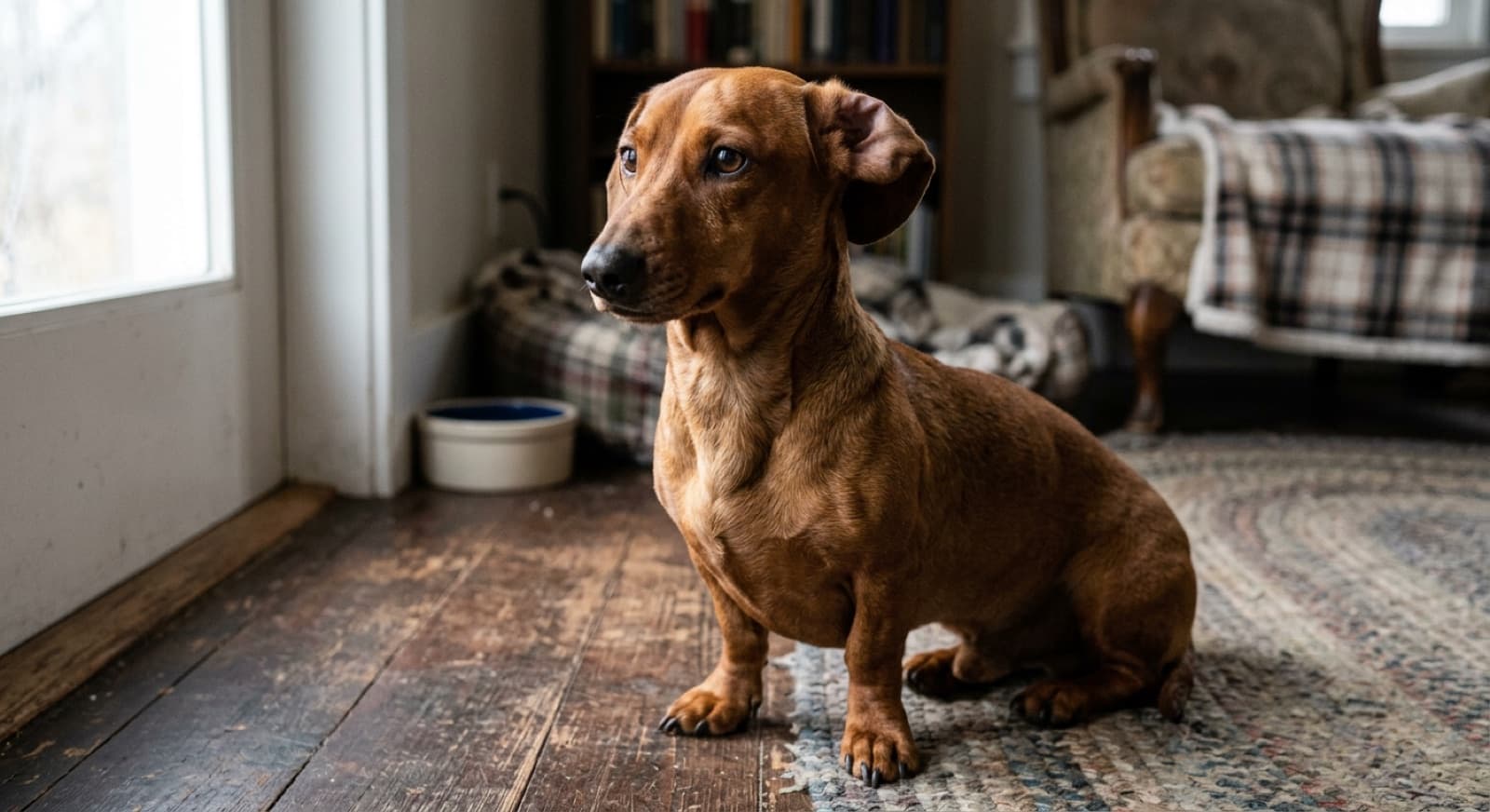
IVDD: the defining Dachshund risk
Intervertebral disc disease happens when the cushioning discs between the vertebrae degenerate and bulge or rupture into the spinal cord. The American College of Veterinary Surgeons notes that chondrodystrophoid breeds account for most disc ruptures, and that Dachshunds make up 45 to 70% of cases.
A mild episode looks like back or neck pain: a hunched posture, shivering, yelping when picked up, or refusing stairs. A severe one shows wobbling, knuckling of a back paw, or hind legs that stop working. Loss of hind-leg function or bladder control is an emergency; go to an emergency vet rather than waiting to see if it passes.
Mild cases are often managed with strict crate rest and pain relief under your vet’s direction, and cutting the rest short is a common cause of relapse. Dogs with serious neurological signs may need imaging and surgery, and the outlook is best when treatment is fast.
- Keep the dog lean: extra weight loads every disc.
- Use ramps for the couch, bed and car, and gate the stairs.
- Lift with one hand under the chest and one under the hindquarters, keeping the back level.
- Use a harness rather than a collar, and add rugs on slippery floors.
Browse adoptable Dachshunds
Foster notes often mention weight and any back episodes, which is exactly what to raise at your first vet visit.
See Available Dachshunds →Weight
Dachshunds are enthusiastic eaters, and on a short frame a few extra kilograms is a large share of body weight. Ask your vet for a body condition score and a written target weight, measure food rather than scooping, and count treats as part of the daily ration. Weight control is the one IVDD risk factor owners fully control.
Teeth
Small breeds are more prone to periodontal disease, according to VCA Animal Hospitals, and many Dachshunds have tartar and gum disease by middle age. Daily brushing with a dog toothpaste is the best prevention, and expect your vet to recommend professional cleanings over the dog’s life.
Heart valve disease and epilepsy
Mitral valve disease is the most common heart disease in small dogs, and VCA names the Dachshund among the breeds affected. The first sign is usually a murmur your vet hears. Later signs to report are a persistent cough, faster breathing at rest and tiring easily on walks.
Dachshunds also appear on VCA’s list of breeds with a higher rate of epilepsy. Most seizures last a minute or two. A seizure that will not stop, or several close together, is an emergency.
The first vet visit after adoption
Ask for a careful back and neck exam, a body condition score with a target weight, a dental check and a heart listen. Mention any history of back episodes in the rescue’s notes, because a previous episode raises the chance of another. Bring the rescue’s records.
Price pet insurance the same week. Every Canadian provider excludes conditions documented before enrolment, and a single disc surgery is exactly the kind of sudden cost insurance is for. Check that spinal surgery and neurology are covered.
Frequently asked questions
What are the most common Dachshund health issues?
Intervertebral disc disease (IVDD) leads the list, followed by obesity, dental disease, heart valve disease in older dogs and epilepsy.
Is it an emergency if my Dachshund cannot walk?
Yes. Sudden weakness or paralysis in the back legs can mean a disc has ruptured into the spinal cord, and the chance of recovery depends on fast treatment. Go to an emergency vet right away.
How do I protect my Dachshund’s back?
Keep the dog lean, use ramps instead of letting it jump, gate stairs, lift it with the spine level and use a harness. IVDD is largely genetic, so these habits lower the risk rather than remove it.
Do Dachshunds need crate rest after a back episode?
Often, yes, for mild cases your vet treats without surgery. Follow the full rest period your vet sets; letting the dog run around too early is a common cause of a second, worse episode.
Why does my Dachshund have bad breath?
Usually dental disease, which is common in small breeds. Ask your vet for a dental exam and start daily brushing.
Should I get pet insurance for a rescue Dachshund?
It is worth pricing in your first week. Canadian pet insurance excludes conditions documented before enrolment, and disc surgery is a large, sudden cost. Look for spinal and neurology coverage.
Sources
- American College of Veterinary Surgeons: Intervertebral Disc Disease: chondrodystrophoid breeds account for most ruptures; Dachshunds 45 to 70% of cases
- VCA Animal Hospitals: Dental Disease in Dogs: small breeds more prone; daily brushing
- VCA Animal Hospitals: Mitral Valve Disease: Dachshund named; murmur as first sign
- VCA Animal Hospitals: Epilepsy in Dogs: Dachshund among higher-rate breeds; status epilepticus is an emergency
General information, not veterinary advice. Diagnosis and treatment decisions belong with your veterinarian.
Related guides
New dog? Start with these care guides
Everything a new adopter needs to set up a safe, happy home.