The short answer
Poodles are generally healthy and long-lived, but carry inherited concerns that vary by size. Across all sizes: hip dysplasia, eye disease (PRA and cataracts), epilepsy, hypothyroidism, von Willebrand bleeding disorder, and chronic ear infections. Standard Poodles add Addison's disease, bloat, and sebaceous adenitis; small Poodles add patellar luxation and dental disease. Doodles inherit from both parents, so hybrid vigour is not guaranteed and many come from untested breeders. Lifespan runs 12 to 15 years for Standards, 14 to 18 for small Poodles. Insure early, keep the dog lean, and know the bloat and Addison's-crisis emergency signs. Regina emergencies go to the 24 HR Animal Care Centre (306-761-1449); specialty ophthalmology and internal medicine refer to the WCVM in Saskatoon. Always consult your veterinarian.
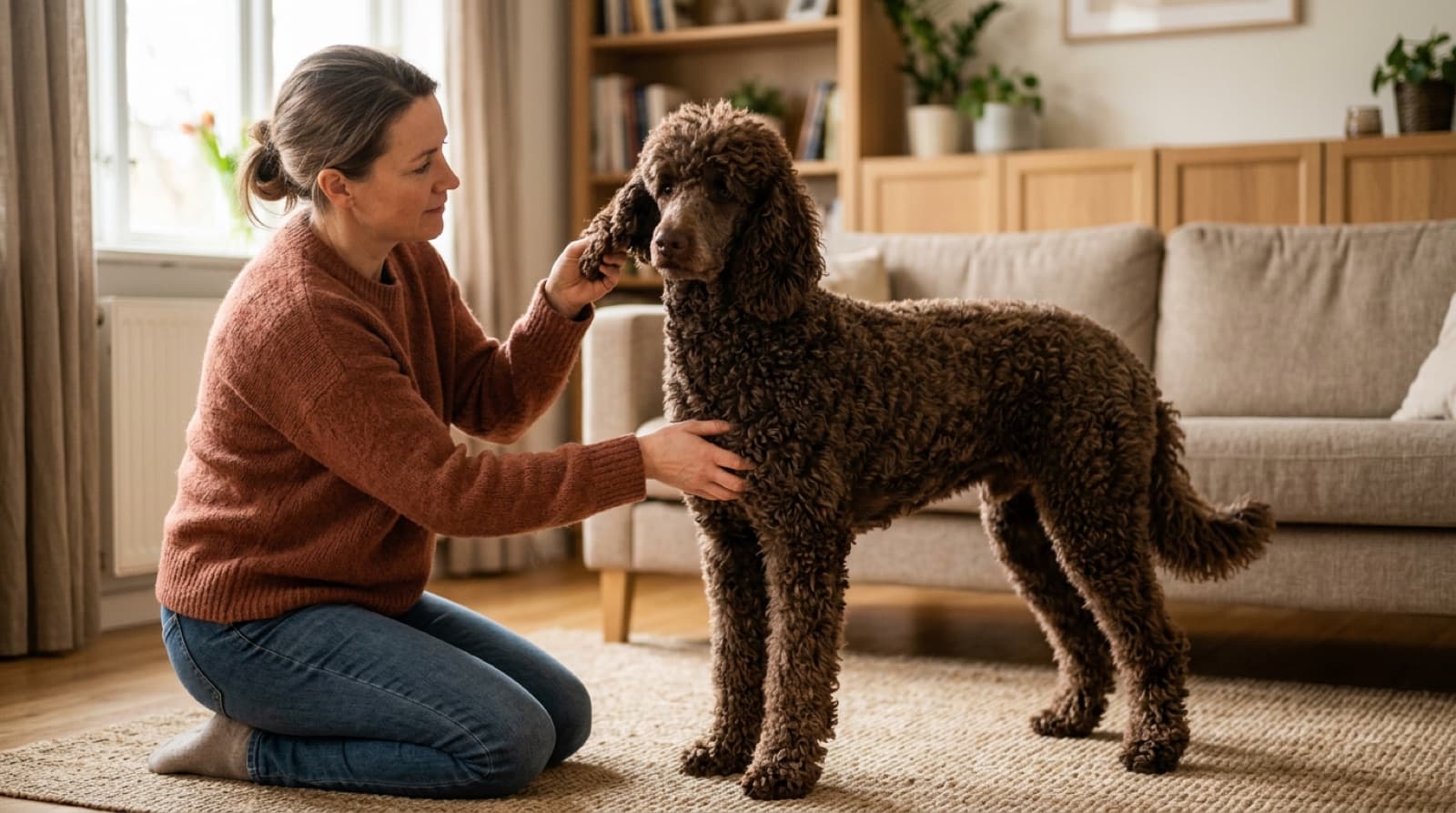
Addison's disease: the great pretender
Addison's disease (hypoadrenocorticism) is a hormonal disorder where the adrenal glands underproduce essential hormones, and Standard Poodles are one of the most predisposed breeds. It is called the great pretender because early signs are vague and come and go: lethargy, poor appetite, vomiting, diarrhea, weakness, and increased thirst. In some dogs it presents suddenly as a life-threatening Addisonian crisis with collapse.
The good news is that once diagnosed, usually through blood tests, Addison's is very manageable with lifelong medication, and affected dogs live full lives. Because the signs are subtle, the key is to have any vague, recurring illness in a Standard Poodle investigated rather than dismissed, and to mention the breed's Addison's risk to your vet. For a rescue Poodle, watch for the pattern of intermittent unexplained illness, and treat sudden collapse as an emergency.
Eyes: PRA and cataracts
Progressive retinal atrophy (PRA) is an inherited condition that gradually destroys the retina and leads to blindness, affecting Poodles and passing to Doodles from the Poodle side. Poodles are also prone to cataracts. Because PRA is progressive and often painless, annual eye exams by a veterinary ophthalmologist are recommended.
At home, watch for cloudiness, a change in the eyes' appearance, reluctance to move in dim light, or bumping into things, and mention anything unusual to your vet. Many affected dogs adapt remarkably well to gradual vision loss, especially in familiar surroundings, but early veterinary assessment gives the best options. Responsible breeders test breeding stock for eye disease, which is one reason parent health testing matters so much in this breed and its crosses.
Bloat, hips, and joints
Standard Poodles and large Doodles are deep-chested, raising bloat risk, a sudden emergency where the stomach fills with gas and can twist. Signs: a hard swollen belly with unproductive retching, restlessness, and drooling. It kills within hours, so treat it as go-now. Hip dysplasia affects all sizes, and small Poodles add patellar luxation, a slipping kneecap.
For a deep-chested Standard or large Doodle, ask your vet about smaller meals, avoiding hard exercise right after eating, and whether a preventive gastropexy fits. Watch for joint signs, stiffness, reluctance to jump or climb, and a skipping gait in the small dogs, and screen parents through the Orthopedic Foundation for Animals if buying. As always, weight is the biggest lever you control for joints, so keep your Poodle or Doodle lean.
The Doodle health lottery
Doodles are not reliably healthier than purebred Poodles. Crossbreeding can sometimes reduce certain risks (hybrid vigour), but a Doodle can inherit problems from both parent breeds. A Goldendoodle can inherit the Poodle's eye disease or Addison's risk plus the Golden's elevated cancer and hip risk.
Worse, many Doodles come from volume or backyard breeders doing minimal health testing, which raises the odds of inherited disease versus a carefully bred purebred. What protects a Doodle's health is the same as any dog: health-tested parents, a lean weight, good preventive care, and early insurance. In a rescue you rarely know the parents, so treat any Doodle as potentially carrying both breeds' risks and budget accordingly. Adopt for the individual dog, not for a health guarantee crossbreeding cannot provide.
Ears, skin, and the rest
Chronic ear infections are among the most common reasons these dogs see the vet, because floppy ears plus hair in the canal trap moisture. Keep the ears clean and dry as part of grooming, manage canal hair as your groomer advises, and treat recurring infections as a possible allergy sign. This is one reason the grooming commitment is a health issue, not just cosmetic, and it ties into our grooming guide.
Poodles can also carry epilepsy, hypothyroidism (easily managed with a daily pill), von Willebrand disease (a bleeding disorder worth knowing before any surgery), and, in Standards, sebaceous adenitis, an inflammatory skin condition. Small Poodles are prone to dental disease, so brush teeth and keep up dental care. None of this is universal, but all of it is worth watching in a dog you will likely have well over a decade.
Browse adoptable Poodles and Doodles in Regina
A rescue Poodle or Doodle comes with a vet workup and, often, a known history, which is a real head start on the health picture, especially for a cross. Refreshed regularly.
See Available Poodles and Doodles →Emergency and specialty vet care from Regina
For after-hours crises, the 24 HR Animal Care Centre (306-761-1449) in Regina is Saskatchewan's only true 24-hour animal hospital, so it is your first call for a bloat emergency in a Standard Poodle or large Doodle, or a sudden collapse that can signal an Addisonian crisis. For specialty ophthalmology (eye disease) and internal medicine (conditions like Addison's), the province's referral centre is the WCVM Veterinary Medical Centre at the University of Saskatchewan in Saskatoon, roughly a 2.5-hour drive north.
Keep the 24 HR Animal Care Centre address and phone handy, and read our Regina emergency vet guide before you need it. Treat these as emergencies: the bloat signs of a hard swollen belly with unproductive retching, sudden collapse, and any severe distress. Your regular Regina vet coordinates any WCVM specialty referral when a Poodle or Doodle needs one.
Frequently Asked Questions
What health problems are Poodles most prone to?
Poodles are generally a healthy, long-lived breed, but they do carry several inherited concerns that vary by size. Across all sizes, the common issues are hip dysplasia, eye disease including progressive retinal atrophy and cataracts, epilepsy, hypothyroidism, and von Willebrand disease, a bleeding disorder. Standard Poodles are notably prone to Addison's disease, a hormonal condition, to bloat as a deep-chested breed, and to sebaceous adenitis, a skin condition. Miniature and Toy Poodles are more prone to patellar luxation, a slipping kneecap, dental disease, and, in Toys, a hip condition called Legg-Calve-Perthes. All Poodles are prone to ear infections because the floppy ears and hair in the canal trap moisture. None of this should scare you off a wonderful breed, but it should shape your budget and insurance, and it matters even more for Doodles, which can inherit these plus the other breed's conditions. Always consult your veterinarian for diagnosis and treatment.
What is Addison's disease and why do Poodles get it?
Addison's disease, or hypoadrenocorticism, is a hormonal disorder where the adrenal glands do not produce enough of certain essential hormones, and Standard Poodles are one of the breeds most predisposed to it. It is sometimes called the great pretender because its early signs are vague and come and go: lethargy, poor appetite, vomiting, diarrhea, weakness, and increased thirst, which are easy to mistake for other problems. In some dogs it presents suddenly as a life-threatening Addisonian crisis with collapse, which is an emergency and in Regina means the 24 HR Animal Care Centre. The good news is that once diagnosed, usually through blood tests, Addison's is very manageable with lifelong medication, and dogs with it can live full, normal lives. Because the signs are subtle, the key is to have any vague, recurring illness in a Standard Poodle investigated rather than dismissed, and to mention the breed's Addison's risk to your vet. For a rescue Poodle, watch for the pattern of intermittent unexplained illness. Always consult your veterinarian.
Do Poodles and Doodles have eye problems?
Yes, eye disease is one of the more common inherited concerns. Progressive retinal atrophy, or PRA, is an inherited condition that gradually destroys the retina and leads to blindness, and it affects Poodles and can pass to Doodles from the Poodle side. Poodles are also prone to cataracts, a clouding of the lens that can impair vision, and to other eye conditions. Because PRA is progressive and often painless, it can go unnoticed until vision is significantly affected, which is why annual eye exams by a veterinary ophthalmologist are recommended for the breed, and why responsible breeders test breeding stock. At home, watch for cloudiness, a change in the eyes' appearance, reluctance to move in dim light, or bumping into things, and mention anything unusual to your vet. Many affected dogs adapt remarkably well to gradual vision loss, especially in familiar surroundings, but early veterinary assessment gives the best options. Consult your veterinarian for any eye concerns.
Are Poodles at risk of bloat?
Standard Poodles are, because they are a large, deep-chested breed, which raises the risk of bloat, medically gastric dilatation-volvulus, a sudden and life-threatening emergency in which the stomach fills with gas and can twist. Miniature and Toy Poodles are at much lower risk because of their smaller build. Signs of bloat include a distended or hard belly, unproductive retching or trying to vomit with nothing coming up, restlessness, drooling, and collapse, and it kills quickly, often within hours, so it is a go-to-the-emergency-vet-immediately situation, not a wait-and-see one. In Regina that means the 24 HR Animal Care Centre. For a Standard Poodle or a large Doodle with a deep chest, risk-reduction steps your vet may suggest include feeding two or three smaller meals rather than one large one, avoiding heavy exercise right after eating, and, for some dogs, a preventive gastropexy. Know the signs before you ever need them and keep the emergency clinic's number handy. Consult your veterinarian about prevention for your dog.
Are Doodles healthier than purebred Poodles?
Not reliably, and this is the Doodle health lottery worth understanding. Crossbreeding can widen the gene pool and sometimes reduces the odds of certain inherited conditions, an effect called hybrid vigour, but it does not erase risk, and a Doodle can inherit health problems from both parent breeds. A Goldendoodle, for example, can inherit the Poodle's eye disease or Addison's risk plus the Golden Retriever's elevated cancer and hip risk, so it is not automatically healthier than either parent. Worse, many Doodles come from volume or backyard breeders who do minimal health testing, which raises the odds of inherited disease compared to a carefully bred purebred. What actually protects a Doodle's health is the same as for any dog: health-tested parents, a lean body weight, good preventive care, and early insurance. In a rescue you rarely know the parents, so treat any Doodle as potentially carrying the risks of both breeds and budget accordingly. Adopt for the individual dog, not for a health guarantee crossbreeding cannot provide. Consult your vet about screening.
Do Poodles and Doodles get ear infections?
Very commonly, and it is one of the most frequent reasons they see the vet. Poodles and most Doodles have floppy ears plus hair that grows inside the ear canal, which traps warmth and moisture and reduces air flow, creating ideal conditions for yeast and bacteria. Signs are head shaking, scratching at the ears, odour, redness, dark discharge, and sensitivity around the ears. Prevention is part of the regular grooming routine: the ears should be checked and kept clean and dry, hair in the canal managed as your groomer or vet advises, and ears dried thoroughly after baths or swimming. Because underlying skin allergies can drive recurring infections, if the ears keep flaring your vet may look at allergies as the root cause. Left untreated, chronic ear infections are painful and can damage the ear canal, so do not let them ride. This is one more reason the grooming commitment for these breeds is a health issue, not just cosmetic. Consult your veterinarian for any suspected infection.
How long do Poodles and Doodles live?
It depends heavily on size. Standard Poodles commonly live 12 to 15 years, while Miniature and Toy Poodles often reach 14 to 18 years, among the longer-lived dogs, so a small Poodle is a genuine long-term commitment. Doodle lifespan varies with the cross and size: a small Cavapoo may live 12 to 15 years, while a large Bernedoodle may live only 10 to 12 because of the Bernese influence, so the non-Poodle parent affects longevity. Across all of them, good weight management, dental care especially in the small sizes, parasite prevention, regular vet checks, and staying on top of ears and skin all support the longest, healthiest life. A senior Poodle or small Doodle of 9 or 10 often has years ahead, making senior adoptions of these breeds especially rewarding and low-risk. Consult your veterinarian about an age-appropriate wellness schedule for your dog's size and cross.
Should I get pet insurance for a Poodle or Doodle?
Yes, and enrol early, especially for a Doodle given the two-breed risk profile. Poodles and Doodles can face eye disease, Addison's disease, joint problems, bloat in the larger dogs, and the downstream costs of skin and ear issues, any of which can bring a meaningful vet bill, and Addison's means lifelong medication while a bloat surgery or cataract treatment is expensive. Pet insurance for a young healthy Poodle or Doodle is commonly $40 to $80 per month depending on size, and the key is to enrol before any condition appears, because pre-existing conditions are excluded once diagnosed. If you adopt an adult or senior dog that already has a noted condition, insurance is harder, so weigh a dedicated vet savings fund instead. Given how long the smaller ones live, insuring early can pay off over many years. Either way, budget for the grooming plus the occasional medical issue across a long life. This is general information, not financial advice.
Where can I find emergency and specialty vet care for a Poodle or Doodle from Regina?
For after-hours emergencies, the 24 HR Animal Care Centre (306-761-1449) is Saskatchewan's only true 24-hour animal hospital, and it is in Regina, so it is your first call for a bloat emergency in a Standard Poodle or large Doodle, or a sudden collapse that can signal an Addisonian crisis. For specialty work such as ophthalmology for eye disease and internal medicine for conditions like Addison's, the province's referral centre is the Western College of Veterinary Medicine at the University of Saskatchewan in Saskatoon, roughly a 2.5-hour drive north. Most Poodle and Doodle health needs, though, are routine and handled by your regular Regina vet. Keep the 24 HR Animal Care Centre number handy and treat these as emergencies: the bloat signs of a hard swollen belly with unproductive retching, sudden collapse, and any severe distress. Your regular vet coordinates any WCVM specialty referral when needed.
Related Guides
New dog? Start with these care guides
Everything a new adopter needs to set up a safe, happy home.