The short answer
The husky is built for prairie cold. The escape drive is the real winter problem. A healthy adult husky handles Saskatoon winter better than almost any breed and rarely needs a coat, though the extremities still have frostbite limits in extreme windchill and paws need protection from road salt. The danger is the roaming drive: huskies climb fences, dig under, and bolt, and their recall cannot be trusted off-leash. A loose husky in a -30 windchill faces cold, traffic, and getting lost. So the winter plan is a secure fence, disciplined leash habits, fenced off-leash parks only, and never the frozen river. On -40 days, shift exercise indoors. On milder days, harness sports are ideal.
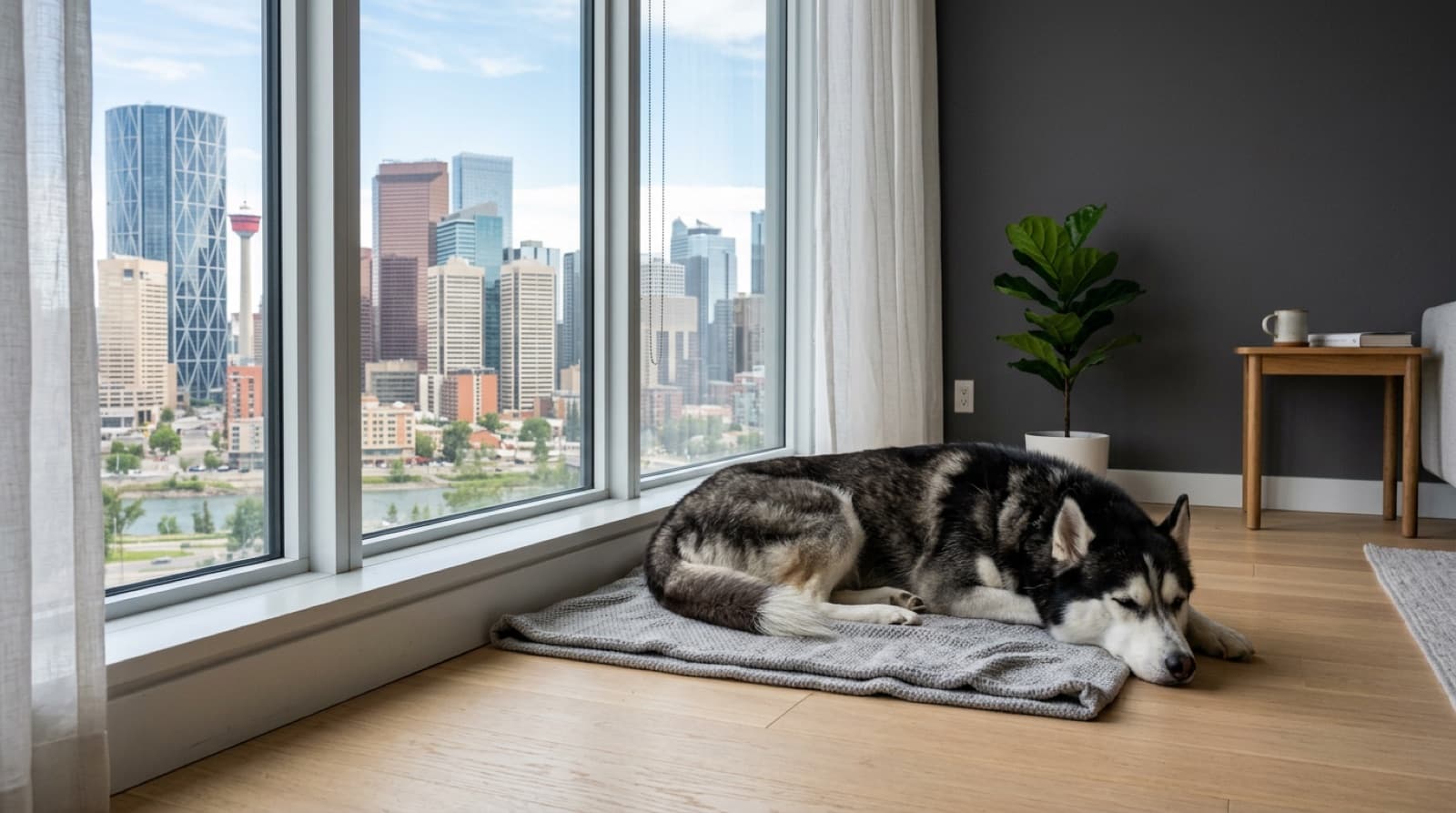
Why the husky is built for a prairie winter
The Siberian Husky was developed by the Chukchi people of northeastern Siberia to pull sleds across frozen terrain in some of the harshest cold on earth. Everything about the breed reflects that: a dense double coat with a woolly insulating undercoat and a weather-resistant outer coat, a bushy tail it wraps over its nose when it curls up to sleep, and a metabolism built to run for hours in the cold. This is one of a small handful of breeds that genuinely thrives in a Saskatoon winter, where a -30 day that miserable for a short-coated dog is a husky in its element.
Most huskies visibly prefer winter to summer. They will roll in fresh snow, sleep happily outdoors in the cold, and light up on a frigid walk that other dogs endure. If you have adopted a husky in Saskatoon, the cold is the easy part. The American Kennel Club breed profile describes the coat and cold tolerance directly. Which brings us to the part that is not easy.
The escape drive is the real winter danger
The coat keeps a husky warm. The roaming drive is what gets it hurt in winter. A loose husky in a Saskatoon cold snap faces cold exposure, blowing-snow disorientation, traffic, and the very real chance of running kilometres from home before anyone catches it.
Huskies were bred to run, and that instinct does not switch off in a backyard. They climb fences, dig under them, bolt through open gates, and slip out doors, and once loose they follow their nose without looking back. Their recall is genuinely unreliable, which is a breed trait rather than a training failure. In summer an escaped husky is a lost-dog and traffic problem. In a -30 winter it is all of that plus cold danger.
Winter raises both the stakes and the opportunity:
- Snowbanks piled against a fence effectively lower it, so knock them down through the season
- Blowing snow disorients a running dog and hides it from you fast
- Holiday visitors leaving gates and doors open create escape chances
- Frozen ground can make some fences easier to breach, and ice near gates fouls latches
Local rescues and Saskatoon animal services handle plenty of loose huskies every winter. It is a common, preventable problem, and prevention is the whole game.
Fencing and containment that actually holds a husky
A secure yard is close to mandatory for a husky, and it needs to defeat both climbing and digging.
- Height: at least six feet, with an inward-angled top or coyote rollers to stop climbers
- Dig protection: bury the bottom of the fence, or line the base with paving stones or an L-footer of buried mesh
- Gates: latched, ideally self-closing and self-latching, and checked through winter when ice fouls the mechanism
- Doors: a physical barrier or a habit of leashing before opening, so the dog cannot bolt past a visitor
- Snow management: knock down snowbanks along the fence line, because they turn a six-foot fence into a three-foot one
- Supervision: do not leave a husky alone in the yard for hours, because a bored husky is a motivated escaper
Microchip and tag the dog regardless, because even careful owners have a husky get out eventually. Exercise is part of containment too: a well-exercised husky is far less driven to escape than a bored one.
Recall, ice, and safe off-leash decisions
A husky's recall cannot be trusted off-leash in open space, and winter makes it worse. Snow muffles sound so the dog hears you less, and a husky chasing a scent across a frozen field is nearly impossible to call back.
The safe approach in Saskatoon is to use the fenced off-leash parks rather than open fields or the riverbank. Hyde Park, Avalon, and Hampton Village let a husky run without the escape risk. Our full off-leash parks guide covers which suit which dog.
Never let a husky loose near frozen water. Ice on the South Saskatchewan River is never reliably safe, especially near moving water, inflow points, and pressure ridges, and rural sloughs and dugouts carry the same danger. A husky with its chase drive is exactly the dog most likely to bolt onto it, and a dog that breaks through into cold water is a life-threatening emergency, for the dog and for any owner who follows it in. Keep the dog leashed near any open or frozen water, stick to the groomed Meewasin Trail, and use a 15-to-30-foot long line if you want to give the dog room without a fence.
Even a cold-hardy husky has frostbite limits
The husky body handles cold, but the extremities do not get a free pass. Ear tips, paw pads, and the nose can still frostbite during very long outings in an extreme windchill.
The number that matters is the windchill, not the air temperature, because a strong prairie wind drives the effective cold much lower. A husky is fine for normal winter exercise down to around -20, and can handle brief colder outings, but when Environment and Climate Change Canada posts an extreme cold warning, even a husky's time out should be shorter, with attention to the extremities.
Road salt is the other winter paw issue. De-icer cracks and burns pads and makes a dog sick if licked off, so use paw balm before walks and rinse paws afterward, drying between the toes, and trim toe hair so ice balls do not form. Never shave a husky, because the double coat regulates temperature year-round. The AVMA cold-weather pet safety guidance is worth reading, and our winter dog care guide covers frostbite signs and the paw routine in full.
Exercising a high-drive husky through deep cold
A husky needs serious exercise year-round, and an under-worked husky is a destructive, escape-motivated husky. The plan for deep cold is to shift the work, not cancel it.
On milder winter days, lean into what the breed is built for:
- Skijoring, canicross, or bikejoring, harness sports huskies were literally bred for and love
- A run at a fenced off-leash park, or a long-line run on the Meewasin Trail
- Snow play, which most huskies find genuinely enriching
On the -40 windchill days, when even a husky's outdoor time is limited, go indoors:
- Puzzle feeders, snuffle mats, and scent games that make the dog work for food
- Short, frequent training sessions, which tire a husky faster than an extra walk would
- Hide-and-seek and stairs for physical bursts
- A doggy daycare day during a long cold snap for a high-drive dog
Twenty minutes of brain work settles most huskies. Use a proper pulling harness and build up gradually for any harness sport, and keep the dog under control near roads and open water. For the temperament and training side of the breed, our German Shepherd training guide covers the same working-dog principles that apply to shepherd-husky crosses too.
Browse adoptable Huskies in Saskatoon
One of the few breeds truly built for prairie winters, and one of the most common in Saskatchewan rescue. If you can offer a secure yard and real exercise, a husky is a wonderful cold-weather companion. Refreshed regularly.
See Available Huskies →Frequently Asked Questions
Can a husky live outside in a Saskatoon winter?
A healthy adult husky tolerates prairie cold far better than most breeds, but that is not the same as saying it should live outdoors through a Saskatoon winter. A husky's double coat handles deep cold, and many huskies genuinely prefer winter to summer, but wind, extreme windchill, and the lack of company all matter. Huskies are social dogs that do poorly isolated outside, and even a cold-hardy dog needs a dry, wind-sheltered, insulated space if it is out for long stretches. The practical answer for almost every Saskatoon owner is that a husky is an indoor dog with strong outdoor tolerance: it loves being out in the cold and snow, and it comes inside to be with its people. Prolonged unsheltered exposure in a -35 windchill is a risk even for this breed.
Why is the escape drive a bigger winter problem for huskies?
Because a loose husky in a Saskatoon winter faces dangers a loose dog in July does not. Huskies are escape artists with a powerful roaming drive, they climb fences, dig under them, and bolt through open gates, and their recall is famously unreliable. In summer that means a lost dog and traffic risk. In a -30 windchill it adds cold exposure, disorientation in blowing snow, and the real chance a dog runs itself into trouble far from home before anyone catches it. This is the single most important winter reality for a husky owner: the coat keeps the dog warm, but the roaming drive is what gets it hurt. A secure fence and disciplined leash habits matter more in winter, not less.
How do I keep a husky from escaping the yard?
Start with a tall, secure fence, at least six feet, with the bottom buried or reinforced against digging and no gaps a determined dog can exploit. Huskies climb, so an inward-angled top or coyote rollers help. But fencing alone is not enough, because a bored, under-exercised husky is far more motivated to escape, so daily exercise is part of containment. Supervise yard time rather than leaving a husky out alone for hours, keep gates latched and ideally self-closing, and use a physical barrier at doors so the dog cannot bolt when someone comes in. In winter, snowbanks piled against a fence effectively lower it, so knock them down. Microchip and tag the dog, because even careful owners have a husky get out eventually.
Can I let my husky off-leash in Saskatoon?
Only in a fully fenced area, and even then with caution. A husky's recall cannot be trusted off-leash in open space, this is a defining breed trait, not a training failure, and most experienced husky owners simply never let them loose in unfenced areas. In Saskatoon that means using the fenced off-leash parks like Hyde Park, Avalon, and Hampton Village rather than open fields or the riverbank. Winter makes it worse: snow muffles sound so the dog hears recall less clearly, and a husky chasing a scent or wildlife across a frozen field is nearly impossible to call back. If you want off-leash freedom without a fence, a long line of 15 to 30 feet gives the dog room while keeping you in control.
Is it safe to let a husky on the frozen South Saskatchewan River?
No. Ice on the South Saskatchewan River is never reliably safe, especially near moving water, inflow points, and pressure ridges, and a husky with its chase drive and unreliable recall is exactly the dog most likely to bolt onto it. A dog that breaks through ice into cold water is a life-threatening emergency for the dog, and owners who go in after their dogs are at serious risk too. Keep your husky leashed near any open or frozen water, stick to the groomed Meewasin Trail and established park paths, and never let a husky chase a ball or wildlife onto river ice. Rural sloughs and dugouts around the city carry the same danger. Winter is the season to be more conservative about off-leash time, not less.
Does a husky need a coat in a Saskatoon winter?
Almost never. The husky is one of the few breeds genuinely built for prairie cold, with a dense double coat that insulates it at temperatures that send most dogs indoors. A healthy adult husky rarely needs a coat and often prefers being out in the snow. The exception is a very old, very young, sick, or thin husky, or a dog that has been shaved (never shave a husky, the double coat is its temperature regulation year-round). Even without a coat, the extremities still need attention: paw pads, ear tips, and the nose can get frostbite during very long outings in extreme windchill. So the rule is coat rarely, paw care always, and windchill limits on the extremities even for this breed.
What temperature is too cold for a husky?
A healthy adult husky is comfortable in cold that would be dangerous for most breeds and is often happiest well below freezing. As a rough guide, a husky is fine for normal winter exercise down to around -20, and can handle brief outings colder than that with attention to the extremities. The number that matters is the windchill, not the air temperature, because a strong prairie wind drives the effective cold much lower and frostbite risk on ears, paws, and nose climbs sharply. When Environment and Climate Change Canada posts an extreme cold warning, even a husky's outing should be shorter, and any dog that is old, young, sick, or thin needs far more caution than a fit adult. Watch the individual dog: if it lifts paws, shivers, or wants to turn home, listen.
How do I exercise a high-energy husky when it is -40 outside?
On the coldest days, when even a husky's outdoor time is limited, shift the work indoors. Mental exercise tires a husky faster than physical exercise: puzzle feeders, snuffle mats, scent games, short training sessions, and hide-and-seek all burn energy without the cold. Twenty minutes of brain work settles most dogs. On milder winter days a husky is in its element, so use a fenced off-leash park, a long-line run, or a harness sport like skijoring or canicross, which huskies are literally bred for and love. A doggy daycare day during a long cold snap is a reasonable option for a high-drive dog. The owners who skip all exercise on cold days end up with a stir-crazy, destructive, escape-motivated husky, so the plan is to shift the work, not cancel it.
Are huskies more likely to run off in winter?
The drive is year-round, but winter raises the stakes and can raise the opportunity. Snowbanks piled against fences lower them, blowing snow disorients a running dog, and holiday visitors leaving gates and doors open create escape chances. A husky that bolts in a -30 windchill is in real danger from cold, traffic, and getting lost far from home. Keep gates latched, knock down snowbanks along the fence, use a door barrier so the dog cannot dash out when someone arrives, and never trust recall off-leash outside a fence. Microchip and tag the dog. Saskatoon animal services and local rescues like the Saskatoon SPCA and Saskatoon Dog Rescue handle plenty of loose huskies every winter, so this is a common, preventable problem.
Are huskies good winter running or skijoring partners?
Yes, and it is one of the best things about the breed on the prairies. Huskies were bred to pull and run in cold, so canicross (running with a dog in harness), skijoring (being pulled on skis), and bikejoring channel exactly what a husky wants to do, and they solve the winter exercise problem for a high-drive dog. Use a proper pulling harness and a waist belt with a bungee line, build the dog up gradually, and avoid hard pulling on very hard-packed ice where a dog can slip. These sports also give a husky a job and an outlet that reduces the boredom that drives escaping and destruction. Start on the groomed Meewasin Trail or a quiet path, and always keep the dog under control near roads and open water.
Husky Adoption Saskatoon
Where to find them, costs, scam warnings, and husky crosses.
Husky Health Issues: Eyes, Skin, Thyroid
Siberian Husky health issues to plan for: juvenile cataracts, corneal dystrophy and PRA, zinc-responsive skin disease, hypothyroidism, epilepsy and degenerative myelopathy.
Winter Dog Care Saskatoon
Frostbite signs, the -40 windchill rules, and the road-salt paw routine.
Saskatoon Off-Leash Parks
The fenced parks where a husky can run safely off-leash.
New dog? Start with these care guides
Everything a new adopter needs to set up a safe, happy home.