Insurance for a Bernese is a binary decision, not a hedge
Bernese Mountain Dog Club of America breed-health surveys consistently show cancer accounts for the majority of Berner deaths, with histiocytic sarcoma a particular concern. Hip and elbow dysplasia rates are elevated, and the breed is deep-chested enough to carry real bloat risk. For Calgary owners, that combination changes the insurance question from “is it worth it” to “which plan, and when do I enroll.” One major cancer or orthopedic event typically costs more than years of premiums combined. Skipping insurance for this breed is not frugality; it is a serious financial bet against odds that are not in your favour. The other part most new owners get wrong: the pre-existing condition trap. Any lump checked, hip flagged, or mass noted at the first Calgary vet visit before your policy starts becomes excluded for life. This guide walks through the breed-specific risk profile, the timing rules, the questions to ask insurers, and how to actually get a current Calgary quote.
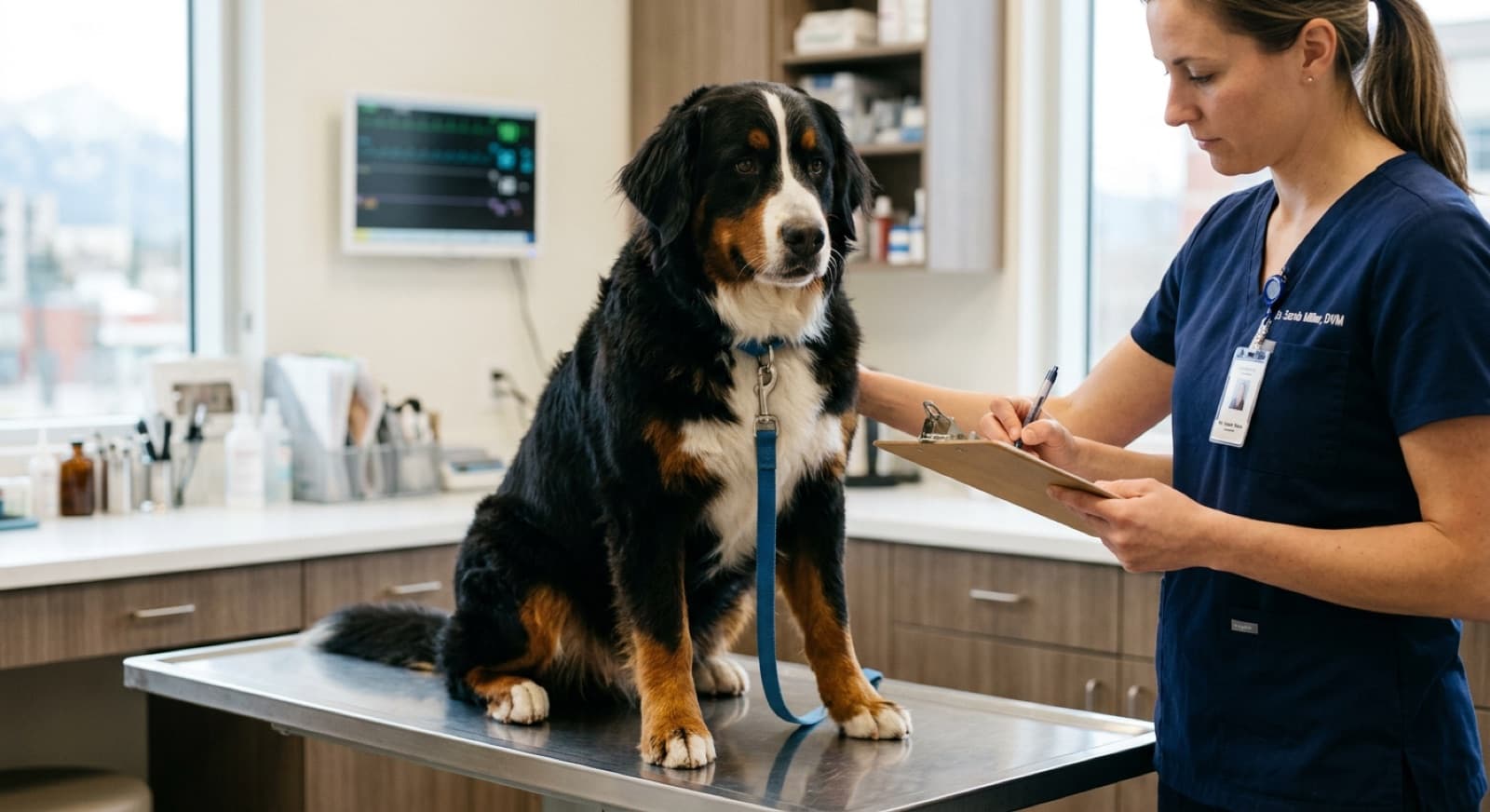
The Breed-Specific Risk Profile
Before comparing plans, look at what insurance is actually covering for this breed. Four conditions drive most of the lifetime claim risk. Lifetime risk percentages below are directional, drawn from AKC breed profiles and Bernese Mountain Dog Club of America breed-health surveys; treatment costs vary widely by Calgary clinic and severity, so consult your vet for case-specific estimates.
| Condition | Lifetime risk (directional) | Calgary treatment |
|---|---|---|
| Cancer (histiocytic sarcoma, lymphoma, mast cell, osteosarcoma) | Majority of breed deaths per BMDCA surveys | Specialist oncology workup and treatment; ask your Calgary vet for case-specific estimates |
| Hip dysplasia | Elevated for the breed | Imaging, possible surgical referral (FHO or THR); estimates vary by Calgary clinic |
| Elbow dysplasia | Elevated for the breed | Imaging and possible arthroscopic referral |
| Bloat / GDV (gastric dilatation volvulus) | Deep-chested breeds carry elevated risk | Emergency surgery at a Calgary 24-hour clinic; consult the clinic directly |
These four conditions explain why Berner insurance premiums tend to run higher than average. Insurers price in the actuarial math; owners who skip the policy are betting against odds the insurer has already accounted for. For current treatment cost ranges in Calgary, ask your veterinary clinic for a written estimate before any procedure.
Calgary Plan Comparison: Structure, Not Premiums
Premiums change yearly and depend on your dog's exact age, coverage tier, deductible, and reimbursement percentage. Rather than quote stale numbers, the table below compares the structural differences that matter for a Berner. Consult a Calgary insurance broker for current quotes from each insurer against your dog's specifics. Insurer reference pages: Trupanion, Pets Plus Us, Petsecure, Embrace.
| Plan | Cap structure | Reimbursement | Best for |
|---|---|---|---|
| Trupanion | No per-condition cap, lifetime coverage advertised | Higher reimbursement tier than most | Cancer-prone breeds where uncapped coverage matters most |
| Pets Plus Us | Tiered annual caps; top tier carries the highest ceiling | Standard percentages by tier | Canadian-owned, balanced coverage at top tier |
| Petsecure | Tiered annual caps; more exclusions on lower tiers | Standard percentages by tier | Canadian-owned, top tier required for breed-appropriate coverage |
| Embrace | U.S.-based insurer with Canadian coverage; annual caps | Standard percentages by tier | Owners who want a U.S.-headquartered carrier |
Senior Berners (around 7+) often face higher premiums or refused new policies. Pumpkin, Figo, and Healthy Paws are U.S.-only and not currently writing policies in Canada. For Berners specifically, the deciding feature is annual cap, hereditary-condition coverage, and how histiocytic sarcoma is classed, not the headline monthly figure.
Why Trupanion Comes Up Often for Berners
In Berner owner communities (r/berners, breed Facebook groups, Calgary rescue networks), Trupanion shows up more than any other plan. According to the North American Pet Health Insurance Association (NAPHIA), accident-and-illness coverage is the dominant plan structure in Canada, and within that category the structural differences below matter most for a cancer-prone breed.
1. No payout cap on cancer (as advertised)
Other Canadian plans cap annual reimbursement by tier. One bad cancer year on a capped plan and you are paying above the cap out of pocket. Trupanion advertises no per-condition cap. For a breed with high cancer exposure, that structure matters more than a lower headline premium. Verify the specific cap (or lack of cap) in the policy document, not the marketing page.
2. Lifetime coverage of chronic conditions
Hip dysplasia and cancer treatment can span months or years. Once a condition is covered, it stays covered for life at the same terms. Some competitor plans renew annually and can add new exclusions or cap-resets that hurt mid-treatment.
3. Higher reimbursement tier than most competitors
Trupanion advertises a higher reimbursement percentage than most competing tiers. Over a Berner's lifetime with multiple expected claims, that gap compounds. Confirm the percentage that applies to your specific quote before signing.
4. Direct vet payment at some Calgary clinics
A handful of Calgary specialty hospitals can bill Trupanion directly. You pay only the deductible and your coinsurance at the visit rather than fronting an emergency-surgery bill and waiting weeks for reimbursement. Confirm direct-pay status with the specific Calgary clinic before you rely on it.
5. No breed loading or breed exclusion on cancer (advertised)
Some lower-tier plans charge breed loading on Berners or exclude histiocytic sarcoma specifically. Trupanion advertises no such loading. Verify this with any insurer you call by asking, in writing: “Is histiocytic sarcoma covered for Bernese Mountain Dogs? Any breed loading or surcharge?”
Trade-off: Trupanion typically runs at a premium to the Canadian-owned plans. Consult a Calgary insurance broker for current quotes from all four insurers so you can compare the gap against the structural advantages above for your specific dog.
Browse adoptable Bernese Mountain Dogs in Calgary
Get insurance quotes BEFORE you bring your new Berner home. Enroll the same day, before any vet visit, to lock in cancer, hip, and bloat coverage for life.
See Available Bernese Mountain Dogs →ROI Logic: Premiums vs Expected Medical Costs
For most breeds, pet insurance is a hedge against a low-probability event. For Berners, elevated cancer and orthopedic rates change the math. The expected cost of medical care over a Berner's life is high enough that, for most owners, insurance comes out ahead of self-insurance. The shape of the argument:
The premium side
Lifetime premiums depend on the insurer, coverage tier, deductible, reimbursement percentage, and how aggressively premiums climb with age. Premiums also climb materially for senior Berners, and some insurers will not write new policies for this breed past age 7 or 8. Consult a Calgary insurance broker for current quotes against your dog's age and the tier you actually want.
The medical side
- Cancer treatment: specialist oncology workup, surgery, chemotherapy, and follow-up imaging stack quickly. The breed's elevated cancer rate (per BMDCA breed-health surveys) makes this the dominant claim category.
- Hip dysplasia surgery: imaging plus surgical referral (FHO or total hip replacement); often bilateral.
- Elbow dysplasia: imaging plus possible arthroscopic referral.
- Bloat / GDV: emergency surgery at a Calgary 24-hour clinic.
- Ongoing arthritis care, supplements, and pain management over the senior years.
- Skin and ear infection treatment (Berners are prone).
- End-of-life palliative care.
For specific Calgary cost figures on a typical Berner, see the companion guide on the true cost of ownership. The point here is that the medical side is sized in tens of thousands of dollars across a typical Berner lifetime, not hundreds.
Net result
Across a typical Berner lifetime, expected reimbursable medical costs (claims paid by the insurer at standard reimbursement percentages) tend to exceed total premiums paid for most owners. For Berners specifically, the expected value of insurance exceeds the expected value of self-insurance for most Calgary owners, particularly when you account for the timing problem: a savings plan needs years to build, but a young Berner can need treatment before those years are up. Run your specific numbers with a Calgary broker before deciding.
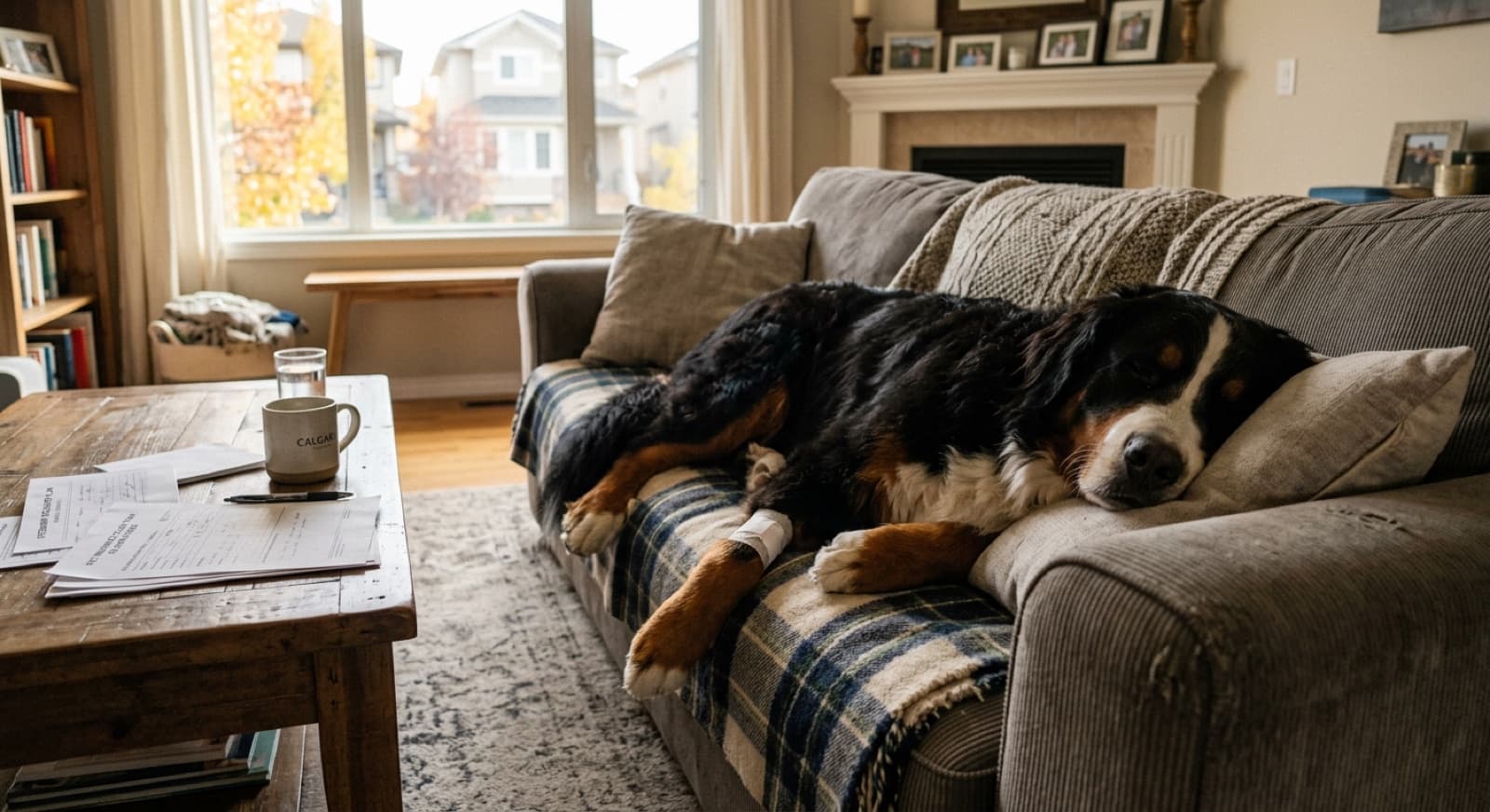
The “I'll Just Save the Money” Trap
A common owner pitch: “I'll put aside money each month in a savings account instead of paying insurance.” Run the numbers carefully before going that route, because the math for this breed has a timing problem most owners underestimate.
The self-insurance timing problem
- A savings plan needs years to build up. A young Berner can develop hip or elbow dysplasia, or even cancer, before the savings have time to grow.
- Bloat (GDV) can strike in any year and demands an emergency surgical bill at a Calgary 24-hour clinic on day one.
- Most owners do not actually stick to a strict monthly savings discipline across the full life of the dog. Insurance forces the discipline through monthly premiums.
- Insurance smooths a one-off catastrophic bill across years. A savings account does not.
- For owners without significant emergency funds already in place, one major cancer or orthopedic event in the early years can wipe out the savings plan and leave you short on day one of treatment.
Self-insurance only works for owners with significant emergency funds already set aside before the dog comes home, who would not feel a large vet bill. For everyone else, traditional insurance is the safer bet for this breed. Talk to a Calgary insurance broker about current premiums so you can compare against your actual savings rate.
The Shape of a Berner Cancer Claim
Insurance-paid Berner cancer claims tend to share the same arc. The pattern matters more than any specific number, because actual figures vary by Calgary clinic and case severity:
- Owner enrolls in insurance day one, before any Calgary vet visit. Premiums accumulate over the early healthy years with no major claims.
- Sometime in the middle years, the owner notices lethargy, weight loss, lameness, or a new mass. The Calgary vet investigates with imaging and bloodwork.
- Biopsy or specialist referral confirms cancer (often histiocytic sarcoma, lymphoma, mast cell tumour, or osteosarcoma in this breed).
- Treatment stacks: surgical removal where applicable, chemotherapy course, follow-up imaging and bloodwork, palliative care. Specialist oncology fees at Calgary referral hospitals are substantial.
- Insurance pays at the policy reimbursement percentage after the deductible. The owner's out-of-pocket sits at premiums paid plus the deductible plus the coinsurance share, which is typically far less than the uninsured cost.
- Without insurance, the same diagnosis can force the “can we afford to treat” calculation at the worst possible moment. Owners are sometimes forced to choose euthanasia for financial reasons that insurance would have prevented.
The harder-to-quantify benefit: insurance removes the affordability calculation at diagnosis. For a breed with this much cancer exposure, that emotional protection alone is worth the premium for most owners. For specific cost figures in Calgary, ask your veterinary clinic for a written estimate at the start of any treatment plan.
The Correct Enrollment Timeline
Adoption / pickup day
Bring the Berner home. Do NOT book a vet visit yet. Pull online quotes from Trupanion, Pets Plus Us, Petsecure, and Embrace. Most return instant quotes in under 5 minutes.
Enroll in insurance
Enroll in your chosen plan. Policies typically start 24 to 48 hours later, with waiting periods of 5 to 14 days for accidents and 14 to 30 days for illness. Save the policy document and start date in writing.
Waiting period clears
After the illness waiting period clears, NOW book the wellness exam. Anything noted at that exam (lumps, hip looseness, dental concerns) is covered going forward.
First wellness exam
Calgary vet wellness exam fees vary by clinic; call your chosen vet for current rates. The vet will palpate for lumps, feel hip and elbow joints, check the spine, and listen to the heart. Anything found at this exam is covered going forward because insurance was active first. Get a written copy of the exam notes for your records.
The mistake: booking the wellness exam in week one before insurance. A note like “palpable mass, monitor” becomes pre-existing for life. If that mass later turns out to be histiocytic sarcoma, cancer coverage is gone. This is the trap.
Bernese-Specific Exclusions to Watch For
Read the policy document, not just the marketing page. Six exclusion categories matter most for this breed.
1. Breed-specific cancer exclusions
Some lower-tier plans exclude histiocytic sarcoma or impose breed loading on Berners. For this breed, that exclusion is fatal to the policy. Ask in writing: “Is histiocytic sarcoma covered for Bernese Mountain Dogs? Any breed loading or premium surcharge?”
2. Pre-existing lumps and orthopedic notes
Any lump checked, mass biopsied, or joint flagged before enrollment is pre-existing for life. For Berners, that exclusion routinely torches the entire reason to buy insurance. Time the enrollment correctly.
3. Hereditary condition exclusions
Hip dysplasia, elbow dysplasia, and some cancers can be classed as “hereditary” on cheaper tiers. Verify in writing that these conditions are covered. Avoid plans that exclude them.
4. Annual cap traps
A low annual cap is dangerous for this breed. One bad cancer year can easily exceed the cheaper-tier caps that some Canadian plans default to. Choose the highest annual cap available within your budget, or choose a plan that advertises no per-condition cap. Confirm the specific cap that applies to your quote with a Calgary insurance broker.
5. Coverage drop after first major claim
A few plans quietly drop or refuse renewal after a major claim. Ask the insurer specifically: “If my Berner is diagnosed with cancer in year 3, is the policy renewable in year 4 at standard terms?” The answer should be yes.
6. Gastropexy and emergency surgery coverage
Many Berner owners get a preventive gastropexy at spay/neuter to reduce bloat risk. Most plans treat elective gastropexy as routine and do not cover it, but ALL major plans cover the emergency GDV surgery if bloat strikes. Verify the emergency coverage in writing.
Questions To Ask Before Signing
Call the insurer directly. Get answers in writing (email or screenshot). The marketing page is not the policy.
- Is histiocytic sarcoma covered? Any breed loading or surcharge on Berners?
- Is cancer treatment covered with no per-condition or per-year cap? What is the annual cap if any?
- Is hip dysplasia covered? Elbow dysplasia? Are they classed as hereditary, and does that affect coverage?
- Is bloat (GDV) emergency surgery covered? What about elective gastropexy?
- How do you define “pre-existing condition”? Does a palpated lump that turns out to be benign count as pre-existing for any future masses?
- Is there a curable-condition window? If a condition is symptom-free for 6 or 12 months, does it become covered again?
- Does the policy cover chronic conditions for life, or annually renew with new exclusions?
- Is reimbursement 80% or 90%? After or before the deductible?
- Do Calgary specialty hospitals bill you directly, or do I pay first and wait for reimbursement?
- What is the waiting period for accidents vs illness? Any extended waiting on cancer or orthopedic specifically?
- Premiums climb with age. What does the curve look like by year 5, year 7, and year 10?
- Will you renew the policy after a major cancer or orthopedic claim?
Save every answer. The policy document is the contract. Marketing claims are not.
Frequently Asked Questions
Is pet insurance worth it for a Berner?
For Berners, insurance is near-mandatory rather than optional. Bernese Mountain Dog Club of America breed-health surveys show cancer accounts for the majority of Berner deaths, and hip dysplasia, elbow dysplasia, and bloat risk are all elevated. One major event typically costs more than years of premiums. The math favours insurance more strongly than for almost any other breed. Consult a Calgary insurance broker for current quotes.
Which plan covers cancer?
All four mainstream Canadian plans (Trupanion, Pets Plus Us, Petsecure, Embrace) cover cancer if enrolled before any lump or mass is documented. They differ on annual cap, reimbursement percentage, and hereditary-condition treatment. Trupanion advertises no per-condition cap, which matters most for this breed. A Calgary insurance broker can pull side-by-side quotes from all four.
Pre-existing lumps and conditions?
Universally excluded. Any lump, mass, or orthopedic note made before insurance becomes lifetime exclusion of that condition (and often related conditions). The catastrophic trap for new Berner owners.
When to enroll?
Day 1 of bringing the Berner home, BEFORE any Calgary vet visit. Sequence: adopt → enroll → wait out the insurer's illness waiting period → schedule wellness exam.
Calgary cost?
Premiums vary by insurer, age, coverage tier, deductible, and reimbursement percentage. Senior Berners pay materially more, and some insurers refuse new policies on this breed past age 7 or 8. Consult a Calgary insurance broker for current quotes rather than rely on stale ranges from any article.
Trupanion vs others?
Trupanion advertises no per-condition caps, lifetime coverage, and a higher reimbursement tier than most competitors, with direct-pay at some Calgary clinics. Pets Plus Us top tier is the next most-discussed option for this breed. Premium typically runs higher than the Canadian-owned alternatives; weigh that against the structural cancer-coverage advantages.
Self-insure instead?
Hard to make the math work for this breed. The savings plan needs years to build, but a young Berner can need treatment before those years are up. Insurance is the safer bet unless you already have substantial emergency funds set aside before the dog comes home.
Common exclusions?
Pre-existing (the killer), breed-specific cancer loading on cheap tiers (avoid those plans), hereditary classifications on cheaper tiers, low annual caps, coverage drop after first major claim, elective gastropexy (the emergency bloat surgery itself is still covered on the major plans).
More Bernese Mountain Dog guides
True Cost of a Bernese Mountain Dog →
Monthly and lifetime cost of a Berner in Calgary. Where insurance fits in the total budget.
Berner Cancer & Lifespan Guide →
Histiocytic sarcoma, lymphoma, and the 7 to 10 year lifespan reality. Why insurance matters so much.
Berner Health Issues →
Cancer, hip dysplasia, elbow dysplasia, bloat. The conditions insurance needs to cover.
Is a Berner Right for You? →
Honest pros and cons of the breed including the medical realities new owners often underestimate.
Buy or Adopt a Berner? →
Calgary breeders vs rescues. How sourcing affects health screening and insurance enrollment.
Berner Training →
Calm-giant training, leash manners, and socialisation tips for the breed.
Exercise & Calgary Climate →
How much exercise Berners need and how Calgary's summer heat affects this thick-coated breed.
Berners With Kids & Cats →
How Berners do with children, other dogs, and cats in Calgary homes.
Berner Grooming & Shedding →
Double-coat care, seasonal blowouts, and Calgary winter grooming routines.
Adopt a Berner →
Browse available Bernese Mountain Dogs and Berner mixes from Calgary rescues. Updated regularly.
New dog? Start with these care guides
Everything a new adopter needs to set up a safe, happy home.